


Match-fixing in esports is the deliberate manipulation of gameplay outcomes or in-game events to secure a pre-arranged benefit, usually tied to betting markets, team advantages, or illicit payments. It ranges from intentional losses to engineered "micro-events" (first death, map handicap) and typically involves covert coordination between players, insiders, and external bettors.
Essential Overview: Match-Fixing in Competitive Gaming
- Scope: Covers both full outcome manipulation and partial-event manipulation that still impacts wagering or standings.
- Primary risk surface: Lower-tier leagues, online qualifiers, and matches with weak oversight.
- Most common enabler: Information asymmetry (injury/roster changes, scrim results, internal conflict) exploited before it becomes public.
- Signal quality: Single anomalies rarely prove anything; patterns across performance, comms, and betting movement matter.
- Operational reality: Many incidents blend coercion, financial distress, and opportunism rather than "one villain."
Mechanics of Match-Fixing in Esports
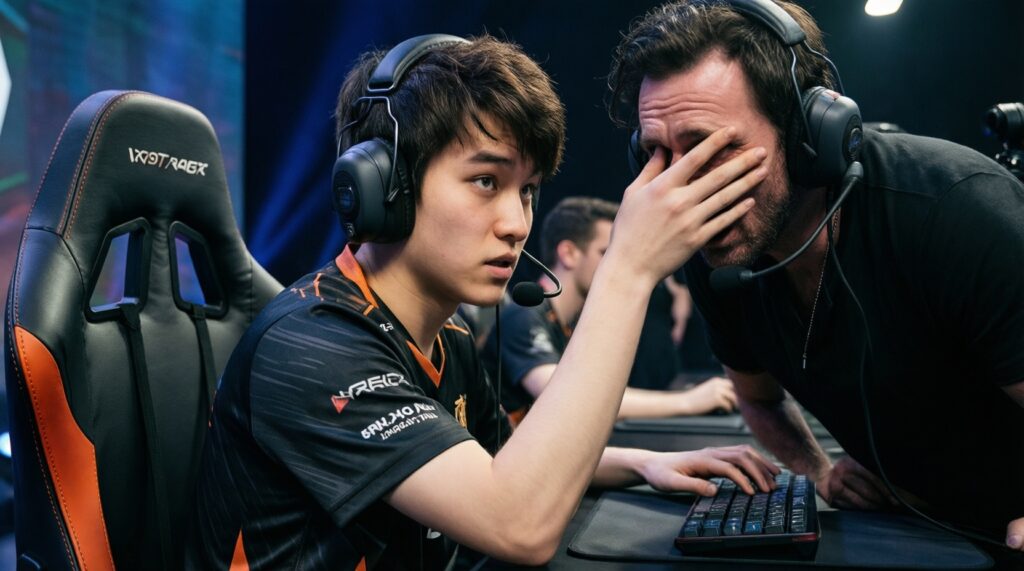
At a practical level, esports match fixing means a participant (or someone with leverage over a participant) intentionally changes decision-making to produce a specific outcome or a specific in-match event. The defining feature is pre-arrangement: an agreement, incentive, or coercion exists before the manipulation occurs.
Match-fixing is not the same as poor performance, experimentation, or a bad draft. It also differs from "throwing for strategic reasons" (for example, bracket positioning) when rules allow it and the motive is competitive advantage rather than an external payoff.
Boundary cases matter in investigations: deliberately leaking strategy, withholding effort, or "soft play" can be manipulation even when the final winner is unchanged-especially if wagers target micro-events.
Common Exploitation Vectors and Actors
- Outcome throws: Intentional losses via draft sabotage, forced fights, or systematically ignoring win conditions.
- Micro-event steering: Manipulating first blood, first objective, map handicap, round count, or "over/under" conditions; this is common in match fixing betting esports because it can be hidden inside an otherwise plausible match.
- Insider information trading: Sharing roster swaps, illness, internal conflict, or "we will test a new comp" with bettors before public disclosure.
- Account/device compromise: A coerced player "lends" access; a third party plays under their identity to force a planned pattern.
- Referee/admin or production abuse: Timing or procedural manipulation (pauses, restarts, rule interpretations) that nudges match state.
- Team-management pressure: Individuals with financial control (salaries, housing, prize distribution) push participants toward a fix.
- Third-party intermediaries: "Sponsors," "agents," or "friends" act as buffers to reduce traceability between bettors and players.
Behavioral and Statistical Warning Signs
Use scenarios as triage tools, not verdicts. The most actionable indicators combine behavioral anomalies with competitive context and market signals.
- Uncharacteristic risk patterns: Repeated low-percentage plays at critical moments without adaptation, especially when safer lines are available.
- Role-consistency breaks: A support initiates solo, an IGL stops calling structure, or a star player avoids high-impact engagements without clear explanation.
- Timing tells: Strange decisions immediately after a pause, substitution, or technical reset-particularly if they recur across matches.
- Communication collapse: Noticeable drop in coordination (missed rotations, duplicated utility, silent mid-rounds) that doesn't match prior matches or scrim reports.
- Line movement mismatch: Betting odds shift hard without public news; this is where esports betting fraud detection teams focus on correlating market moves with internal information access.
- Repeatable "accidents": Same player repeatedly mispositions for a key objective or repeatedly "misclicks" in high-leverage spots, beyond plausible variance.
Economic and Regulatory Motivations
- Direct cash incentives: Payment for a throw, partial-event manipulation, or early information.
- Debt and coercion: Informal loans, family pressure, threats, or blackmail (including compromising photos/chats) used to force compliance.
- Weak contract protection: Late salaries, unclear prize splits, or unstable orgs make illicit offers more attractive.
- Low oversight environments: Online leagues with minimal monitoring and inconsistent identity checks.
- Regulatory fragmentation: Esports spans publishers, tournament operators, and jurisdictions; enforcement pathways are often unclear.
- Evidence constraints: Proving intent requires more than gameplay; logs, comms, devices, and financial trails are hard to access quickly.
- Publisher control: Sanctions can be decisive (bans, license limits), but standards differ by title and operator.
- Resource imbalance: Tier-2/3 ecosystems often cannot afford full-time integrity staff, creating gaps opportunists exploit.
Detection Tools and Investigative Methods
Effective esports match fixing investigation work is multi-source: gameplay review, technical artifacts, and market intelligence. The common failure mode is over-trusting a single "silver bullet."
- Myth: One suspicious clip proves fixing. Reality: clips are leads; you need corroboration (pattern analysis, comms, device/account evidence, or credible witness statements).
- Mistake: Ignoring access paths. If odds moved, map who knew what and when (scrim partners, staff, substitutes, friends on betting Discords).
- Myth: Betting anomalies always mean player guilt. Sometimes the leak is external (data scraping delays, unofficial streams, observer feeds, or rumor networks).
- Mistake: No chain-of-custody. Screenshots without provenance, edited VODs, or unlogged admin actions become unusable when sanctions are challenged.
- Overreach: Over-collecting personal data. Implement proportionality; use formal consent, clear retention rules, and a minimal-necessary approach.
When budgets allow, specialized esports integrity services can fuse bookmaker alerts, device telemetry, and investigative workflows. When budgets are tight, you can still build a credible baseline by standardizing evidence capture, access logs, and incident playbooks.
Preventive Measures and Industry Protocols
Prevention works best as operations, not slogans: reduce opportunity, increase detection likelihood, and make reporting safe. Below is a practical protocol that scales down for limited resources.
Minimum viable integrity protocol (works for smaller leagues)
- Set enforceable rules: Define prohibited conduct (outcome manipulation, micro-event manipulation, insider betting, information sharing) and publish sanctions.
- Control access: Limit who can see private lobbies, referee tools, and delay-sensitive match data; log admin actions.
- Identity assurance: Require stable player IDs; for online play, perform periodic live checks (camera + screen share) and keep simple verification records.
- VOD + comms retention: Keep match VODs and (where permissible) team voice for a defined window; document who can access it.
- Incident workflow: Triage → preserve evidence → isolate access → notify stakeholders → document decisions consistently.
Lean alternatives when you cannot fund a full integrity team
- Two-person review rotation: Pair an experienced admin with a rotating independent reviewer for high-risk matches (qualifiers, relegations).
- Structured anomaly notes: Use a standardized template: timestamp, situation, expected play, observed play, confidence, possible benign explanations.
- Partnered alerting: Establish a single contact channel with at least one bookmaker or monitoring partner for suspicious market movement alerts (even informal, documented emails help).
- Code-of-conduct onboarding: Short mandatory briefing for teams: prohibited actions, reporting channel, consequences for non-cooperation.
- Whistleblower safety: Anonymous intake via a trusted third party (legal counsel, player association) if you cannot run secure tooling.
Mini-case example (operationally realistic)
An online qualifier shows abrupt odds movement before the match, followed by repeated low-value peeks from the same player immediately after tactical pauses. Instead of accusing publicly, the operator freezes related admin logs, preserves VODs, requests roster health/travel disclosures, and audits who had access to private match details. Only after corroborating a leak path does the operator escalate to sanctions and partner notifications.
Self-check before you escalate (quick checklist)
- Do you have at least two independent signal sources (gameplay + access logs, or gameplay + market anomaly, or comms + witness statement)?
- Have you preserved original VODs/logs with timestamps and a clear chain-of-custody?
- Can you explain plausible non-malicious causes (tilt, patch changes, role swap, hardware issues) and why they are unlikely here?
- Have you mapped who knew sensitive information and verified how it could have leaked?
- Are you following a consistent process to avoid bias and protect due process?
Practical Clarifications and Rapid Answers
Is match-fixing only about losing on purpose?
No. Manipulating a specific in-game event (first objective, total rounds) can be match-fixing even if the team still wins.
Can suspicious betting odds alone prove a fix?

No. Odds movement is a lead; you still need corroborating evidence like access traces, communications, or repeatable gameplay patterns.
Why are smaller tournaments more exposed?
They often have weaker oversight, inconsistent identity checks, and delayed payments-conditions that increase both temptation and opportunity.
What should an operator do first when manipulation is suspected?
Preserve evidence (VODs, admin logs, match configuration), document timelines, and restrict further access before communicating externally.
Do integrity measures require expensive tooling?
Not necessarily. A clear rulebook, access logging, standardized reviews, and a disciplined incident workflow can reduce risk significantly.
What is the most common operational mistake during an inquiry?
Contaminating evidence by sharing clips publicly or editing VODs, which breaks chain-of-custody and weakens enforceability.