


Iconic CS2 skins become valuable when recognizable visuals, constrained supply, and repeatable demand signals (rarity tier, float distribution, event-driven hype, and visible sale history) reinforce each other over time. In practice, value is less about "prettiness" and more about market memory: what players notice, pros showcase, collectors archive, and traders can reliably resell on the cs2 skin market.
Snapshot of Why CS2 Skins Gain Value
- Persistent cultural visibility: esports moments, streamer exposure, and long-term meme/identity value.
- Hard constraints: case/discontinued drops, collection sunsets, and limited high-grade floats.
- Recognizable design language: silhouettes and palettes that read instantly in spectator and highlight clips.
- Upgradeable "quality stack": float, pattern, stickers, and provenance that create price ladders.
- Liquidity loops: frequent listings + trustworthy comps stabilize cs2 skins prices.
Cultural Origins and Iconic Status
What "iconic" means in skin valuation
An iconic skin is one that functions like a shared symbol: many players can name it, spot it instantly, and associate it with eras of Counter-Strike. For cs2 skins, icon status is a market force because it attracts both "use value" (people want to equip it) and "display value" (people want to own the story).
Where icon status actually comes from
Most icon arcs start with repeated exposure in public spaces: pro matches, highlight reels, and streamer inventories. The skin becomes a visual shorthand, so demand persists even when new finishes release.
Boundaries: icon status is not the same as rarity
Some very rare skins stay niche if the design doesn't circulate. Some widely recognized skins are not the rarest, but remain liquid because buyers understand them and sellers can price them using recent comps.
Mini-scenarios (Thailand context)
- Showcase loadout: You want a recognizable profile loadout for FACEIT/Premier-iconic skins help because teammates/opponents instantly "get" the flex without needing to understand niche patterns.
- Collector identity: You build a themed inventory (era/team colorway)-iconic items anchor the theme and make later upgrades (better float/stickers) easier to justify.
- Resale-first trading: You aim for fast flips-iconic skins reduce negotiation friction because buyers already know what they're looking at.
Checklist: Treat "iconic" as a measurable demand amplifier (recognition + repeat exposure), not a synonym for "rare."
Design, Rarity Tiers and In-Game Mechanics
The mechanics that turn a skin into a price ladder
- Rarity tier and drop container: The case/collection defines how new supply enters (or stops entering) the economy.
- Wear grade + float: Float compresses or expands the top-end market; "best-in-grade" floats create premium rungs.
- Pattern logic: Some finishes have widely discussed "good patterns," creating a separate premium market even within the same wear.
- Stickers and crafts: Sticker scarcity + placement quality can dominate the base skin price; good crafts also increase recognizability in clips.
- Weapon popularity: Skins on frequently played guns (AK/M4/AWP) sustain demand better than niche weapons.
- Visibility in gameplay: How often the model is seen (first-person, inspect, kill feed identity) affects perceived value.
Mini-scenario: choosing between "best cs2 skins" and best mechanics
If you're browsing "best cs2 skins" lists, translate hype into mechanics: prioritize a skin with (a) consistent weapon usage, (b) clear float premiums, and (c) enough sales history to price it without guesswork.
Checklist: Before you buy cs2 skins, confirm which variable will create your upgrade path: float, pattern, stickers, or container scarcity.
Supply, Demand and Secondary Market Forces
How prices form on the secondary market
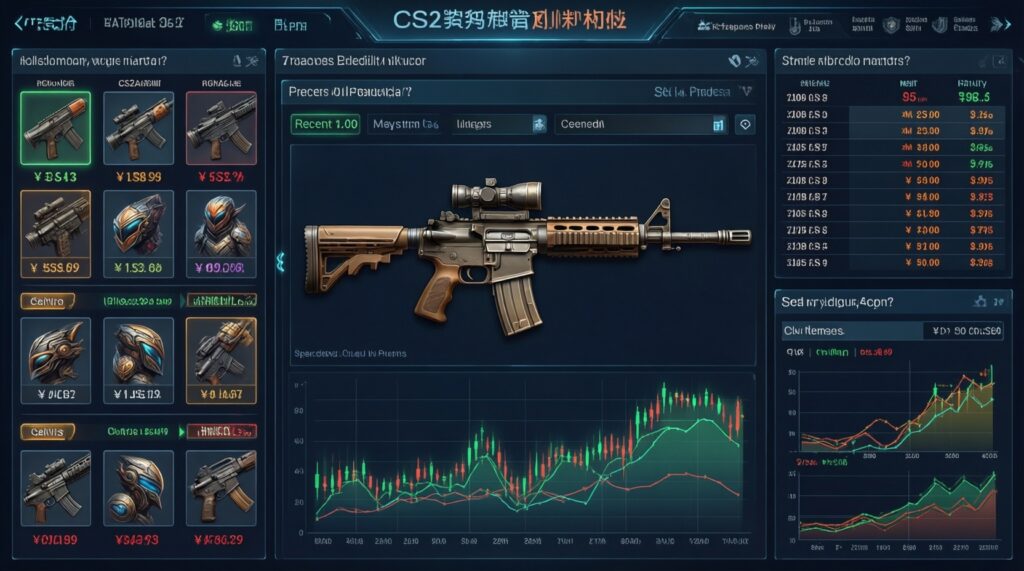
Most cs2 skins prices are discovered through repeated listings, completed sales, and the spread between quick-sell and patient-sell. Liquidity matters: the easier it is to resell, the more comfortable buyers are paying a premium.
Typical usage scenarios that move the market
- Event-driven spikes: A pro uses a skin on stream/tournament week; buyers rush to mirror the look.
- Inventory rotation: Players cash out to fund a knife/glove upgrade; mid-tier icons get dumped then absorbed.
- Sticker season behavior: Crafting trends shift demand toward clean bases (for new crafts) or already-crafted showpieces.
- Collection narrative cycles: A discontinued-feeling collection gets renewed attention; older finishes re-rate upward.
- Risk-off cashouts: Broader uncertainty makes buyers prefer liquid icons over niche, hard-to-price patterns.
Mini-scenario: fast flip vs long hold
- Fast flip: Choose a liquid icon with many recent comps; target small margins and quick resale.
- Long hold: Choose a "quality stack" item (great float + tasteful craft) where premium is supported by scarcity, not only hype.
Checklist: If you can't explain who the next buyer is and why they'll pay more, you're not analyzing demand-you're hoping.
Signature Case Studies: How Specific Skins Rose to Fame
Case study 1: AWP | Dragon Lore (high-status trophy skin)
- Why it became iconic: Instantly recognizable art + long-standing prestige signaling.
- Value drivers you can verify: strong cultural memory, clear "trophy" positioning, and a buyer pool that includes collectors-not just players.
- Limitations: High entry cost concentrates liquidity; premiums can be sensitive to provenance and condition disputes.
- Timeline: Early era recognition → featured repeatedly in high-profile inventories → becomes a default benchmark for "trophy AWP" → premium shifts toward best floats and clean histories.
Case study 2: AK-47 | Fire Serpent (mythic look with long shelf life)
- Why it became iconic: Unique theme and colorway that reads clearly in motion; strong "I know this skin" factor.
- Value drivers you can verify: stable demand on a top-used rifle; price ladder by wear (cleaner looks command more attention).
- Limitations: Condition sensitivity-small wear changes can affect visual appeal more than new traders expect.
- Timeline: Adoption by long-time players → becomes a recognizable AK identity skin → buyers pay increasing premiums for cleaner examples and tasteful sticker sets.
Case study 3: M4A4 | Howl (scarcity narrative + "story premium")
- Why it became iconic: A scarcity story that the community repeats; the narrative itself becomes part of the asset.
- Value drivers you can verify: strong provenance sensitivity, consistent collector interest, and a clear premium for top-condition examples.
- Limitations: Rumor-driven pricing can cause overpaying if you ignore comps and liquidity.
- Timeline: Community narrative solidifies → collectors treat it as a legacy piece → premiums shift toward verified history, clean floats, and high-confidence trades.
Mini-scenarios: which case study matches your goal
- Streamer-style visibility: Choose skins with instant readability in clips (Dragon Lore-type effect).
- Main-rifle daily driver: Choose iconic AK/M4 finishes with stable demand and frequent comps (Fire Serpent-type profile).
- Collector thesis: Choose "story premium" items only if you can authenticate provenance and accept lower flexibility (Howl-type behavior).
- Pros: Iconic skins usually have deeper buyer pools, clearer comps, and more predictable upgrade ladders (float/stickers).
- Constraints: You can still overpay if you ignore recent sale history, misread sticker value, or buy into thin liquidity.
Checklist: A real icon has both a story and a repeatable pricing method (comps + condition ladder), not just fame.
Provenance, Authentication and Trading Channels
What provenance means for cs2 skins
Provenance is the "ownership story" that reduces buyer doubt: consistent sale history, reputable venues, and clear descriptions of float, stickers, and pattern. It matters most when the premium is large relative to the base skin.
Common mistakes and myths to avoid
- Myth: "Any old skin automatically goes up." Reality: Without demand and liquidity, age alone doesn't protect value.
- Mistake: Pricing only by current listings. Fix: Cross-check against recent completed sales and comparable wear/float.
- Mistake: Treating all stickered skins as "overpay guaranteed." Fix: Value depends on sticker rarity, placement, craft aesthetics, and buyer taste.
- Mistake: Ignoring float/pattern documentation. Fix: Save inspect links/screenshots and note exact float for future resale.
- Mistake: Using unfamiliar channels for big trades. Fix: Prefer well-known marketplaces and escrow-like processes; reduce counterparty risk.
Mini-scenario: buying on a tight schedule
If you must buy cs2 skins quickly (limited promo window or event hype), prioritize authenticity signals you can verify immediately: exact float, clear sticker set, and comparable sales-not "seller says it's rare."
Checklist: Don't pay a premium you can't document (float, stickers, pattern, and sale comps) in a resale-ready note.
Risk Assessment, Liquidity and Exit Playbook
Risk types that matter to intermediates
- Pricing risk: You anchor on a high listing instead of real comps.
- Liquidity risk: The item is "valuable" but slow to sell at your target premium.
- Quality risk: Float/pattern/stickers are worse than what the market pays premiums for.
- Channel risk: Disputes, chargebacks, or counterparty issues on less reputable routes.
A practical exit playbook (mini HowTo)
- Define your exit buyer: player (wants clean look), collector (wants story + condition), trader (wants spread).
- Set a comp range: identify recent sales for the same wear/float bracket and similar sticker configuration.
- Pre-write your listing: include float, stickers, pattern notes, and why it's priced where it is.
- Choose liquidity level: quick-sell near the lower comp bound, or patient-sell near the upper bound.
- Review weekly: if comps soften, decide to cut price or hold based on your time horizon.
Mini-case: deciding whether to hold or sell after a hype spike
if (recent_sales_count is low) and (your_price_premium is high):
    prioritize liquidity -> list closer to comps
else if (you have top-float or standout craft) and (buyer_pool is collectors):
    test patient price -> small step above comps with strong documentation
else:
    hold only if you can explain next catalyst (event, craft trend, supply change)
Actionable do/don't for intermediates
- Do: Treat the cs2 skin market like a spread business-your edge is buying below your realistic exit comp.
- Do: Keep a one-note "asset card" per skin (float, stickers, pattern, comps, purchase context).
- Don't: Overpay for "best cs2 skins" rankings without verifying liquidity and recent sales.
- Don't: Stack multiple uncertainties at once (unknown channel + unclear comps + hype timing).
- Can I name the exit buyer and the channel I'll use to sell?
- Do I have comps for the same wear/float (and similar stickers), not just listings?
- Is my premium tied to a verifiable attribute (float/pattern/provenance), not a rumor?
- Does this item have enough liquidity that I can exit within my time horizon?
- Did I write down the exact details I'll need to defend the price later?
Practical Questions About Skin Valuation
What matters more: rarity tier or iconic status?
Rarity controls supply; iconic status controls persistent demand. The strongest cs2 skins have both, but if you must choose, iconic status usually improves liquidity and resale speed.
How do I check whether I'm overpaying on cs2 skins prices?
Compare against recent completed sales for the same wear/float bracket and similar sticker configuration. Avoid anchoring on the highest active listing unless it has clear proof of achieving that premium.
Is it safer to buy cs2 skins with no stickers?
Often yes for simplicity, because you price mostly by float and wear. Stickered skins can outperform, but only if the craft is desirable and you can find comparable sales.
What's the fastest way to improve liquidity when selling?
Sell a well-known icon and price near the lower end of the recent comp range. Clear documentation (float, stickers, pattern notes) reduces buyer hesitation.
Do "best cs2 skins" lists predict future value?
They mostly reflect recognition, not necessarily undervaluation. Use them to shortlist liquid icons, then validate with mechanics: container supply, float ladder, and sale history.
How should I think about float when I'm not chasing #1 rankings?
Use float as a bracket: stay within commonly traded ranges unless you intentionally pay for top-end scarcity. The closer you get to best-in-grade, the more your price depends on finding collector buyers.
What's one sign a skin is hard to sell later?
Thin comps: very few comparable recent sales in your exact configuration. In that case, your "value" may be real, but your exit will be slow or discounted.