
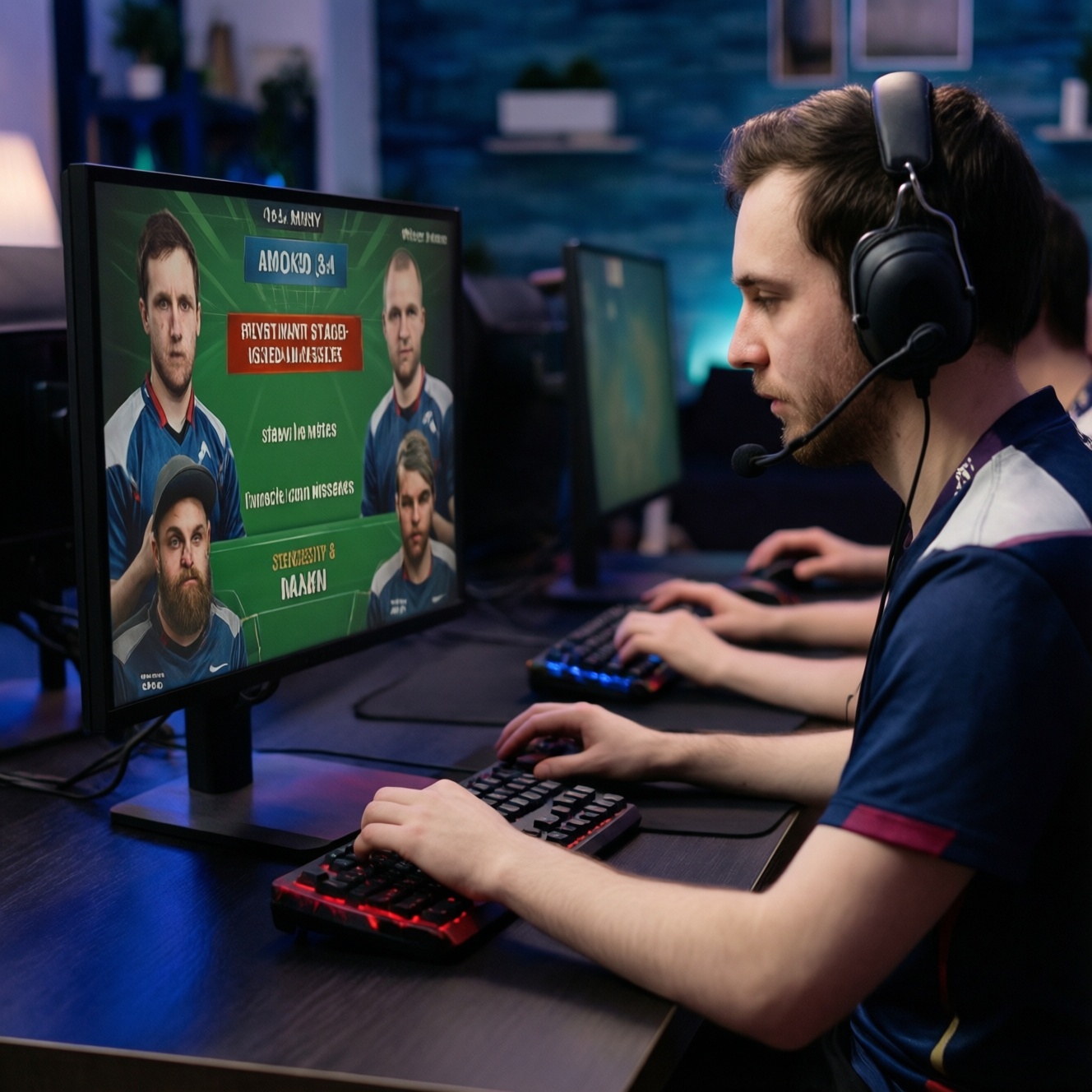
Esports match-fixing is the intentional manipulation of in-game actions or outcomes to profit from betting markets, secure team advantages, or settle disputes-often hidden behind plausible mistakes. Detection relies on combining gameplay review with betting-market signals and communication evidence. Sportsbooks ("books") respond by limiting markets, flagging accounts, and coordinating with esports integrity services.
Core Concepts of Esports Match-Fixing
- Manipulation can be partial: not just losing a match, but steering a map, round, or stat line to match a bet.
- Betting shapes incentives: micro-markets (first blood, pistol round, map 2 winner) create many attack points.
- Signals are multi-source: suspicious play alone rarely proves intent; betting, comms, and timeline consistency matter.
- Collusion is an ecosystem problem: players, intermediaries, and outside bettors often share risk and rewards.
- Detection is triage: most cases start as anomaly review, then escalate to evidence preservation and investigation.
- "Books" act fast: risk teams can void/limit and share alerts before any public ruling exists.
How Match-Fixing Manifests Across Esports
Esports match fixing typically appears as a deliberate deviation from optimal play with a clear betting or competitive payoff. Unlike normal underperformance, match-fixing usually aligns with a pre-decided narrative: a specific round is thrown, a map is lost "accidentally," or a player hits an unlikely pattern of errors at high-leverage moments.
It can occur in tier-2/3 scenes (where wages are unstable) and also in top leagues when incentives shift (e.g., guaranteed qualification, low stakes group matches, roster instability). Games with discrete rounds and many micro-decisions-CS2/CS:GO, Valorant, Dota 2, League of Legends-are frequent targets because manipulation can be granular and harder to prove.
Boundaries matter. Not every strange draft, off-meta pick, or tilt episode is fixing. Also, "soft integrity" issues (conflict of interest, leaked strategies, smurfing) may overlap but aren't necessarily match-fixing unless tied to intentional manipulation for gain.
- Do: define the suspected unit of manipulation (match, map, round, objective, player prop) before accusing anyone.
- Do: record the exact timestamps and contexts (economy state, cooldowns, vision, score pressure) for every anomaly.
- Avoid: treating one highlight clip as proof; intent requires a consistent pattern plus supporting context.
Actors, Motivations, and Ecosystem Enablers
Most cases follow a simple mechanic: someone with influence over gameplay (directly or indirectly) coordinates with someone who can place or route bets. The "influence" can be obvious (a player throwing) or subtle (a coach pressuring a substitute, or a manager controlling participation).
Common actors and motivations include:
- Players: debt, low/late salary, or opportunistic profit via micro-market throws.
- Coaches/managers: roster leverage, "discipline," or side deals with bettors.
- Intermediaries ("runners"): recruiters who approach players and arrange payment, often across regions.
- External bettors/syndicates: capital and betting access; they may use many small accounts to avoid limits.
- Insiders with info access: scrim partners, analysts, or staff who leak injuries/lineups to shape odds (sometimes paired with fixing).
- Enablers: weak contracts, no reporting channels, and lack of esports anti match fixing training.
For limited-resource teams, the practical takeaway is governance: reduce "single points of failure" (one person controlling lineup + payments + comms) and make reporting safe.
- Set: a minimum integrity policy (conflict disclosure, betting bans, and reporting steps) in plain language.
- Separate: duties (payments, roster decisions, and competitive operations) where possible-even in small teams.
- Create: a low-friction reporting route (one trusted contact + documented escalation).
Tactics Used to Manipulate Outcomes and Betting
Fixing tactics are designed to look like ordinary variance. The goal is to "buy uncertainty" while still reliably landing a bet condition. That's why many cases target rounds, timing, and positioning decisions rather than a blatant sprint-into-enemy-base feed.
Typical scenarios include:
- Micro-throws in round-based shooters: forced buys into poor odds, unnecessary solo peaks, or "missed" utility timings to lose a pistol/eco round.
- Map targeting in best-of series: intentionally dropping map 1 to win series 2-1, aligning with specific map winner markets.
- Draft/strategy sabotage in MOBAs: systematically ignoring win conditions (e.g., not contesting key objectives) while keeping KDA plausible.
- Objective timing manipulation: late smokes, delayed rotations, or suspiciously conservative calls at match point.
- Player-prop steering: manipulating first death/first blood participation, or a support "randomly" face-checking vision at predictable times.
- Signal-based coordination: using innocuous phrases in comms or pauses as triggers for when to throw a specific round.
Limited-resource alternative: you don't need access to private bets to notice "bet-shaped play." If the same "type" of mistake appears repeatedly only when a specific market condition becomes live (e.g., pistol round, first objective), it deserves a structured review.
- Identify: which betting market(s) the play pattern would benefit (map, round, first objective, props).
- Compare: the player/team decision to their own prior VOD tendencies under similar game states.
- Log: whether the errors cluster around high-bettable events rather than random moments.
Signals and Evidence: Spotting Abnormalities in Play
Detection works best when you treat anomalies as hypotheses, not verdicts. In esports, mechanical mistakes happen; what matters is whether the sequence is repeated, strategically inconsistent, and aligned with a profitable external outcome.
Gameplay signals worth escalating (what you can see in VODs/demos):
- Repeated high-risk decisions that contradict team style, especially at match point or swing rounds.
- Utility/ability usage that is consistently late, absent, or mis-aimed in the same situation.
- Unusual pathing/positioning that exposes objectives without a trade plan.
- Communication breakdown patterns (e.g., sudden silence, inconsistent shot-calling) that coincide with key markets.
- Substitution/role swaps that reduce winning chances without a plausible performance reason.
Supporting evidence signals (often outside the server):
- Betting-market anomalies: sharp line movement, liquidity spikes, or concentrated action on niche markets (when observable).
- Unexplained roster news timing: late announcements that conveniently affect odds.
- Player financial distress indicators reported internally (salary delays, debt claims), handled carefully and privately.
- Messaging patterns: contact from unknown intermediaries, sudden new "friends," or offers tied to "just one round."
- Device/account irregularities: suspicious logins, shared PCs, or third-party access to player accounts.
Limits: without betting data or message logs, you may only reach "reasonable suspicion," not proof. That's still useful-because it guides preservation steps and risk controls.
- Preserve: the raw demo/VOD files and match logs immediately (with hashes if you can).
- Write: a timeline of anomalies with timestamps and game-state context, not interpretations.
- Escalate: to a designated integrity contact before discussing publicly.
Analytical and Technological Detection Methods
Teams, tournament organizers, and books increasingly rely on a mix of analysts and automation. You'll hear about match fixing detection tools, vendor dashboards, and alerting systems. The value is real, but most failures come from process mistakes-treating alerts as verdicts or ignoring basic data hygiene.
| Approach | What it catches well | Typical pitfalls | Low-resource alternative |
|---|---|---|---|
| Manual VOD/demo review | Contextual "why this was weird" analysis | Bias, selective clipping, lack of baselines | Use a structured rubric: same situation comparisons + timestamped notes |
| Market surveillance via books | Suspicious betting concentration and line moves | Not all anomalies imply fixing; local limits hide signals | Ask partners/TOs for integrity alerts; track public odds changes when available |
| Esports betting monitoring software | Automated anomaly scoring across markets/events | False positives; poor coverage in minor regions/leagues | Start with a spreadsheet of odds snapshots + match timelines |
| Esports integrity services (vendors/units) | Case management, evidence standards, cross-operator coordination | "Outsourcing" responsibility; slow internal escalation | Define an internal triage protocol and contact points even without a vendor |
Common myths and errors to avoid:
- Myth: one suspicious clip proves fixing. Reality: you need pattern + motive + opportunity + corroboration.
- Error: no baseline. Without prior matches and role expectations, "abnormal" is guesswork.
- Myth: only tier-3 matches are fixed. Opportunity exists wherever incentives and access exist.
- Error: mixing investigation with punishment. Keep evidence collection separate from disciplinary decisions.
- Myth: monitoring software replaces analysts. Alerts need interpretation and game knowledge.
- Build: a baseline library (recent demos, common setups, economy patterns, draft tendencies).
- Standardize: an incident template (who/what/when/market hypothesis/evidence list).
- Decide: what triggers escalation (single severe event vs repeated medium anomalies).
Responses: Legal, Platform, and Organizational Countermeasures
Responses vary by stakeholder. Tournament organizers can suspend, investigate, and share findings with publishers. Teams can discipline, terminate contracts, and report to leagues. Books (sportsbooks) can limit markets, restrict accounts, freeze withdrawals pending checks, and share risk signals with integrity networks-often before any public statement.
A practical mini-case: A tier-2 Valorant match shows repeated solo peeks on pistol rounds by the same player across two maps, despite team calls favoring grouped executes. Odds for "pistol round winner" swing sharply close to start time, and multiple small accounts hit the same niche market. A book flags it, reduces exposure, alerts the organizer, and requests demo files. The organizer preserves server logs and initiates interviews; the team isolates devices and checks for intermediary contact.
Minimal triage workflow (usable even with limited resources):
if (gameplay_anomalies are timestamped AND repeatable) then
  preserve(demos, logs, VODs)
  open_case_record()
  restrict_internal_access(comms, devices) without deleting data
  notify(TO_or_league_integrity_contact)
  request(betting_alerts) from books/partners if available
else
  continue_baseline_monitoring()
end
Operationally, prevention is cheaper than investigation. The fastest win for small teams is consistent esports anti match fixing training plus clear "no betting" rules and a reporting path that won't ruin a player's career for raising a concern.
- Implement: a written betting prohibition (including indirect betting via friends) with signed acknowledgement.
- Run: short integrity briefings before each event (how approaches happen, what to report, who to tell).
- Coordinate: with the organizer and, where possible, books for integrity alerts and evidence handling.
- Document: every step; integrity cases often fail due to poor chain-of-custody, not lack of suspicion.
- Self-check: Can you explain the suspected market and the exact manipulated unit (round/map/prop) in one sentence?
- Self-check: Do you have preserved raw files (not just clips) and a timestamped incident log?
- Self-check: Have you separated "investigation notes" from "disciplinary decisions" to reduce bias?
- Self-check: Do players know the reporting route and the rule on indirect betting?
Brief Clarifications and Common Edge Scenarios
Is intentional "limit testing" or trolling in scrims match-fixing?
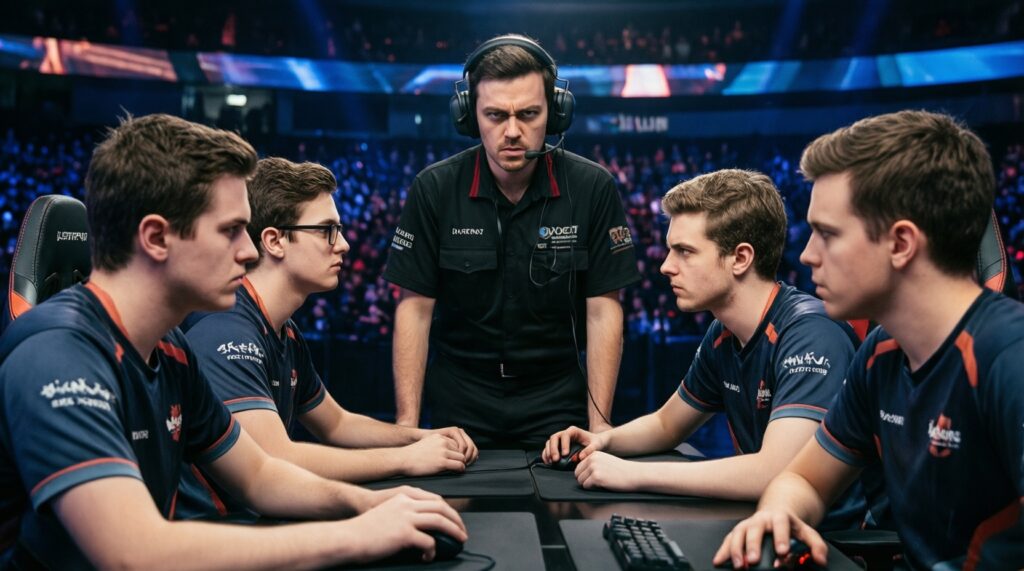
No, unless it is linked to betting or an agreed manipulation of a competition outcome. Poor scrim behavior can still be a disciplinary issue.
Can a single player fix a match in a 5v5 game?
Yes, by targeting micro-events (pistol rounds, first death, key objective timing) or repeatedly sabotaging high-leverage situations. Proof still requires more than "they played badly."
Are strange drafts or off-meta picks evidence of fixing?
Not by themselves. Drafts become suspicious when paired with repeated strategic contradictions and supporting evidence such as unusual betting interest or intermediary contact.
What if betting is illegal or uncommon in my local scene (Thailand context)?
Fixing can still be driven by offshore markets and third-party bettors. Your best defense is prevention, reporting channels, and preserving evidence early.
Do books always void bets when match-fixing is suspected?

Not always. Books may limit markets, suspend accounts, or hold payouts while they assess risk, depending on their rules and available evidence.
What's the difference between stream sniping/cheating and match-fixing?

Cheating aims to win unfairly; match-fixing aims to manipulate an outcome for external gain, often by losing or shaping specific in-game events. Both are integrity violations but investigated differently.
Is using esports integrity services mandatory for tournament organizers?
No, but it helps with standardized processes and cross-operator coordination. Limited-resource organizers can still run a basic triage protocol and escalation network.