


Cross-platform skin-market arbitrage means buying a CS2 skin where it is temporarily cheaper and selling it on another marketplace where the net (after fees and transfer frictions) is higher. The workable edge comes from timing, latency, and fee-aware execution, not guessing trends. Use repeatable cross platform skin price comparison, strict filters, and reconciliation to avoid losses.
Essential prep checklist for skin-market arbitrage
- Pick 2-3 marketplaces you can fully use in Thailand (KYC, payouts, supported payment rails, and withdrawal rules).
- Define your "same item" match rules: exact skin, wear, float range, stickers, and special patterns.
- Build a net-price calculator (fees + deposit/withdrawal costs + expected sell-through time buffer).
- Set timing routines: monitoring cadence, alert thresholds, and a "pause" rule during high volatility.
- Prepare an execution log: order IDs, timestamps (ICT), screenshots, and settlement status.
Mapping cross-platform price gaps: data sources and validation
This workflow fits intermediates who already understand marketplace fees, order books, and item attributes, and who want repeatable skin arbitrage opportunities rather than one-off flips. It is most suitable when you can compare the same item across venues and can move funds quickly enough to capture short-lived gaps.
Do not do this if any of the following apply: you cannot complete KYC, you rely on slow/irreversible payment methods, you do not understand float/sticker/pattern impacts, you cannot tolerate temporary holds, or you are tempted to bypass platform rules (that is how accounts get frozen and funds locked).
Build a clean universe of comparable items
- Start with high-liquidity items you can verify easily (popular skins with frequent sales).
- Exclude ambiguous items until your matching is reliable (rare patterns, heavy sticker premiums, wide float sensitivity).
- Standardize naming: keep one canonical item key (skin + wear + special attributes).
Validate that the gap is real (not a mismatched item)
- Confirm the exact wear tier and any "special" tags (StatTrak, Souvenir).
- Check float/pattern constraints if the destination market prices them explicitly.
- Verify the listing is actionable (not already reserved, not restricted, not from a blocked seller region).
Working table for platform comparison (template)
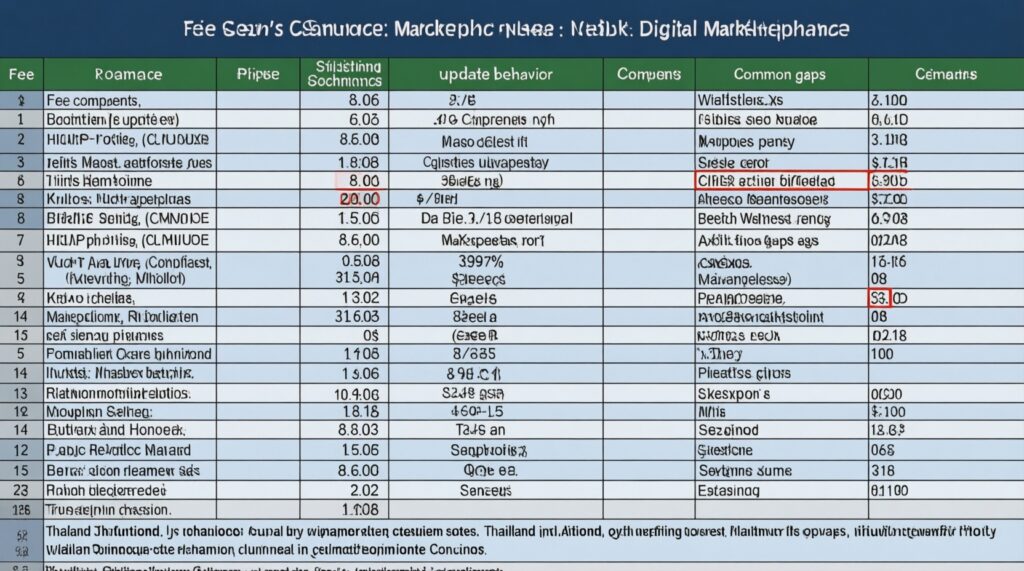
| Venue type | Examples (non-exhaustive) | Typical fee components to model | Price update behavior to expect | Where gaps often appear | Notes for Thailand (TH) |
|---|---|---|---|---|---|
| Steam Community Market | Steam | Platform fee baked into buyer/seller prices; no cash-out to bank | Fast-moving with frequent repricing | When comparing to cash marketplaces (Steam balance vs cash) | Useful for signals; not a direct cash arbitrage exit |
| Cash marketplace (P2P / marketplace) | Third-party markets | Seller fee, withdrawal fee, payout FX spread, optional instant-sell discount | Can lag during spikes; some have slower index refresh | Latency gaps, fee mispricing, localized demand | Check payout methods available in TH and processing holds |
| Instant-buy / bot-based shop | Bot stores / "quick sell" desks | Spread embedded in quote; potential additional withdrawal costs | Quote updates can be discrete (stepwise) | When bots update slower than market or run inventory constraints | Read trade/withdrawal rules carefully; log trade IDs |
Use the table as your baseline for cs2 skin prices by marketplace: you are not looking for the "highest price," but the highest net realizable price after all frictions.
Latency and timing: identifying exploitable windows
Arbitrage fails when you see a gap but cannot execute before it closes. Your job is to reduce detection-to-fill time and avoid trading during periods where prices are unstable. If you're trying to buy cs2 skins cheapest, timing discipline matters more than finding a single "low listing."
What you need (access, tooling, and routines)
- Accounts and limits: verified accounts on each venue you plan to use; know deposit/withdrawal limits and holds.
- Fee sheet: a single page that lists each venue's seller fee, buyer fee (if any), withdrawal fees, and any FX conversion spread you face.
- Monitoring: at minimum, a spreadsheet plus alerts; optionally, API polling where allowed by the platform's terms.
- Timekeeping in ICT: record all actions with timestamps (Bangkok time) to learn when gaps recur and to define your best time to buy cs2 skins for your own execution constraints.
- Risk gates: a pre-trade checklist and a hard rule to stop after consecutive reconciliation failures.
Simple alert logic (safe, terms-aware)
- Track a "net sell" estimate for each venue: expected sale price minus seller fee minus payout costs.
- Trigger an alert when net sell on Venue B minus all-in buy cost on Venue A exceeds your minimum buffer.
- Pause alerts during known volatile periods for you (major patches, major tournaments, sudden platform outages), because spreads can be illusory when fills fail.
Inventory and capital allocation: sizing profitable trades
Before executing, do a quick prep pass so every trade is measurable and reversible.
Mini prep checklist (before each session)
- Confirm balances on each venue and confirm withdrawal status is "normal" (no new holds or security flags).
- Open your fee calculator and set the correct payout method (bank/ewallet/crypto where applicable) and currency assumptions.
- Pick 5-20 candidate items you can match perfectly (no sticker/pattern surprises).
- Decide your per-trade max loss (from slippage + unexpected fees) and your daily stop rule.
-
Define the exact arbitrage route
Write it as A → transfer (if any) → B. Include the asset form (Steam balance vs cash) and whether you must hold inventory in between.
- Example route label: "Cash Market A buy → hold skin → Cash Market B sell".
- Reject routes that require prohibited transfers or rule-bending.
-
Compute conservative net profit (fees-first)
Use worst-case assumptions: higher fees tier, slower sale price (slightly below best ask), and an extra buffer for FX/payout costs.
- Net Profit = Expected Sell Proceeds (after seller fee) − All-in Buy Cost − Withdrawal/Deposit Costs.
- Only proceed if the buffer still clears after a "slippage haircut" you can tolerate.
-
Size the position based on liquidity, not conviction
Start small on each new item and only scale after clean settlements. Prefer multiple small trades across different items to avoid single-item traps.
- Avoid tying up all capital in items with uncertain sell-through.
- Cap exposure to one marketplace if it has a history (for you) of slow withdrawals or disputes.
-
Validate the listing and seller constraints
Check for hidden restrictions: trade locks, minimum account age, region limitations, and "reserved/queued" states. If anything is unclear, skip.
- Confirm the item attributes match your target listing on the sell venue.
- Prefer listings with clear provenance and platform-provided protections.
-
Plan the exit before entering
Choose one primary sell listing and one fallback (e.g., lower price on the same venue or a different venue). This prevents holding inventory indefinitely if the spread collapses.
- Set a time-based exit rule (for example: "if not sold by my session end, reprice to a safer level").
- Document the minimum acceptable sell price that still breaks even after fees.
Execution mechanics: order types, bots and reconciliation
Execution is where most "paper profit" disappears. Keep your mechanics simple, reduce manual mistakes, and reconcile every step. If you automate, do it only through allowed APIs and within each platform's terms.
Result verification checklist (post-trade)

- Record the buy: item ID, float/pattern (if relevant), price paid, and timestamp (ICT).
- Confirm custody: the item is in the expected inventory and not under a new lock/hold.
- Record the sell listing: venue, listing price, expected net after fee, and listing ID.
- Validate the order type used (instant sell vs limit listing) matches your plan.
- When sold, confirm the final net proceeds match your calculator within your buffer.
- Initiate withdrawal and capture the payout request ID and method.
- Confirm payout arrival and note the net received (after any conversion spreads shown).
- Update your journal with the realized profit/loss and the main cause of variance (fees, slippage, delay, mismatch).
Brief automation prompt (for your own tooling)
Create a script or spreadsheet function that, for each item, stores: venue A best buy, venue B expected sell, fee parameters, and a computed "trade/no-trade" flag. Keep it read-only on prices if API terms are unclear; manual entry still works if you are consistent.
Fees, slippage and market microstructure considerations
- Ignoring payout friction: "Profitable" trades often fail after withdrawal fees and FX spreads are applied.
- Mixing currencies incorrectly: always convert to one base currency before comparing and log the rate you assumed.
- Comparing the wrong price points: last sale is not the same as a fillable buy; use actionable bids/asks or realistic limit prices.
- Underestimating time-to-sell: slow fills turn arbitrage into directional exposure.
- Overreliance on instant-sell quotes: bots embed spreads that can erase the edge unless the gap is unusually wide.
- Not accounting for item uniqueness: stickers, patterns, and float can dominate price; mismatches are a common hidden loss.
- Trading during volatility spikes: fills fail, listings get repriced, and spreads become misleading.
- Fee tier surprises: some venues change fees by volume or require certain verification levels-confirm your current tier.
Risk controls and dispute resolution workflows
If you cannot control settlement risk, use a safer alternative rather than forcing arbitrage.
-
Single-venue spread capture
Use one marketplace and capture bid/ask spreads with limit orders when cross-venue transfers are slow or uncertain.
-
Inventory rebalancing instead of pure arbitrage
Move only when you already need inventory on another venue (operational transfer), and treat any price gap as a bonus.
-
Paper-trading and journaling first
Track opportunities and compute net outcomes without executing until your calculator and matching rules are consistently correct.
-
Dispute-ready execution
Trade only on venues with clear dispute processes; keep screenshots, IDs, and timestamps so you can escalate with complete evidence.
Practical clarifications and common practitioner issues
How do I know a gap is a real arbitrage and not just different item attributes?
Treat the item as identical only if wear tier, float constraints, special tags, and sticker/pattern considerations match your rules. If you cannot verify a critical attribute reliably, skip the trade.
Which matters more: finding cheaper listings or executing faster?
Execution speed usually dominates because the gap can close before you fill. Optimize your workflow so detection-to-order is short and repeatable.
What is the safest way to start without blowing up my bankroll?
Start with small sizes on high-liquidity items, and require clean reconciliation for several trades before scaling. Use a daily stop rule and avoid volatile windows.
Can I use Steam Community Market as the "buy" leg if I want cash profit?
Steam balance is not a direct cash-out path, so treat Steam primarily as a signal or as part of a broader inventory strategy. Cash arbitrage requires an exit on a venue that can pay out to you.
How do I decide the best time to buy cs2 skins for arbitrage?
Define it operationally: the hours when your target venues have stable fills, normal withdrawals, and predictable spreads for your chosen items. Log results in ICT and let your own data define the window.
What should I do when my sale is not filling and the spread disappears?
Follow your pre-set exit plan: reprice to your fallback level or move to your secondary venue. Do not average down without a clear liquidity-based reason.
What documentation should I keep for disputes?
Keep order IDs, trade IDs, timestamps, and screenshots of the item attributes and transaction states. Store them per trade so you can provide a complete timeline quickly.