
NFT gaming and traditional skin economies both offer real utility, but in different places: NFT utility is strongest when you need portable ownership across apps and permissionless trading, while centralized skin markets win on day-to-day usability inside one dominant game, smoother onboarding, and clearer governance. Choose based on where you want value to accrue: player custody and open rails, or platform-integrated convenience.
Topline findings for decision-makers
- "Real utility" is mostly about in-game relevance, not resale: if items affect progression or status, both models can work.
- A centralized CS2 skins marketplace-style model usually delivers higher practical utility for mainstream players due to frictionless UX and strong game integration.
- An NFT gaming marketplace can outperform when you need self-custody, composability, and interoperability-but only if multiple experiences actually support the same assets.
- Liquidity can be good in either model; the deciding factor is concentration of demand (one hit game vs many small ecosystems).
- Fraud patterns differ: centralized markets concentrate account/payment fraud; NFT markets concentrate wallet compromise and counterfeit/duplicate metadata issues.
- Regulatory and platform risk is often higher for NFTs in Thailand if assets resemble speculative instruments or enable unrestricted off-platform cash-out.
Economic Models: NFT Ownership Versus Centralized Skin Markets
Use these criteria to decide which model has more real utility for your goals (player utility, developer revenue, or ecosystem growth):
- Primary utility driver: cosmetic status, gameplay advantage, access rights, or social identity.
- Where value is realized: inside one game client vs across multiple apps/partners.
- Custody model: player self-custody (wallet) vs platform custody (account-bound inventory).
- Liquidity design: open markets and aggregators vs a single first-party venue with controlled supply.
- Supply control: immutable scarcity vs adjustable issuance/balancing by the developer.
- Onboarding friction: wallet creation, gas/bridges, recovery vs standard login, local payments, support flows.
- Enforcement and dispute resolution: on-chain finality vs reversible transactions and customer support.
- Composable rights: royalties, licensing, and user-generated commerce vs ToS-bound resale permissions.
- Regulatory exposure: off-platform cash-out, token incentives, and marketing that invites investment-like expectations.
Player Incentives, Liquidity and Long-term Value Capture
The practical question is not "NFT vs non-NFT," but which market design best matches your audience and risk tolerance. The table below compares common implementations you'll meet when evaluating how to buy NFT game items or buy CS2 skins.
| Option | Who it fits | Pros | Cons | When to choose |
|---|---|---|---|---|
| Centralized, first-party skin market (account-bound inventory) | Mainstream players; single-title live service teams; esports-driven cosmetics | Lowest friction; tight anti-cheat/anti-fraud controls; easy pricing UX; strong in-client utility | Players don't truly own; platform can freeze/alter items; limited portability; ToS can change | If your priority is mass adoption and "works every day" utility inside one game |
| Centralized marketplace with limited external trading (approved partners) | Publishers wanting some liquidity without full openness | Controlled ecosystem; clearer support/dispute path; easier compliance posture | Less price discovery; partner concentration risk; slower market expansion | If you want liquidity while preserving strong governance and KYC/AML options |
| NFT marketplace for cosmetics (self-custody, open resale) | Crypto-native players; communities that value custody and open trading rails | True ownership; permissionless resale; easier third-party integrations; potential cross-app identity | Wallet/security burden; scams/counterfeits; fragmented liquidity; utility collapses if the game deprioritizes items | If you need open trading and want ownership to exist beyond your servers |
| NFTs with multi-game utility (partnered interoperability) | Studios with strong partnerships and shared standards | Best-case "real utility" story: items used in multiple experiences; broader demand base | Hard to execute; balancing conflicts; brand/IP approval complexity; coordination overhead | If you can contractually guarantee support across multiple apps and seasons |
| Hybrid: centralized gameplay items + NFT "proof of ownership" for prestige/perks | Teams wanting web3 upside while keeping gameplay stable | Protects game balance; keeps onboarding simpler; NFTs become optional layer | Two systems to maintain; community confusion; risk of perceived pay-to-win if perks matter too much | If you want collectible ownership without tying core progression to tradable assets |
| Pure speculative NFT drops (minimal in-game utility) | Short-term fundraising attempts (high risk) | Fast capital inflow (assumption: strong hype); simple to launch | Lowest real utility; reputational risk; regulatory scrutiny; rapid liquidity decay after hype | Avoid for "utility-first" goals; only consider if you can ship meaningful utility on a clear timeline |
Quantitative examples (assumptions, not universal): if an item is useful only in one game and the active buyer base falls, liquidity can drop sharply regardless of NFT or centralized rails. If an item is usable across two or more active experiences, the potential buyer pool increases, which can stabilize turnover; this requires sustained partner support, not just token standards.
Technical Foundations: Blockchains, Smart Contracts and Back-end Controls
Use "if..., then..." rules to map product requirements to implementation reality:
- If you need instant purchases for the average player and local payment rails, then a centralized inventory with an in-client marketplace usually delivers the highest utility per engineering hour.
- If you need players to hold assets outside your platform and trade without your permission, then NFTs with self-custody are the correct base layer-plan for wallet recovery education and phishing resistance.
- If you expect frequent rebalancing (stats, drop rates, crafting outcomes), then keep gameplay-critical attributes off-chain and treat tokens as access/identity keys to reduce breakage and disputes.
- If you want royalties to be reliable, then don't assume marketplace-level enforcement; design the economy so value flows through controlled venues (in-game sinks, crafting fees, official listings) where you can actually collect.
- If your threat model includes chargebacks and stolen cards, then centralized custody with strong risk scoring and reversible support processes is safer than irreversible on-chain settlement.
- If you want interoperability, then align on a shared metadata and utility standard with partners; "same token format" without shared game design produces cosmetic-only portability, not meaningful utility.
Legal, Compliance and Platform Governance Risks
- Define the asset promise in plain language: what does the player get today inside the game, and what might disappear if servers, ToS, or partners change?
- Map cash-out paths: can users convert items to money off-platform easily (P2P, exchanges, gift cards)? Higher cash-out flexibility usually increases compliance burden.
- Classify market messaging: avoid investment framing (for example, "best NFT games to invest in" language) if you cannot support the expectations it creates.
- Decide custody and KYC boundaries: who holds funds/items at each step, and where identity checks are required or optional?
- Write governance for reversals: what happens with hacked accounts/wallets, item duplication, chargebacks, or mistaken transfers?
- Plan platform dependency: if distribution relies on mobile/console policies, confirm whether NFT features and external payments are permitted for your release targets.
- Implement monitoring: define triggers for wash-trading signals, price manipulation, and automated farming; assign response owners before launch.
Monetization Dynamics: Fees, Royalties and Market Manipulation
- Overvaluing secondary royalties while underinvesting in primary utility (sinks, progression, cosmetics desirability).
- Assuming an NFT gaming marketplace automatically creates liquidity; without sustained demand, listings just accumulate.
- Designing items whose value depends on "number go up" instead of repeatable in-game use (crafting, flex value, access).
- Letting off-platform markets set the "real" price while your in-game economy still rewards based on outdated internal prices.
- Ignoring wash trading and self-dealing risk on open rails; it distorts perceived demand and breaks trust.
- Making gameplay power tradable without robust anti-pay-to-win constraints; utility becomes controversial and short-lived.
- Not budgeting for support: chargebacks, hijacked accounts, and disputes are operational costs that can erase fee revenue.
- Fragmenting liquidity across too many item collections, chains, or marketplaces; fewer pools usually means better price discovery.
- Copying a CS2 skins marketplace economy without equivalent player volume and cultural acceptance of cosmetic trading.
Comparative Case Studies and Measurable Outcomes
- If your goal is maximum everyday utility for the broadest player base: choose a centralized skin economy integrated into the game client, and optimize for smooth ways to buy CS2 skins-style items (clear pricing, instant delivery, strong support).
- If your goal is portable ownership and partner expansion: choose NFTs, but only when you can commit to real cross-app support and a credible NFT gaming marketplace distribution plan.
- If your constraint is regulatory/platform uncertainty: choose a hybrid where NFTs are optional proof/collectibles while core gameplay items remain centrally controlled.
- If your constraint is security/support capacity: avoid fully permissionless trading until you can operate incident response and education at scale.
Best fit tends to be: centralized skin markets for one-title, high-frequency cosmetic utility; NFTs for multi-surface ownership and community commerce when you can sustain utility beyond hype. If your evaluation process starts from "best NFT games to invest in," pause and reframe to "best utility loops we can ship and maintain," then pick the rails that minimize friction for your players.
Common practical concerns for choosing a model
What counts as "real utility" for a digital item?
Repeatable in-game use (status, access, customization, progression) and reliable delivery matter more than resale potential. Utility is real when it remains valuable even if trading volume drops.
Is an NFT automatically more useful because I can sell it?
No. Resale is only useful when there is durable demand, safe access, and continued in-game relevance. Without those, ownership is technically real but practically limited.
Which is safer for a mainstream audience in Thailand: NFTs or centralized skins?
Centralized skins are usually safer operationally because recovery and reversals are possible. NFTs shift security to the user; wallet compromise is often irreversible.
Can I combine both without confusing players?
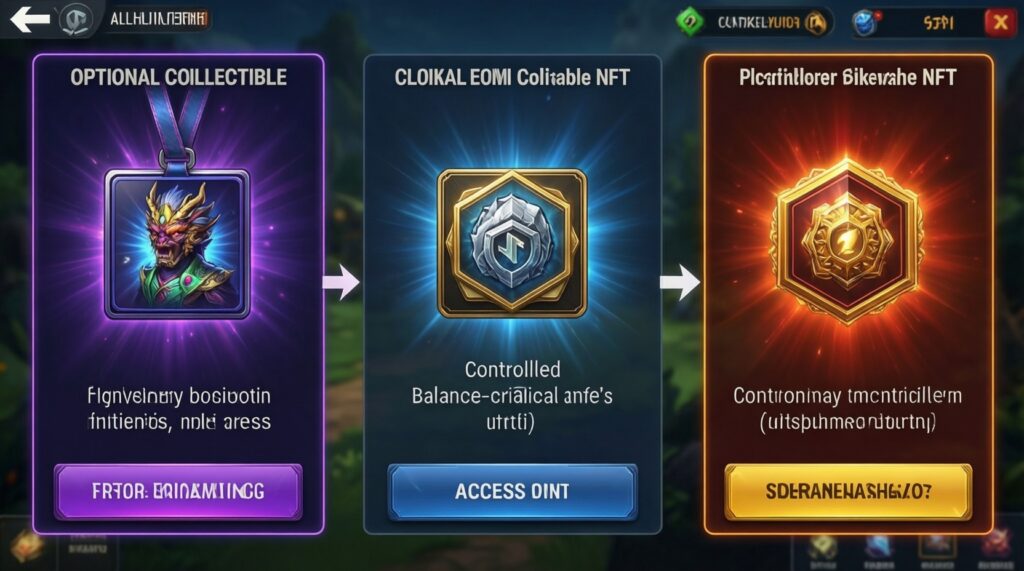
Yes, if you clearly separate what is tradable and what affects gameplay. Keep NFTs optional (collectibles, access badges) and keep balance-critical items under central control.
How do I evaluate whether I should use an NFT gaming marketplace?
Check whether you can sustain item utility for at least one full content cycle and whether external trading adds value beyond your in-game store. If you can't defend against scams and educate users, delay.
What should I look for when comparing a CS2 skins marketplace model to NFTs?
Look at onboarding friction, dispute handling, and whether your game can generate constant cosmetic demand. Also compare how policy changes or bans could affect player inventories.
Should players think in terms of "best NFT games to invest in"?
For utility-focused decisions, no. Evaluate games by shipped features, item sinks, and longevity of demand rather than investment narratives.