


To reduce the chance of getting rug pulled in a crypto game, treat every "game launch" like a token investment: verify on-chain liquidity, token distribution, vesting, and contract controls before you buy or grind. This guide gives a practical วิธีตรวจสอบเกมคริปโตก่อนลงทุน with a compact pass/fail checklist so you can filter เกมคริปโตน่าลงทุน from high-risk traps.
Critical Pre-Investment Checks
- Confirm the exact token contract address and chain, then review holders, transfers, and top wallets on a block explorer.
- Verify liquidity status: who controls LP tokens, whether liquidity is locked, and whether the pool can be drained quickly.
- Check vesting and unlocks for team/investors; avoid near-term large unlock cliffs without transparency.
- Read contract permissions: owner/admin roles, pausing, minting, blacklist/whitelist, fee changes, upgradeability.
- Validate the team's identity and history; reject anonymous teams that control critical keys without safeguards.
- Cross-check community claims with on-chain reality: "partnerships," "audits," and "revenue" must be verifiable.
On-Chain Evidence: Tokenomics and Liquidity Analysis
This section fits intermediate users who can use a block explorer and a DEX analytics page to verify liquidity, distribution, and suspicious flows. Skip (or pause investing) if you cannot confirm the contract address, you don't understand what LP ownership means, or you cannot tolerate rapid downside risk typical of early เกมคริปโตไม่โดน Rug Pull attempts.
- Do this when: you plan to buy the token, provide liquidity, or invest time in grind-to-earn loops where token price matters.
- Do not do this (yet) when: the project only has a teaser, no deployed contracts, no DEX pool, or the "token" is just a placeholder ticker without an address.
One good sign: liquidity is meaningfully sized relative to circulating supply and LP tokens are time-locked or held by a reputable lock contract/multisig.
One bad sign: a single wallet controls most supply and also controls the LP tokens (can remove liquidity at any moment).
Team and Governance: Identity, Track Record, and Vesting
What you'll need (tools, access, and minimal setup):
- A reliable block explorer for the chain (EVM explorer for ERC-20 style tokens; chain-specific explorers for others).
- A DEX analytics view for the pool (to see liquidity, price impact, LP holders, and large swaps).
- The official project links (website, whitepaper, GitHub, X/Twitter, Discord/Telegram) gathered from one canonical source (the website or verified social profile).
- A vesting source: token vesting contract address, vesting schedule page, or on-chain timelock contract reference.
- Basic identity verification capability: cross-linked profiles, company registration claims (if any), past shipped games/apps, and consistent public presence.
- Optional but useful: a read-only wallet (no signing) to inspect contracts and simulate transactions with minimal risk.
One good sign: founders are doxxed, verifiable, and critical treasury/owner keys are controlled by multisig with public signers and clear rules.
One bad sign: "team is private for safety" while they control minting and liquidity and provide no vesting proof.
Smart Contract Audit and Code Transparency
Risks and limits you should accept upfront (risk-aware):
- Audits reduce risk but do not prevent rugs; admins can still misuse legitimate privileges.
- On-chain data shows what happened, not intent; a clean history can still rug later.
- Upgradeable contracts can change behavior after you buy; treat upgradeability as a major risk factor.
- Fake "audit badges" and copied reports are common; you must verify the report source and contract address match.
-
Start from the contract address (not the ticker). Get the token and core game contracts from the project's official site/verified channel, then confirm they match what the DEX pool uses.
- Good sign: the address is consistent across website, explorer, and pool.
- Bad sign: multiple addresses posted in chat, "new contract" announcements without clear migration steps.
-
Verify the contract is actually verified. On the explorer, check whether source code is published/verified and whether it matches the deployed bytecode (the explorer should indicate verification).
- Good sign: verified source, readable functions, constructor parameters visible.
- Bad sign: unverified code for a token that claims "audited and safe."
-
Identify privileged roles and dangerous functions. Look for owner/admin roles, and scan for capabilities like minting, pausing transfers, blacklisting, changing fees/taxes, and withdrawing tokens from contracts.
- Good sign: privileges are limited, documented, and time-locked/multisig controlled.
- Bad sign: owner can mint unlimited supply or set transfer tax to extreme values.
-
Check upgradeability and timelocks. If the contract is proxy/upgradeable, locate the admin and any timelock; confirm upgrades are delayed and publicly observable before execution.
- Good sign: timelock enforced for upgrades, with on-chain queued transactions.
- Bad sign: instant upgrades by a single wallet.
-
Validate liquidity control and LP ownership. In the pool, determine who holds LP tokens (or who can withdraw liquidity). Confirm whether LP is locked and for how long, and whether it is extendable.
- Good sign: LP tokens locked in a known lock contract or held by multisig with clear policy.
- Bad sign: deployer wallet holds most LP tokens directly.
-
Confirm vesting/unlock mechanics on-chain. Find the vesting contract (or timelock wallets) and inspect release schedules and upcoming unlocks; treat unclear or manual unlock power as high risk.
- Good sign: automated vesting contracts with immutable schedules.
- Bad sign: "vesting" is just a promise in a PDF with no on-chain enforcement.
-
Cross-check the audit claim end-to-end. If they claim an audit, verify the audit publisher, verify the audited contract address equals the deployed address, and ensure the report is current (not for an older contract).
- Good sign: audit firm hosts the report and lists the exact contract addresses.
- Bad sign: screenshots of a report or a PDF hosted only in a Telegram pin.
Compact pass/fail checklist table (use this as your เช็กลิสต์ตรวจสอบโปรเจกต์เกมคริปโต)

| Main area | Pass (actionable check) | Fail / red flag | What to do |
|---|---|---|---|
| On-chain tokenomics & liquidity | Top holders and LP holders are understandable; LP locked or controlled by multisig; no unexplained massive transfers | Deployer controls LP; concentration extreme; sudden mint/transfer spikes | Do not buy; wait for lock/multisig proof and distribution clarity |
| Team & governance | Doxxed team with verifiable history; treasury/owner keys under multisig; clear incident/upgrade policy | Anonymous team + single-wallet control; vague "partners"; no governance transparency | Only consider no-money testing; avoid capital exposure |
| Contracts & audit transparency | Verified source; limited admin powers; upgrades timelocked; audit matches current addresses | Unverified code; unlimited mint; instant upgrades; fake/irrelevant audit | Stop; assume rug risk is high |
| Community & social proof | Consistent comms; verifiable product progress; real user discussions; mod behavior is professional | Bots, shill raids, censorship of questions, "price-only" channels | Ask hard questions publicly; if banned/ignored, walk away |
| P2E economy design | Earning is balanced with sinks; emissions are capped/transparent; game fun without constant token rewards | Rewards depend on new entrants; no sinks; "guaranteed ROI" language | Avoid treating it as เกมคริปโต Play to Earn ปลอดภัย; size down or skip |
| Exit & emergency controls | Clear withdrawal paths; transparent treasury; emergency pause used sparingly and documented | Withdrawals gated by admins; frequent "maintenance" during sell-offs; sudden rule changes | Do not lock assets; avoid staking/locking features |
Community Signals and Social Proof Verification
- Official links are consistent across website, X/Twitter, Discord/Telegram, and the explorer (no "new official" links dropped only in DMs).
- Announcements include verifiable artifacts (contract addresses, commit links, builds, patch notes), not only hype posters.
- Moderation allows critical questions about liquidity locks, vesting, and admin keys without instant bans.
- User conversation is gameplay-focused (strategy, bugs, updates), not only price, referral codes, and "when Binance."
- Partnership claims are cross-confirmed by the partner's official channel (not just a logo on a landing page).
- Influencer promotions disclose sponsorship; the "review" includes concrete on-chain references, not vague safety claims.
- Team members have consistent identities across platforms and a track record you can independently locate.
- There is a clear incident response history (how they handle exploits/bugs), not silent deletions and message wipes.
Economic Design: Play-to-Earn Mechanics and Incentive Alignment

- Confusing "earn" with "profit": if rewards come primarily from new buyers, sustainability is weak.
- Unlimited or opaque emissions: if minting is flexible or controlled by admins, dilution and dumping risk rises.
- No meaningful sinks: if tokens only exit via selling (no upgrades, crafting, fees, or sinks), sell pressure dominates.
- Pay-to-win requirements that force buying the token: this can create short pumps followed by sharp exits.
- Locked staking with unclear exit rules: you carry both price risk and protocol control risk.
- Reward rates advertised as fixed ROI: stable ROI claims are a frequent rug-pull marketing pattern.
- Economy tied to one narrow activity (single farming loop): bots and extractors overwhelm real players.
- Off-chain progression with on-chain promises: if rewards depend on centralized databases, rules can change instantly.
- Frequent token "rebalances" that always disadvantage players: signals the team is optimizing for treasury, not players.
Exit Scenarios and Emergency Controls: Recognizing Red Flags
Alternatives that can be safer depending on your goal and risk tolerance:
- Play-only, no token exposure: If you want to evaluate gameplay, use a fresh wallet, avoid buying tokens/NFTs, and treat it as a demo until on-chain controls and liquidity are proven.
- Use liquid positions, avoid locks: Prefer not locking assets in staking/vesting mechanics; keep the option to exit if admin actions change risk.
- Wait for post-launch stability: If contracts and liquidity are new, waiting through major unlocks/updates can reveal whether the team behaves responsibly.
- Choose transparent, battle-tested ecosystems: If you mainly want exposure to the sector, consider projects with long-lived contracts, clear governance, and strong on-chain transparency rather than early-stage clones.
Immediate red flags: liquidity removed, trading suddenly restricted for "bots," surprise contract migration, admin wallet moving large amounts to exchanges/bridges, or emergency pauses that coincide with sell pressure.
Quick Answers to Common Risk Questions
How do I quickly spot a likely rug pull in a crypto game?
If the deployer controls LP tokens, the contract is unverified or can mint unlimited supply, and the team refuses to show vesting/multisig details, treat it as high rug risk.
Is an audit enough to call it "safe"?
No. Audits do not remove admin abuse risk, upgrade risk, or liquidity control risk; they only reduce certain technical vulnerabilities.
What's the fastest on-chain check before buying?
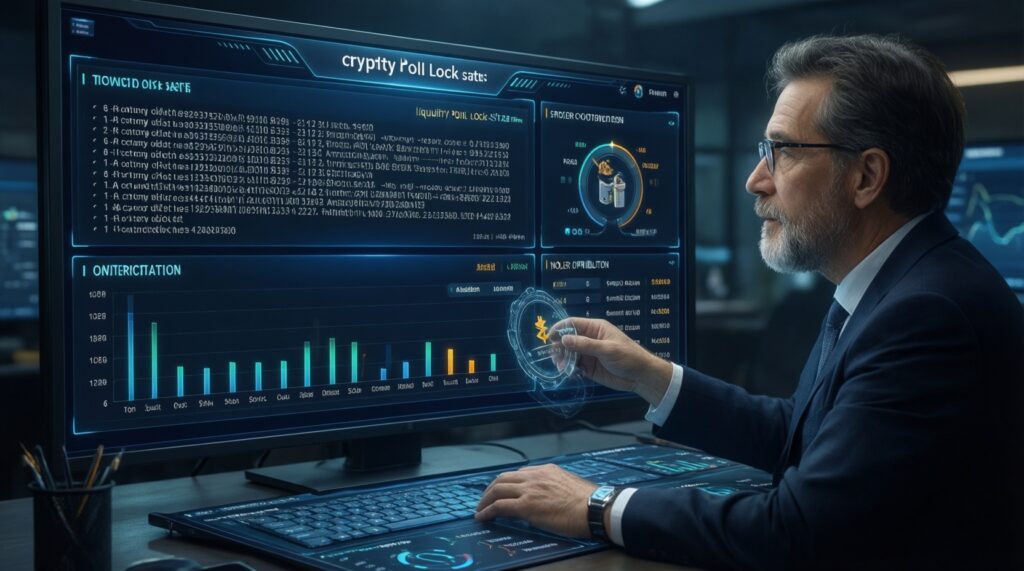
Confirm the contract address, inspect LP ownership/lock status, then check top holders and whether the owner has mint/fee/blacklist powers.
How can I tell if liquidity is actually locked?
LP tokens should be held by a lock contract or multisig with verifiable lock parameters; a promise in chat is not proof. If the deployer wallet holds LP directly, liquidity can typically be removed anytime.
Can a "Play to Earn" game be low-risk?
เกมคริปโต Play to Earn ปลอดภัย is relative: risk is lower when emissions are capped and transparent, sinks exist, and admin powers are constrained by multisig/timelocks.
What if I only want เกมคริปโตน่าลงทุน but don't have time for deep analysis?
Use the pass/fail table: if you cannot verify liquidity control, vesting, and contract permissions in minutes, skip and wait for clearer transparency.
What's the safest way to test a new project?
Use a fresh wallet, avoid approvals for unknown contracts, don't lock assets, and start with amounts you can fully lose while you complete the เช็กลิสต์ตรวจสอบโปรเจกต์เกมคริปโต.