


Loot boxes are randomized paid rewards inside games, and their future is being shaped by tighter consumer-protection rules: clearer labeling, probability transparency, stronger age controls, and more scrutiny of manipulative design. Expect more "disclose, restrict, or redesign" outcomes across markets, pushing developers toward predictable monetization and helping players identify and buy games without loot boxes more easily.
Core Concepts and Definitions
- Loot box: a paid (or pay-to-open) randomized reward mechanic; regulation often focuses on paid randomness, not all in-game items.
- Gambling classification risk: increases when real-money purchase + chance + value/transferability (or perceived value) are present.
- Disclosure model: rules and platform policies that require probability and purchase information (for example, loot box odds disclosure requirements).
- Labeling: standardized consumer-facing notices (storefront icons, age descriptors, warnings) tied to monetization features.
- Protection tools: age gates, spend limits, parental controls, refunds, and anti-dark-pattern enforcement.
- Cross-border compliance: teams typically implement a "highest-common-standard" baseline plus country overrides.
Global Regulatory Landscape: Laws, Classifications, and Precedents
Definition in law/policy: "Loot box regulations" usually target monetized randomness and the risk of consumer harm, rather than banning all random drops. The boundary typically sits at paid access to chance-based outcomes that can meaningfully affect progression, perceived value, or spending behavior.
How jurisdictions differ: "Loot box laws by country" vary because gambling definitions and consumer-protection frameworks vary. Some regulators treat loot boxes as a potential gambling-like feature under certain conditions; others treat them as a disclosure/labeling issue (probabilities, warnings, and age information) under consumer law or platform rules.
What trends look like next: the direction is toward (1) clearer classification tests, (2) standardized store labels, and (3) enforcement against deceptive UX. In Thailand (th) and for Thai-facing products, companies commonly align with major platform expectations and the strictest export-market practices to reduce rework.
- For developers: document whether any randomized reward is purchasable, tradeable, or convertible; treat that as a compliance "hot path."
- For publishers/platforms: standardize a single internal taxonomy for monetization features so every SKU gets consistent treatment.
- For consumers/parents: check storefront descriptors and in-game purchase screens before enabling payments on a device.
Labeling Standards and Disclosure Models for In-Game Purchases
Definition: Labeling and disclosure translate complex monetization into a simple, auditable set of consumer notices: what you can buy, what is randomized, and what the odds are. In practice, "loot box odds disclosure requirements" often mean showing probabilities in-game and/or on a storefront page, in a way that is accessible before purchase.
How it typically works end-to-end:
- Feature detection: identify every purchase path that can lead to randomized outcomes (direct purchase, keys, bundles, battle pass tiers with random drops).
- Probability source of truth: define where odds live (server config, item tables) and how they are versioned.
- Player-facing presentation: show odds near the purchase decision, not buried in settings; localize language for the store region.
- Change control: log odds changes and attach them to release notes and configuration IDs for auditability.
- Store metadata: publish consistent labels/icons and descriptors so users can compare titles before installing.
- Verification: test that displayed odds match actual drop tables across regions and time-limited events.
Comparative snapshot: how requirements often appear by jurisdiction and platform
| Jurisdiction / ecosystem | Typical classification focus | Common required or expected labels | Disclosure expectations |
|---|---|---|---|
| EU/UK consumer protection context (varies by country) | Unfair commercial practices, transparency, minors | In-game purchases; randomized items warning (where adopted) | Clear pre-purchase information; odds disclosure where required by platform or local guidance |
| Belgium / Netherlands (high scrutiny, varies over time) | Gambling-law interpretation risk in certain designs | May require removal/disablement of paid loot boxes in some cases | Disclosure alone may not be sufficient if classified as gambling-like |
| United States (state-by-state; platform-led standards) | Consumer transparency, child-focused protections | Storefront purchase labels; parental-control indicators | Often driven by platform policy and settlements; odds disclosures may be expected in specific contexts |
| Japan / Korea (industry and regulatory expectations differ) | Probability transparency; comp-gacha style restrictions historically relevant in Japan | Probability/contents notices; purchase descriptors | More explicit presentation of odds and item pools is commonly expected |
| Major mobile/console/PC platforms (global) | Standardized consumer labeling and enforcement of policy | In-game purchases; may include "random items" descriptors | Platform review can require odds disclosure and consistent metadata across regions |
- Quick prevention (teams): maintain one machine-readable "monetization manifest" that feeds storefront labels and in-game disclosures.
- Quick prevention (QA): add a test case that cross-checks displayed odds vs. server drop tables for every limited-time event.
- Quick prevention (product): prohibit "hidden" randomized rewards inside bundles without explicit pre-purchase explanation.
Consumer Protection Mechanisms: Age Gates, Refunds, and Fair Play
Definition: these are controls that reduce harm: limiting who can buy randomized items, making spending more deliberate, and preventing deceptive presentation. They also intersect with "age rating for loot boxes" signals that inform parents and younger players.
Mini-scenarios you'll see in real products
- Minor on a shared device: a teen can open randomized packs using a saved card. Mitigation: platform parental controls + in-game spend PIN + default purchase friction for underage accounts.
- Event-driven pressure: limited-time banners plus countdown timers push impulsive purchases. Mitigation: clear odds + "total cost to guarantee" messaging if pity systems exist + cooldown prompts for high spend.
- Confusing virtual currency: users buy gems first, then spend gems on loot boxes, obscuring real cost. Mitigation: show local-currency equivalent at the point of opening and in purchase history.
- Duplicate-heavy outcomes: players repeatedly receive low-value duplicates without clarity. Mitigation: disclose duplicate rules, add duplicate protection, or allow conversion to predictable value.
- Perceived pay-to-win: random rewards affect competitive balance. Mitigation: separate cosmetic-only pools or cap competitive advantage, and disclose gameplay impact plainly.
- For developers: treat age gating and spend controls as part of feature design, not a late compliance patch.
- For publishers: offer a predictable pathway (earnable or direct purchase) alongside randomness to reduce pressure and complaints.
- For consumers: use store labels and parental tools to filter titles and reduce accidental spending.
Enforcement, Compliance Costs, and Cross-Border Challenges

Definition: enforcement is the practical side of compliance: store review actions, regulator inquiries, consumer complaints, and payment-provider constraints. Cross-border issues arise when one build ships globally but "loot box regulations" and expectations differ by region.
Where teams gain value (and reduce risk)
- Lower removal risk: consistent labeling/disclosure reduces the chance of last-minute store rejection.
- Fewer disputes: clearer information reduces refund requests and chargebacks tied to misunderstanding randomness.
- Better governance: odds and configuration logs make audits and internal reviews faster.
Where teams get stuck (and how to preempt it)
- Policy drift: platform rules change faster than game update cycles. Preempt: subscribe to policy updates and keep a "policy delta" checklist per quarter.
- Regional fragmentation: one country may require different notices or restrictions. Preempt: implement country toggles and a localization-ready disclosure system.
- Data mismatch: displayed odds diverge from server tables after a hotfix. Preempt: block release if odds and tables are out of sync (CI gate).
- Ambiguous value: tradable items, secondary markets, or "cash-out-like" features increase scrutiny. Preempt: restrict transferability or redesign rewards to avoid monetized randomness with external value.
- Operational: budget time for compliance QA on every monetization event, not only major releases.
- Technical: centralize loot tables and disclosures so client and server cannot diverge silently.
- Legal/product: keep a country matrix for "loot box laws by country" decisions (enabled/disabled, labels, age gates).
Industry Responses: Design Alternatives and Monetization Shifts
Definition: industry response means changing monetization to reduce regulatory risk while preserving revenue. The common direction is toward predictable value, clearer pricing, and less reliance on persuasive randomness.
Frequent mistakes and fast prevention
- Mistake: treating "odds shown somewhere" as sufficient. Prevent: show odds at the purchase decision and keep them accurate during live events.
- Mistake: hiding loot boxes inside bundles, keys, or multi-currency flows. Prevent: flag any path that ends in randomness and label it consistently in UI and store metadata.
- Mistake: assuming cosmetic-only means zero risk. Prevent: still apply transparency and spending controls; the harm model often includes minors and excessive spend, not only gameplay advantage.
- Mistake: using urgency patterns that look like pressure selling. Prevent: cap frequency of prompts, remove misleading timers, and add "review purchase history" access.
- Mistake: ignoring parents' decision flow. Prevent: make it easy to understand age rating for loot boxes signals and to disable purchases at the account level.
- Design: offer direct purchase options (fixed-price cosmetics) alongside or instead of randomized packs.
- Trust: publish a clear "how randomness works" page in-game and keep it updated with every item pool change.
- Support: align refund messaging with what is randomized, what is consumable, and what is reversible.
Implementation Roadmap: From Policy to Platform Practices
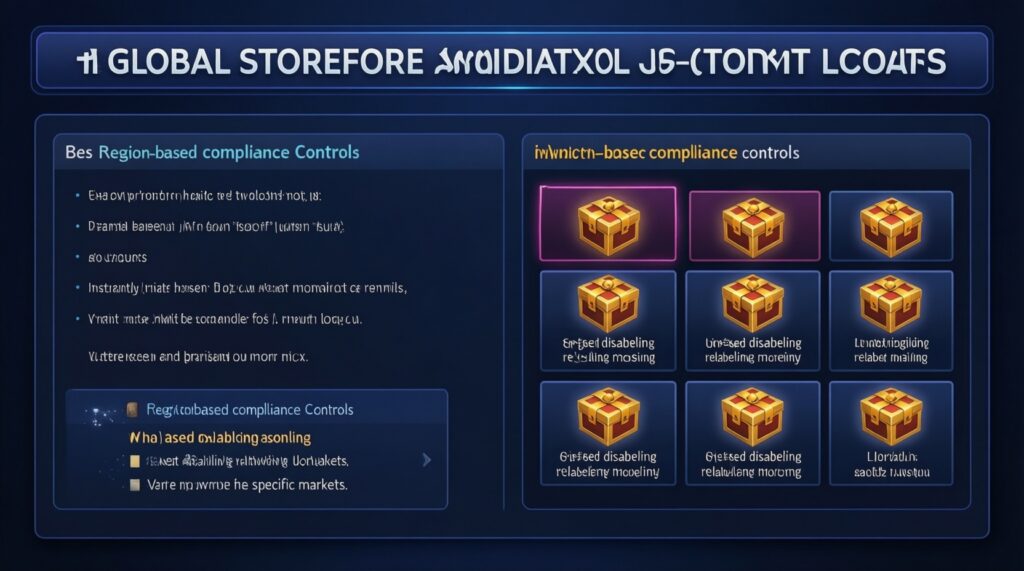
Goal: ship one compliant system that scales across regions and storefronts, while letting you quickly disable or relabel loot boxes in specific markets.
Mini-case: turning a live gacha event into an auditable, region-aware feature
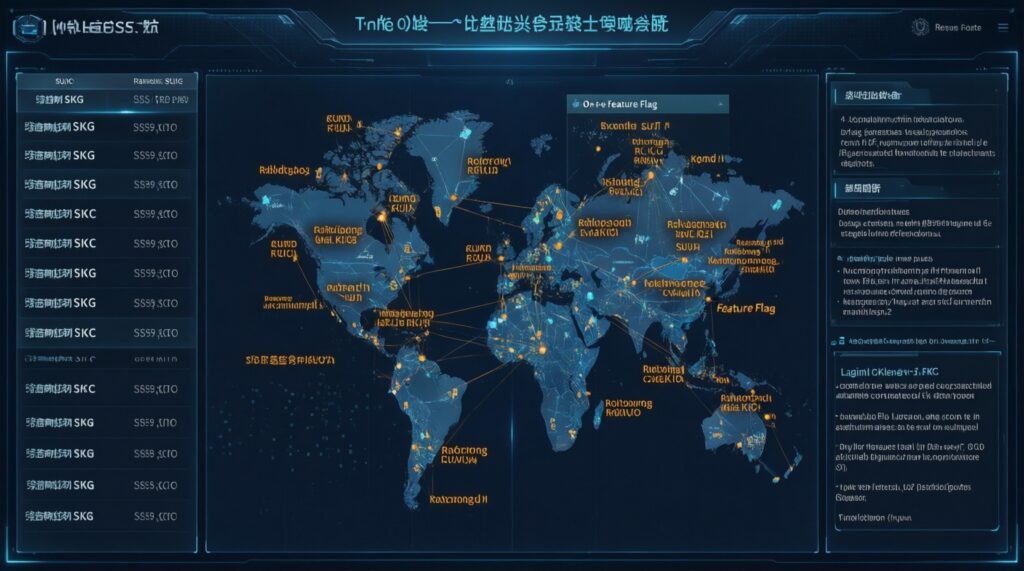
- Inventory the feature: list all randomized SKUs (direct, via currency, via bundles) and map them to one "RandomizedReward" feature flag.
- Attach disclosures: for each pool, generate a localized disclosure payload (items, odds, date/version, duplicate rules).
- Enforce region rules: apply country settings for visibility, purchase eligibility, and labels.
- Verify in CI: fail builds when UI-displayed odds don't match server configuration.
- Monitor and support: log purchases, show history to users, and prepare a refund playbook for accidental purchases.
Mini pseudo-logic (platform-agnostic)
function canSellLootBox(user, region, sku):
  if sku.type != "RandomizedReward": return true
  if region.rules.lootboxDisabled: return false
  if user.age < region.rules.minAgeForRandomizedPurchases: return false
  if not sku.disclosure.isPresent: return false
  if sku.disclosure.version != sku.dropTable.version: return false
return true- Fast win: build the "monetization manifest" first; it unlocks labeling, disclosures, and audits across teams.
- Risk reducer: add an automated odds-sync check before every event goes live.
- Consumer clarity: ensure store pages make it easy to buy games without loot boxes by filtering/labeling randomized purchases.
Practical Answers to Common Consumer and Developer Concerns
Are loot boxes always illegal?
No. Many places regulate them through consumer-protection and platform policy rather than outright bans; legality depends on design and how local rules classify paid randomness.
What do "loot box regulations" usually require in practice?
Most practical requirements focus on transparency (clear notices, odds where required), protections for minors, and avoiding deceptive UX that pressures spending.
How can I quickly check "loot box laws by country" impact for my release?
Maintain a country matrix that records whether randomized purchases are allowed, what labels are required, and what age limits or disclosures apply, then drive builds via regional configuration.
What are common "loot box odds disclosure requirements" teams miss?
Showing odds only in a help page, failing to update odds after item-pool changes, or not covering indirect purchase paths (keys, bundles, multi-currency flows).
Does an "age rating for loot boxes" automatically block purchases?
No. Ratings and descriptors inform users, but purchase blocking typically requires platform parental controls and in-game age gates or spend controls.
How can players buy games without loot boxes without deep research?
Use storefront labels/descriptors for in-game purchases and randomized items, read the monetization section before installing, and disable in-app purchases on the device if needed.
If my game uses only cosmetic loot boxes, am I safe?
Not automatically. Cosmetic-only reduces competitive fairness concerns, but transparency, minors' protections, and anti-manipulation rules can still apply.