
You usually don't "own the skin" or the artwork in the real‑world property sense. You own either (a) an account-bound license to use a cosmetic inside one game, or (b) an NFT token that points to rules and metadata. Your real control depends on the game's terms, the issuer's license, and the platform's ability to change or revoke access.
Reality Snapshot: What an NFT or Skin Actually Entitles You To
- You can typically use a skin in a specific game account, not reproduce the art commercially.
- An NFT usually gives you token control (transfer/sign) plus whatever license the issuer promises.
- NFT ownership rights are mostly about the token; IP rights usually stay with the developer/artist unless explicitly granted.
- Digital ownership of virtual items is conditional: the game server, anti-cheat, and ToS can still limit usage.
- "Transferable" can mean market-transferable while still being game-revocable.
- If the image/metadata is off-chain, the "asset" can disappear or change even if the token remains.
Common Myths About NFT and Skin Ownership
Myth: Buying a skin means you own the item like a physical product. In most live-service games, a skin is a permission to display a cosmetic on your account, governed by the game's Terms of Service (ToS). If your account is banned, the permission often stops working even though you "paid for it."
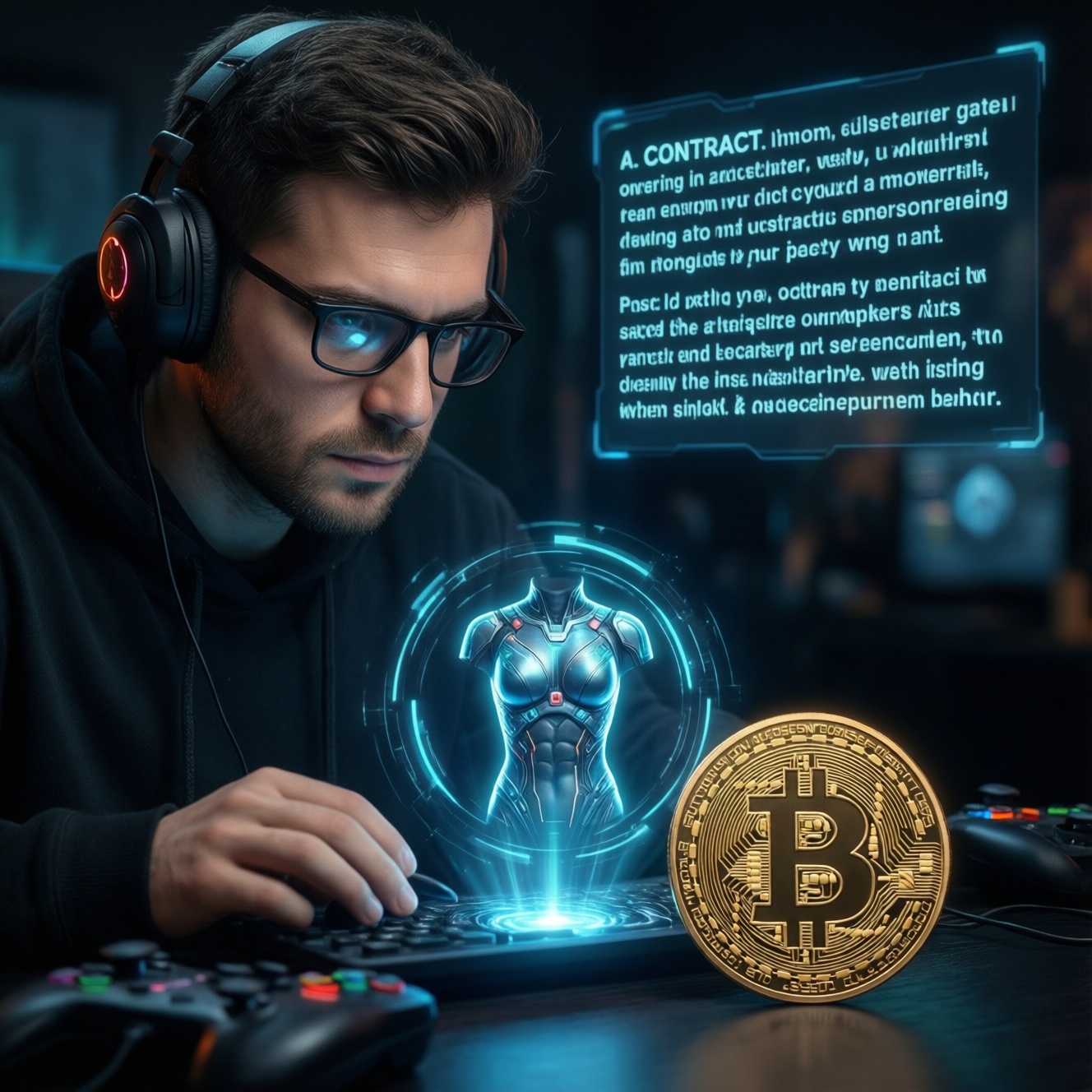
Myth: NFTs automatically grant copyright or commercial rights. Most NFTs are not a copyright assignment. They are more like a signed receipt plus a pointer to metadata and a license document. If the license is silent, default copyright rules usually apply: you can't legally merch, reupload, or use the art as a brand just because you hold the token.
Myth: The blockchain makes items permanent and censorship-resistant. Blockchains can make token transfers durable, but games are services. A developer can patch visuals, disable an item, remove a collection from matchmaking, or change eligibility rules. "Permanent ownership" is rarely compatible with anti-cheat, balancing, and content moderation.
Legal Foundations: Intellectual Property vs Token Rights
To understand what you "own," separate intellectual property (IP) from token/account rights. Skins and NFTs typically involve multiple layers of rights that don't automatically travel together.
- IP (copyright, trademarks, character designs): usually remains with the studio/artist. A skin purchase rarely transfers IP.
- Contract/license rights: your real permissions come from ToS, EULA, and the NFT/collection license (what you may do, where, and for how long).
- Token control (NFT): if you hold the private key, you can sign transfers. This is not the same as a legal right to use the art commercially.
- Platform rules: the marketplace and the game can impose restrictions (KYC, geofencing, trading cooldowns, delistings, compliance holds).
- Enforcement reality: even when a license promises utility, you may need dispute resolution or courts to enforce it-blockchain doesn't "self-enforce" off-chain promises.
- Local context (TH): expect ToS and IP law to matter more than token narratives; practical enforceability depends on contracts and evidence.
Technical Mechanisms: On‑Chain References and Off‑Chain Assets
When people say "I will buy NFT skins," they often imagine a fully on-chain item. In practice, most gaming NFTs mix on-chain token records with off-chain game logic and content hosting.
- Token + metadata URI: the NFT stores an ID and a link (URI) to metadata describing the skin (name, traits, image link).
- Off-chain image/3D files: the actual artwork (PNG, GLB, textures) is commonly hosted on servers or decentralized storage; access can break or be updated.
- Game entitlement mapping: the game backend checks "wallet X owns token Y" and grants an in-game entitlement to an account.
- Rental or delegation: some systems let you delegate usage without transferring the NFT, creating "play rights" separate from "sell rights."
- Marketplace custody: in some "best NFT marketplace" flows, the platform holds assets in escrow or uses custodial wallets, changing your risk profile.
Licensing and Transferability: What a Sale, Gift, or Burn Changes
Transfer actions (sell, gift, burn) change token custody, but they don't necessarily change the game's willingness to honor the item or the scope of permitted use. Always read the license and check if utility depends on account status, region, or season.
- Sale: you transfer the token (or account entitlement) to another party; the buyer gets only the rights the license grants at that time.
- Gift: same as sale in legal effect (a transfer), but may trigger different platform controls (fraud review, cooldowns).
- Burn: you destroy the token; this can remove resale value but might be required for "redeem to claim" mechanics.
- Bridging/wrapping: moving tokens across chains can introduce new smart contract risk and may break marketplace/game integrations.
- Check for "personal use only" clauses: common for skins; it blocks commercial exploitation even if you can resell.
- Check for revocation language: some licenses allow the issuer to change utility, artwork, or access rules.
- Check for sublicensing limits: "You may display" is not "You may let others use in a tournament broadcast."
- Check transfer restrictions: some items are transferable only through approved marketplaces or only after verification.
Game Ecosystems and Developer Control: Bans, Patches, and Live Services
If you plan to buy gaming skins online, most real-world surprises come from live-service control points rather than the purchase itself.
- Account bans and anti-cheat: a ban can effectively nullify utility even if you still "own" the entitlement or NFT.
- Balance and visibility changes: a patch can alter a skin's look, rarity perception, or disable it in competitive modes.
- Delisting and trading freezes: marketplaces can delist collections; games can pause transfers during incidents.
- Server shutdowns: if the game stops operating, "use right" can vanish; token ownership may remain but utility is gone.
- Interoperability myths: owning a skin doesn't force other games to support it; cross-game use requires explicit integration.
Practical Implications: Valuation, Security, and Recoverability
Valuation is mostly "utility + trust + liquidity." Utility depends on whether the game honors the item; trust depends on the issuer's license and hosting; liquidity depends on where you can sell and whether buyers accept the risk. Treat every purchase as a bundle of revocable permissions, not as unconditional property.
Safe steps before you buy NFT skins on a best NFT marketplace:
- Identify what you're buying: account-bound entitlement, NFT in your wallet, or a custodial marketplace balance.
- Read the license summary: look for personal/commercial use, modification rights, and revocation/change clauses.
- Verify storage: check whether metadata and art are robustly hosted; if the asset is off-chain, plan for link rot risk.
- Test transfer and redemption: confirm the in-game item appears after connecting the wallet and that transfers don't break access.
- Harden security: separate "cold" holding wallet from "hot" gaming wallet; revoke unnecessary approvals.
Mini-case decision logic (simple checklist-as-code) for digital ownership of virtual items:
if item_is_account_bound:
  value = utility_in_game
  main_risk = ban_or_tos_change
else if item_is_nft:
  value = utility_in_game + resale_liquidity
  main_risk = (license_limits + offchain_hosting + smart_contract + game_refusal)
if you_cannot_explain(main_risk) in 1 sentence:
  do_not_buy_yet
Practical Questions Players and Collectors Ask
When I buy a skin, do I own it or just license it?
Usually it's a license tied to your account under the game's ToS. You control usage only as long as the account and the game service remain in good standing.
Do NFTs give me copyright over the artwork?
Not by default. NFTs typically prove token ownership, while copyright stays with the creator unless a written license explicitly grants broader rights.
Can a game remove or disable an NFT skin I bought?
Yes, if the game controls the servers and rules. Token ownership may remain, but the game can refuse to render or honor the item.
Is the "best NFT marketplace" always the safest place to trade?
No. Safety depends on custody model, dispute handling, scam controls, and whether the marketplace is officially integrated with the game/collection.
If I buy gaming skins online, can I get a refund if the item loses utility?
Often not, especially for peer-to-peer trades. Refunds depend on platform policy and local consumer rules, not on blockchain mechanics.
What happens if the image or metadata is hosted off-chain and disappears?
Your token still exists, but the visible asset can break or change. That can reduce utility and resale value even if transfers still work.
What's the single best way to protect NFT ownership rights in practice?
Control your keys and limit approvals: use a dedicated wallet for gameplay, keep valuables in a separate wallet, and revoke permissions you no longer need.