
Match-fixing in esports is deliberate manipulation of outcomes or in-game events to profit from esports betting, typically by exploiting weak oversight, low-tier tournaments, or specific prop markets. It impacts betting markets by distorting prices, spiking suspicious liquidity, and triggering erratic line moves. You can detect it by combining read-only market checks, gameplay review, and cross-book comparisons before any production changes.
Executive summary: market impact of match‑fixing in esports
- Price integrity breaks: sharp, one-sided moves appear without public news, often consistent with esports betting odds manipulation.
- Liquidity becomes "unnatural": concentrated stakes cluster around niche markets (maps/rounds/first objective) more than match winner.
- Prop markets are high-risk: micro-events are easier to steer than full-match results, especially in lower visibility fixtures.
- Operator exposure increases: slower books or small esports betting sites get picked off; limits and void rules matter.
- Evidence is multi-source: market patterns alone are weak; corroboration needs VOD, logs, roster context, and timing analysis.
- Containment beats confrontation: freeze/limit suspect markets, preserve data, and follow an audit trail before escalation.
How match‑fixing works across esports titles and tournament structures
Below are user-visible symptoms (what bettors, traders, or investigators typically notice first) when esports match fixing may be involved:
- Unexpected "throw" moments: unforced errors at high leverage (e.g., a free objective given away) with no strategic benefit.
- Line moves without catalysts: odds swing hard while rosters, map pool, and official announcements remain unchanged.
- Odd market focus: heavy action on "first blood/first tower/first dragon," "map 1 winner," "exact rounds," or "total corners" analogs in sports simulators.
- Mismatch between narrative and price: community sentiment says one thing; the market quietly prices another.
- Recurring patterns in low-tier events: smaller leagues, online-only qualifiers, and late-night matches show repeat anomalies.
Concrete examples by genre (what gets steered)
- FPS (e.g., CS-like titles): single-round swing decisions (eco-round force buys, strange rotations, last-second peeks) that decide map totals or handicap lines.
- MOBA (e.g., Dota/LoL-like titles): first objective props (first tower/first Roshan-style objective), suspicious smoke/gank timings, or late-game calls that contradict prior discipline.
- Sports simulators: event totals (cards/corners/shots equivalents), early concessions, or unusual player selection that increases variance on props.
How fixing distorts odds, liquidity and bettor behavior
Use this read-only checklist as quick triage when you suspect how to spot match fixing in esports issues in a market. The goal is to determine whether the market looks merely "sharp" or structurally compromised.
- Check whether the first move happened on a niche market (props/maps) before the mainline match odds moved.
- Compare move timing to public information: roster posts, official delays, patch notes, map veto results, and stream start.
- Look for asymmetric movement: one side collapses while the opposite side barely drifts (suggests targeted buying rather than balanced repricing).
- Assess liquidity concentration: a small set of accounts staking repeatedly at the top of limits, especially near open/close.
- Check for cross-book desync: your price moves early while larger books remain stable, or vice versa.
- Review in-play spikes: sudden stake bursts immediately before a pivotal moment (pause ends, draft completes, pistol round, objective spawn).
- Inspect market selection: bettors prefer outcomes easiest to influence (first map, exact rounds, first objective) instead of match winner.
- Look for repeated offender fixtures: the same team/tournament repeatedly triggers alerts even when opponents change.
- Verify whether bet cancellations cluster after the move (attempts to probe limits or fish for stale lines).
Statistical, behavioral and betting‑pattern red flags to monitor
Market signals are often ambiguous. Treat each red flag as a hypothesis, then validate with independent checks before taking action. The table below contrasts normal vs. suspicious patterns and provides fixes that keep you within "read-only first" safety rules.
| Symptom | Possible causes | How to verify (read-only first) | How to fix (containment first) |
|---|---|---|---|
| Large pre-match line move with no news | True sharp action; hidden roster issue; inside info; coordinated betting linked to fixing | Cross-check multiple books; review official channels; check map veto timing; compare to historical volatility for that league | Lower limits on sensitive markets; widen margins; delay reopening until veto/rosters confirm; document decision trail |
| Action concentrates on micro props (first objective, exact rounds) | Prop market is exploitable; model weakness; micro-events easier to steer in fixes | Account-level stake distribution; correlation with in-game timestamps; compare prop volume vs. match winner for similar events | Cap prop exposure; temporarily suspend highest-risk props; tighten settlement rules and data requirements |
| In-play odds jump right before a "mistake" on stream | Stream delay exploitation; faster data feed elsewhere; deliberate throw; latency/settlement lag | Compare your feed timestamps vs. broadcast delay; check if bets land during delay window; audit latency logs | Increase in-play delay; restrict in-play for suspect leagues; use stricter bet acceptance windows |
| Repeated alerts tied to one team across tournaments | Small sample variance; consistently mispriced team; potential compromised player/staff network | Build a case file: matches, odds moves, bet flows, VOD markers; check roster changes and org finances signals (public) | Add team-specific risk rating; pre-emptively limit; require manual approval for certain markets |
| Your book moves, but major books do not | Your pricing is off; manipulation against smaller book; local influencer rumor; thin liquidity | Compare openers/closing lines; see if your move is driven by a small number of accounts; check if others move later | Anchor to reference books for low-tier events; slow down auto-moves; reduce max stake until alignment improves |
| Sharp one-sided betting at maximum limits near close | Legitimate syndicate; leaked scrim results; inside info; coordinated fixing payout strategy | Identify commonality: IP/device/payment patterns (as allowed); check bet timing clusters; see if stakes avoid main markets | Switch to manual trading for the fixture; cut limits; consider closing the market early and preserving evidence |
| Unusual gameplay decisions inconsistent with prior match behavior | New strategy; tilt; coaching change; intentional underperformance | VOD review with timeline: pauses, buy patterns, draft choices; compare to the team's last matches in same patch | Tag match for integrity review; if repeated, adjust risk scoring and remove certain prop offerings |
Common false positives (avoid overreacting)
- Patch/meta shifts: one update can change objective priority and invalidate older pricing assumptions.
- Stand-in players: last-minute substitutions can be semi-public but not uniformly distributed across communities.
- Broadcast quirks: observer missed context makes a decision look irrational when it is not.
Data sources and investigative techniques for corroborating suspicions
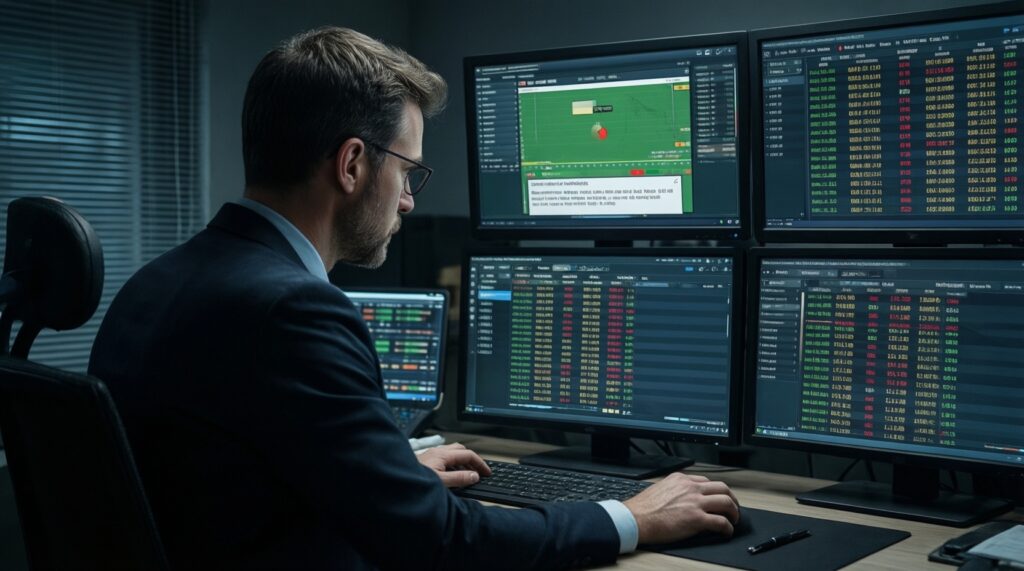
Follow these steps from least risky to more intrusive. They are designed for troubleshooting workflows on betting operations: preserve evidence first, then narrow hypotheses, then act.
- Freeze a read-only snapshot: export odds history, bet logs, account IDs involved, timestamps, and market states (open/suspended/settled).
- Cross-book comparison: record prices and move times from several esports betting sites for the same markets (mainline + key props).
- Timeline reconstruction: build a single timeline combining: market moves, bet bursts, match start, pauses, draft/veto, and stream delay notes.
- Account clustering (policy-compliant): look for shared devices, repeated stake sizing, correlated market selection, and synchronized bet timing.
- VOD review with markers: locate decision points that coincide with bet bursts or price collapses; note whether errors are "forced" or "unforced."
- Data-feed sanity check: confirm the official data source for scoring/objectives, and verify there were no outages or late corrections.
- Model validation: test whether your pricing model historically underestimates variance for this league/title (especially on props).
- Integrity package creation: compile a concise dossier: affected markets, exposure, suspicious accounts, timeline, VOD timestamps, and cross-book deltas.
Operator responses: market controls, sanctions and legal avenues
Escalate when you have corroboration beyond "weird odds." Trigger escalation if any of the following are true:
- Multiple independent signals align: unusual odds movement + concentrated accounts + VOD anomalies + cross-book divergence.
- Exposure is material: you cannot cap downside with normal limit changes without distorting your entire book.
- Repeat patterns: the same participants/teams/tournament operator appear in previous suspicious cases.
- Settlement integrity risk: scoring feed disputes, match restarts, or admin decisions could make settlement contested.
- Potential criminal conduct: credible evidence of coordinated manipulation, bribery, or organized syndicate behavior.
What to do during escalation (keep it operationally safe)
- Move the fixture to manual trading or suspend the highest-risk markets (props first, then in-play).
- Preserve evidence: lock logs, keep raw exports, and maintain chain-of-custody notes internally.
- Notify internal integrity/risk and, where applicable, your data provider and league/tournament integrity contact.
- Apply account controls consistent with policy: enhanced monitoring, stake limits, or temporary restrictions pending review.
- Prepare for dispute handling: ensure void/refund rules are consistent and communications are scripted.
Mitigation checklist with a rollback plan for compromised markets
- Maintain a risk tier list by league and tournament format (online qualifiers, low visibility events, new organizers).
- Restrict or remove high-steerability props (first objective, exact rounds) in high-risk tiers.
- Implement move throttles and manual confirmation for large odds changes on thin markets.
- Set in-play delay and acceptance windows based on observed stream delay and feed latency.
- Use cross-book anchors for low-liquidity events to reduce exposure to targeted manipulation.
- Run post-event reviews on flagged fixtures: compare closing line, bet concentration, and VOD markers.
- Keep an integrity dossier template ready so investigators get consistent evidence packages.
- Train traders to recognize how to spot match fixing in esports signals without relying on rumors.
Rollback plan before escalation (step-by-step)
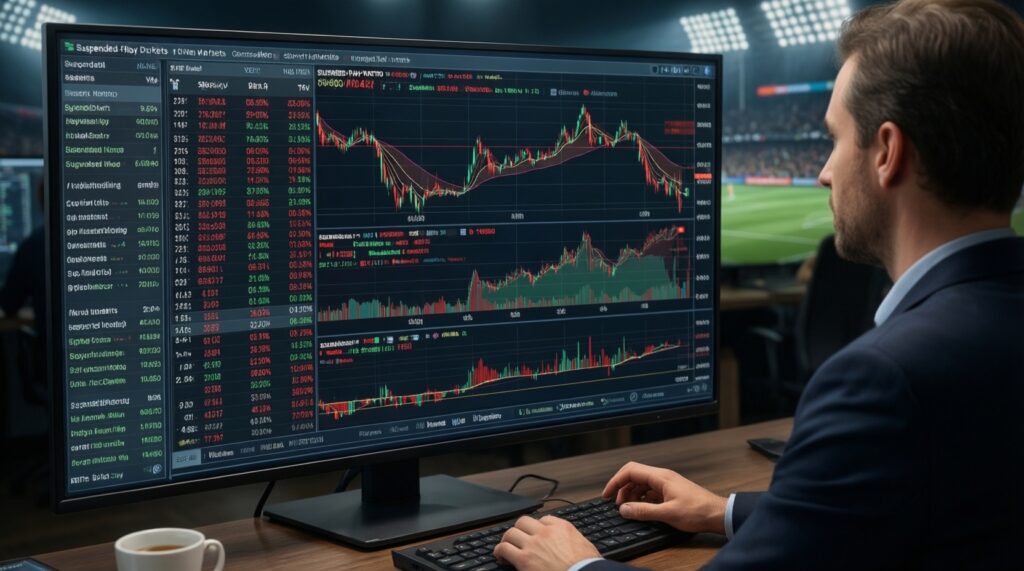
- Stop further drift: suspend only the affected markets (usually props/in-play) rather than the entire match immediately.
- Revert pricing controls safely: roll back recent auto-trading parameter changes (throttles, margins, acceptance rules) to the last known-good configuration for that competition.
- Restore exposure limits: temporarily revert to conservative default limits for the title/league tier; avoid custom overrides that are hard to audit.
- Reopen selectively: reopen only mainline markets once you confirm roster/veto and feed health; keep high-risk props closed until reviewed.
- Document the rollback: record who changed what, when, and why, so the integrity review can separate market ops issues from manipulation attempts.
Practical answers for operators, investigators and bettors
Does an abrupt line move always mean match-fixing?
No. It can be sharp information (roster, veto, patch impact) or your own model correction; treat it as a trigger for corroboration, not a verdict.
What markets are most sensitive to esports match fixing?
Micro-event props and early-game objectives are typically easier to steer than full-match results, especially in low-tier online events.
How can bettors reduce risk when doing esports betting on small tournaments?
Prefer mainline markets over niche props, avoid chasing late moves, and compare pricing across several books to spot abnormal divergence.
What is the fastest way to detect esports betting odds manipulation operationally?
Check cross-book desync plus account concentration on a specific prop market, then align timing with match events and stream delay windows.
Should operators void bets when a match looks suspicious?

Only follow your published rules and documented integrity procedures; premature voiding without evidence can create disputes and reputational damage.
What evidence is most useful to investigators?
A unified timeline: odds history, bet logs, account clustering indicators (policy-compliant), and VOD timestamps showing the relevant in-game decisions.
When should you stop offering in-play on a league?
If repeated fixtures show bet bursts aligned with stream-delay windows or consistent feed/latency issues, restrict in-play until controls are improved.