
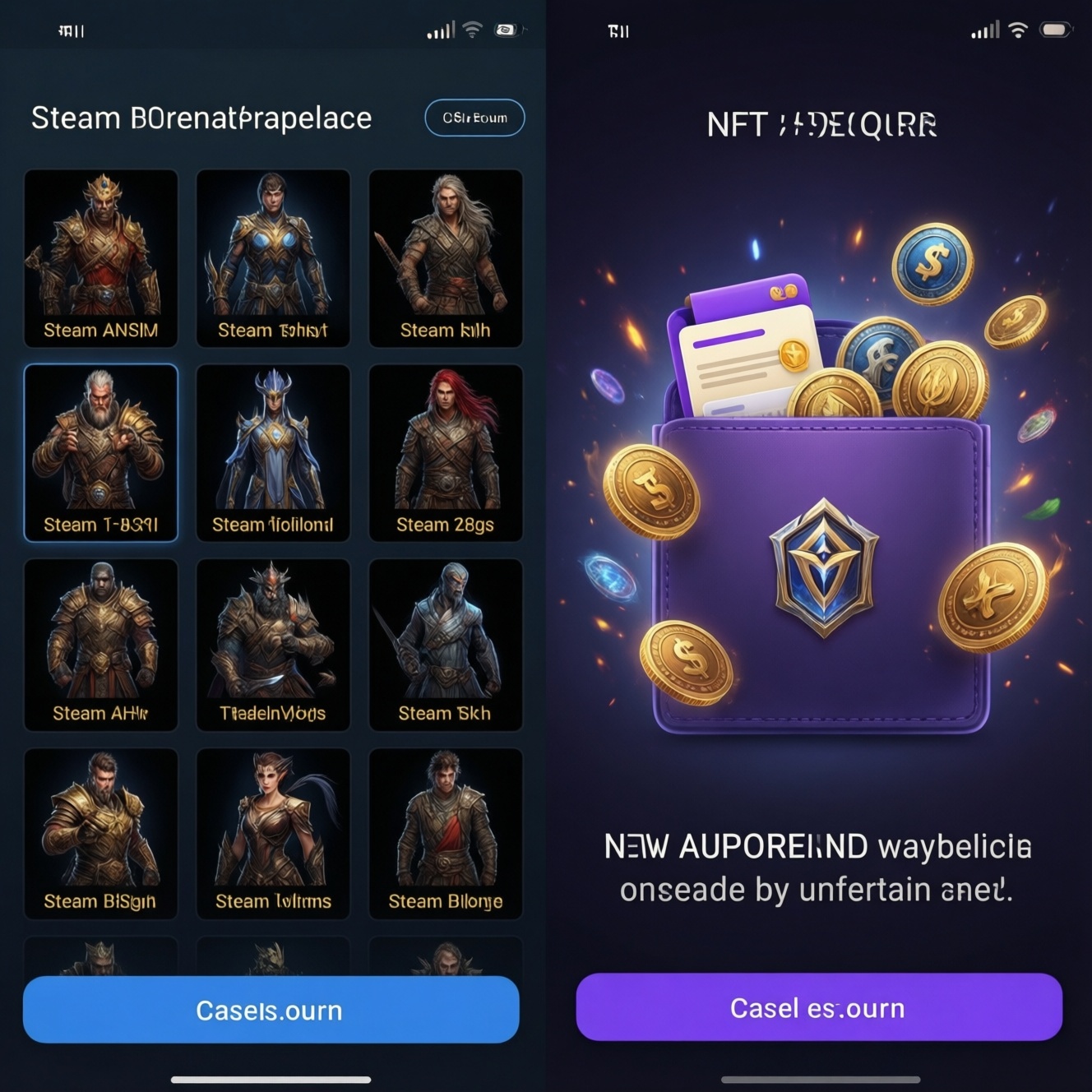
If your goal is practical control and easier cash-out, Steam skins usually behave more like a platform-based collectible with predictable trading rails, while NFTs behave more like a wallet-held token whose usability depends on the game, chain, and market demand. Choose Steam skins for faster liquidity; choose NFTs for cross-platform custody and higher uncertainty.
Snapshot: ownership, transferability, and real-world value
- Ownership: NFTs are held in your wallet; Steam skins are licensed digital items controlled by Steam's rules and the game ecosystem.
- Transferability: NFTs can move across wallets/markets (chain-dependent); skins move within Steam's rails, with stricter limits but clearer user flows.
- Liquidity: Skins often have more consistent day-to-day trading; NFT liquidity is highly collection- and chain-specific.
- Cash-out reality: If you want to sell Steam skins for real money, you typically rely on off-Steam methods with added counterparty risk; NFTs cash-out depends on exchange ramps and compliance.
- Risk profile: Steam skins face policy enforcement and account risks; NFTs face smart-contract, phishing, and market-structure risks.
- Budget fit: Skins can be simpler for small budgets; NFTs can add wallet setup and transaction-cost uncertainty.
How ownership is defined: NFTs versus Steam skins
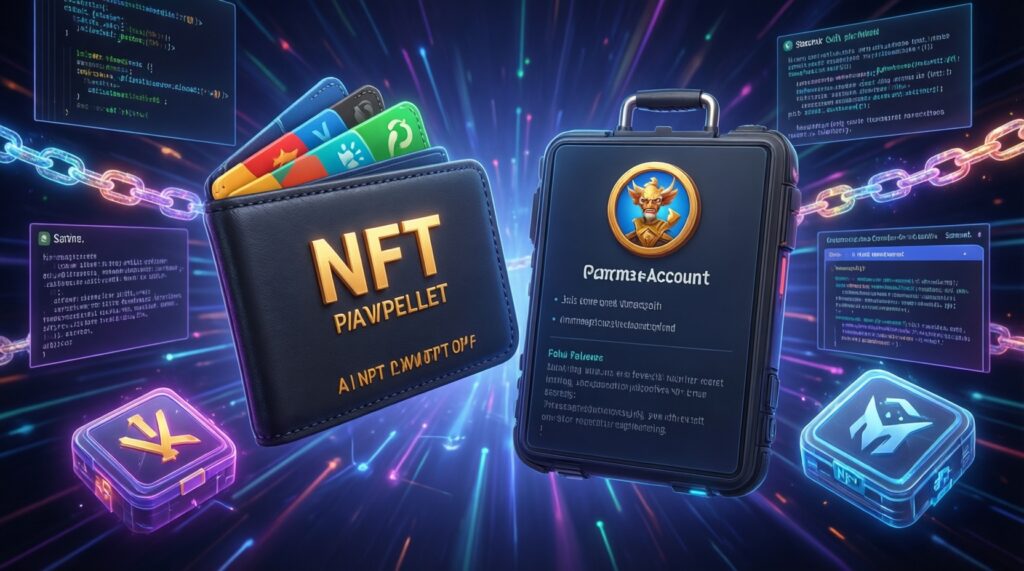
Use these criteria to decide what "owning" means for you before you buy:
- Custody model: self-custody (NFT wallet) vs. custodial account (Steam).
- Enforceability: "code + chain rules" vs. "platform policy + game publisher policy."
- Portability: ability to move assets outside the original platform or into other tools/markets.
- Usability: whether the item has in-game function (skins) or utility beyond speculation (some NFTs claim utility; verify it).
- Transfer friction: confirmations, wallet signing, and marketplace listing vs. Steam holds, trade limits, and account security steps.
- Counterparty risk: reliance on Steam account health vs. reliance on private keys, marketplaces, and smart contracts.
- Dispute handling: Steam support and platform procedures vs. mostly irreversible on-chain transfers.
- Exit options: whether you can realistically convert value to THB through your available rails and risk tolerance.
Technical foundations: blockchain tokens compared to platform-tied items
The "best" choice depends less on hype and more on where the asset lives, how it moves, and what can break. The options below cover the common routes people use to buy NFTs or buy Steam skins and then potentially resell.
| Вариант | Кому подходит | Плюсы | Минусы | Когда выбирать |
|---|---|---|---|---|
| Ethereum NFT (ERC-721/1155) via an NFT marketplace | Users who want maximum ecosystem support and are comfortable with wallet security | Broadest tooling; widely supported standards; strong secondary-market infrastructure | Transaction cost uncertainty; high phishing/impersonation risk; liquidity varies by collection | When the collection has persistent demand and you accept higher friction for broader compatibility |
| Polygon / L2 NFT (ERC-721/1155) via an NFT marketplace | Budget-first users who still want wallet custody | Usually lower transfer friction than mainnet; easier to experiment with small positions | Still exposed to wallet draining, fake listings, and thin liquidity for many projects | When your budget is small and the project's activity is verifiably real (not just marketing) |
| Solana NFT (SPL) via an NFT marketplace | Users who prefer fast transfers and are ecosystem-specific | Quick UX; strong native marketplace culture in some segments | Collection quality varies; scams and wash-style activity can distort signals | When you already operate in Solana tools and can validate collection legitimacy |
| Steam Community Market skin (e.g., CS2, Dota 2) | Users who value a single integrated platform and clear trading flow | Simple listing and discovery; convenient for "buy, trade, re-buy" loops inside Steam | Funds generally stay in Steam ecosystem; items remain subject to Steam and game rules | When your goal is stable in-platform trading rather than external cash-out |
| Direct Steam trade + third-party Steam skins marketplace | Users aiming to sell Steam skins for real money and accept more operational risk | Potential path to cash-out; can offer broader price discovery than Steam wallet-only flow | Counterparty risk, scams, API key theft, fake bots; may violate platform expectations depending on method | When you have strong security hygiene and a clear plan to manage off-platform risks |
| In-game marketplace / publisher-run items (non-Steam, non-NFT) | Users who mainly want cosmetic utility and minimal complexity | Lowest learning curve; fewer moving parts than wallets and external markets | Often the weakest "ownership"; limited transfer and resale options | When utility matters more than resale value and you want to avoid market risk |
Transferability and marketplaces: fees, restrictions, and liquidity differences
Use scenario thinking. "Transferable" only matters if you can transfer and find a buyer without losing too much to friction and risk.
- If you want quick in-platform turnover, then favor Steam Community Market skins; you can buy Steam skins and relist with fewer external steps.
- If your goal is to cash out to fiat, then plan the full path first: Steam wallet is not the same as bank money, and trying to sell Steam skins for real money usually pushes you toward higher-risk off-platform routes.
- If you need cross-platform custody, then choose NFTs held in your wallet and use a reputable NFT marketplace; you can move tokens between wallets even if a single marketplace blocks you.
- If you are budget-first, then prioritize low-friction experimentation: smaller positions, stricter allowlists of collections/items, and fewer hops (avoid bridging and obscure markets). This is often easier with mainstream Steam skins or lower-friction NFT networks where your total overhead is easier to control.
- If you are choosing a premium/high-ticket route, then pay for verification time, not just the asset: provenance checks, seller reputation, and security hardening. Premium NFTs and high-tier skins both attract more targeted scams and impersonation attempts.
- If liquidity is your top constraint, then pick assets with visible, consistent secondary activity (recent sales, many unique traders, tight spreads) rather than "rare" items that do not actually move.
Platform policy and legal exposure: developer control, bans, and consumer rights
Run this quick selection algorithm before committing funds (especially from Thailand, where FX/on-ramp availability and account verification requirements can shape what is practical):
- Decide your non-negotiable: self-custody (NFT) or platform convenience (Steam).
- Map your exit route: in-platform spend only, or conversion to fiat/THB; stop if you can't describe the steps clearly.
- Check policy fragility: what happens if your account is flagged, the game changes drop rules, or the marketplace delists an item/collection.
- Assess ban impact: estimate the damage if you lose access (Steam account lock, NFT wallet compromise, marketplace suspension).
- Choose the lowest-risk marketplace you can realistically operate: official rails first; third-party only if you can handle scams and verification.
- Set security baseline: hardware-backed 2FA for Steam; for NFTs, separate hot wallet vs. cold storage and never sign unknown approvals.
- Only then buy: start small, document purchase hashes/trade IDs, and keep proof of origin where possible.
Determinants of real-world value: scarcity, provenance, and demand signals
Common selection mistakes that destroy resale outcomes for both NFTs and skins:
- Confusing "scarce" with "liquid": an item can be rare and still hard to sell without a deep buyer base.
- Ignoring fees/friction: small spreads matter more on a low budget; extra hops can erase upside.
- Buying narratives instead of demand: prioritize verifiable trading activity and real utility over announcements.
- Not verifying provenance: fake NFT collections, lookalike contracts, and impersonated Steam traders are routine.
- Overpaying for cosmetics with unstable desirability: meta shifts, streamer trends, and game updates can change demand quickly.
- Assuming marketplaces are interchangeable: liquidity often concentrates; listing on the wrong venue can stall sales.
- Holding everything in one place: one compromised Steam account or one drained wallet can wipe a portfolio.
- Misreading "floor price" or top listings: focus on executed sales and time-to-sale, not just visible asks.
- Skipping security hygiene: API key scams (skins) and malicious approvals (NFTs) are frequent root causes of loss.
Budget-first cost and risk analysis: upfront cost, ongoing expenses, and downside scenarios
For a budget-first buyer seeking clearer liquidity and simpler operations, Steam skins are often the better fit; for a buyer prioritizing self-custody and portability (and willing to accept higher security and market-structure risk), NFTs can be the better fit. If your plan requires frequent moves or cash-out, choose the route with the fewest fragile steps you can execute reliably.
Concise answers to common budget-focused concerns
Is it safer to buy NFTs or to buy Steam skins?
They fail in different ways: NFTs are vulnerable to wallet-draining and irreversible transfers, while Steam skins are vulnerable to account actions and platform rules. "Safer" is usually the one whose security model you can actually operate correctly.
Can I sell Steam skins for real money without breaking rules?
Steam's primary flow is designed around Steam wallet value, not guaranteed fiat cash-out. Off-platform cash-out exists in practice but increases counterparty and scam risk, so you should treat it as an advanced path.
What is the most practical marketplace choice for beginners on a budget?
For skins, the Steam Community Market is the most straightforward. For NFTs, a major NFT marketplace on a chain you already understand is typically less error-prone than using bridges and obscure aggregators.
Do NFTs always have better "ownership" than Steam skins?
NFTs usually offer stronger custody (you hold the token), but that doesn't guarantee in-game utility or buyer demand. Steam skins usually offer weaker legal-style ownership but often clearer in-game meaning and trading UX.
How do I avoid fake listings when I use an NFT marketplace?
Verify the collection contract, not just the name and images, and cross-check it from multiple trusted references. Avoid signing approvals you don't understand and don't chase "too cheap" listings.
What makes a skin or NFT easier to resell quickly?

Consistent recent sales, many unique participants, and narrow spreads matter more than rarity alone. If you can't see real transaction history and fast turnover, assume liquidity risk.
Should I treat either option as an investment?
For most users, it's more practical to treat both as speculative collectibles with downside scenarios. Only allocate money you can afford to lock up or lose, and prioritize operational safety over big upside stories.