


The future of gamer gambling is converging around three practical building blocks: social casino platforms that borrow retention loops from games, creator driven gambling platforms that turn audiences into liquidity and governance, and hybrid betting experiences that blend sports and casino journeys in one wallet. Success depends less on novelty and more on compliant flows, trust tech, and measurable unit economics.
Essential concepts to grasp
- Social casino mechanics are engagement systems first; real-money wagering may be absent or added later via compliant pathways.
- Creators change distribution: they bring traffic, shape rules, and expect transparent revenue-sharing and moderation tooling.
- A hybrid sports betting casino platform is primarily a product design problem: one identity, one wallet, and clear context switching.
- Compliance is a user-journey constraint, not a legal afterthought (KYC/AML, geofencing, age gates, marketing limits).
- Trust is operational: identity, fraud controls, and auditability matter more than buzzwords like "on-chain."
- Choose online gambling platform software for integrations and controls (risk, payments, content, reporting), not just game catalog size.
How social casinos reshape player engagement
Social casinos are casino-style games optimized for social play, progression, and community retention. In practice, they sit on a spectrum: from "coins-only" experiences (no cash-out) to regulated real-money products, with many operators using social layers as a top-of-funnel for later conversion where permitted.
What makes social casino platforms distinct is the product loop: daily rewards, limited-time events, clans/guilds, gifting, and UGC-like community features that create reasons to return even when the player isn't in a wagering mindset. This is why teams often benchmark "best social casino apps" less for graphics and more for event cadence, segmentation, and frictionless re-entry.
Boundary conditions matter. The moment you add cash-out, transferable value, or wagering on uncertain outcomes, the regulatory and risk profile changes sharply. Teams should treat "social" as a design approach (community + progression) rather than a compliance shortcut.
Creator-driven economies: monetization and governance
Creator-led gambling products work when creators are treated like operators of a micro-community: they need safe monetization, predictable rules, and tooling that reduces their exposure to fraud, chargebacks, and policy violations.
- Audience-to-lobby routing: deep links from streams to a creator-branded lobby with curated games, promos, and chat rules.
- Revenue share primitives: transparent rev-share on NGR-like signals (or other agreed basis), with caps, clawbacks, and clear attribution windows.
- Community perks: access passes, cosmetic tiers, badges, or VIP queues that do not imply guaranteed winnings.
- Creator moderation stack: chat filtering, timeouts, reporting queues, and escalation paths (especially for self-harm and underage cues).
- Promotion governance: pre-approved promo templates, disclosure requirements, and automated checks for restricted claims.
- Risk controls by segment: deposit limits, session limits, and cool-off flows tuned by cohort (new viewers vs. known players).
Operationally, creator driven gambling platforms need a "two-sided" compliance mindset: player safety controls plus creator policy enforcement. If either side is weak, the distribution advantage turns into reputational and regulatory risk.
Hybrid betting platforms: models and user journeys
A hybrid sports betting casino platform is most compelling when it removes unnecessary context switching. Users should not feel like they are entering a different company when moving from a pre-match bet to a slot session.
- Single-wallet, multi-vertical: one balance across sportsbook, casino, and social features, with clear ledgering for bonuses and restricted funds.
- Event-triggered casino journeys: after a bet settles, users get a compliant nudge into a themed casino room (e.g., "match night" missions) without implying outcome manipulation.
- Live moments to micro-engagement: during match downtime, surface low-friction social-casino mini-events (coins-only or regulated, depending on jurisdiction).
- Creator watch-party rooms: a creator hosts a match room; viewers can place permitted bets and join parallel social-casino challenges for community progression.
- Unified VIP and loyalty: one tier system that rewards net contribution responsibly, with guardrails to avoid incentivizing harm.
In all scenarios, the key UX artifact is a clear "state": the user must always know whether they are in play-money mode, real-money mode, or bonus-restricted mode.
Regulatory frameworks and compliance challenges
For Thailand-context operations, the practical takeaway is to design for jurisdictional variability: geofencing, payment routing, and marketing controls must be configurable because eligibility can change by user location and legal structure. Build compliance as a product surface (settings + logs), not as back-office paperwork.
Advantages when compliance is built into the product
- Faster launches across partners: audited flows (KYC/AML, self-exclusion, limit setting) shorten integration cycles with payment and distribution partners.
- Reduced operational load: fewer manual reviews when risk scoring, source-of-funds checks, and chargeback handling are standardized.
- Cleaner creator programs: consistent disclosure tooling and promo approvals lower the chance of policy breaches during live content.
Common constraints that shape the roadmap
- Age and identity verification: you need defensible checks before enabling any feature that can be interpreted as wagering or value transfer.
- AML monitoring and reporting: transaction patterns, bonus abuse, and unusual behavior must be detectable and reviewable.
- Marketing restrictions: localized rules affect influencer language, targeting, and even UI copy.
- Data retention and audit trails: retention windows, player consent, and access logs must be implementable per jurisdiction and partner policy.
Technologies powering trust: blockchain, AI, and identity
Trust technology helps when it reduces disputes, fraud, and ambiguity. It fails when it is treated as a slogan. Typical errors and myths to avoid:
- Myth: "Blockchain makes games fair by default." Fairness still depends on RNG integrity, change control, and verifiable audit trails that users and regulators can understand.
- Mistake: adding AI without human ops. AI can triage fraud or harmful play signals, but you still need playbooks, escalation SLAs, and appeal handling.
- Mistake: weak identity boundaries. If identity is not consistent across sportsbook/casino/social modes, you invite multi-accounting, bonus abuse, and underage leakage.
- Myth: "KYC is a one-time gate." Ongoing monitoring (device, payment instrument changes, velocity checks) is where most real-world risk shows up.
- Mistake: choosing tools that don't integrate. If risk, CRM, payments, and game services cannot share signals, you will fight fraud with partial visibility.
Measuring success: metrics, retention, and revenue signals
A practical measurement approach is to treat social, creator, and hybrid features as separate funnels that converge into a single value model. Example mini-case: a creator watch-party launches weekly. You measure (1) room join rate, (2) first session completion, (3) repeat attendance, (4) cross-vertical migration (sports to casino/social), and (5) net revenue after bonuses and fraud losses.
Minimal analytics logic (pseudo-implementation)
for each user in cohort:
  engaged = joined_creator_room AND session_minutes > threshold
  migrated = placed_sports_bet OR played_casino_round
  retained = returned_within_window

  value_signal = net_revenue - bonuses_cost - fraud_loss_estimate

report:
  engagement_rate = sum(engaged)/users
  migration_rate  = sum(migrated)/users
  retention_rate  = sum(retained)/users
  quality_value   = avg(value_signal among retained users)
Next-action self-check (implementation checklist)
- Document user "states" (play-money, real-money, bonus-restricted) and ensure the UI makes the current state unmistakable.
- Define creator program rules (disclosures, promo approvals, moderation) before onboarding the first large channel.
- Instrument one cross-vertical journey end-to-end (deep link → session → transaction → risk event → CRM message) and verify logs are auditable.
- Pick online gambling platform software based on integrations for identity, risk, payments, and reporting-not just games and skins.
Practical concerns operators and creators commonly face
What is the clearest boundary between social casino and gambling?
The boundary is transferable value and wagering on uncertain outcomes: cash-out, tradable tokens, or real-money bets typically trigger gambling rules. Keep product states explicit so users and teams know what mode they are in.
How do "best social casino apps" keep players returning without aggressive spending pressure?
They rely on event cadence, progression, and social obligations (teams/clans) rather than constant monetization prompts. The practical move is to invest in content scheduling and segmentation, then add responsible limits where real-money exists.
What is the biggest operational risk in creator driven gambling platforms?
Attribution and compliance during live promotion: unclear disclosures, prohibited claims, and incentive misuse can escalate quickly. Solve it with pre-approved promo templates, automated checks, and clear enforcement.
How do you design a hybrid sports betting casino platform without confusing users?
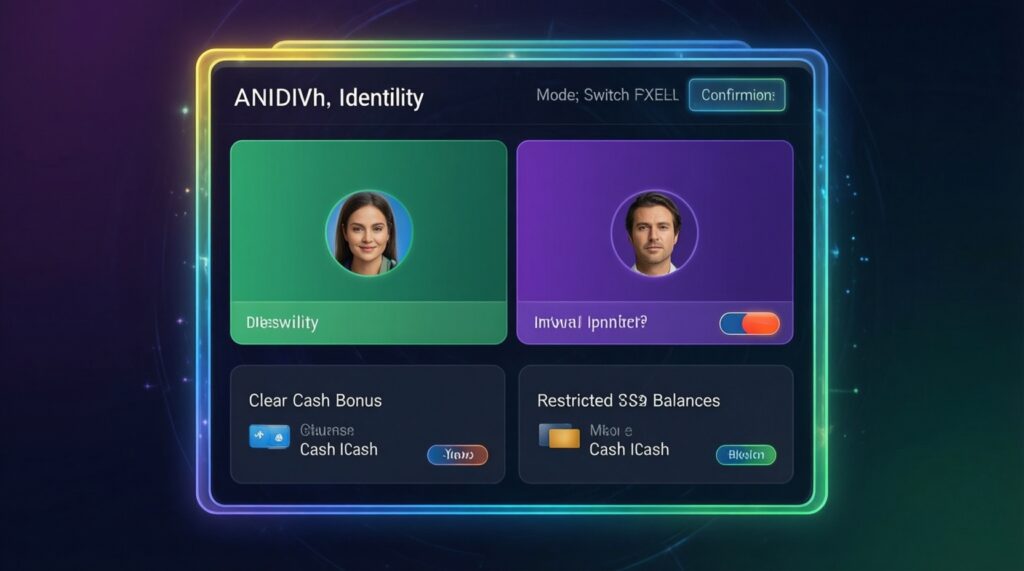
Use a single wallet and consistent identity, but separate contexts with clear labels, color/space cues, and confirmations when switching modes. Always show whether funds are cash, bonus, or restricted.
Which integrations matter most when choosing online gambling platform software?
Identity/KYC, payments, risk scoring, AML monitoring, CRM, and reporting/audit logs are the core. Game aggregation is secondary if you cannot control fraud, bonuses, and user eligibility reliably.
Do blockchain features help with player trust in practice?

They can help if they produce understandable auditability and reduce dispute resolution time. If users cannot verify or interpret the proofs, the trust benefit is mostly theoretical.