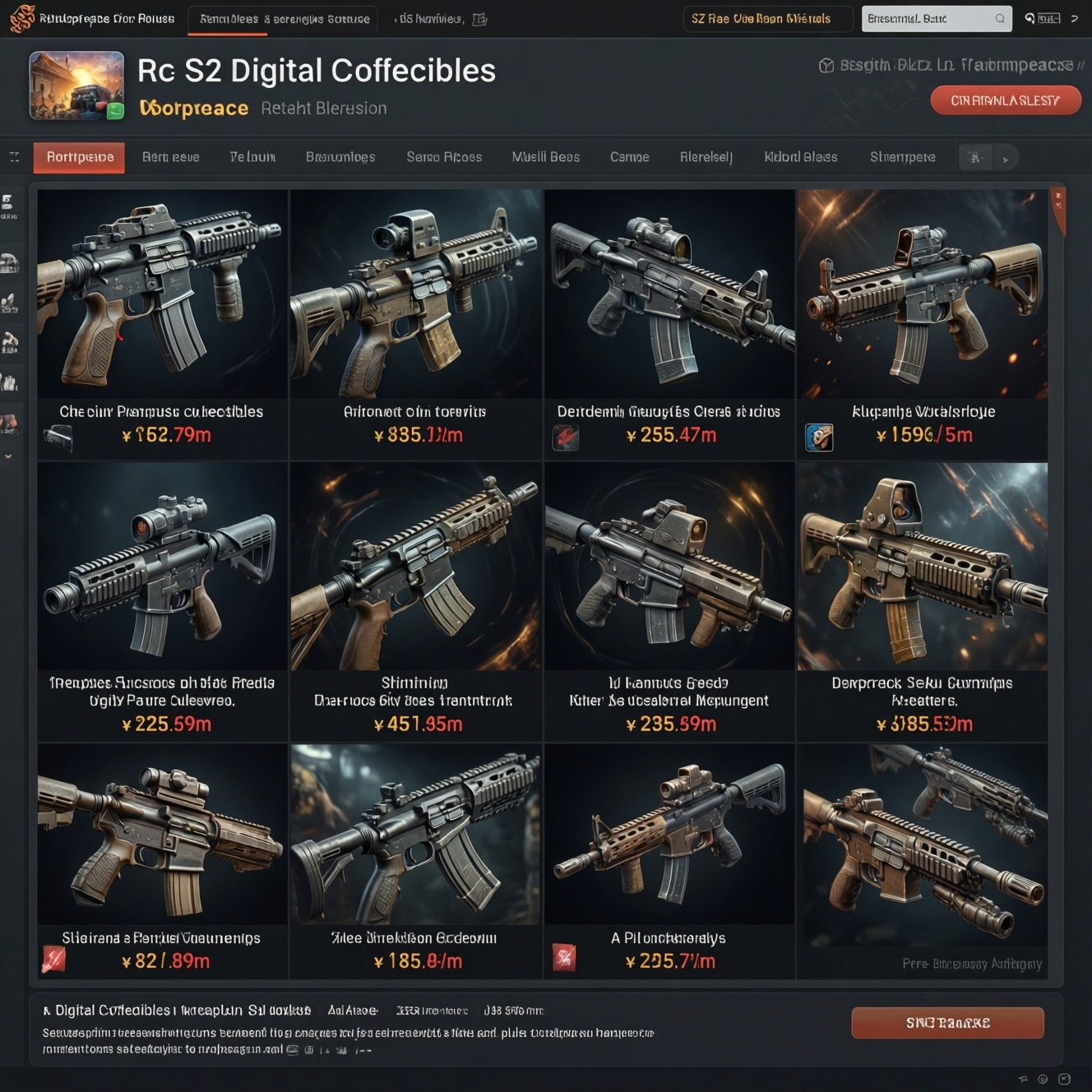


Value investing in game items means buying CS2 skins, stickers, and capsules only when their market price is below a realistic, evidence-based value range, then holding through catalysts like tournaments, updates, and supply changes. Build a portfolio by focusing on liquidity, verifiable scarcity, and repeatable demand signals, not hype or "next big item" narratives.
Core principles for value investing in game items
- Prefer items with consistent trading volume and narrow bid/ask spreads over "rare but illiquid" collectibles.
- Anchor decisions to observable metrics (historical prices, volume, float, supply signals), not social buzz.
- Buy in tranches and size positions by liquidity, not by conviction alone.
- Diversify across item types (skins, stickers, capsules), time horizons, and events.
- Use strict verification and transfer hygiene to avoid fraud, trade locks, and account losses.
- Define exit rules before entry (profit targets, invalidation points, time-based exits).
Understanding value drivers for skins, stickers, and capsules
This approach fits intermediate traders who already understand Steam inventory basics and want repeatable rules for CS2 skins investment rather than single "lottery" bets. It is most useful when you can track prices weekly and can tolerate drawdowns without panic selling.
Skip value investing in game items if you:
- Need guaranteed short-term returns or rely on borrowed money.
- Cannot verify items (float, authenticity, applied stickers, trade restrictions) reliably.
- Only want to chase "best CS2 skins to buy" lists without a valuation method or exit plan.
What drives value in each item type
| Item type | Main value drivers | Liquidity profile | Common value traps | Best suited holding style |
|---|---|---|---|---|
| Skins | Finish popularity, wear/float distribution, rare patterns, meta relevance, visibility in-game | Often high for popular rifles/pistols; varies by condition and pattern | Overpaying for "rare" patterns with no buyer depth; ignoring float; hidden sticker value assumptions | Core holdings with scheduled re-evaluation |
| Stickers | Team/player desirability, tournament relevance, application rate vs remaining supply, craft trends | Can be high for popular event stickers; can dry up fast for niche items | Buying purely on "looks"; confusing listed supply with real sellable supply; overestimating craft demand | Event-cycle positions and selective long holds |
| Capsules | Expected opening demand, long-term supply shrink (openings), event prestige, drop/availability status | Often very liquid while trending; can become slow if demand fades | Buying too late in the hype window; ignoring ongoing availability; paying premium for convenience | Structured accumulation and staged exits |
Where to trade: marketplaces, liquidity and price discovery
To buy CS2 skins, you need access to at least one primary price reference and one execution venue. Use multiple references to avoid anchoring on a single marketplace's temporary mispricing.
Minimum setup (tools and access)
- Steam account with Steam Guard enabled and stable device access (to reduce security and recovery risk).
- A consistent pricing reference workflow (same time of day, same currency view, same item naming).
- Ability to inspect items (float/wear and any relevant attributes visible in the listing or inspect link).
- A simple tracking sheet or portfolio app for cost basis, fees, and realized proceeds.
Liquidity and price discovery rules

- Prefer items where you can reasonably exit in parts (multiple buyers) rather than needing one perfect buyer.
- Compare recent sale prices to current listings; do not value an item by the lowest listing alone.
- Account for fees and withdrawal friction when comparing "cheap here, expensive there."
- If you plan to buy CS2 stickers or buy CS2 capsules for an event cycle, confirm the market still has active demand (recent sales) before entering.
Sourcing, verifying and timing acquisitions
-
Define your target universe and constraints
Pick a manageable watchlist (e.g., 10-30 items) across skins, stickers, and capsules, then set constraints for minimum liquidity and maximum position size. This prevents impulsive buying when a "deal" appears.
- Set a maximum number of simultaneous positions.
- Decide upfront whether you want "core" (stable) vs "event-cycle" (catalyst) holdings.
-
Build a valuation range from observable history
Estimate a conservative fair-value range using recent sale history, not aspirational listings. Your goal is to buy below the middle of that range after fees, not to predict the top.
- Use multiple time windows (short-term for current regime, longer-term for context).
- Adjust for condition/float tiers and special attributes (patterns, applied stickers) only when you can verify buyer demand.
-
Confirm liquidity before you commit capital
Liquidity is your safety net. If sales are sporadic, price drops can trap you even if you are "right" long-term.
- Check that there are frequent recent sales, not just many listings.
- Prefer tighter spreads and deeper buyer interest for larger positions.
-
Verify the item details and transfer conditions
Before you execute, verify exactly what you are buying and whether you can move or sell it when needed. This is where most avoidable losses happen.
- Skins: confirm wear/float, any meaningful pattern attribute, and whether stickers (if applied) are actually valued by buyers.
- Stickers/capsules: confirm exact capsule/sticker version and naming; avoid lookalikes and similarly named items.
- Check for trade restrictions, holds, or other constraints that change your exit timing.
-
Enter in tranches and document cost basis
Split entries to reduce timing risk and to learn how the market reacts to your chosen catalysts. Record total costs including fees so you can measure true performance.
- Tranche example: 3 entries spaced by time or by predefined price levels.
- Log: date, venue, item, attributes, unit price, fees, and intended exit rule.
-
Use event-aware timing without chasing hype
For event-driven segments-especially when people rush to buy CS2 capsules-avoid buying after the obvious spike. Look for stabilization, pullbacks, or periods when attention shifts away while volume remains healthy.
- Plan entries before the crowd or after the first excitement cools.
- For "best CS2 skins to buy" candidates, prefer stable demand skins that benefit indirectly from overall player activity, not only from short-lived narratives.
Быстрый режим
- Pick 15-20 liquid items across skins, stickers, and capsules and set max position sizes.
- Compute a conservative fair-value range from recent sale history; only buy below your entry threshold after fees.
- Verify attributes (float/condition, exact item version, restrictions), then enter in 2-3 tranches.
- Pre-write exits: profit target, invalidation point, and time stop.
- Track weekly; rebalance into higher-liquidity winners and cut positions that lose liquidity or violate your thesis.
Valuation techniques and constructing a diversified item portfolio
Use this checklist to confirm you are buying value (mispricing) rather than excitement (story). If you cannot tick most items, don't enter yet-even if the plan is to buy CS2 skins "because they always go up."
- I can explain the demand source in one sentence (gameplay popularity, crafting demand, event exposure) and it is not purely influencer-driven.
- I checked recent sale prices (not just listings) and my entry price is meaningfully below my fair-value midpoint after fees.
- Liquidity is adequate for my planned position size (I can exit in parts without collapsing the price).
- For skins, the float/wear tier I'm buying has consistent buyer demand (not just rare supply).
- For stickers, I understand why this specific sticker is applied (team/player relevance, craft trend) and I'm not assuming "all stickers age well."
- For capsules, I have a clear view on availability status and what would reduce supply (openings, time, delisting), not only hope.
- I compared at least two price references and accounted for fees, withdrawal constraints, and timing risk.
- My portfolio is diversified by item type and catalyst timing (not all tied to one tournament window).
- I have a written exit plan with at least one partial take-profit level.
Managing risk: volatility, fraud, and regulatory exposure
These are the mistakes that most often turn a reasonable CS2 skins investment plan into a drawdown or a loss:
- Overconcentrating in one item because it "feels" like the best CS2 skins to buy, despite weak liquidity.
- Ignoring fee drag and ending up with a break-even "win" that is negative after fees and spreads.
- Buying illiquid rare patterns/low-float extremes without evidence you can exit at a fair price.
- Confusing a temporary listing shortage with true scarcity (especially common when people buy CS2 stickers during hype waves).
- Entering late after a vertical move-common when people rush to buy CS2 capsules at peak attention.
- Failing to verify item identity/version and ending up with the wrong capsule/sticker/skin variant.
- Accepting off-platform deals or "middleman" arrangements that bypass protections and increase fraud risk.
- Not accounting for transfer holds/restrictions that prevent timely selling during fast moves.
- Letting one regulatory or platform-policy change dominate your whole portfolio because you have no diversification.
Performance tracking, rebalancing and realized returns

If your time or risk tolerance is limited, these alternatives can be more appropriate than active item selection:
- Rules-based core-only portfolio: hold only the most liquid mainstream skins and rebalance quarterly; suitable when you still want exposure but fewer decisions.
- Event-cycle basket with strict time stops: allocate a small, capped budget to stickers/capsules around major events and exit on a schedule; suitable when you can't monitor daily.
- Cash-first approach with limit entries: keep most capital in cash and only deploy when your valuation threshold triggers; suitable when markets feel overheated and you want patience as an edge.
- Skills-first investing: spend your "investment time" improving sourcing and verification (float, variants, liquidity) before scaling capital; suitable when past mistakes came from execution, not thesis.
Common investor concerns with short, practical answers
How much should I diversify between skins, stickers, and capsules?
Diversify by liquidity and catalyst: keep a liquid core (often skins) and smaller satellite positions (stickers/capsules) tied to event cycles. If you can't explain your exit timing, keep that slice small.
Is it still rational to buy CS2 skins if prices already ran up?
Yes, if your entry is below a defensible value range after fees and liquidity is strong. If the only reason is "prices always rise," skip and wait for better entries.
What's the safest way to buy CS2 stickers without overpaying?
Focus on stickers with consistent recent sales, then buy in tranches at predefined levels. Avoid paying a premium during peak attention unless you already have a fast exit plan.
How do I decide which are the best CS2 skins to buy for value, not hype?
Pick skins with stable demand (frequent sales) and transparent attributes (condition/float) where mispricing is measurable. Avoid "rare story" skins where the buyer pool is uncertain.
When should I buy CS2 capsules for a long hold?
Prefer periods when hype is low but sales remain steady, and only when you understand availability and supply reduction mechanics. If the capsule is still broadly available, treat it as a shorter trade unless proven otherwise.
How do I track real returns if I trade across multiple venues?
Track cost basis and proceeds net of all fees and spreads per item, then aggregate by item type. Without net tracking, you'll overestimate performance.
What is the single biggest red flag before entering a position?
Illiquidity: if you can't exit in pieces at a reasonable spread, your "value" thesis can be correct but still unprofitable. Reduce size or choose a more liquid substitute.