


Skin gambling and loot boxes trigger gambling, consumer-protection, and financial-compliance risks when players pay value for a chance-based outcome and can cash out (directly or via markets). Globally, regulators treat these mechanics unevenly, so you must map your exact user flow, item transferability, and monetization to each target jurisdiction before launch or update.
Regulatory Snapshot: What Practitioners Must Know

- Legal risk hinges on three facts: consideration (payment), chance, and prize/value (including tradable skins and secondary markets).
- "Skin gambling legality" often turns on whether skins are redeemable, transferable, or commonly sold for money-like value.
- Many "loot box laws by country" are not single statutes; they combine gambling law, consumer law, and platform/payment rules.
- Effective "loot box regulation compliance" usually requires design controls (odds disclosure, spend limits) plus operational controls (age gating, vendor oversight).
- Regulators look at the real-world ecosystem (streamers, item brokers, off-platform marketplaces), not only what your T&Cs say.
- A documented "loot box legal risk assessment" is defensible evidence of reasonable compliance governance.
Legal Definitions: Gambling, Skins, and Virtual Economies
For most legal analyses, a loot box or skin mechanic is evaluated against a functional gambling test: users provide consideration (money or money's worth), outcomes are determined predominantly by chance, and users can obtain a prize that has value. "Value" may be direct (cash-out) or indirect (transferable items with an established secondary market).
Skins are cosmetic virtual items, but they become legally sensitive when they are tradable, transferable, or convertible into fiat, crypto, gift cards, or other monetizable benefits. "Virtual economies" add complexity: if your system enables exchange, gifting, escrow-like features, or marketplace pricing, regulators may treat that as evidence of value and prize.
In Thailand (th), the core question usually becomes whether your mechanic resembles wagering or enabling betting, including facilitation via third parties, and whether minors are exposed to inducements. Even when gambling classification is not triggered, consumer and advertising rules can still apply.
Action checklist for definitions
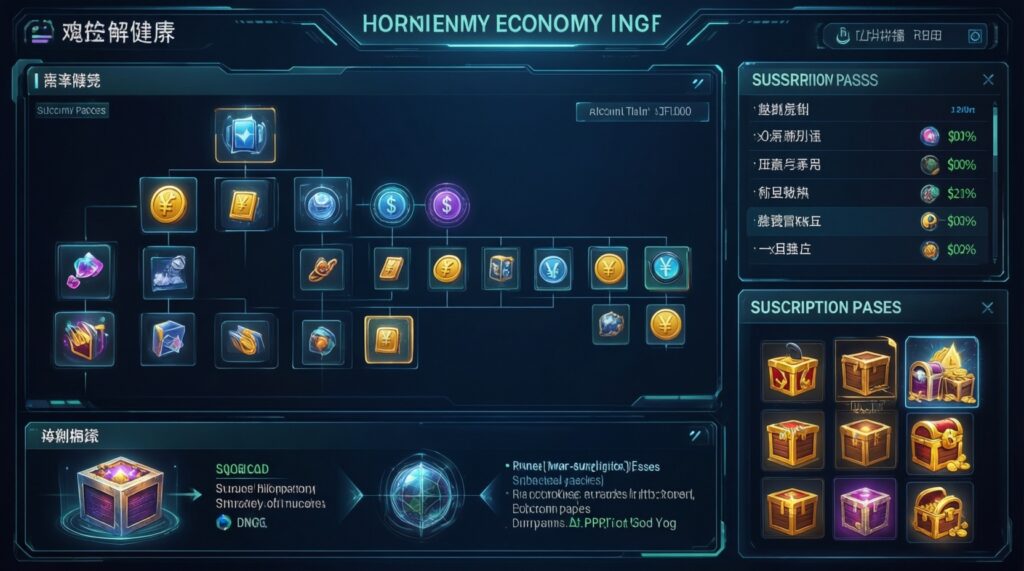
- Write a one-page item taxonomy: bound vs tradable vs withdrawable vs giftable.
- Map consideration sources: cash, premium currency, earned currency, subscriptions, battle passes.
- Document chance elements: RNG, pity timers, weighted drops, randomized bundles.
- Identify value pathways: official marketplace, peer-to-peer trades, API access, known third-party markets.
Jurisdictional Approaches: Comparative Global Frameworks
Countries and regulators do not align on one doctrine for loot boxes and skins. Your safest approach is to treat this as a jurisdiction-by-jurisdiction product classification exercise and maintain a living matrix. This is where teams most often search for "loot box laws by country" and miss that enforcement may come from different agencies (gambling, consumer, data, payments).
- Gambling-led classification: focuses on consideration/chance/prize and whether prizes have real-world value.
- Consumer-protection-led controls: focuses on transparency, unfair practices, and minors' protection, even if not "gambling."
- Platform and payment governance: app store rules, card network rules, and wallet/payment partner policies may be stricter than law.
- Transferability as the pivot: tradable skins and third-party cash-out can convert "toy" rewards into "prize" value.
- Operator vs facilitator lens: some regulators pursue game publishers; others target skin betting sites, streamers, affiliates, and API enablers.
| Regulatory stance (typical) | What triggers higher risk | Common compliance expectation | Practical product implication |
|---|---|---|---|
| Gambling classification likely | Paid randomized rewards + cash-out or widely monetized tradable items | Licensing/authorization, AML controls, strict age gating | Remove cash-out paths or segregate jurisdictions; consider disabling trading/withdrawals |
| Gambling classification debated | Tradable items exist but no official cash-out; active third-party markets | Risk assessment + mitigations (transfer limits, enforcement against third-party betting) | Strengthen anti-bot/anti-fraud; limit API access; tighten trade rules |
| Consumer-protection priority | Opaque odds, aggressive monetization, minors targeted, misleading marketing | Odds disclosure, clearer pricing, parental controls, refund/chargeback handling | Add disclosures in-store and in-client; introduce spending controls |
| Industry/self-regulatory approach | Low cash-out feasibility; mostly bound items | Best practices (transparency, age ratings, purchase confirmations) | Use "compliance by design" to preserve monetization while reducing scrutiny |
Action checklist for global frameworks
- Maintain a jurisdiction matrix for launch markets, including Thailand (th) and major player bases.
- Track regulator type per market (gambling vs consumer vs payments) and who can fine/ban.
- Decide your default posture: global high-standard vs market-by-market feature flags.
- Assign an owner for updates (patch notes can change legal classification overnight).
Consumer Protection and Age Verification Obligations
Even when a feature is not formally "gambling," consumer protection duties often attach to monetized randomization and virtual economies. These duties commonly appear through unfair-practices standards, advertising rules, and minors' protection. In practice, "loot box regulation compliance" frequently fails on UX details rather than legal theory.
- Odds and pricing transparency: disclose drop rates and explain how pity/guarantee mechanics affect probability.
- Minors and age gating: apply age checks proportionate to risk; avoid designing mechanics that strongly pressure minors to spend.
- Informed consent for purchases: clear confirmations, localized pricing, and friction against accidental buys.
- Marketing and influencers: ensure sponsored openings and "case opening" streams are clearly labeled as ads and not framed as easy profit.
- Complaint handling: fast refunds/chargeback response for minors' spend and deceptive-presentation claims.
Action checklist for consumer and age controls
- Place odds and key mechanics disclosures at the point of purchase (not only in a help page).
- Implement parental controls: spend caps, purchase PIN, and purchase history export.
- Localize disclosures (language and currency) and keep them consistent across web, client, and app stores.
- Audit influencer/affiliate templates to prevent "profit" framing for randomized rewards.
Anti-Money Laundering and Financial Compliance Risks
AML and financial-crime exposure increases when skins function like transferable value, especially with peer-to-peer trading, market pricing, and any withdrawal channel. Even without formal licensing, payment partners may demand controls to reduce laundering, fraud, and chargeback risk. This is a core input to any "loot box legal risk assessment."
Where AML-type risk concentrates
- Cash-out or redemption: conversion to fiat/crypto/gift cards, or brokered withdrawals via third parties.
- High-velocity trading: rapid item turnover, wash trading, circular transfers, mule accounts.
- Account takeovers: stolen payment instruments used to acquire tradable skins that are quickly transferred away.
- Cross-border flows: mismatched geolocation, VPN patterns, and multi-currency funding sources.
Controls that are commonly expected (even if not called "AML")
- Risk-based KYC triggers: step-up verification for high-value trading, withdrawals, or unusual patterns.
- Transaction monitoring: rules for velocity, linkage analysis, device fingerprinting, and sanctions/blocked lists where applicable.
- Trade friction: cooldowns, trade holds, limits for new accounts, restrictions on gifting.
- Evidence retention: logs that connect purchase, RNG outcome, transfer, and marketplace sale.
Action checklist for financial compliance
- Classify every value exit: official redemption, marketplace payout, third-party "facilitated" cash-out signals.
- Define step-up verification triggers and document why thresholds are reasonable (internally, not as public promises).
- Coordinate with PSPs/app stores on prohibited flows and required reporting.
- Ensure logs are tamper-resistant and searchable for investigations.
Enforcement Trends: Precedents, Fines, and Litigation
Enforcement is typically fact-driven and ecosystem-driven. Regulators and plaintiffs focus on what users can actually do (trade, cash-out, circumvent age checks), and whether the company knew or should have known. "Gaming loot box legal consulting" often starts after an incident; you want the governance and evidence ready before that.
- Myth: "No official cash-out means no prize." Reality: widespread secondary markets can be treated as value evidence.
- Mistake: relying only on Terms of Service to prohibit skin betting. Reality: weak enforcement looks like tolerance.
- Mistake: odds disclosures that omit pity timers or bundled probabilities.
- Mistake: allowing minors to purchase randomized items with minimal friction.
- Mistake: API/marketplace features that enable third-party betting sites to scale.
Action checklist for enforcement readiness
- Create an incident playbook: marketplace manipulation, underage spend, streamer promotion issues.
- Keep evidence of proactive steps: takedown notices, bans, API restrictions, monitoring rules.
- Align Legal, Trust & Safety, Payments, and Product on a single risk narrative.
- Run periodic red-team tests for "cash-out in practice," not only "cash-out in policy."
Operational Mitigations: Compliance Programs and Design Changes
Mitigation is most effective when it combines product design (reduce prize value and compulsion features) with operations (monitoring and enforcement). For teams doing "loot box regulation compliance," a small set of feature flags plus a documented decision trail usually delivers the biggest risk reduction without rewriting the game loop.
Mini-case: rolling out a tradable-skin drop feature safely
- Design constraint: make drops account-bound by default; unlock trading only after verified age and account maturity.
- Market constraint: disable peer-to-peer trading in high-risk jurisdictions; use server-side geofencing plus payment BIN checks.
- Economic constraint: cap daily trade volume; add cooldowns; restrict gifting for new accounts.
- Transparency constraint: publish odds and clearly label paid randomization as such in-store.
Short algorithm to validate your outcome (release gate)
- Describe the flow: payment method → randomization → item state (bound/tradable) → exit path (sell/transfer/redeem).
- Run the gambling test: consideration? chance? prize/value (including secondary markets)? If all three: treat as gambling-risk feature.
- Score jurisdictions: for each market, mark the stance and required controls; escalate if uncertain rather than assuming "low risk."
- Confirm controls exist: age gating, odds disclosure, trade limits, monitoring, enforcement, logging.
- Decide and record: ship, ship with feature flags, or redesign; store evidence for audits and partner reviews.
Action checklist for mitigations
- Implement feature flags for trading, gifting, and withdrawals so you can respond quickly.
- Build "ecosystem enforcement": API throttling, anti-bot measures, and third-party market monitoring.
- Document a repeatable review process (owners, sign-offs, and rollback criteria).
- Prepare a lightweight "gaming loot box legal consulting" brief template for rapid external review.
Main-content self-check before launch
- I can explain, in one diagram, how a skin moves from purchase to potential cash-out (including third parties).
- I have a written "loot box legal risk assessment" for each launch market and a plan for updates.
- Age gating, odds disclosure, and spending controls are implemented where risk is non-trivial.
- Monitoring and enforcement are real (rules, tooling, logs), not only contractual.
Practical Answers to Common Legal Uncertainties
Are loot boxes always gambling?
No. Many systems fail one element of the gambling test (often "prize/value"), but the analysis is jurisdiction-specific and may still trigger consumer-protection duties.
Does banning cash-out in Terms of Service solve the risk?
Not by itself. If users can reliably monetize skins through third-party markets, regulators may still treat the items as having value and expect active enforcement.
When does "skin gambling legality" become a serious issue for a publisher?
When your design or ecosystem enables betting-like behavior at scale (tradable items, APIs, marketplaces, stream promotion), or when minors can participate with low friction.
How should I use "loot box laws by country" research without being misled?
Use it as a starting index, then validate the applicable regulator, enforcement posture, and whether consumer or payments rules are the primary constraint in each market.
What minimum controls signal good-faith "loot box regulation compliance"?

Clear odds disclosure at purchase, meaningful age gating for paid randomization, spending controls, and documented monitoring/enforcement against prohibited cash-out and betting.
What is the fastest way to start a defensible "loot box legal risk assessment"?
Write the end-to-end value flow, list all transferability and exit paths, then score each target jurisdiction and map required mitigations and owners.
When should we bring in "gaming loot box legal consulting"?
Before launching tradable items, marketplaces, or any withdrawal-like feature, and when expanding into new jurisdictions or responding to regulator/platform inquiries.