

Steam trade holds and cooldowns are time-based restrictions that delay when items or funds can be traded or listed, which directly reduces liquidity for bettors and traders by slowing inventory turnover and widening effective spreads. They are not bans and cannot be bypassed safely; instead, you plan around the timer, adjust exposure, and use lower-resource alternatives like pre-funded float, smaller position sizing, and staged settlements.
Concise overview: how trade holds and cooldowns reshape liquidity
- A steam trade hold delays delivery/receipt of items, so inventory cannot be immediately recycled into the next bet or trade.
- A steam trade hold cooldown changes timing risk: the same position can be profitable on paper but untradeable when the market moves.
- A steam market cooldown affects how quickly you can convert items to Steam Wallet funds (or back into items), reducing cash-like flexibility.
- Trying to remove steam trade hold via "workarounds" usually increases account risk; operational planning is the realistic mitigation.
- A steam trade hold after changing password is a common trigger that unexpectedly freezes liquidity during a critical trading window.
Debunking common myths about Steam trade holds and cooldowns
Myth 1: A hold is the same as a ban. A hold is a delay, not a punishment. Your items remain yours, but settlement is deferred, so you lose the ability to redeploy that value quickly.
Myth 2: You can reliably "remove steam trade hold" instantly. In practice, holds are enforced by Steam's risk controls and account security state. Attempting shortcuts (buying "verified" accounts, sharing logins, using questionable services) typically increases restrictions and can lead to losses unrelated to price movement.
Myth 3: Holds only matter for big traders. Bettors feel them even more because betting liquidity depends on fast turnover. If you need to hedge or rebalance and your items are locked, your effective risk doubles: price risk plus timing risk.
Myth 4: A "steam trade hold cooldown" and a "steam market cooldown" are interchangeable. They constrain different pipelines: trade settlement versus market listing/withdrawal. Liquidity planning must treat them separately.
Technical mechanics: how Steam enforces holds and cooldown timers

- Settlement delay is stateful. Steam ties trade eligibility and timer behavior to the account's security and risk signals (e.g., recent security changes).
- Different actions, different gates. Trading items, listing on the Community Market, and moving value into/out of Steam Wallet can each be subject to distinct cooldown logic.
- Timers affect both legs of a cycle. A bettor's "item → bet → item" loop breaks if either trade delivery or market conversion is delayed.
- Holds shift from price friction to time friction. Even if the nominal spread is small, the inability to act makes the effective spread larger.
- Security events can trigger surprise constraints. A steam trade hold after changing password is common because Steam treats it as an elevated-risk event.
- Cooldowns compound. If you must wait to receive items and then also wait to list/sell, the total "time to liquidity" becomes the sum of multiple gates.
Comparative table: holds/cooldowns, liquidity effect, and realistic mitigations
| Restriction type | What gets delayed | Typical trigger (examples) | Liquidity impact (numeric example) | Mitigation (practical, low-resource options included) |
|---|---|---|---|---|
| steam trade hold | Trade settlement (items not immediately deliverable/receivable) | Account risk/security state; newly enabled protections; suspicious patterns | If your loop is 2 trades/day, a hold that blocks settlement for a day can cut turnover from 2 to 0 for that inventory window. | Keep a small "float" inventory; stagger trades; reduce position size so one hold doesn't freeze all capital; avoid last-minute rebalancing. |
| steam trade hold cooldown | Ability to execute back-to-back trade actions without delay | High-frequency trading patterns; repeated cancellations/changes | If you rely on flipping 5 items sequentially, a cooldown that forces spacing between trades can turn a 30-minute rebalance into hours. | Batch decisions; pre-select counterparties; trade fewer, higher-liquidity items; use staged settlement (split into 2-3 tranches). |
| steam market cooldown | Listing/selling on Community Market and conversion into Steam Wallet | Market-side restrictions; new listing activity; security events | If you need wallet funds to buy a hedge item, a delay means you miss the price window; a 3% move on a volatile item can erase a thin edge. | Maintain a modest wallet buffer; prefer items you can trade directly (no market step); use conservative bet sizing when wallet liquidity is low. |
| steam trade hold after changing password | Trade eligibility/settlement timing due to heightened account risk | Password change; recovery activity; device/location changes | If you planned a same-day cash-out and the hold hits, your "time to exit" becomes unknown at the exact moment you need certainty. | Schedule security changes outside peak trading; document devices; avoid simultaneous password/email/2FA changes; keep emergency liquidity in non-locked form. |
Measuring liquidity impact on betting markets and item exchanges
For bettors and item traders, liquidity is not only "can I sell?" but "can I settle and redeploy on schedule?" These scenarios show where restrictions bite the hardest:
- Hedging after odds shift: You win or lose, odds move, and you need to hedge immediately, but the steam trade hold blocks the transfer of the hedge inventory.
- Arb windows that close fast: A small price mismatch exists across marketplaces; a steam trade hold cooldown means you can't complete both legs before the spread collapses.
- Deposit/withdrawal timing on betting sites: If deposits require tradable items, a hold delays funding; if withdrawals are items, the "cash-out" is delayed.
- Market-to-trade conversion bottleneck: A steam market cooldown prevents fast conversion of items into wallet funds to buy the next needed item.
- Inventory concentration risk: If most value sits in a few items, a single restriction event freezes most of your deployable capital.
Trader and bettor behavior: strategy shifts and timing risks
What improves when you plan around holds
- Lower forced selling: You stop relying on "sell now or lose edge" behavior, which reduces panic exits.
- Cleaner risk budgeting: You explicitly price in timing risk and reduce hidden leverage created by fast turnover assumptions.
- Better item selection: You prioritize high-demand, easy-to-match items where delays hurt less because spreads are tighter and counterparties are abundant.
What gets worse (and needs compensating controls)
- Edge decay: If your edge depends on speed, cooldowns convert a speed edge into an execution liability.
- Opportunity cost: Locked inventory cannot be used for new bets, laddering strategies, or rebalancing across items.
- Timing risk becomes dominant: The market can move while you are unable to act, turning small spreads into large realized losses.
- Operational fragility: A steam trade hold after changing password can hit during peak events (tournaments, patch days), when volatility is highest.
Operational mitigations: platform and user-level tactics to preserve liquidity
- Stop trying to "hack" restrictions. If your plan depends on instantly remove steam trade hold, it is not a plan. Replace it with buffers and scheduling.
- Run a two-bucket bankroll. Keep (1) an active trading float for immediate actions and (2) a slower bucket that can tolerate holds. Low-resource alternative: even a small float reduces total freeze risk.
- Prefer direct trade pathways when wallet liquidity is constrained. If a steam market cooldown slows wallet conversion, prioritize peer-to-peer item trades to avoid the market step.
- Stagger execution into tranches. Split large rebalances into multiple smaller trades so a steam trade hold cooldown doesn't block the whole move at once.
- Avoid stacking security changes. Don't combine password change, device swap, and recovery actions close together; this is how you end up with a steam trade hold after changing password when you least can afford it.
- Operational logging for limited resources. Use a simple note (date/time, action, expected unlock window) to avoid accidental repeated edits/cancellations that can worsen cooldown behavior.
Policy considerations: platform rules, arbitrage, and market resilience
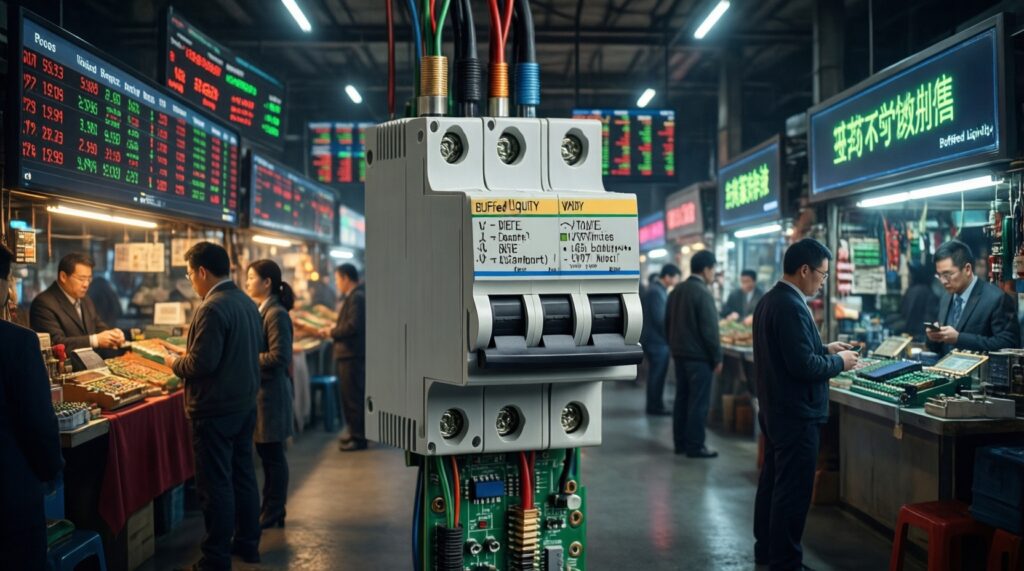
Holds and cooldowns act like circuit breakers: they reduce rapid capital cycling and make manipulation harder, but they also penalize legitimate liquidity providers. On betting-adjacent flows, this shifts advantage toward participants with inventory buffers and disciplined timing.
Mini-case (practical illustration): You spot an arbitrage where Item A trades for more on a betting site than on the open market. Without restrictions, you cycle capital quickly; with a steam trade hold, your capital is trapped mid-cycle, and the arb disappears before settlement.
# Timing-aware decision rule (conceptual)
if expected_edge <= expected_price_move_during_lock + fees:
    skip_trade()
else:
    trade_in_tranches()
    keep_float_for_hedges()
Practical clarifications for common concerns
Is a steam trade hold permanent?
No. It is a delay mechanism; the key problem is that it disrupts timing, not ownership.
Does a steam trade hold cooldown affect betting deposits and withdrawals?
It can. If the betting flow depends on tradable items, a cooldown slows funding and cash-out cycles.
What is the difference between a steam market cooldown and trade restrictions?
Market cooldowns constrain listing/selling and wallet conversion, while trade restrictions constrain item transfers between accounts. For liquidity planning, treat them as separate bottlenecks.
Can I remove steam trade hold instantly by using a third-party service?
Relying on third parties is risky and often counterproductive. The realistic approach is to stabilize account security and plan liquidity buffers.
Why did I get a steam trade hold after changing password?
Password changes can trigger higher-risk status. Schedule security changes away from critical trading windows and avoid stacking multiple account changes at once.
How should I trade if I have limited capital and can't keep a big float?
Use smaller position sizes, trade fewer items with better depth, and execute in tranches so one delay does not freeze all deployable value.