

Roulette-style minigames are chance-based reward loops where players stake a currency or item, trigger a spin, and receive a randomized outcome from a weighted pool. They hook players by combining variable rewards, near-miss feedback, social proof, and rapid re-entry. This guide explains how a roulette minigame works, how to design it safely, and when to avoid it.
Core Mechanics Snapshot
- A roulette minigame is a weighted random draw presented as a spin, often bundled with scarce rewards and fast replays.
- Hook drivers: variable reinforcement, near-miss framing, collection completion, time-limited offers, and social visibility.
- Core design levers: RNG transparency, payout/EV targets, cooldowns, stake sizing, and inventory sinks.
- Abuse vectors: alt accounts, botting, laundering value through trading, chargebacks, and streamer-driven herd behavior.
- Safer implementation: clear odds disclosure, loss limits, age gates, anti-fraud controls, and non-monetary alternatives.
Designing Roulette Mechanics: RNG, Odds and Paytables

Good fit: live-service games that need predictable economy sinks, event engagement, and collectible progression-especially where rewards are cosmetic or non-transferable. It can also work as a controlled "loot reveal" layer in a roulette game online that already has a robust anti-fraud stack.
Don't build it when: (1) your rewards can be traded for real value, (2) you can't clearly explain odds and expected outcomes, (3) your community already struggles with compulsive play complaints, or (4) your jurisdictional risk is unclear for Thailand (th) distribution. In those cases, an in-game roulette can create more harm (and moderation/legal load) than retention upside.
- RNG model: use server-authoritative draws; client should only render the animation.
- Weighting: define reward tiers and weights; then lock a versioned paytable so you can audit changes.
- Fairness posture: avoid "fake spins" (preselected outcome + misleading reel) unless the UI explicitly communicates it as an animation. Trust is a long-term KPI.
- Near-miss ethics: do not intentionally tune reels to create frequent near-misses; it increases harm signals and player backlash.
Stakes and Assets: Virtual Currency, Item Rarity and Real‑Money Risks
Before shipping a roulette minigame app-like experience inside your game, set up the assets and controls so the mechanic is auditable, rate-limited, and hard to exploit.
- Asset definitions: item catalog with rarity tiers, binding rules (tradeable vs non-tradeable), and clear ownership history.
- Economy controls: currency sources/sinks map, inflation monitoring, and rollback tooling for bad configurations.
- Odds disclosure text: short, localized copy for the spin screen and a deeper help article. Keep it consistent with the actual paytable.
- Server logs: immutable event logs for stake, RNG seed reference (or draw ID), result, inventory delta, and client/session identifiers.
- Anti-fraud tooling: device fingerprinting, velocity limits, anomaly detection (burst spins, repeated small deposits, suspicious trade graphs).
- Risk review: internal policy for real-money risks (top-ups, gift cards, third-party markets) and a plan for complaints escalation.
Player Flow and UX: Interface, Feedback Loops and Session Pacing
-
Define the promise and the boundary. Write one sentence for what the spin does ("stake X to draw 1 item from pool Y") and one sentence for what it doesn't do ("no skill advantage; outcomes are random"). Place both near the call-to-action so players don't confuse an in-game roulette with skill-based crafting.
- Safety note: avoid copy that implies guaranteed wins or "beating the system."
-
Build a versioned paytable and show odds clearly. Create a reward pool with explicit weights per tier and publish tier odds in the UI. If you run events, version the table (e.g., "Summer Pool v3") so support can reproduce outcomes from logs.
- Practical tip: show odds by tier (Common/Rare/etc.) and disclose if duplicates are possible.
-
Make the server decide the outcome, then animate. On "Spin," the server validates stake, applies limits, draws the outcome, writes logs, updates inventory, and returns a result token. The client then plays the roulette animation mapped to that token (not the other way around).
- Fraud mitigation: deny spins if the client is out-of-date or tampered; require time sync.
-
Gate re-entry to slow runaway sessions. Add pacing controls: cooldowns, session reminders, optional self-limits, and escalating friction after repeated spins. This reduces impulsive loops without killing the feature.
- Use "soft friction" first: confirmation prompts after streaks, then cooldowns if needed.
-
Design outcomes to reduce regret. Provide consolation value that doesn't amplify harm: duplicate protection, crafting dust, or progress toward a guaranteed cosmetic-without implying players should chase losses.
- Avoid: "Double down" prompts immediately after a loss; it trains loss-chasing.
-
Handle edge cases like a live service. Implement clear states for insufficient funds, inventory full, transaction pending, reconnect after disconnect, and dispute flows. If you also offer a roulette game online storefront, keep purchase steps separated from spin steps to reduce coercive funnels.
- Support readiness: one-click tool to fetch spin history by user and draw ID.
Fast mode
- Lock a paytable (tiers + weights), version it, and prepare odds disclosure text.
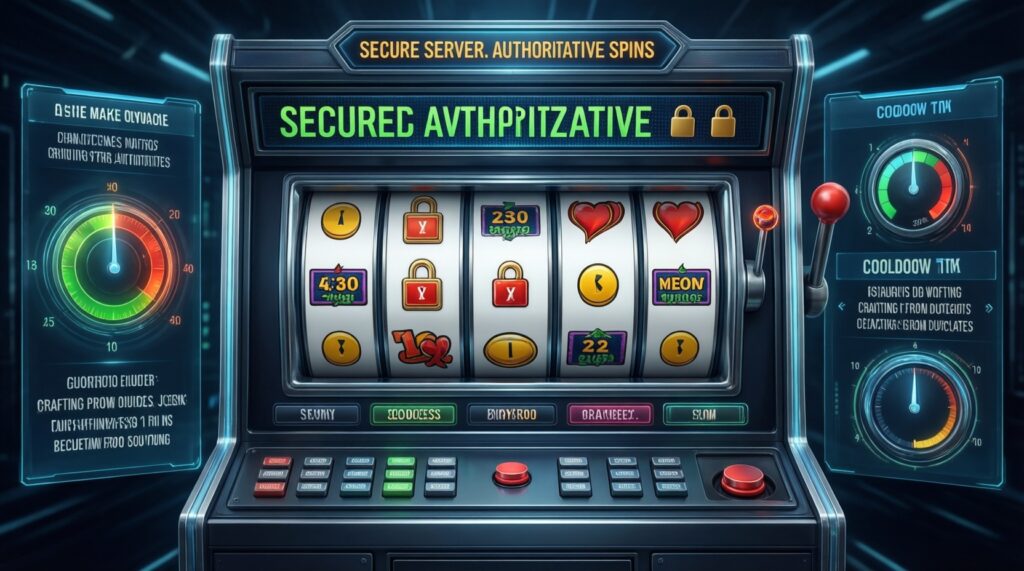
- Make spins server-authoritative: validate stake → draw → log → grant → return result token.
- Add pacing: cooldowns, streak prompts, and optional self-limits.
- Reduce regret: duplicates-to-crafting, progress meters, and clear non-guarantee wording.
- Ship with monitoring: anomaly alerts, support tools, and a rollback plan for the pool.
Social Layers: Betting Pools, Trading, Streaming and Community Effects
Use this checklist to verify the social impact before scaling visibility (leaderboards, streams, sharing) for roulette-style minigames.
- Sharing is opt-in and doesn't pressure replay (no forced "post to chat to spin again").
- Public feeds avoid highlighting "almost won" moments as the main narrative.
- Trading rules prevent value laundering (limits, cooldowns, bind-on-acquire for high-risk rewards).
- Community moderation has clear policy for "spin encouragement," harassment, and scams.
- Streamer integrations avoid incentivizing binge play (no "spin until you hit X" quests from official channels).
- Group features (betting pools, guild pots) have contribution caps and transparent ledgers.
- New players are protected from predatory coaching (tutorial warnings, restricted gifting early on).
- Regional compliance review exists for Thailand-facing distribution and localization of warnings.
Measuring Success: Retention, ARPU and Behavioral KPIs
Common mistakes when teams evaluate a roulette minigame and scale it too aggressively:
- Optimizing only revenue (ARPU/ARPDAU) while ignoring harm signals like late-night binge sessions and complaint volume.
- Attributing retention gains incorrectly because the feature launches alongside events, content drops, or influencer campaigns.
- Using win-rate confusion: players judge fairness by perception; if the experience feels rigged, churn rises even if the math is "correct."
- Ignoring distribution tails: a small segment can drive most spins; track concentration and set risk thresholds internally.
- Failing to segment by source of funds: earned currency spins behave differently from paid top-up spins.
- Not monitoring economy inflation: a misweighted pool can flood rare items and collapse long-term goals.
- Shipping without rollback: if a pool is exploited, you need fast disable switches and reversible grants.
- Overusing limited-time pools: constant urgency messaging increases fatigue and distrust, especially for younger audiences.
Safety and Compliance: Age Gates, Fraud Prevention and Ethical Limits
When roulette mechanics are risky or inappropriate, these alternatives usually achieve similar goals with lower harm and regulatory exposure:
- Earned-only reward wheels: spins use only gameplay-earned tokens (no direct purchase path), with strict daily caps and transparent odds.
- Deterministic reward tracks: battle-pass style milestones or stamp cards that guarantee outcomes via progress, not chance.
- Crafting + exchange: convert duplicates into materials and let players choose rewards from a shop rotation (predictable, auditable value).
- Skill-based micro-challenges: short, replayable tasks with fixed payouts; use leaderboards carefully to avoid coercive loops.
Common Practitioner Concerns and Rapid Answers
Is a roulette minigame always considered gambling?
No-classification depends on jurisdiction and whether players stake something of value for a chance outcome, especially if rewards are tradeable or monetizable. Treat it as a high-risk mechanic and get local legal review for your target markets, including Thailand.
What makes roulette-style minigames feel "addictive" to players?
Fast cycles, variable rewards, and social proof can create powerful replay impulses. Near-miss framing and urgency messaging amplify this, so pacing controls and clearer disclosures matter.
How do I prevent fraud and botting in an in-game roulette?
Make outcomes server-authoritative, log every draw, and apply velocity limits plus anomaly detection. Restrict trading for high-risk rewards and watch for suspicious account graphs and burst activity.
Should I show exact odds in the UI?
Yes-publish tier odds and keep them synchronized with the actual paytable version. Clear odds reduce disputes and improve trust even when outcomes are unfavorable.
How can I keep the feature fun without pushing loss-chasing?
Avoid "double down" prompts and immediate re-spin nudges after losses. Use soft consolation like crafting materials or progress meters, plus cooldowns and optional self-limits.
What if the community already runs a roulette game online outside the game?
Integrations can import real-money risks and reputational damage into your product. If you can't control trading and payments end-to-end, prefer non-transferable rewards and deterministic alternatives.
What's the safest way to prototype a roulette minigame app-like loop?
Start with earned-only currency, non-tradeable cosmetics, strict caps, and full odds disclosure. Run it as a limited-time test with monitoring and an easy kill switch.