
CS2 skin prices move because supply and demand change faster than most players notice: game updates shift utility and desirability, new cases alter scarcity expectations, pros/streamers trigger short-lived demand spikes, and market sentiment amplifies moves through speculation and liquidity. Understanding these drivers helps you time entries, avoid hype traps, and find lower-cost alternatives when budget is limited.
Core Drivers Behind CS2 Skin Price Movements
- Update-driven repricing: patches change visibility, feel, and meta preferences, re-ranking "must-have" skins.
- Case and drop expectations: new supply narratives move prices before real supply meaningfully arrives.
- Attention shocks: pros and streamers create short bursts of demand that often mean-revert.
- Sentiment and liquidity: thin order books, wide spreads, and fear/greed cycles exaggerate candles.
- Micro-scarcity: float, pattern, and StatTrak segments can behave like separate markets.
- Venue differences: platform fees, withdrawal rules, and bot inventory create arbitrage windows.
How Game Updates Reshape Skin Valuations
Concept: "Update-driven repricing" is the market's reaction when an update changes what players see, value, or believe will be valued next. It is not only about raw weapon strength; it also includes visual clarity, audio feedback, and changes to how often a weapon is picked in real matches.
Mechanics: after an update, buyers re-evaluate skins through three lenses: (1) utility (how often the weapon is used), (2) presentation (how the skin looks under new lighting/shaders), and (3) status (what becomes "in" within the community). A small perception shift can move prices quickly when listings are thin.
Trading implication: treat patch weeks as "repricing windows." If you check ราคาสกิน CS2 วันนี้ and see sudden dispersion (some variants jumping while others lag), that's a sign the market is re-sorting winners/losers rather than moving everything together.
- Limited resources alternative: if the "headline" skin becomes unaffordable, target the same weapon in a cheaper finish tier, or a visually similar palette across another collection. You capture the usage trend without paying the hype premium.
- Process tip: compare "before/after" screenshots in similar lighting and inspect in-game, not only marketplace thumbnails, to avoid paying for a look that doesn't translate.
New Case Drops and Rarity Mechanics: Immediate vs. Long-Term Effects
Concept: new cases and drop pool changes move prices through expectations first, and actual supply later. The market often "prices in" what it thinks will happen (more supply, new substitutes, shifting attention) before you can measure it in listings.
Mechanics:
- Substitution effect: a new case introduces new "shiny" options, pulling demand away from older looks-even if the older skin's supply did not change.
- Attention rotation: traders rotate capital into whatever is being unboxed and showcased, creating temporary illiquidity elsewhere.
- Expectation of supply: if players assume a skin's source becomes more common, they list faster; if they assume it becomes rarer, they hoard.
- Segment splits: the same skin can decouple by wear/float class; "clean" examples may resist declines better than average ones.
- Fee friction: real money cost (fees, cashout limits) slows arbitrage, letting mispricings persist longer right after a release.
- Unboxing narrative: the question "เปิดกล่อง CS2 คุ้มไหม" spreads during new case hype, often pushing more people to chase openings rather than buy the exact skin they want-changing demand distribution across tiers.
Trading implication: separate "announcement shock" from "supply reality." Early moves are often about positioning; later moves are about listings, undercuts, and how quickly new inventory reaches sellable markets.
| Horizon | Typical driver | What to watch | Practical move (incl. low-budget option) |
|---|---|---|---|
| Short-term (hours-days) | Hype, attention, fast repricing | Spread widening, rapid relists, sudden buy-wall changes | Use limit orders; if priced out, buy a cheaper wear tier or a close-looking substitute to avoid paying peak hype. |
| Mid-term (days-weeks) | Listings normalize, capital rotates | Listing count trend, undercut speed, whether demand persists after content cycle | Scale in; prefer liquid items. For "ซื้อสกิน CS2 ราคาถูก," hunt during rotation away from last week's hype item. |
| Long-term (months) | True scarcity narrative, collector demand | Consistency of demand across seasons, strength of premium segments (clean float/pattern) | Focus on durable aesthetics; if budget is tight, hold smaller positions in stable, liquid skins rather than one illiquid trophy piece. |
Influence of Pros and Streamers on Demand and Price Spikes
Concept: visibility creates demand spikes. When a pro or major streamer repeatedly uses a specific skin, the skin becomes a social signal, and buyers rush to replicate the look.
Mechanics: these moves are driven by attention density (many eyes at once) and imitation. Liquidity matters: thin markets spike harder; thick markets absorb demand with smaller moves.
Where it shows up (typical scenarios):
- Tournament spotlight: a signature weapon skin repeatedly appears on broadcast, and "buy now" demand hits within hours.
- Loadout trend: a streamer standardizes a themed inventory (colors/stickers), causing correlated demand across multiple items.
- Clip virality: a highlight clip spreads with the skin clearly visible; casual buyers chase the exact variant rather than alternatives.
- Community replication: "budget versions" trend next-cheaper wears/finishes that approximate the look see delayed demand.
- Sticker pairing: specific sticker+skin combos trend, lifting a narrow micro-segment more than the base skin.
Trading implication: treat influencer spikes as time-bound unless the skin also benefits from structural factors (drop changes, long-term collector appeal). If your goal is ลงทุนสกิน CS2 ทำกำไร, prioritize items where the hype aligns with lasting demand, not just a single weekend of attention.
- Limited resources alternative: instead of buying the exact showcased skin at peak, copy the theme (colorway) using a different finish, higher wear, or a less-hyped weapon from the same palette.
Market Sentiment, Speculation and Liquidity Cycles
Concept: sentiment and liquidity determine how violently prices move. In optimistic phases, buyers lift asks; in fearful phases, sellers race to the bottom. Speculation amplifies both.
Mini-scenarios you can apply before judging risk
- Rotation day: you notice a new case dominating attention; older skins show slower sales and deeper undercuts. You place staggered bids rather than market-buying.
- Hype spike: a pro uses a skin; you avoid the exact variant and buy a close substitute with better liquidity, planning to exit into the second wave of imitators.
- Spread trap: a skin looks cheap on one venue but has a wide buy/sell gap; you calculate fees and cashout friction before committing.
Upsides you can exploit:
- Mean reversion after attention peaks: many spikes cool once the spotlight moves on.
- Mispricing between segments: different wear tiers can lag each other, letting you choose a better risk/reward segment.
- Patient bids: limit orders can outperform chasing "green candles," especially in thin books.
Limitations and risks:
- Liquidity illusion: visible listings don't guarantee fast selling at your target price; spreads can widen instantly.
- Fee drag: marketplace fees and currency conversion reduce edge; small flips can become negative EV after costs.
- Speculation cascades: when everyone is "front-running," exits become crowded, and you may be forced to undercut.
- Information asymmetry: bots and full-time traders react faster; you need rules (entry, exit, max spread) to avoid impulse trades.
Supply-side Mechanics: Drop Rates, Float Distribution and StatTrak
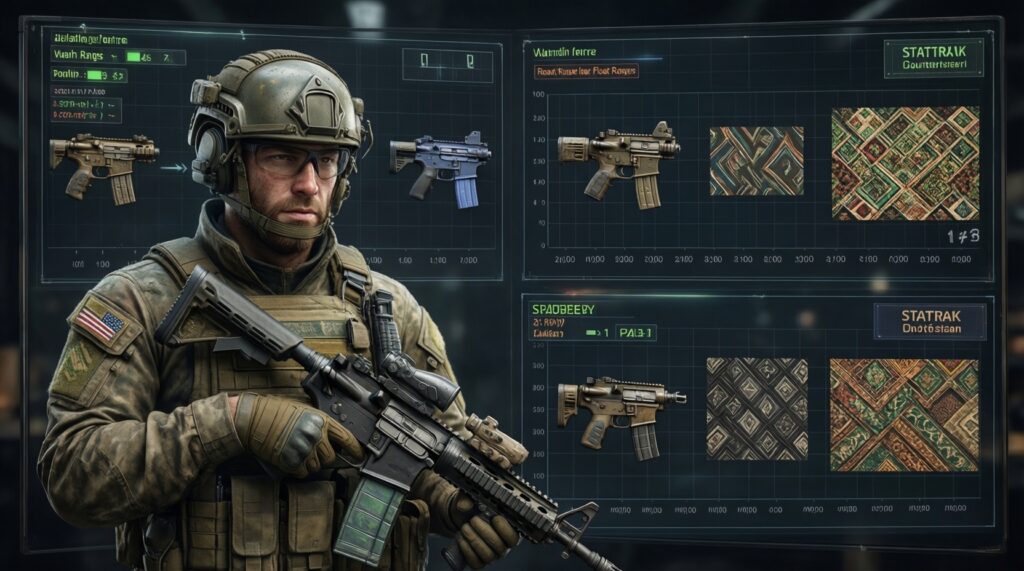
Concept: supply is not one number. It's a set of micro-markets: wear tiers, float ranges, special counters (StatTrak), and pattern-driven premiums. Many pricing mistakes come from ignoring which segment is actually scarce.
Common mistakes and myths:
- Myth: "All Factory New are equally rare." In practice, float distribution matters; two FN items can have very different buyer demand depending on how clean they look and how close they are to "best-in-tier" floats.
- Mistake: paying a premium without a resale plan. If you buy a niche float/pattern premium, confirm the market has consistent buyers, not just one expensive listing.
- Myth: "StatTrak always adds value." It depends on the weapon's popularity and the skin's audience; some collectors prefer non-StatTrak aesthetics.
- Mistake: ignoring float-based comparables. Pricing an item using random "same wear" listings can mislead you if your float is unusually good or unusually bad.
- Mistake: confusing "low supply" with "low liquidity." An item can be scarce but hard to sell quickly; scarcity alone doesn't guarantee profitable exits.
Trading implication: when you evaluate whether something is "cheap," compare like-for-like: same wear, similar float range, similar visibility of the finish. This is how you avoid buying the wrong "deal" when searching ซื้อสกิน CS2 ราคาถูก.
Third-Party Marketplaces, Bots and Arbitrage Opportunities
Concept: the same skin can have different effective prices across venues due to fees, withdrawal friction, inventory depth, and bot pricing. Arbitrage exists when those differences exceed all costs and execution risk.
Mechanics: bots tend to move fast on liquid items, while human listings can lag. Cross-market differences persist longer on illiquid skins, but that also increases the risk you can't exit.
Concrete implication: when asking ซื้อขายสกิน CS2 เว็บไหนดี, evaluate "best" as: (1) total cost to acquire, (2) time-to-sell, (3) cashout reliability, and (4) whether prices are distorted by thin liquidity.
Mini-case: a low-resource arbitrage check (before you click buy)

- Pick one target skin you understand (avoid ultra-niche patterns at first).
- Record the net sell you can realistically achieve on Venue A (after fees).
- Record the net buy on Venue B (including all fees and conversion costs).
- Only proceed if the gap is comfortably larger than your predefined buffer for slippage and time-to-sell.
# Pseudocode (conceptual)
net_sell_A = expected_sell_price_A * (1 - fee_A)
net_buy_B  = buy_price_B + all_costs_B
edge       = net_sell_A - net_buy_B

if edge > safety_buffer and liquidity_ok and cashout_ok:
    buy_on_B()
    sell_on_A()
else:
    skip()
Limited resources alternative: if you can't compete on speed, avoid bot-heavy "headline" items. Focus on modestly liquid skins where patient bids work, and where your edge comes from discipline, not reaction time.
Practical Questions Traders Ask About CS2 Skin Pricing
Why does a skin jump in price right after an update?
Updates shift perceived utility and aesthetics, so buyers re-rank what they want. Thin liquidity can amplify the move because a small burst of demand clears the cheapest listings quickly.
Is "ราคาสกิน CS2 วันนี้" enough to decide whether something is cheap?

No-today's snapshot ignores spread, fees, and liquidity. Always compare net prices and similar wear/float so you don't mistake a bad comparable for a bargain.
เปิดกล่อง CS2 คุ้มไหม compared to buying the skin directly?
Unboxing is primarily entertainment; pricing is affected by fees and variance. If your goal is a specific skin, direct purchase usually gives better control over cost and timing.
How can I "ซื้อสกิน CS2 ราคาถูก" without getting stuck with illiquid items?
Target liquid weapons, buy during attention rotation away from them, and use limit orders. Avoid paying premiums for niche floats/patterns unless you already know the buyer pool.
ซื้อขายสกิน CS2 เว็บไหนดี for beginners who want predictable execution?
Choose the venue where you understand fees, settlement time, and cashout rules, then stick to it until your process is stable. Predictability often beats chasing the lowest headline price.
Can I realistically "ลงทุนสกิน CS2 ทำกำไร" as an intermediate trader?
Yes, but your edge usually comes from risk control: fees, spreads, and disciplined entries/exits. Focus on repeatable setups (rotation, mean reversion) rather than one-off hype bets.