

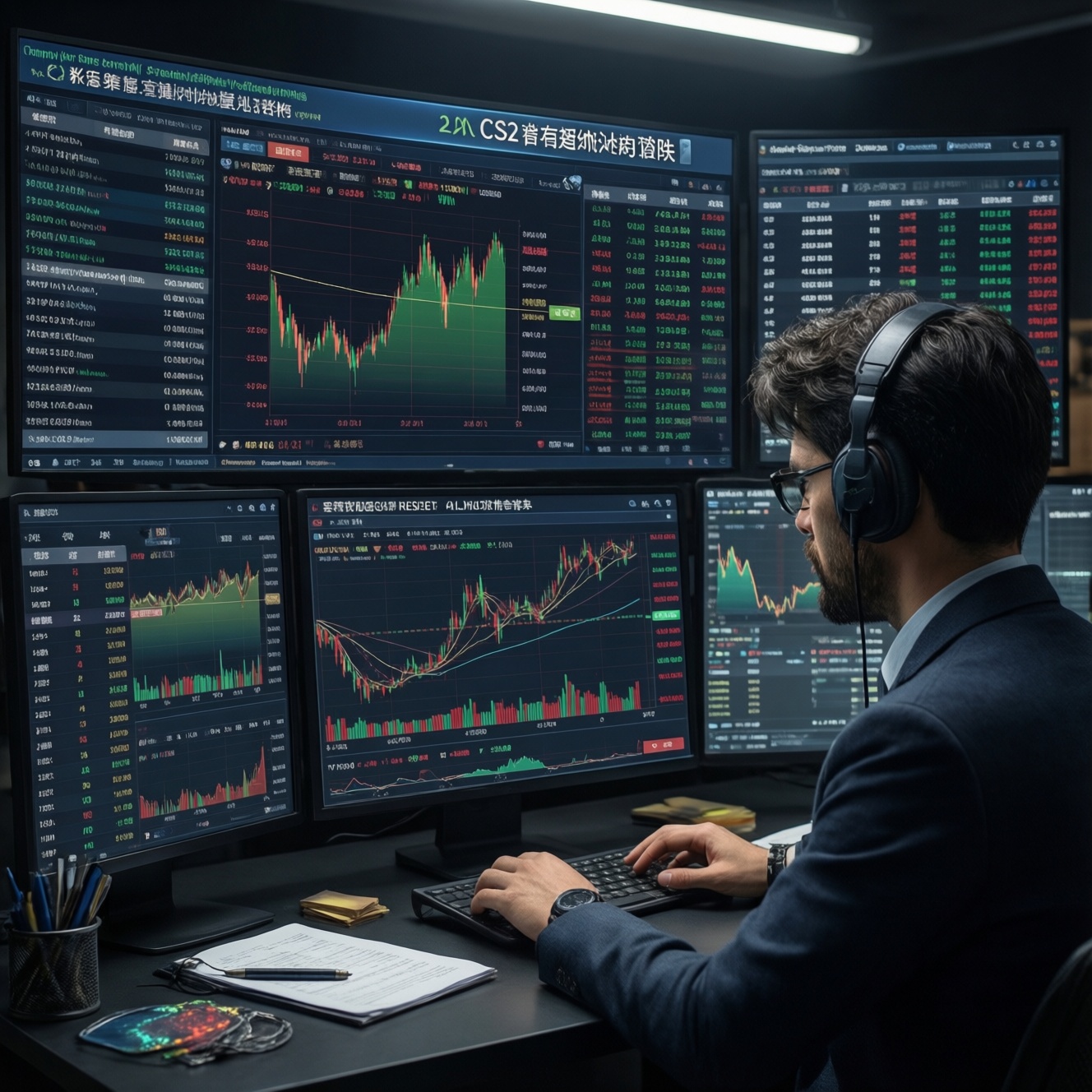
To build a data-driven edge in CS2 skins, combine a reliable CS2 skin price tracker with normalized market snapshots, verified CS2 skin trade history, and a lightweight pipeline that flags liquidity, fees, and anomalies in near real time. Use multiple data sources, reconcile discrepancies, and track item identifiers consistently so your alerts, backtests, and buying decisions stay reproducible.
Core metrics and signals to monitor for skins markets
- Median/last sale vs. best ask: measure spread and potential slippage before you buy CS2 skins.
- Volume and turnover: confirm an item is tradable, not just "priced."
- Time-to-sell proxy: how quickly listings clear at/near your target price.
- Price dispersion across venues: detect inconsistent CS2 skin prices caused by fees, region, or stale data.
- Fee-aware net price: compare opportunities using "after-fee" proceeds, not headline prices.
- Anomaly flags: sudden spikes, wash-like patterns, or repeated micro-trades that distort signals.
Selecting reliable market data sources and APIs
- List the marketplaces you actually trade on (and any you monitor for discovery).
- Decide your minimum update frequency (minutes vs. hours) and acceptable staleness.
- Define one canonical item key (weapon/skin, condition, StatTrak, souvenir, special pattern where relevant).
- Confirm you can legally access the data (API terms; avoid brittle or prohibited scraping).
Who this is for: traders and analysts who need consistent pricing, alerts, and a repeatable workflow across multiple markets and "best CS2 skin trading sites."
When not to do it: if you only make occasional purchases, a simple watchlist is safer than building an automated pipeline; also avoid automation if a site's ToS disallows it, or if you can't secure API keys and storage properly.
- Must-have: at least two independent data sources; item-level identifiers; fee model per venue.
- Nice-to-have: listing depth (top N asks/bids) and delist tracking.
- Optional: float/pattern enrichment, seller reputation signals (where available and compliant).
Tools for real-time price monitoring, alerts and scraping
- Choose your stack: spreadsheet, no-code automation, or code (Python/Node) for reliability.
- Prepare secure secret storage for API keys (never hardcode in public repos).
- Pick one alert channel (Telegram/Discord/email) with rate limits and deduping.
- Plan for time zones and timestamp normalization (store everything in UTC).
| Tool/approach | Data coverage | Latency | Cost | Integrations |
|---|---|---|---|---|
| Marketplace official APIs | Best for that venue (prices, listings, sometimes sales) | Low to medium (depends on rate limits) | Usually free; may require account | HTTP + JSON; easy for Python/Node; webhooks sometimes |
| Public price aggregators | Broad snapshot coverage; quality varies by item and venue | Medium (often cached) | Free tiers or paid plans | APIs, CSV exports, Google Sheets connectors (varies) |
| Headless scraping (Playwright/Selenium) | Whatever is visible on pages; fragile to UI changes | Medium to high | Compute + maintenance | Works with any site, but higher risk (ToS, blocks) |
| Manual watchlists + alerts | Small set of items only | Human-paced | Free | Browser + notes; limited automation |
- Must-have: official APIs where possible; retry + backoff; alert deduplication by (item, venue, rule).
- Nice-to-have: screenshot/log capture for anomaly investigations; structured logs.
- Optional: headless scraping only when permitted and when no API exists.
Example snippet (Python): normalize item keys and store a price snapshot
# Python (concept): normalize to a canonical key and write one snapshot row
from datetime import datetime, timezone

def item_key(name, condition, stattrak=False, souvenir=False):
    flags = []
    if stattrak: flags.append("stattrak")
    if souvenir: flags.append("souvenir")
    return "|".join([name.strip().lower(), condition.strip().lower(), ",".join(flags)])

snapshot = {
    "ts_utc": datetime.now(timezone.utc).isoformat(),
    "venue": "example_market",
    "key": item_key("AK-47 | Redline", "Field-Tested", stattrak=True),
    "best_ask": 0,   # fill from API
    "last_sale": 0,  # fill from API (if available)
}
Aggregating trade history, provenance and wallet-level data
- Decide what "history" means for you: sales, listings, or both, and at what granularity.
- Prepare a mapping table: raw marketplace item names → your canonical item key.
- Set clear boundaries: only collect what you're allowed to access and store.
- Pick a storage format first (CSV for small scale; SQLite/Postgres for ongoing tracking).
- Define a reconciliation rule for conflicting data between sources.
-
Define the canonical data model
Store each event as a row with: timestamp (UTC), venue, canonical item key, event type (sale/list/delist), price, currency, and a source ID (trade ID / listing ID). This prevents mixing snapshots with true trade prints when you analyze CS2 skin trade history.
- Keep a separate table for item metadata (name, condition, StatTrak/Souvenir flags).
- Keep a separate table for venue settings (fees, payout rules, currency conversion policy).
-
Ingest from primary sources first, then enrich
Pull trade/sale events from the venue that executed the trade when available; use aggregators as secondary confirmation. For CS2 skin prices, prefer "executed sale" data over "current listing" data when measuring momentum.
- Tag each row with a confidence level (primary/secondary/inferred).
-
Link provenance safely (where applicable)
If you track provenance-like signals (ownership changes, repeated flips), only use identifiers you can access legitimately. Avoid collecting personal data; focus on item-centric linkage (listing IDs, trade IDs) rather than user identities.
- Store reversible hashes only if you must link repeated entities across time.
- Keep retention limits for raw logs to reduce risk.
-
Detect duplicates and out-of-order events
Market feeds often resend events or arrive late. Deduplicate using (venue, source ID) and tolerate late-arriving data by allowing inserts into prior time windows.
- Maintain an idempotent ingestion process (safe to re-run).
-
Normalize prices to a single analysis currency
Store the original currency and a normalized value using a consistent conversion snapshot (time-stamped). This matters when comparing "best CS2 skin trading sites" that quote differently or apply different fee models.
- Always keep the raw price alongside the normalized price.
-
Build "tradeable now" features from current listings
History explains what happened; order-book snapshots explain what you can do now. Combine last sale with best ask/bid and listing depth to estimate slippage before you buy CS2 skins.
Designing a data pipeline and dashboard for continuous tracking
- Pick an execution mode: cron job, serverless schedule, or always-on worker.
- Decide your "freshness SLA" per venue (how late is too late for alerts).
- Plan for failure: retries, backoff, and a dead-letter log for bad rows.
- Choose a dashboard surface: spreadsheet, BI tool, or a simple web page.
- All timestamps are stored in UTC and rendered in Thailand time only at the UI layer.
- Each ingested record has a unique key (venue + source ID) and is idempotent on re-run.
- Dashboards show both headline and after-fee prices per venue.
- Alerts include: item key, venue, trigger condition, observed price, and a link to the source page/API reference.
- Data freshness is visible (last updated per venue and per item segment).
- Missing fields are explicit (NULL) rather than silently defaulted to zero.
- Currency conversion policy is consistent and time-stamped.
- You can reproduce a chart point by querying the raw events that generated it.
- Access controls exist for API keys, logs, and any enrichment datasets.
Backtesting strategies, statistical indicators and feature engineering
- Freeze a dataset snapshot before changing parsing rules or item mappings.
- Define the execution model: can you realistically fill at best ask/bid after fees?
- Separate signals built from sales history vs listing snapshots.
- Decide evaluation windows and avoid looking ahead (no future leakage).
- Mixing listings with sales as if both are trades: listings are intentions; sales are executions. Keep them separate in features and plots.
- Ignoring fees and withdrawal constraints: backtests that use gross prices won't match real P&L across venues.
- Survivorship bias from "tracked items only" lists: if you only track popular items, your model may fail on thin markets.
- Latency blind spots: "instant" signals based on cached CS2 skin prices can be stale during volatility.
- Wrong item identity: inconsistent naming (StatTrak, condition, special variants) creates fake arbitrage.
- Overfitting to one venue: rules that work on a single market often fail elsewhere due to different microstructure.
- Not modeling fill probability: low-volume items can look profitable but never execute at your assumed price.
- Using unverified outliers: a single bad print can dominate indicators; use robust stats (median, trimmed measures) and anomaly flags.
Operational controls: fees, liquidity, fraud detection and compliance
- List every fee path: trading fee, deposit/withdrawal, conversion, and payout friction.
- Set risk limits: max exposure per item, per venue, and per day.
- Decide what triggers a manual review (suspicious spikes, thin liquidity, repeated flips).
- Document ToS-compliant data collection and retention rules.
Alternatives to a full custom tracker, and when to use them:
- Portfolio/watchlist-only tracking - best when you monitor a small set of items and mostly need "good enough" alerts without building infrastructure.
- Aggregator-first workflow - suitable for discovery across many items, then confirm on the execution venue before acting; reduces build time but can hide latency/coverage gaps.
- Execution-venue-only tooling - appropriate if you trade almost exclusively on one marketplace; simplifies fees and identity mapping but limits cross-market comparisons.
- Managed BI + scheduled exports - good for teams who want governance and dashboards quickly; you trade flexibility for cost and dependence on vendor connectors.
Troubleshooting common tracking and data-quality issues
Why do two trackers show different CS2 skin prices for the same item?
They may be comparing different signals (last sale vs best ask), using different fee assumptions, or mapping the item incorrectly (condition/StatTrak). Normalize to a canonical item key and compare after-fee prices with timestamps.
My CS2 skin price tracker misses updates during busy periods-what should I change?
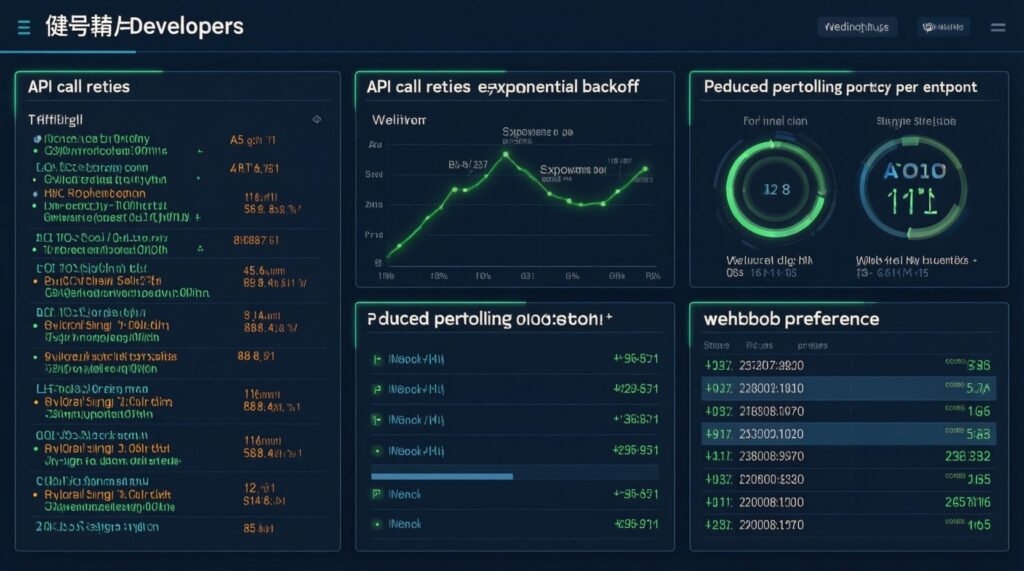
Increase resilience: add retries with exponential backoff, reduce polling frequency per endpoint to respect rate limits, and log HTTP status codes. If a venue offers webhooks or batch endpoints, prefer those over frequent single-item calls.
Trade history has duplicates or gaps-how do I fix it?
Make ingestion idempotent using (venue + trade/listing ID) as a unique key, and allow late-arriving events by backfilling recent windows. Keep raw events and a cleaned view so you can reprocess when parsers change.
How can I safely track CS2 skin trade history without collecting personal data?
Store item- and event-level identifiers (trade ID, listing ID) rather than user identities. If linkage is needed, use reversible hashing with strict retention limits and only where the platform's terms allow it.
Alerts trigger too often and become noise-what's the practical fix?
Add deduping (one alert per item per window), require confirmation across two consecutive snapshots, and use fee-aware thresholds. Also segment rules by liquidity so thin items need stronger confirmation.
How do I decide where to buy CS2 skins when multiple venues match my target?
Compare net cost after all fees, expected time-to-fill, and withdrawal constraints. In practice, "best CS2 skin trading sites" depend on your payment method, region, and how quickly you need inventory to be transferable.