

Bankroll management for gamers means treating betting money like a competitive resource: separated from life funds, sized per play, and protected with limits so variance and tilt can't wipe you out. Use a fixed bankroll, small unit sizes, session stop rules, and simple tracking. This turns a win-focused mindset into safer, repeatable habits.
Essential Rules for Managing Your Gaming Bankroll
- Keep a dedicated bankroll that is separate from rent, bills, and savings.
- Use small, consistent units (a fixed % of bankroll), not "confidence" or emotion.
- Set session start/stop rules before you place the first bet.
- Track every wager; review results on a schedule, not after a bad streak.
- Scale stakes only after meaningful sample size and rule compliance, not after a hot run.
- When tilt appears, pause play and switch to low-risk alternatives (or stop entirely).
Defining Your Bankroll: Calculations for Sustainable Play
This approach fits intermediate players who already understand odds and variance and want a repeatable way to protect funds while they learn. It is also useful when moving from casual wagering into structured sports betting bankroll management, where results can swing despite good decisions.
Do not use this method if any of these apply: you're borrowing money to bet, you're behind on bills, you're trying to "win back" losses, or your betting causes conflict, stress, or loss of control. In those cases, the correct move is to stop and seek support, not optimize staking.
Define your bankroll (simple and strict):
- Pick an amount you can lose without life impact. That number is your bankroll; nothing else counts.
- Separate it physically. Use a dedicated e-wallet/account used only for betting.
- Set a base unit. A practical default for betting bankroll management is 0.5%-2% of bankroll per bet (smaller if you're new to tracking or you tilt easily).
Concrete example: If your bankroll is 10,000 THB, then 1 unit at 1% is 100 THB. Your job is to protect units. Wins are a side effect of good process.
Typical outcomes: On a normal week, you'll have small swings and can keep playing. Worst-case streaks still happen; the goal is surviving them. Best-case streaks are not a reason to jump stakes.
Staking Systems and Bet Sizing for Competitive Gamers
You don't need complex formulas to start. You do need consistent rules, basic tools, and access to your own history.
- Dedicated bankroll access: a separate account/wallet and a clear deposit cap.
- Tracking tool: spreadsheet, notes app, or betting tracker.
- Unit sizing rule: choose 0.5%-2% per bet (and write it down).
- Odds awareness: know whether you're betting fixed odds, live odds, or parlays.
- Optional: a simple bankroll management calculator (even a spreadsheet cell) that converts bankroll × unit % into a stake amount.
Recommended staking for most intermediates: fixed-percentage staking (flat unit size as a % of current bankroll). It's easier to follow than aggressive systems and aligns with responsible bankroll management.
Avoid: Martingale/"double after loss" approaches. They are structurally risky because losing streaks are inevitable and stake growth accelerates exactly when you're least able to afford it.
Managing Variance: Session Limits, Tilt Control, and Recovery Plans
- Betting outcomes are noisy; short-term results don't prove skill or lack of skill.
- Live betting and fast markets increase impulse risk and tilt frequency.
- Chasing losses changes stake sizing at the worst possible moment.
- Sleep, alcohol, and stress reliably degrade decision quality.
-
Set your session budget and time box before opening any app.
Decide a maximum number of bets and a hard end time. This is your "queue limit," like competitive ranked sessions.- Example: max 5 bets or 60 minutes, whichever comes first.
- If you exceed either limit, the session is over-even if you're up.
-
Define a stop-loss and a stop-win that trigger a mandatory cooldown.
A stop-loss prevents emotional overreach; a stop-win prevents "playing with house money" and taking sloppy spots.- Example: stop-loss at 5 units down; stop-win at 5 units up.
- Cooldown: no bets for at least 24 hours after a trigger.
-
Use a strict unit rule to size every bet.
Pick 1 unit (or 0.5 units if you're volatile) and do not adjust it based on confidence or recent results. This is the core of how to manage betting bankroll safely.- Example: bankroll 10,000 THB, unit 1% = 100 THB; most bets are 1 unit, rare bets are 0.5-1.5 units (predefined).
-
Add a tilt tripwire and an exit routine.
Identify 2-3 behaviors that mean you're tilted and must stop immediately.- Tripwires: increasing stakes, betting markets you didn't research, refreshing scores compulsively, or trying to "get even."
- Exit routine: close apps, log the last bet, write one sentence about why you're stopping, and do something non-betting for 30 minutes.
-
Plan a recovery protocol for losing streaks (no improvisation).
Losing streaks are normal; breaking rules is optional. Your protocol should reduce risk, not increase it.- Drop unit size by 25%-50% for the next 10 bets, or pause for 48 hours.
- Ban live betting for the next week if impulse was involved.
- Only resume after you review your log and confirm rule compliance.
Recordkeeping and Analytics: Metrics to Track and How to Use Them
- I can list every bet with date/time, market, odds, stake (units), and result.
- I know my current bankroll and my unit size today (not last month).
- I can separate pre-match bets vs live bets and compare discipline.
- I can spot rule breaks (stake jumps, chasing, extra sessions) within 24 hours.
- I review results on a schedule (weekly), not after emotional sessions.
- I track "process notes" (why I bet) to detect impulsive patterns.
- I know my biggest drawdown and what triggered it (fatigue, tilt, overconfidence).
- I can answer: "If I keep betting exactly like this, is my risk acceptable?"
Practical use: Treat tracking like replay review. You're looking for repeatable mistakes (rule breaks), not a single unlucky result.
Adapting Bankroll Strategy Across Game Modes and Formats

- Mixing funds across modes: using one bankroll for esports props, casino games, and sports without separate rules.
- Assuming higher odds mean higher edge: longshots amplify variance; they don't automatically improve value.
- Overusing parlays: they can be entertaining but often increase volatility; keep stakes smaller if you use them.
- Live-betting without limits: speed encourages impulsive decisions; apply tighter session caps.
- Stake sizing by emotion: "must-win" matches and rivalry games are prime tilt traps.
- Confusing entertainment with investment: if it's for fun, budget it like entertainment and accept losses.
- Scaling up too early: increasing unit size after a short hot streak instead of after consistent rule compliance.
- Ignoring sport-specific variance: some markets swing more; reduce unit size rather than forcing higher volume.
Note: "sports betting bankroll management" is still just bankroll management-your edge and volatility change by market, so your unit size and limits must adapt.
Responsible Limits, Legal Considerations, and When to Step Back
- Switch to a fixed entertainment budget. If tracking feels stressful, set a small weekly cap and stop when it's spent-no reloads.
- Use stricter guardrails instead of more bets. Fewer sessions, smaller units, and no live betting can stabilize behavior while you learn.
- Take a structured break. A 7-30 day pause is appropriate after repeated tilt, rule-breaking, or relationship/financial strain.
- Seek specialized support. If you can't stick to limits, hide betting activity, or chase losses, stop betting and contact local support services or a qualified counselor.
Clarifications on Common Concerns and Edge Cases
Is bankroll management the same as predicting better?
No. Bankroll management controls risk and survival; prediction skill affects long-term results. You need both, but risk control comes first.
What unit size should I use if I'm new to tracking?
Start smaller (often 0.5%-1% per bet) until you prove you can follow rules consistently. Increase only after weeks of clean logs and stable behavior.
Can I use a bankroll management calculator to automate stakes?
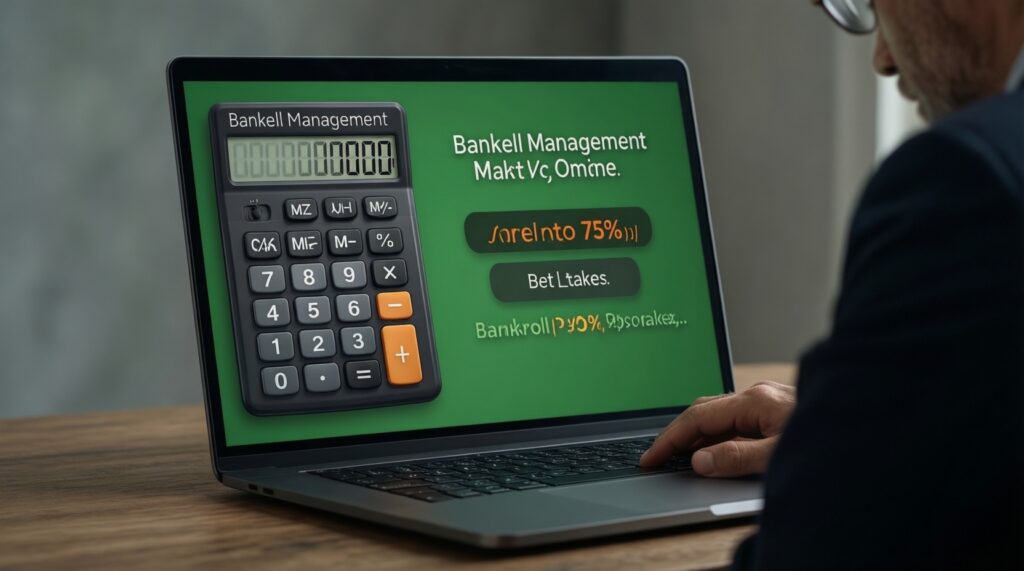
Yes, a simple bankroll management calculator can reduce mistakes by converting bankroll × unit % into a stake. Automation helps only if the underlying unit % and limits are responsible.
Should I increase my stake when I feel highly confident?
Not in the moment. If you want variable staking, define it in advance (e.g., rare 1.5-unit plays) and audit whether it improves outcomes without increasing tilt.
How do I handle a big win without giving it back?
End the session at your stop-win and take a cooldown. Optionally withdraw a portion to keep the bankroll and real-life money separated.
What if I bet multiple games: esports, sports, and casino?

Split budgets or apply stricter limits to higher-variance modes. Mixing them without separate rules often breaks betting bankroll management discipline.
When is it a sign I should stop completely?
If you chase losses, borrow money, hide betting, or repeatedly break limits, stop and seek help. Responsible play requires control, not just a system.