


Loot boxes overlap with gambling only when legal tests for chance, paid consideration, and a prize with transferable value are met; many products fail the "prize/value" leg, but still create gambling-like risk via opaque RNG and monetization pressure. To choose the best option, compare your loot boxes legal definition exposure, your loot boxes RNG mechanics transparency, and the player protection measures loot boxes gambling regulators expect.
At-a-glance: legal scope, RNG risks and consumer outcomes
- Legal risk hinges on "value": if rewards can be sold, traded, or cashed out, the "are loot boxes gambling" question becomes harder to dismiss.
- Transparency is a control: published odds plus auditable RNG reduces disputes and helps with loot boxes regulation laws expectations.
- Monetization design can be the harm vector: near-miss cues, time pressure, and escalating offers can mimic gambling dynamics even without cash-out.
- Budget-first compliance is feasible: server-side logs, probability tables, and clear refund handling often deliver most risk reduction at low operational cost.
- Consumer outcomes improve with guardrails: age gates, spend controls, and cooling-off UX can reduce impulsive loops and chargebacks.
Statutory definitions: how jurisdictions treat loot boxes versus gambling
Because loot boxes regulation laws differ, teams should map their design to common statutory "gambling-like" elements. Use these criteria to triage exposure before shipping or expanding to new markets:
- Consideration: is there a paid stake (real money or a currency purchased with real money) required to open?
- Chance predominance: is the outcome primarily random rather than skill-determined?
- Prize/value: do items have transferable value (trade, marketplace, gifting, cash-out, or third-party resale that you enable or tolerate)?
- Convertibility: can rewards be converted back into something of monetary value (directly or via sanctioned intermediaries)?
- Marketing and presentation: do you frame it like wagering (jackpots, near-miss effects, "spin" metaphors) or like purchase of known goods?
- Access by minors: can underage players purchase/open, and are safeguards proportionate to risk?
- Disclosure standard: are odds disclosed clearly, per item tier, and kept current across events and regions?
- Consumer remedy: can the player obtain refunds/chargeback-friendly remedies for mistaken purchases or underage spending?
Practical interpretation: if your loot boxes legal definition analysis finds paid consideration + chance + transferable value, assume a higher likelihood of gambling-style treatment and build the product as if "are loot boxes gambling" could be answered "yes" by at least some regulators.
RNG mechanics: probability models, provable fairness and audit trails
RNG design affects both fairness perception and legal defensibility. Below are common implementations and how they compare in transparency, operational overhead, and auditability.
| Variant | Who it fits | Pros | Cons | When to choose |
|---|---|---|---|---|
| Client-side RNG (device generates outcome) | Offline titles, prototypes, very small teams | Lowest engineering complexity; minimal server cost | Weak tamper resistance; hard to prove fairness; easy to dispute outcomes | Only for non-monetized or non-purchasable boxes; avoid for real-money purchases |
| Server-side RNG with logged draws | Most live-service games and platforms | Strong control over outcomes; centralized tuning; clean audit trail if logs are immutable | Players must trust you; requires secure logging and access controls | Best budget-first baseline when loot boxes RNG mechanics must be defensible without heavy cryptography |
| Commit-reveal (server commits hash, later reveals seed) | Teams needing "provable fairness" messaging | Improves player-verifiability; reduces allegations of targeted manipulation | More complex UX and support; must manage seed lifecycle carefully | When you need credible fairness claims for high-stakes monetization or sensitive regions |
| VRF-based randomness (verifiable random function) | Security-mature orgs; competitive or regulated-adjacent ecosystems | Cryptographic verifiability; strong integrity properties | Higher engineering and review burden; operational key management risk | When third parties (platforms, auditors) expect strong proofs rather than logs |
| Third-party RNG / independent attestation | Publishers seeking trust signaling | External credibility; can support compliance narratives | Vendor dependency; added legal and procurement overhead | When you need a compliance signal for partners, storefronts, or cross-border launches |
| Fixed "pity" / guarantee model (bounded randomness) | Games needing churn reduction and fewer extreme outcomes | Reduces tail risk; easier to explain; can mitigate harm vectors | Still RNG; can encourage "just one more" spending to reach guarantee if not designed carefully | When consumer outcomes matter and you want fewer outlier spend events while keeping excitement |
Implementation note: regardless of variant, keep an audit trail (event logs, odds versioning, configuration change history) so you can answer regulator or platform questions without reverse-engineering production history.
Monetization and player spending: economic incentives and harm vectors
Design choices around pricing, pacing, and UX can amplify or reduce harm. Use scenario rules to pick the "best" approach for your risk tolerance, budget, and audience:
- If you cannot confidently defend "are loot boxes gambling" in multiple markets, then prioritize direct purchase options (known items) alongside loot boxes and reduce exclusivity of random-only rewards.
- If your budget is limited, then implement low-cost protections first: clear odds, capped bundle sizes, cooldown messaging, and server-side purchase logs before investing in premium cryptographic RNG.
- If you run time-limited events, then avoid aggressive FOMO patterns (countdowns paired with escalating discounts) and use transparent progress systems (e.g., visible counters to guarantees) to reduce impulsive spikes.
- If you rely on "whale" economics, then add spend-based friction (soft limits, confirmations, session summaries) to reduce chargebacks and reputational risk; this is a player protection measures loot boxes gambling staple even where not mandated.
- If you can afford a premium approach, then combine verifiable RNG (commit-reveal or VRF) with independent attestation and richer player controls; this tends to travel better across stricter interpretations of loot boxes regulation laws.
Regulatory case studies: rulings, enforcement actions and compliance signals
Instead of chasing every headline, use a repeatable screening workflow. This helps teams react to new rulings or platform policy shifts without rebuilding the product each time.
- Classify value pathways: list every way an item can become "value" (official trading, gifting, marketplace, redemption, partner programs, tolerated third-party resale).
- Map the legal tests: for each target jurisdiction, check whether consideration, chance, and prize/value are interpreted broadly or narrowly for digital items.
- Identify compliance signals: note what regulators and platforms commonly ask for (odds disclosure, age gating, refund flow, audit trail, marketing restrictions).
- Pick an RNG stance: choose a loot boxes RNG mechanics variant that matches your risk level (logged server RNG for budget-first; provable fairness for sensitive markets).
- Set a controls baseline: decide minimum safeguards that ship everywhere, plus stricter toggles for higher-risk regions.
- Run a red-team review: have someone attempt to argue your design satisfies gambling elements; fix the strongest arguments.
- Document decisions: keep a short, versioned memo per region so you can answer partner due diligence quickly.
Brief examples teams can operationalize: (1) If a storefront starts requiring clearer odds and stronger age handling, treat that as a compliance signal even without a new statute. (2) If a regulator focuses on tradability, prioritize disabling transfers in that region over reworking the entire economy.
Player safeguards: disclosure, age verification, refund and loss‑limit tools
Common selection mistakes tend to be about implementing "a control" without making it enforceable, measurable, or understandable. Avoid these pitfalls:
- Publishing odds that are too coarse (e.g., only by rarity) while running complex sub-tables that materially change outcomes.
- Failing to version odds: players open boxes under one configuration while the disclosure page shows another.
- Using age gates that are easy to bypass without any escalation (e.g., no re-check on payment method, no parental controls integration where available).
- Offering refunds without a clear, predictable policy, causing support overload and inconsistent decisions.
- Implementing "loss limits" that are not aligned to actual spending channels (web store vs in-app vs gift cards) or that reset in confusing ways.
- Adding friction only at purchase time, but not at re-purchase loops (one-click rebuy, auto-top-ups, or rapid bundle flows).
- Not providing spend transparency (session or monthly summaries), which weakens player self-regulation and increases disputes.
- Relying on "responsible gaming" language while still using gambling-like UX patterns (near-miss, celebratory effects tuned to push repeat opens).
Cost-conscious compliance: low-budget strategies for developers and platforms
Best for budget-limited teams is typically server-side RNG with immutable logging, accurate odds disclosure, and a small set of universal safeguards (age gate, refunds, spend summaries). Best for high-risk regions or premium trust positioning is adding provable fairness (commit-reveal or VRF) plus stronger verification and optional loss-limit tooling, while reducing tradability to lower the prize/value argument.
Practical clarifications for policy makers and developers
What is a practical loot boxes legal definition for product teams?
It is an internal test that checks paid consideration, chance, and whether the reward has monetary or transferable value. Teams use it to decide which markets need stricter controls or design changes.
Are loot boxes gambling if items cannot be cashed out?
Often the legal risk is lower if there is no transferable or cash-out value, but gambling-like harm can still exist through spending pressure and randomness. Treat it as a spectrum: legal classification and consumer risk do not always match.
Which loot boxes RNG mechanics choice is the best baseline for a live game?
Server-side RNG with strong logs is usually the best baseline because it is controllable, auditable, and cost-effective. Add verifiable mechanisms when you need higher trust or face stricter scrutiny.
What do loot boxes regulation laws most commonly force you to operationalize?
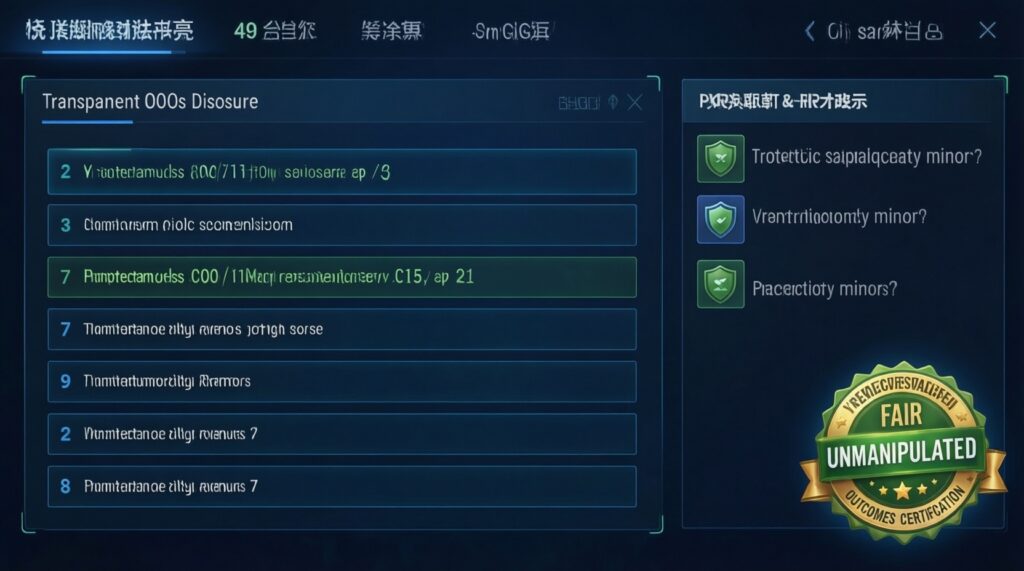
Typically: clear odds disclosure, minors protection, and evidence that outcomes are not manipulated unfairly. Even where not explicit, platforms may require similar measures as a condition of distribution.
What are the most defensible player protection measures loot boxes gambling reviewers look for?
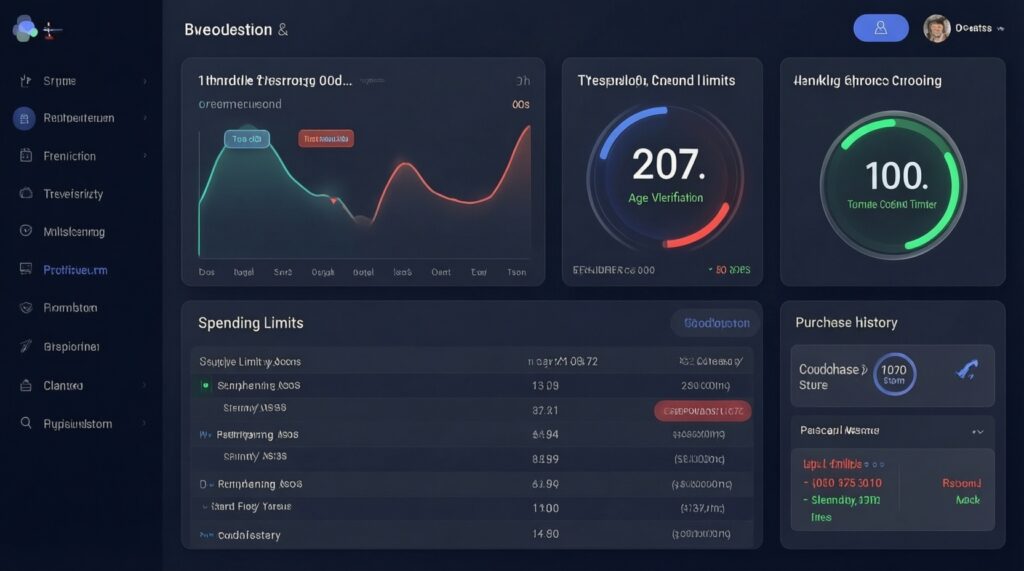
Transparent odds, age-appropriate access control, spend visibility, and predictable refunds are the core. Loss limits and cooldown features become more important as monetization intensity increases.
How can a small studio document compliance without a legal department?
Maintain a short per-region memo: value pathways, odds table versioning, RNG approach, and safeguards shipped. Pair it with exportable logs that can answer disputes and partner questions quickly.