


To get started with esports betting safely and consistently, learn the core esports betting markets, convert esports betting odds across decimal/fractional/American formats, and size every wager with a strict bankroll plan. Use a repeatable workflow: choose a market you can model, estimate true probability, compare to the book price, then stake a small, pre-defined fraction of bankroll.
Essential Concepts to Grasp First
- Markets differ in volatility: match winners are usually steadier than props and live bets.
- Odds are just implied probability plus margin; convert them before comparing prices.
- Value = your probability − implied probability (or positive expected value); not the same as "likely to win."
- Bankroll is a tool: stake sizing matters more than picking winners.
- Track every bet; without records you cannot tell skill from variance.
- For Thailand (TH) users, prioritize operational safety: clear rules, payout reliability, and limits you can enforce.
Anatomy of Esports Betting Markets
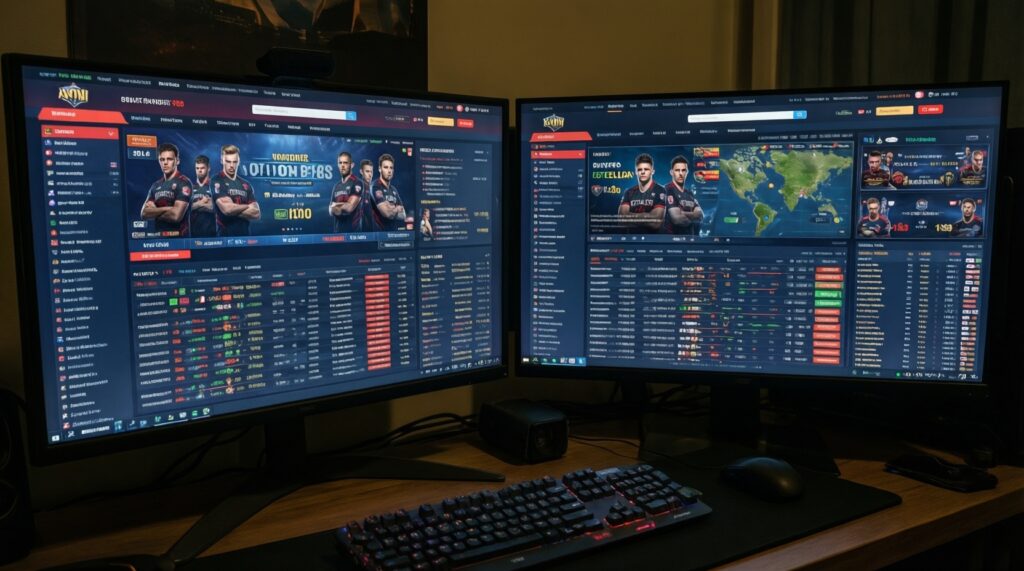
Who this suits: intermediate bettors who already follow at least one title (e.g., CS2, Dota 2, LoL, VALORANT) and can name teams, maps, and formats. If you're comparing multiple esports betting sites, these fundamentals help you evaluate which lines and rules are actually comparable.
When you should not place a bet (keep it short and strict):
- You cannot explain the match format (Bo1/Bo3/Bo5), map pool, or patch context in one sentence.
- You are relying on highlights, rumors, or social media sentiment instead of repeatable inputs.
- You're planning to recover losses, or you've increased stake after a bad day.
- You don't understand settlement rules for that market (especially props and in-play).
One takeaway: bet only markets you can price with a simple model and verify after the fact.
Odds Formats Explained: Decimal, Fractional, and American
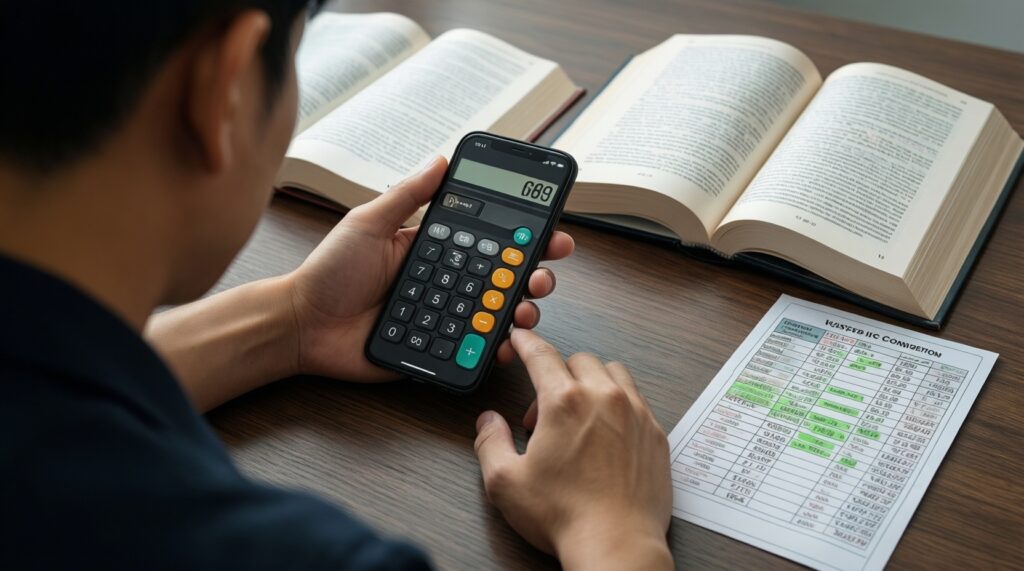
What you need:
- A calculator (phone is fine) and a notes sheet for conversions.
- Access to lines from at least two books so you can compare esports betting odds (and not assume one site is "correct").
- Clear staking rules (fixed unit size or a capped percentage of bankroll).
Conversion formulas you'll use repeatedly
- Implied probability (Decimal): P = 1 / D
- Decimal from American: if +A, D = 1 + (A/100); if -A, D = 1 + (100/A)
- Decimal from Fractional (a/b): D = 1 + (a/b)
- Profit (Decimal): Profit = Stake × (D − 1)
| Format | How it reads | Implied probability | Quick conversion to Decimal | Example (same price) |
|---|---|---|---|---|
| Decimal (D) | Total return per 1 unit staked | P = 1 / D | Already decimal | D = 2.00 → P = 0.50 |
| Fractional (a/b) | Profit a for every b staked | P = b / (a + b) | D = 1 + (a/b) | 1/1 → D = 2.00 |
| American (+A / -A) | Profit on 100 (plus) / stake to win 100 (minus) | +A: 100/(A+100); -A: A/(A+100) | +A: 1 + A/100; -A: 1 + 100/A | +100 → D = 2.00 |
One takeaway: always convert everything to decimal and implied probability before deciding whether a line is "good."
Specific Market Types: Match, Map, Outright, Prop, and In-Play
Use this step-by-step workflow to choose and execute bets across common esports betting markets without guessing.
-
Define the event structure and settlement rules
Write down series length (Bo1/Bo3/Bo5), patch/version, and any special rules (map veto format, substitutes, online vs LAN). If you can't state how your bet wins/loses, skip the market.
- Match bet: settles on series winner.
- Map bet: settles on a specific map winner inside the series.
- Outright: settles on tournament winner (long settlement, more variance).
-
Pick the market type that matches your edge
Start with the simplest market you can price. Props and in-play are more sensitive to data quality and timing.
- Match: best when your view is team-level (form, matchup, map pool).
- Map: best when one map is highly asymmetric for the teams.
- Outright: best when bracket path and matchup tree matter more than raw rating.
- Prop: best when you can quantify the stat driver (pace, side selection, veto).
- In-play: best when you have a pre-planned trigger, not emotions.
-
Convert the odds and compute the book's implied probability
Normalize the displayed price (decimal/fractional/American) into decimal, then compute P = 1/D. This is the cleanest way to compare across esports betting sites.
-
Make your own probability estimate (simple, auditable)
Use a small set of inputs you can re-check later: team rating, map win rates on relevant pool, recent roster changes, and tournament context (travel, LAN/online). Keep notes on why the number is what it is.
- Example: you estimate Team A wins the match 55% (P = 0.55).
-
Decide: is there value after margin and uncertainty?
Compare your probability to implied probability. Only proceed if the gap is meaningful for you and you can defend it without hindsight.
- Example: odds D = 2.10 → implied P ≈ 0.476. If you are truly at 0.55, that's a positive gap.
-
Stake using a capped rule, then place the bet and record it
Set a unit size and a hard max stake (e.g., 1-2 units) before opening the bet slip. Record market, odds, stake, timestamp, and the reason in one line.
-
Review after settlement (process over outcome)
Grade whether your inputs were correct (veto expectation, role swaps, map pool read), not whether the bet won. This is how you improve long-term performance.
Fast mode: a 60-second execution loop
- Confirm format + rules (series length, map pool/veto, LAN vs online).
- Convert price to decimal and implied probability (P = 1/D).
- Write your probability in one number and one reason.
- Bet only if your edge is clear and stake is within your cap.
- Log it immediately; review weekly.
Identifying Value: Probability, Expected Value, and Edge
Core formulas (keep them consistent):
- Implied probability: Pimp = 1 / D
- Expected value per 1 unit stake (decimal): EV = (Pyour × (D − 1)) − (1 − Pyour)
- Edge (probability gap): Edge = Pyour − Pimp
Example (quick): If D = 2.10 and you estimate Pyour = 0.55, then EV = 0.55×1.10 − 0.45 = 0.605 − 0.45 = 0.155 per 1 unit (positive).
Value verification checklist (use before every bet)
- I can state the market and settlement condition in one sentence.
- I converted the line to decimal and computed implied probability.
- My probability estimate is written down (not "a feeling").
- My estimate uses inputs that match the market (team-level for match, map-level for map, etc.).
- I considered the main uncertainty driver (patch, stand-in, role swap, veto volatility, tilt risk).
- The edge is large enough for my model error (if I'm not sure, I pass).
- The stake obeys my cap and does not change because of recent results.
- I checked line movement across at least one alternative book or snapshot.
- I logged the bet with odds, stake, and rationale before kickoff.
Practical Bankroll Management for Esports Bettors
Goal: stay solvent through variance and give your edge time to work. If you're searching for best esports betting sites, remember: the best site cannot fix poor staking.
Common bankroll mistakes that break otherwise good bettors

- Chasing losses: increasing stake after a loss turns variance into bankruptcy risk.
- Overbetting props and in-play: higher volatility markets require smaller stakes, not bigger confidence.
- No unit definition: "I bet what feels right" guarantees inconsistent risk.
- Too many correlated bets: match winner + 2-0 correct score + map 1 winner often stack the same outcome.
- Betting every day: forcing volume reduces selectivity and increases mistakes.
- Ignoring limits and rules: void conditions, map changes, and roster swaps can change settlement.
- Not separating bankroll from spending money: mixing funds makes discipline impossible.
- Measuring success by win rate only: you can win often at bad prices and still lose long-term.
Operational Tools: Tracking, Models, and Performance Review
Use the simplest tool that improves decisions and reduces errors. Upgrade only when you consistently apply the basics of esports betting.
Option 1: Plain spreadsheet tracking (best default)
Appropriate when you need discipline: market, odds, implied probability, your probability, stake, result, and notes. Weekly review is enough to spot overbetting and market leaks.
Option 2: Simple pricing model (ratings + map adjustments)
Appropriate when you bet the same title repeatedly. Keep the model auditable: start with a baseline team rating, then apply small adjustments for map pool and roster changes.
Option 3: Closing-line check as feedback
Appropriate when limits are decent and markets move. If your prices routinely beat the close, your process is likely solid; if not, tighten inputs and avoid noisy markets.
Option 4: Market specialization
Appropriate when you notice one market is consistently easier for you to price (e.g., maps instead of outrights). Specializing reduces cognitive load and improves review quality.
Concise Practical Clarifications
Is esports betting different from sports betting in practice?
Yes: patches, map pools, and frequent roster changes can shift team strength quickly. That means your edge depends more on up-to-date context and less on long historical averages.
Which odds format should I use day-to-day?
Use decimal internally because implied probability is simplest (P = 1/D). Convert from fractional or American only to normalize comparisons.
What are the safest markets for an intermediate bettor?
Start with match winner and selective map winner markets you can explain and price. Treat props and in-play as advanced until your tracking shows stable results.
How do I compare lines across esports betting sites properly?
Convert all prices to decimal, compute implied probability, and compare settlement rules. Two lines that look similar can grade differently if void/refund conditions differ.
How big should my typical stake be?
Pick a fixed unit and cap it; most disciplined approaches use small fractions of bankroll per bet. The exact number matters less than never breaking your cap.
What does it mean when esports betting odds move against me?
It can mean new information hit the market or that liquidity shifted. Use it as feedback: re-check your assumptions rather than auto-cashing out or doubling down.
How do I know if I actually have an edge?
You need a meaningful sample of logged bets and a repeatable method. Look for process signals (consistency, good comparisons, beating your own errors) rather than short-term profit alone.