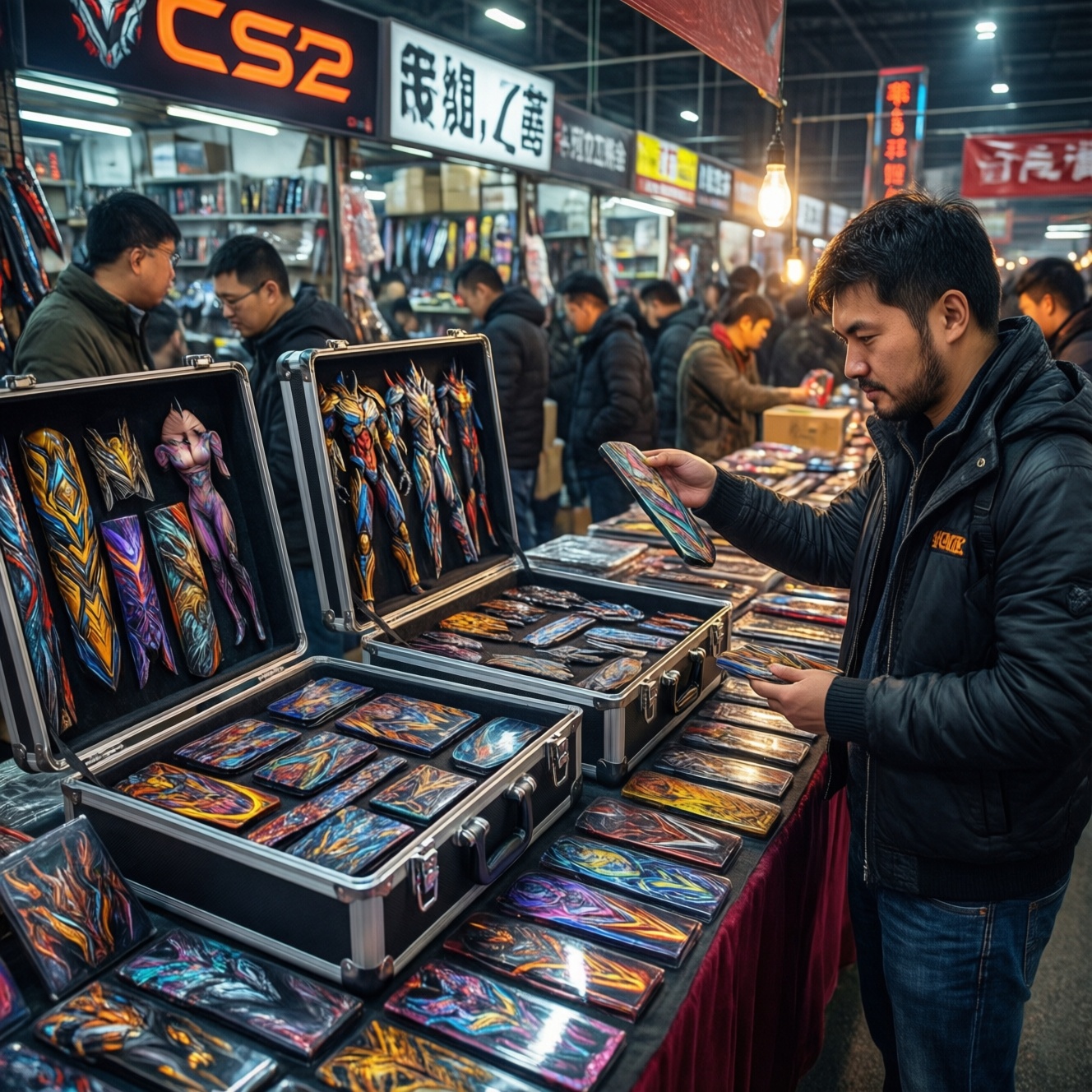


A Steam trading bot is an automated account (or fleet of accounts) that lists, prices, and exchanges Steam items using Steam's web APIs and trade-offer flow. In practice it behaves like a 24/7 market maker: it quotes prices, manages inventory, and executes trades. Its presence mainly affects prices by tightening or widening spreads, accelerating repricing, and shifting liquidity between items.
Common Misconceptions About Steam Trading Bots
- Myth: A steam trading bot is always a scam. Bots can be used legitimately for automated quoting and inventory handling, but scams often impersonate bots or exploit user mistakes.
- Myth: steam trading bots buy sell automatically means guaranteed profit. Most profit comes from disciplined spread control, risk limits, and operational reliability; competition quickly compresses easy edges.
- Myth: A steam market bot sets the "true price". Bots typically follow price anchors (market listings, competitor quotes) and adjust; they rarely "discover" value independently.
- Myth: A cs2 trading bot manipulates prices just by existing. Impact depends on inventory size, quoting rules, and how many substitutes exist; small bots usually track the market, not move it.
- Myth: A steam item trading bot can trade any item instantly. Liquidity varies widely; illiquid items may not clear at quoted prices and may require larger discounts to move.
How Steam Trading Bots Operate: Architecture and Protocols
Steam trading bots automate two related but distinct workflows: market listing (Steam Community Market) and direct item exchange (Trade Offers). Many "trading bots" focus on trade offers only, while "market bots" focus on listings; some do both. The boundary matters because pricing, latency, and risk controls differ between these channels.
At a minimum, a bot consists of (1) an authenticated Steam session, (2) a pricing service, (3) an inventory service, and (4) an execution service that creates/cancels listings or creates/accepts trade offers. Real deployments add queueing, rate limiting, and monitoring because Steam endpoints can be slow, temporarily unavailable, or limited.
Typical message flow (trade-offer style) looks like this:
User/Counterparty
   |
   | 1) send trade offer (items requested / offered)
   v
Bot Trade Listener ----> 2) validate partner, items, and constraints
   |
   | 3) fetch prices + verify inventory availability
   v
Pricing + Inventory Services
   |
   | 4) accept/decline offer; log outcome
   v
Steam Trade Offer API
Bot categories you'll actually encounter
| Bot type | Primary channel | Typical pricing model | Pros | Cons | Typical impact on price |
|---|---|---|---|---|---|
| Single-account quoting bot | Trade offers | Static spreadsheet / fixed margins | Simple to run; predictable behavior | Slow to adapt; easier to arbitrage | Often trails market; may widen spreads on low-liquidity items |
| Fleet market maker | Trade offers + sometimes market listings | Dynamic repricing (competitor-aware) | Tighter quotes; higher fill rate | Operational complexity; risk of runaway repricing if inputs are wrong | Can tighten spread and speed up repricing around news/patches |
| Inventory rebalancer | Trade offers | Target inventory bands + discounts | Controls exposure; reduces stockouts | May quote unattractive prices during rebalancing | Creates temporary price pressure when unloading excess stock |
| Arbitrage scanner | Multi-venue (Steam + external signals) | Threshold-based triggers | Fast reaction; opportunistic | Can chase stale data; higher ban/scam surface | Mostly compresses obvious mispricings; limited lasting effect |
Pricing Algorithms: From Static Listings to Dynamic Market Makers
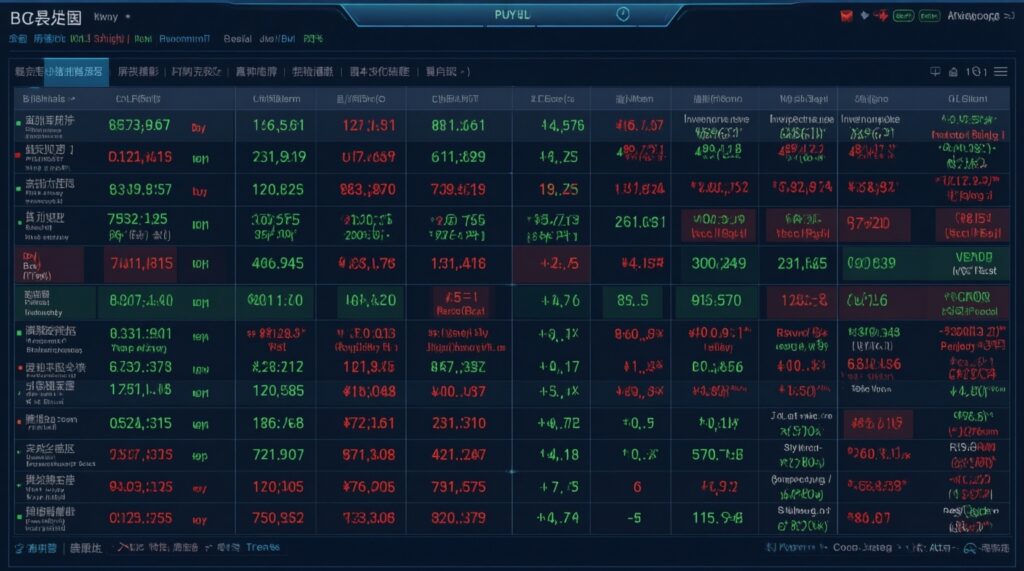
If you want an actionable mental model: a bot sets two numbers per item-its buy quote and sell quote-then continuously revises them as inventory and competitors change. Common mechanics include:
- Anchor price selection: choose a reference (last known market median, lowest listing, competitor bot quote, or internal fair value).
- Spread policy: define buy = anchor − margin, sell = anchor + margin; margin may vary by liquidity tier.
- Inventory sensitivity: widen spreads when inventory is high (push selling) and narrow when inventory is low (encourage buying back).
- Volatility gates: freeze repricing when anchor changes too fast or sources disagree to avoid chasing spikes.
- Outlier filtering: ignore single listings/quotes that are too far from recent ranges (simple trims or median-of-sources).
- Rate-limit aware updates: batch reprices and avoid constant cancel/relist cycles that increase failure rates.
Practical rule set you can implement quickly
- Define 3 liquidity tiers (high/medium/low) and set different margins and max position sizes per tier.
- Use at least 2 anchors (e.g., market listing + competitor quote); if they diverge beyond a threshold, pause updates and require manual review.
- Never allow "infinite" repricing loops: cap per-update price movement and set a cooldown window after each change.
Liquidity, Spread and Inventory Management in Bot Fleets
Bots are used where humans are slow: quoting many items, reacting 24/7, and keeping stock balanced. Typical scenarios include:
- Always-on two-sided quoting: maintain buy/sell prices for a catalogue of items to provide instant trades.
- Bulk intake and redistribution: buy common items in volume, then gradually sell to avoid flooding your own exit.
- Stockout prevention: raise buy quotes (or lower sell quotes) when inventory falls below a target band.
- Risk-off liquidation: reduce exposure during uncertainty by widening buy quotes and discounting sells until inventory shrinks.
- Cross-item hedging (basic): if two items are close substitutes, limit combined inventory rather than per-item only.
Actionable inventory controls (simple, effective)
- Target bands: min/target/max units per item; repricing is driven by how far you are from target.
- Position caps: maximum value per item and per category to prevent one volatile item from dominating your book.
- Aging rules: if an item sits unsold beyond your time limit, apply a stepwise discount schedule instead of random repricing.
Risk, Fraud and Security Mechanisms Around Automated Traders
Automation concentrates risk: one bad config can misprice everything; one compromised session can drain inventory. Treat security and guardrails as core features, not add-ons.
Common advantages you can safely rely on

- Consistency: deterministic rules reduce emotional trading and ad-hoc discounts.
- Speed: faster reaction to inventory changes and competitor repricing.
- Auditability: logs and rule-based decisions make it easier to review mistakes and improve.
Limitations and failure modes to plan for
- Session and credential risk: stolen cookies/tokens can allow unauthorized trade actions.
- Phishing and impersonation: attackers mimic a "steam item trading bot" brand to trick users into sending items first.
- Price-source poisoning: if your anchor is manipulated or stale, your bot can reprice into bad fills.
- Runaway repricing: two bots reacting to each other can spiral prices unless you cap step sizes and add cool-downs.
- Operational fragility: endpoint changes, timeouts, or rate limits can cause partial execution (listed but not tracked, offers sent but not recorded).
Concrete safety checklist for bot operators
- Separate roles: one account for holding inventory, one for quoting/execution where feasible.
- Use allowlists for trade partners (or strict reputation rules) and deny trades that include unusual item mixes.
- Implement hard limits per trade: max items, max value, and max discount vs anchor.
- Log every decision input (anchors, inventory level, rule version) so you can replay incidents.
- Fail closed: if pricing inputs are missing or disagree too much, stop trading rather than guessing.
Empirical Effects on Market Prices, Rarity and Player Behavior
Without relying on specific datasets, you can still reason about repeatable effects: bots change speed and availability more than they change an item's underlying scarcity. The mistakes below are the ones that mislead practitioners.
- Confusing faster repricing with manipulation: bots can make price moves look sudden because updates are synchronized, not because the "value" changed instantly.
- Assuming rarity equals liquidity: rare items can be illiquid; bots may quote wide spreads, making the visible market look "stuck."
- Ignoring spread as the key metric: many observers track only last price, but bots primarily compete on spread and fill probability.
- Overestimating a single bot's influence: unless inventory is large relative to typical daily volume, most bots are price takers.
- Attributing all volatility to bots: patches, promotions, and creator trends often move demand; bots merely propagate the move faster.
What to measure if you want to know whether bots affect an item
- Quote frequency: how often top buy/sell quotes change per day.
- Observed spread: best sell minus best buy (in the same venue and same condition).
- Depth at quotes: how many units sit near the top prices before price steps.
- Time-to-fill: how long it takes for reasonably priced listings to get matched.
Practical Implementation: Building, Deploying and Measuring a Trading Bot
This mini-outline is for an intermediate builder who wants clear steps, not theory. The goal is a safe quoting loop for a small catalogue, with measurable outcomes.
Minimal build plan (production-minded)
- Define scope: start with trade-offer quoting for a short list of items; postpone broad catalogues.
- Model data: store item id, liquidity tier, anchor sources, current buy/sell quotes, inventory units, and rule version.
- Build the execution loop: fetch anchors → compute quotes → enforce limits → publish quotes (or respond to offers).
- Add guardrails: trade caps, price-change caps, cooldowns, and a kill switch.
- Instrument: log fills, rejects, time-to-fill, inventory drift, and errors per endpoint.
Pseudocode for a safe quoting loop
# Inputs per item:
# inv = current inventory units
# target = desired units
# a1, a2 = anchor prices from two sources (may be None)
# tier = liquidity tier (HIGH/MED/LOW)

def compute_anchor(a1, a2):
    if a1 is None or a2 is None:
        return None
    # simple disagreement gate
    if abs(a1 - a2) / max(a1, a2) > DISAGREE_LIMIT:
        return None
    return (a1 + a2) / 2

def quote(item):
    anchor = compute_anchor(item.a1, item.a2)
    if anchor is None:
        return HALT_TRADING

    # inventory skew: positive means too much inventory
    skew = (item.inv - item.target)

    base_margin = MARGIN[item.tier]
    inv_adj = clamp(skew * INV_SENS[item.tier], -MAX_INV_ADJ, MAX_INV_ADJ)

    buy  = anchor * (1 - (base_margin + inv_adj))
    sell = anchor * (1 + (base_margin - inv_adj))

    # hard limits
    buy  = clamp(buy,  anchor * (1 - MAX_DISCOUNT), anchor * (1 + MAX_PREMIUM))
    sell = clamp(sell, anchor * (1 - MAX_DISCOUNT), anchor * (1 + MAX_PREMIUM))

    # step cap to prevent runaway repricing
    buy  = cap_step(buy,  item.prev_buy,  MAX_STEP)
    sell = cap_step(sell, item.prev_sell, MAX_STEP)

    return (buy, sell)
Measurement you can act on weekly
- Fill rate per item: accepted trades or completed sales divided by quotes served.
- Inventory drift: average distance from target; if high, your pricing isn't steering flow.
- Quote quality: how often you were top-of-book versus how often being top actually filled.
- Error budget: endpoint failures and stale-anchor incidents; reduce before expanding catalogue.
Concise Clarifications for Practitioners
What is the practical definition of a steam trading bot?
It's an automated Steam account that computes quotes and executes item exchanges or listings based on rules. It replaces manual price checking and trade handling with a repeatable loop.
Do steam trading bots buy sell on the Steam Community Market or via trade offers?
Both exist. Many bots are primarily trade-offer systems, while a steam market bot focuses on automated listing/cancel/relist workflows.
How does a cs2 trading bot usually decide prices?
Most use anchor prices (market listings and competitor quotes) plus a margin and inventory adjustment. Better bots add outlier filters, cooldowns, and caps on price movement.
Why do bot-heavy items feel more volatile?
Bots reprice quickly and often in sync, so the visible best prices move more frequently. That can amplify short-term swings even when underlying demand changes are ordinary.
Can a steam item trading bot move prices by itself?
Only if it can consistently absorb or supply meaningful inventory relative to the market's available depth. Otherwise it typically follows existing price signals.
What single control prevents the most expensive mistakes?
A hard limit on maximum discount/premium versus a trusted anchor plus a per-update step cap. Together they reduce damage from poisoned inputs and runaway feedback loops.