
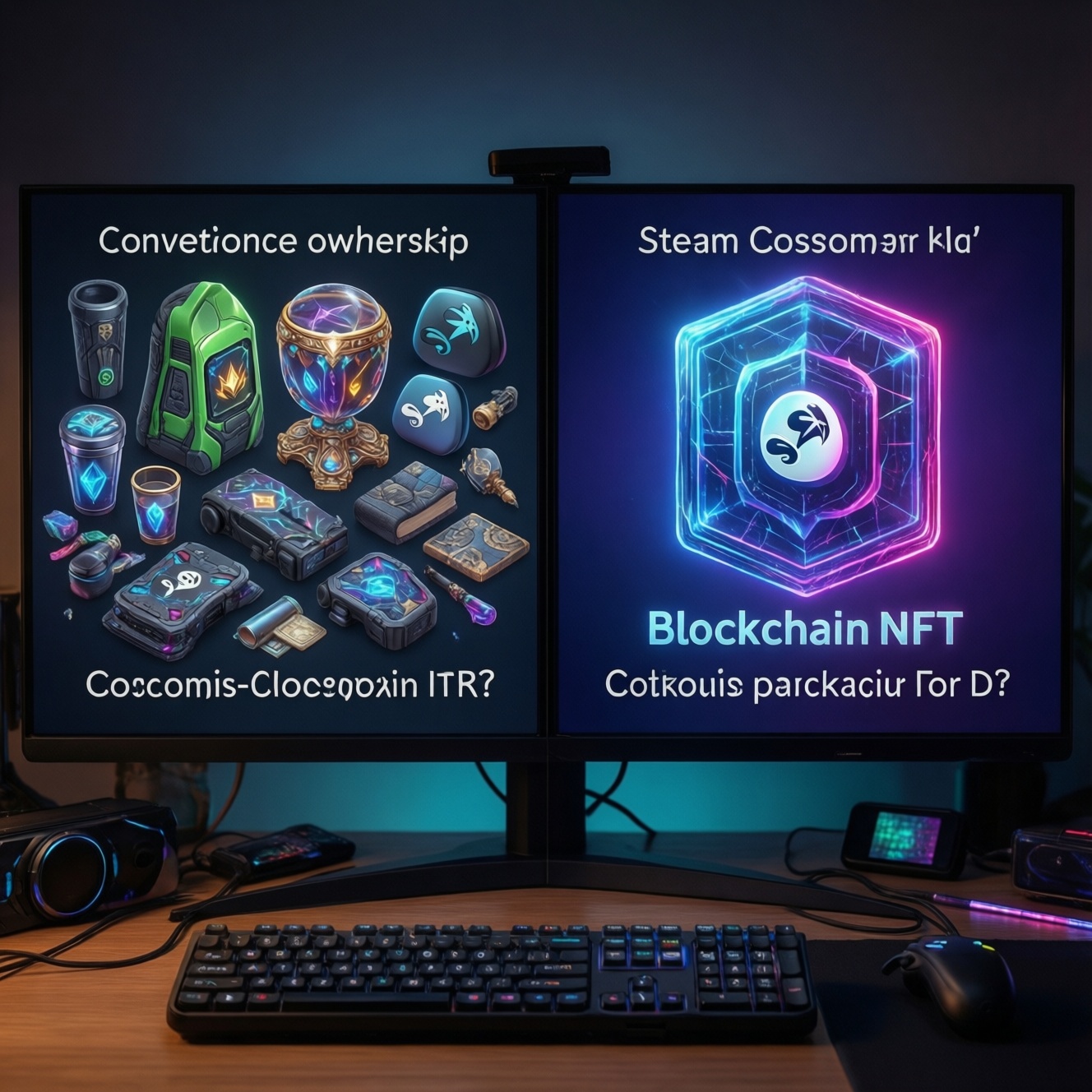
If you want the simplest, lowest-friction way to trade game cosmetics with minimal setup, Steam items usually win on convenience and predictable buyer flow, but you never truly own them beyond Steam's license. On-chain NFTs can offer stronger portability and self-custody, yet add wallet, chain, and smart-contract risk plus variable fees and liquidity.
Executive summary for budget-conscious readers
- Choose Steam items when you prioritize speed, familiarity, and low operational overhead, even if your rights are limited to Steam's ecosystem.
- Choose on-chain NFTs when you need transferable ownership outside one platform and can manage wallet security and chain-specific costs.
- Liquidity is not automatic on-chain: a ตลาดซื้อขายไอเทม NFT can be deep for popular collections and empty for most others.
- Security trade-off: Steam reduces wallet mistakes but concentrates platform risk; NFTs reduce platform dependence but increase user-key and contract risk.
- Budget-first: avoid repeated on-chain moves; batch actions, use a low-fee chain, and only mint/list when there is proven demand.
- Creators: NFTs enable royalties and direct distribution, but enforcement and buyer acceptance vary by marketplace.
Ownership model: on-chain NFTs vs Steam item licenses
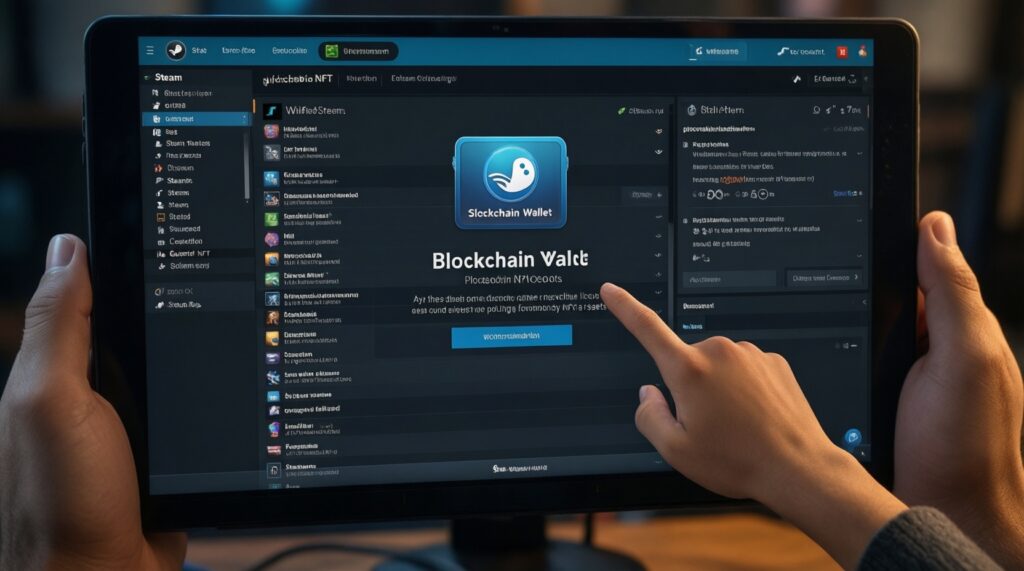
Takeaway: Steam gives you a revocable, platform-bound license; NFTs can give you self-custodied control, but only within the rules of the chain and the game integration.
- Custody: Steam custodial inventory vs wallet-based self-custody (or custodial exchange/wallet).
- Transfer permissioning: Steam trades depend on Steam's rules; NFTs depend on token standards plus any contract restrictions.
- Revocation risk: Steam can restrict accounts/inventories under policy; NFTs can be frozen only if the contract has that power, but games can still refuse to honor items.
- Proof of ownership: Steam ownership is inside Steam; NFTs are publicly verifiable on-chain, but that doesn't guarantee in-game utility.
- Use rights: Steam items are typically tied to specific games; NFTs may be reusable across apps only if others integrate them.
- Upgrade/merge mechanics: Steam crafting/market rules vs on-chain burn/mint/upgrade contracts (adds contract risk and fees).
- Dispute handling: Steam has centralized support processes; on-chain transfers are final, so recovery relies on off-chain support (if any).
- Exit options: Steam value often cycles within Steam; NFTs can be sold in crypto markets, but off-ramping may add friction and compliance steps.
Budget-first recommendation: If your goal is "buy, play, and resell with minimal learning," start with Steam; if you specifically need true external transfer (e.g., to another wallet or marketplace), only then consider ซื้อ NFT ไอเทมเกม-and pick a mature collection with active secondary trading.
Liquidity landscape: marketplaces, fees, and time-to-exit
Takeaway: Steam offers consistent in-app buyer discovery; on-chain liquidity depends heavily on collection popularity, chain choice, and marketplace coverage-so time-to-exit can range from minutes to "never."
| Option | Who it fits | Pros | Cons | When to choose |
|---|---|---|---|---|
| Steam Community Market | Players optimizing for convenience and fast exposure | Built-in demand, familiar UX, no wallet setup | Funds typically stay in Steam; license-based ownership; policy constraints | When your main question is ไอเทม Steam ซื้อขายที่ไหน and you want the default path |
| Steam player-to-player trading (Trade Offers) | Experienced traders seeking direct swaps | Flexible negotiations; can bundle items | Higher scam/social engineering risk; time-intensive; pricing uncertainty | When you can verify counterparties and need custom deals |
| Official game-linked NFT marketplace (publisher-run) | Players who want NFTs tightly integrated with one game | Clear utility; often smoother UX than generic NFT markets | Liquidity can be narrow; still platform rules; may be chain-custodial | When utility matters more than resale flexibility |
| General NFT marketplaces (secondary) | Collectors and traders comfortable with crypto rails | Broad reach; many buyers already on-chain | Discoverability problems for small projects; counterfeits/impersonation risk | When you need maximum visibility across a ตลาดซื้อขายไอเทม NFT |
| Aggregators (multi-market search and routing) | Active traders chasing best execution | Compares listings; can reduce search time | Extra complexity; still exposed to chain fees and contract approvals | When spreads are large and speed matters more than simplicity |
| OTC/escrow via trusted intermediaries | High-value trades where counterpart risk dominates | Custom terms; reduces direct counterparty risk | Trust/fee overhead; slower; not ideal for small budgets | When the asset is expensive enough to justify extra safeguards |
Use the table above to frame your decision as เปรียบเทียบ NFT กับ ไอเทม Steam: Steam is typically "high baseline liquidity inside one walled garden," while NFTs are "variable liquidity across many venues," including แพลตฟอร์มซื้อขายไอเทมเกมบนบล็อกเชน that may or may not have real demand for your specific item.
Budget-first recommendation: If you can't clearly name where the buyers are (specific market + active collection), avoid on-chain flipping; stick to Steam Market for smaller budgets, and only go NFT when there is a proven secondary market with frequent trades for that exact collection.
Security comparison: custody, smart contract risk, and platform breaches
Takeaway: Steam centralizes security (fewer user-key mistakes) while NFTs decentralize it (fewer platform dependencies) but push critical security duties onto you.
- If you are budget-first and risk-averse: prefer Steam Market or a publisher-run NFT market with strong account protections, because "wrong-address" losses and malicious approvals on-chain can be irreversible. Action: do not sign wallet approvals you don't understand.
- If you hold higher-value items and want maximum control (premium posture): use a hardware wallet, separate "vault" and "hot" wallets, and minimize contract approvals. Action: keep valuable NFTs in a wallet that never interacts with random dApps.
- If you must use on-chain marketplaces frequently: assume smart-contract and phishing risk; restrict approvals, revoke unused permissions, and verify collection contracts. Action: maintain a dedicated trading wallet funded only with what you can afford to risk.
- If you rely on Steam trading/market daily: assume account takeover and API-key scams are your main threat, not "blockchain hacks." Action: lock down Steam Guard, avoid clicking trade links, and verify trade offers inside the Steam client.
- If you are an indie dev shipping item economies: Steam reduces your security surface but locks you into Steam's policies; NFTs add smart-contract responsibilities and customer support for irreversible transfers. Action: start with the simplest custody model you can reliably support, then expand.
Budget-first recommendation: Default to "least moving parts": Steam for casual trading; on-chain only after you can follow a repeatable security routine (separate wallets, limited approvals, verified contracts) without shortcuts.
Cost breakdown: acquisition, transaction, listing, and maintenance expenses

Takeaway: Your real cost is the full lifecycle: buy-in + fees + failed relists + time-on-chain adds network and approval steps that can quietly dominate small trades.
- Define your exit route before buying: exact marketplace, expected buyers, and how you will cash out (Steam balance vs fiat off-ramp).
- List every fee you may pay: marketplace fee, creator royalty (NFTs), network/gas, and any bridge/off-ramp spreads.
- Estimate how many on-chain actions you'll perform: approve, list, modify, cancel, transfer-more actions usually mean more cost and more risk.
- Set a minimum profit threshold that justifies your overhead (especially if you plan to relist multiple times).
- Choose the lowest-complexity path that still meets your goal: Steam Market for simple buy/sell; publisher-run NFT market for game utility; general NFT markets only when liquidity is proven.
- Do a "dry run" with a small amount first to validate wallets, listings, and withdrawals end-to-end.
Budget-first recommendation: For small budgets, avoid strategies that require repeated on-chain updates; prefer one purchase and one sale on a single venue, or stick to Steam where the operational overhead is typically lower.
Interoperability and persistence: portability, standards, and platform lock-in
Takeaway: NFTs can be portable as tokens, but "portable utility" is rare; Steam items often have reliable in-platform persistence but minimal portability by design.
- Assuming an NFT automatically works across games: token portability ≠ gameplay integration.
- Buying based on artwork/name without verifying the contract and official links (counterfeits and clones exist).
- Ignoring chain friction: bridges, wrapped assets, and cross-chain listings add risk and steps.
- Overestimating liquidity from "listed volume" rather than actual completed sales for your trait/item type.
- Confusing custody with durability: self-custody protects against platform removal, but games can still delist or nerf utility.
- Assuming Steam items can always be sold quickly: market freezes, trade holds, and policy changes can slow exits.
- Locking into one marketplace's proprietary listing features (both Steam and NFT platforms can create platform-specific dependencies).
- Not planning for account/wallet loss recovery: Steam has account recovery processes; on-chain recovery depends on your backup discipline.
Budget-first recommendation: Treat interoperability as a bonus, not the core thesis-buy based on current, verifiable utility and active trading, and avoid cross-chain complexity unless it clearly increases sell-through.
Compliance and monetization: taxes, legal risk, and revenue paths for creators
Takeaway: Steam is often best for players who want straightforward, platform-contained trading and for devs who prefer minimal on-chain compliance overhead; NFTs are often best for creators who need programmable distribution and potential royalties, and for players who value external custody. In Thailand context, plan for tax and reporting obligations tied to crypto off-ramps and trading activity rather than assuming the platform handles everything.
Concise practical answers to common concerns
Is an NFT always "true ownership" compared to Steam?
NFTs can give you control of the token in your wallet, but the game can still decide whether it recognizes the item. Steam items are typically licenses controlled by Steam policies.
Where can I sell Steam items fastest?
The Steam Community Market is usually the fastest for standard items because it has built-in demand. For niche or bundled deals, direct trade offers can work but require more caution.
What's the safest way to buy game-item NFTs?
Use official links from the game/publisher, verify the contract address, and use a dedicated wallet with limited funds. Avoid signing unlimited approvals for unknown contracts.
How do I judge whether a ตลาดซื้อขายไอเทม NFT is actually liquid?
Check recent completed sales for the exact collection and similar items, not just listings. If sales are sparse, your time-to-exit may be long even if prices look attractive.
Are fees lower on Steam than on-chain?
Steam has platform fees but avoids gas and wallet operational costs. On-chain fees vary by chain and your number of actions (approve/list/cancel/transfer), which can be expensive for small trades.
Should indie devs launch items on Steam or as NFTs first?
If you want the lowest operational risk, start where you can support users reliably and handle disputes. If your design depends on external ownership and composability, NFTs may fit-budget time for security and support.