
Web3 crypto games and gambling mechanics combine (1) game rules and payout math (house edge/EV), (2) token incentives (tokenomics), and (3) on-chain integrity (provable randomness and settlement). To evaluate web3 crypto casino games safely, you validate the contract, reproduce the expected value, and independently verify the randomness proof for a specific round.
Practical overview: core mechanics at a glance
- Separate game math from token rewards: EV from the wager is distinct from any emissions, airdrops, or loyalty rewards.
- Tokenomics is an incentive layer: blockchain casino tokenomics can subsidize play temporarily; it does not remove variance or guarantee profit.
- Integrity needs verifiability: outcomes should be reproducible from public inputs (commit-reveal or VRF), not just "on-chain = fair".
- House edge is deterministic: if odds and fees are fixed, edge can be computed; token price volatility can dominate the experience.
- Risk comes from two sources: gameplay variance plus token exposure (rewards paid in volatile crypto gambling games tokens).
- "Best" is contextual: best web3 crypto betting platforms for you depend on provability, liquidity, fee model, and regulatory fit in Thailand.
Common myths about Web3 gaming and gambling
Definition and boundaries. Web3 gambling uses smart contracts to accept bets, compute outcomes, and settle payouts (often in crypto). Web3 gaming may include wagering mechanics, but many "game" products are closer to casinos with gamified UX, especially when outcomes are primarily chance-based.
Where play to earn web3 crypto games fits. "Play-to-earn" typically adds token rewards (emissions, quests, NFTs) on top of gameplay. If a player must stake/enter paid matches with chance-based payouts, the system behaves like gambling even if rewards are framed as "earnings".
Myths that cause bad decisions:
- "On-chain means fair." On-chain execution can still be biased if randomness is manipulable, parameters are upgradable, or the operator can censor settlement.
- "Token rewards cancel the house edge." Rewards can subsidize EV for a period, but they are paid from inflation, fees, treasury, or other players-each with limits.
- "Audited = safe." Audits reduce known bug classes; they do not remove economic exploits, oracle manipulation, or governance risk.
- "If it's called a game, regulation doesn't apply." In practice, products with staking, chance, and payouts can trigger gambling frameworks regardless of branding.
Tokenomics models: design patterns and incentive flows
Tokenomics describes how value moves between players, the house/treasury, liquidity providers, and token holders. In crypto gambling games tokens, incentives often aim to increase volume and retain users, but can also create reflexive risks (bank-run dynamics when rewards drop).
Common design patterns (what to look for)
- Fee-to-treasury: a portion of wagers/entry fees funds a treasury that pays rewards, buybacks, or operations.
- Volume mining / emissions: users receive tokens proportional to betting volume or gameplay activity.
- Staking for rakeback: staking token grants fee discounts, cashback, or a share of protocol fees.
- LP-backed bankroll: third parties supply capital (bankroll) and earn a share of house edge and fees.
- NFT utility loops: NFTs gate access, boost rewards, or affect odds/limits; can concentrate advantage among whales.
- Dual-token setups: one volatile governance/reward token plus a stable(ish) in-game chip; reduces UX volatility but adds peg/solvency risk.
Comparative table: tokenomics models vs incentives, risks, and best-fit
| Model | Main incentive | Where value comes from | Key risks | Best-use cases |
|---|---|---|---|---|
| Volume mining (bet-to-earn) | Rewards proportional to volume | Token inflation + treasury allocation | Wash trading, unsustainable emissions, token price collapse | User acquisition for new web3 crypto casino games; short campaigns |
| Stake-to-rakeback | Cashback / fee share | House edge and platform fees | Security of staking contract, governance capture, reward dilution | Retention for mature platforms; aligns frequent players |
| LP bankroll (decentralized house) | Yield from house edge | Player losses net of payouts | Tail risk (big wins), oracle/MEV manipulation, liquidity runs | Games with bounded max payout; transparent risk limits |
| Treasury-funded quests (game-first) | Non-wager engagement rewards | Treasury budget + partnerships | Sybil farming, weak conversion to paying users | Play to earn web3 crypto games with skill/engagement loops |
| Dual-token (chip + reward) | Stable UX, separate speculation | Chip liquidity/peg mechanisms + reward emissions | Peg failure, liquidity fragmentation, hidden solvency gap | Casino-style UX; cross-game economies with many payouts |
Worked tokenomics example (simple incentive flow)
Suppose a game charges a fee f per wager volume V. Treasury inflow per period is T = f × V. If rewards are paid as R (in tokens) with market value P, then reward cost in base currency is C = R × P. A sustainable loop requires C ≤ T over realistic volume; if C > T, the gap is funded by dilution or reserves.
House edge and expected value: formulas, examples, and on-chain implementation
House edge is the expected loss per unit wager, assuming fixed rules and honest randomness. For a bet size b with possible payouts xi (net profit, can be negative) and probabilities pi, the player's expected value is:
EV = Σ(pi × xi). If the wager is always lost on failure and pays a multiplier m on win with probability p, a common simplified net EV is EV = b × (p × (m − 1) − (1 − p)).
Worked house edge example (one bet)
Consider a 1-unit bet that wins with probability p and pays m total return on win (including stake). Net profit on win is (m−1), and net profit on loss is −1. Then:
EV = p × (m − 1) + (1 − p) × (−1) = p × m − 1. If p × m < 1, EV is negative and the difference (1 − p×m) is the house edge per unit bet.
Where this shows up on-chain (typical scenarios)
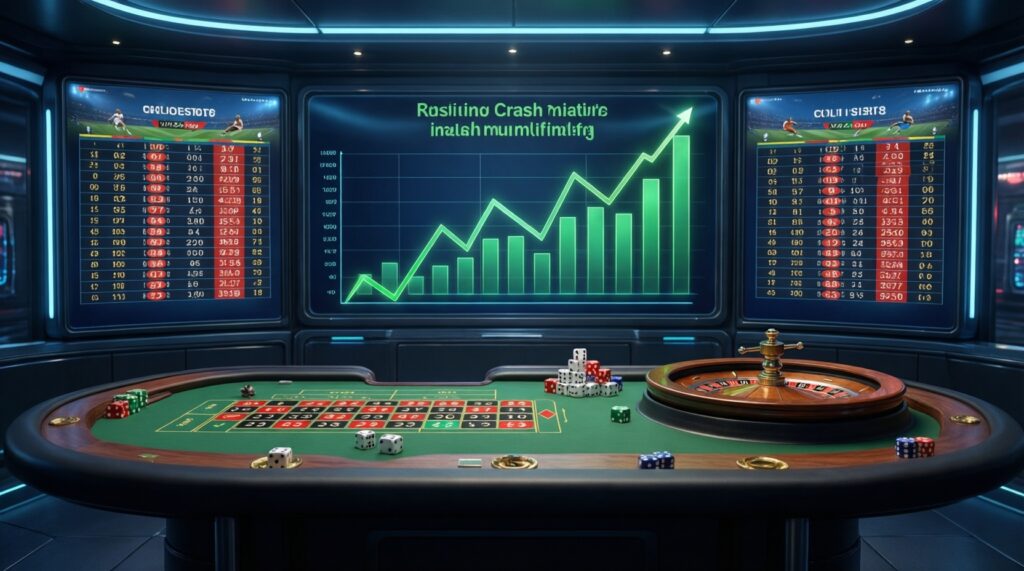
- Dice / roulette-style games: contract encodes p via ranges; payout multiplier m is fixed minus a fee.
- Crash / multiplier games: distribution of crash point defines p for each cash-out multiplier; edge often embedded in the distribution.
- Sports betting / AMM odds: odds include margin; settlement depends on an oracle; EV is sensitive to fees and slippage.
- Prediction markets: "edge" may appear as trading fees and spread rather than a casino-style built-in loss.
- Loot boxes / gacha: EV depends on drop rates and secondary-market realizable value; token reward overlays can hide negative base EV.
Provable randomness, oracles, and integrity of outcomes
To trust outcomes, you need a mechanism that prevents the operator, validators, or players from choosing favorable randomness after seeing your bet. Most reputable systems use commit-reveal, VRF, or a combination with time locks and nonces.
What "provable" should mean in practice
- Deterministic verification: given public inputs, anyone can recompute the random value and the game result.
- Binding commitment: the party that commits to a secret cannot change it after seeing your action.
- Unpredictability: the random value cannot be predicted before commitment is locked.
- Replay protection: round IDs / nonces ensure the same proof cannot be reused for multiple bets.
Limits and attack surfaces you still must consider
- Oracle integrity: sports results and external events require an oracle; manipulation or delayed updates can dominate fairness.
- MEV and transaction ordering: if placing/canceling a bet can be front-run, users can be selectively disadvantaged.
- Upgradable contracts/admin keys: an admin can change parameters (fees, max payout, randomness source) mid-stream.
- Censorship and liveness: even if randomness is fair, a stalled reveal can freeze settlement and funds.
Short algorithm to verify a single round result (practitioner checklist)
- Identify the exact contract and round: get the game contract address, your bet transaction hash, and the round/nonce emitted in events.
- Confirm parameters at that block: read on-chain values used for payout (fee, payout table, max multiplier, min/max bet) and ensure they match the UI.
- Recompute randomness:
- If commit-reveal: verify the revealed secret hashes to the committed value (e.g., check hash(reveal) == commit), then recompute RNG from the documented formula (often hash(secret, nonce, playerSeed)).
- If VRF: verify the VRF proof using the public key and the on-chain verifier call result; derive RNG from the VRF output exactly as the contract does.
- Recompute the outcome mapping: apply the game's mapping rule (e.g., rng % N selects bucket) and confirm it lands in the same payout range.
- Recompute payout and fees: calculate gross payout, subtract fees, and compare to actual token transfers/logs.
- Check for abnormal admin actions: scan for upgrades/parameter changes immediately before the round (if the system is upgradeable).
Player risk profiles, volatility, and crypto bankroll strategies
In Web3, bankroll risk is amplified by token volatility and smart-contract tail risk. Many users lose not because they misunderstand EV, but because they underestimate drawdowns, withdrawal constraints, and reward token price risk.
- Mixing bankroll and reward exposure: treating volatile reward tokens as "profit" before converting or hedging can erase gains.
- Ignoring max loss per session: without a hard stop, variance will eventually realize worst-case streaks.
- Chasing rebates/emissions: playing negative-EV games "for rewards" works only if reward value reliably exceeds edge after fees and slippage.
- Overestimating liquidity: cashing out large wins may move price, especially when rewards are thinly traded.
- Assuming platform ranking implies safety: "best web3 crypto betting platforms" lists rarely reflect contract upgrade risk, oracle design, or solvency constraints.
Practical bankroll rules (intermediate)
- Define a base currency bankroll (e.g., stablecoin) and measure results in that unit, not in reward tokens.
- Set a max bet size and a max daily loss before you start; treat it as a protocol you follow, not a suggestion.
- If rewards are paid in a volatile token, decide in advance: convert immediately, convert on schedule, or hold with a cap.
Failure modes: exploits, economic attacks, and regulatory constraints

Beyond "bugs," many failures are economic: attackers use timing, liquidity, or oracle weaknesses to turn a fair-looking game into a one-sided trade. In Thailand, an additional constraint is legal and compliance risk: access, marketing, and payment rails can change quickly, affecting withdrawals and availability.
Mini-case (end-to-end): predictable randomness via weak commit-reveal
If the contract derives RNG from a value an attacker can influence (or predict), outcomes become gameable. Example anti-pattern: rng = hash(blockhash, userSeed) where the attacker can spam transactions and only finalize favorable ones.
// Anti-pattern (illustrative): attacker can bias by choosing when to submit
rng = keccak256(blockhash(block.number - 1), userSeed, nonce)
outcome = rng % N

// Safer pattern (conceptual): binding commit + later reveal or VRF output
commit = keccak256(secret)
... later ...
require(keccak256(secret) == commit)
rng = keccak256(secret, roundId, playerSeed) // or VRF output
Operational red flags to scan before you play
- Unlimited admin powers: can change fees, pause withdrawals, change RNG/oracle, or upgrade without delay.
- Unbounded max payout: bankroll insolvency risk if a single win can drain liquidity.
- Oracle dependency without fallback: disputes or delays can trap funds.
- Reward promises without budget math: no clear source of rewards beyond "community growth".
Quick clarifications for practitioners
Are Web3 casino outcomes automatically provable?
No. They are provable only if the randomness and outcome mapping are publicly verifiable and binding, such as VRF or a correctly implemented commit-reveal.
Can token rewards make a negative-EV game profitable?
Sometimes temporarily, if reward value exceeds the house edge after fees and slippage. It usually degrades as emissions drop or token price falls.
What is the fastest way to sanity-check house edge?

Extract p and payout m from contract/UI rules and compute EV = p×m − 1 (per unit bet) for a simple win/lose bet, then adjust for fees.
How do I verify a single bet result without trusting the UI?
Use the bet transaction and emitted round/nonce, recompute the RNG from the documented inputs (commit-reveal or VRF), then recompute the bucket mapping and payout from the contract parameters at that block.
Why do "play-to-earn" projects feel like gambling?
When entry requires payment/stake and outcomes are largely chance-based with financial payouts, the experience and risk profile resemble gambling even if presented as a game.
What is the biggest hidden risk in crypto gambling tokens?
Liquidity and price risk: rewards can be real on paper but hard to exit without heavy slippage, especially during downturns.
What should I prioritize when comparing platforms?
Provability of outcomes, upgrade/admin controls, bankroll solvency limits, oracle design (if applicable), and transparent fee math-more than marketing claims about being among the best web3 crypto betting platforms.