


To manage bankroll for esports tournaments (Majors, TI, and Worlds), treat each event as a different risk profile, cap stake size per bet, and tighten exposure as brackets progress. Use a simple sizing model (flat or fractional Kelly), log every wager, and apply hard stop-loss/session rules. This keeps variance survivable across esports betting markets.
Core Principles for Bankroll Stability
- Separate "bankroll" from living money; fund it once, then wager only from that pool.
- Use a consistent unit size (a fixed % of bankroll) and avoid jumping stakes after wins/losses.
- Limit correlated exposure (same team/patch/map pool) across multiple bets on the same day.
- Scale down when uncertainty spikes (patches, stand-ins, role swaps, meta shifts).
- Track closing line/value and outcomes; if you can't measure, you can't correct.
- Prefer fewer, higher-conviction bets over "action betting" across every match.
Assessing Tournament Variance: Majors vs The International vs Worlds
This section fits intermediate bettors who already understand odds formats and want to survive long events without blowing up. Skip aggressive staking if you don't have reliable team news access, if you're chasing losses, or if you can't commit to logging every bet (including cashouts/voids).
| Event type | Typical variance drivers (practical view) | Recommended stake per bet (as % of bankroll) | Sample bet count per event (to plan workload) |
|---|---|---|---|
| CS2 Majors (e.g., CS2 Major betting) | Map pool volatility, veto edge, pistol-round swing, momentum, BO1/BO3 mix | 0.5%-1.0% | 10-25 |
| Dota 2 The International (bet on Dota 2 The International) | Patch-read, draft edges, hero comfort, long series stamina, lower-bracket survival | 0.25%-0.75% | 12-30 |
| LoL Worlds (League of Legends Worlds betting) | Meta-read, side selection, objective setup, limited underdog comebacks, BO1 groups | 0.5%-1.0% | 8-20 |
Where this helps: planning stake caps before you open any betting sites for esports. Where it doesn't: if you rely on "hot takes" without draft/map context or if you place many same-team parlays (high correlation).
Bet Sizing by Stage: Group Play, Upper/Lower Brackets, Grand Finals
Before adjusting bet size by stage, you need:
- A bankroll number in one currency (THB is fine) and a chosen "unit" percentage (example below).
- Access to reliable lines across at least 2 sportsbooks or exchanges (to compare price movement); this is especially important in esports betting where openers can be soft.
- Fast news intake: official team accounts, tournament admin posts, and trustworthy reporters for roster/stand-in updates.
- Match context tools: map veto history for CS2, draft trends for Dota 2/LoL, and schedule/time zone awareness to avoid fatigue-based mistakes.
- A logging method (spreadsheet/Notes app) that records stake, odds, market, and rationale in under 30 seconds.
Stage-based sizing rule of thumb: groups = smaller stakes (more noise, more matches), early bracket = standard stakes, late bracket/grand final = not automatically bigger stakes; only size up if your edge is clearer and correlation is controlled.
Choosing a Model: Flat, Kelly, and Fractional Kelly for Esports
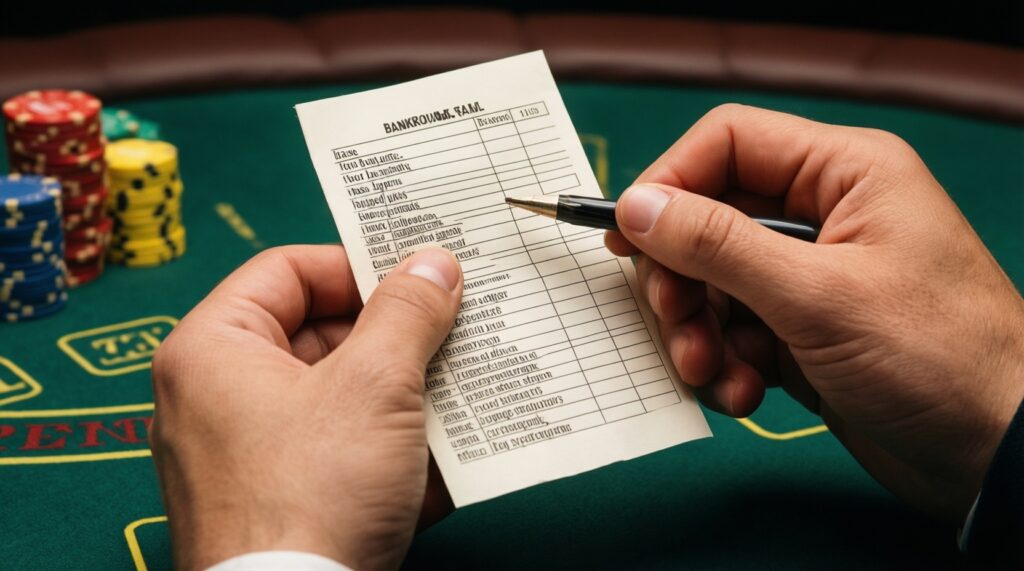
-
Pick your base unit and maximum stake
Choose a unit as a % of bankroll (e.g., 0.5% or 1.0%) and set a hard max per bet (e.g., 2 units). This prevents "one match" from deciding your month.
- Example: Bankroll = 50,000 THB; 1 unit at 0.5% = 250 THB; max stake = 2 units = 500 THB.
-
Start with flat staking for your first 30-50 logged bets
Use the same unit size on every qualifying bet while you validate your process. Flat staking is the safest baseline when your estimated edge is noisy (common in Majors/TI/Worlds).
-
If you can estimate probability, compute Kelly-but use fractional Kelly
Kelly sizing requires your win probability (p) and odds (decimal). In esports, estimation error is the main danger, so use fractional Kelly (e.g., 25% Kelly) rather than full Kelly.
- Decimal odds = 2.10, your p = 0.52 → full Kelly fraction = (p×odds − 1)/(odds − 1) = (0.52×2.10 − 1)/(1.10) ≈ 0.0836 (8.36% of bankroll). Too large for most bettors.
- Use 25% Kelly → ~2.1% of bankroll, then still cap it (e.g., at 1.0%-1.5%) if event variance is high.
-
Apply stage modifiers instead of emotional "confidence"
Define modifiers in advance: groups (0.75×), early bracket (1.0×), late bracket (0.75×) unless your edge is information-based (injury/stand-in confirmed) and not already priced in.
-
Enforce exposure limits per team and per market
Cap total exposure on one team in one day (e.g., 3 units across moneyline + maps + props). This reduces the chance a single upset or patch-read mistake breaks your bankroll.
Fast mode (3-5 steps)
- Set unit = 0.5%-1.0% of bankroll; set max bet = 2 units.
- Use flat staking for groups and first bracket rounds; avoid increasing size in finals by default.
- If you have a probability model, use 25% Kelly and still cap stakes by event (lower for TI-style variance).
- Limit exposure: max 3 units per team/day; no more than 2 correlated bets per match.
- Log stake/odds/market/reason immediately; stop if you hit session stop-loss.
Adjusting Bankroll to Meta, Roster Changes, and Patch Risks
- Patch or major balance update within the last week → reduce unit size (or require stronger edge) until you see stable drafts/maps.
- Stand-in, role swap, or unresolved visa/travel issue → avoid pre-match bets; consider live-only with smaller stakes.
- Team shows new strategic identity (different tempo, hero priority, map preferences) → treat past stats as lower weight.
- Schedule compression (multiple series/day) → downgrade stamina-dependent teams; reduce correlated parlays.
- Book lines move sharply without public news → assume information risk; don't chase; size down or pass.
- Your last 20 bets show worsening discipline (late bets, missed logs, impulsive live wagers) → cut unit size until workflow is clean again.
- Market type changes (moneyline to props) → reset assumptions; props often require different edge sources.
Concrete Risk Controls: Stop-losses, Profit Targets, and Session Rules
- No chasing after bad beats: increasing stake to "get it back" is the fastest path to ruin in CS2 Major betting and other high-swing formats.
- Skipping price checks: placing at the first number you see on betting sites for esports increases hidden cost; compare at least two books when possible.
- Overloading one match: stacking moneyline + map handicap + total maps + props is often the same bet repeated.
- Auto-sizing up in playoffs: late-stage matches feel "more important" but can be more efficient markets; only size up with real edge.
- Unbounded live betting: live markets are designed to tempt frequent clicks; pre-set a maximum number of live entries per series.
- Ignoring void/cancel rules: roster substitutions and map restarts can trigger different settlement rules; read sportsbook terms for that tournament.
- Letting entertainment bets leak into bankroll: if you want action, use a separate "fun" wallet with a fixed cap.
- Not updating bankroll after every settled bet: stale bankroll numbers lead to accidental overbetting.
Operational Workflow: Tracking, Tools, and a Fast-Track Betting Log
Choose the workflow that matches your time and discipline level:
-
Spreadsheet-first (best for improvement)
Use Google Sheets with columns: date/time, event (TI/Worlds/Major), market, pick, odds, stake (units + THB), closing odds, result, notes. Most useful if you regularly bet on Dota 2 The International or full Worlds slates.
-
Notes-app quick log (best for speed)
One line per bet: "Worlds-Group-ML-Team A @1.95-1u-reason: draft edge-CLV check later." Works when you're traveling or betting small.
-
Tracker app (best for automation)
If you already use a betting tracker, ensure it supports esports markets and lets you export CSV. Keep the same fields so you can audit decisions, not just profit.
-
Two-tier system (best for mixed goals)
Tier 1 = "model/edge bets" (strict rules). Tier 2 = "fan bets" (tiny fixed cap). This helps when you mix League of Legends Worlds betting with casual viewing.
Fast-track betting log (copy-friendly fields)
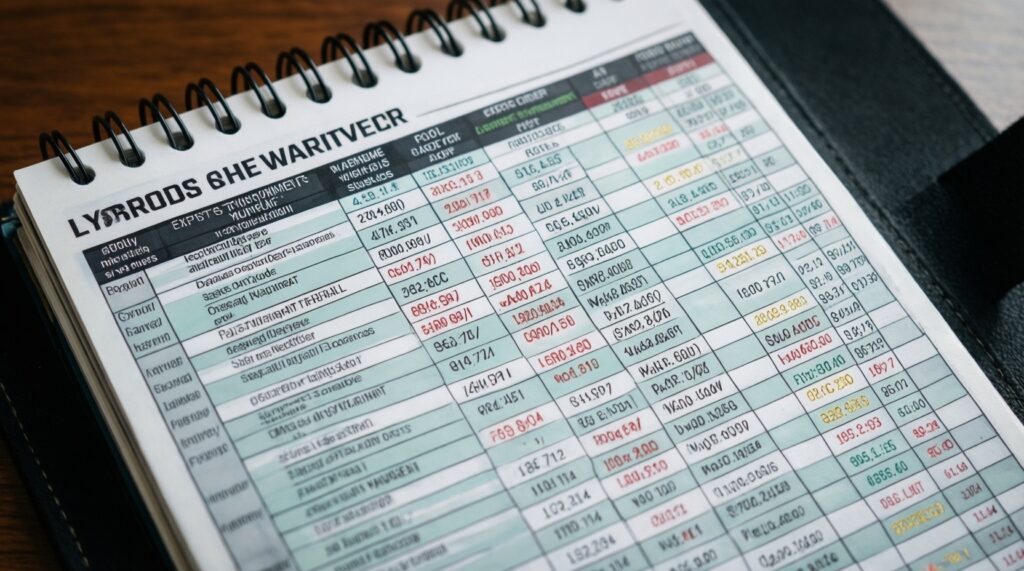
- Date/time (local TH)
- Tournament + stage (Major/TI/Worlds; Groups/Bracket)
- Market (ML, map handicap, total maps, series correct score, props)
- Odds taken + best odds available (optional)
- Stake (units + currency)
- Reason (max 12 words)
- Result + bankroll after settlement
Common Clarifications and Edge Cases
Should I increase stakes for grand finals because lines are "sharper"?
No by default. If anything, keep stakes capped because sharper lines reduce edge; only increase if you have clear, verifiable information not reflected in the price.
Is Kelly staking safe for esports betting?
Only if your probability estimates are reliable; most bettors overestimate their edge. Fractional Kelly plus a hard cap is safer than full Kelly.
How do I handle multiple bets on the same team in one day?
Treat them as correlated and cap total exposure (e.g., a maximum number of units per team/day). If one thesis drives all bets, one upset can wipe out your session.
What's a practical unit size for long events like TI or Worlds?
Commonly 0.5%-1.0% per bet with a strict maximum per bet. For high-variance spots (patch week, stand-ins), go smaller or pass.
Do I need multiple betting sites for esports to manage bankroll correctly?
It helps. Line shopping improves price and reduces hidden variance, but bankroll rules (unit size, caps, exposure limits) still matter even with one book.
How should I approach early BO1 stages in CS2 Major betting or Worlds groups?
Reduce stake size and be selective. BO1 outcomes can swing on small edges, so treat them as higher variance than BO3/BO5.