


A safe inventory portfolio strategy balances three realities: Steam items are illiquid and platform-bound, CS2 skins can be volatile and sentiment-driven, and crypto adds fast liquidity but higher tail risk. The practical approach is to diversify cs2 skins investment portfolio across price tiers, keep position limits, plan exits by days-to-liquidate, and use crypto exposure hedging for investors rather than over-allocating.
Executive Inventory Summary and Risk Profile
- Define your inventory scope: Steam-bound items vs off-platform assets (crypto), because your exit routes and risks differ materially.
- Use concentration caps (by item, collection, and marketplace) to prevent one "hot" skin or one venue from dominating outcomes.
- Measure liquidity in "days-to-liquidate" under normal volume, not in "last sale price."
- Prefer skins investment portfolio diversification across quality tiers and demand drivers (utility skins vs collector pieces) over chasing only "best steam items to invest in."
- Treat crypto as a hedging and liquidity sleeve, not as the core thesis of a Steam inventory.
- Operate with a security-first workflow (API key hygiene, escrow awareness, verified URLs) because operational loss beats market loss.
Assessing Asset Types: Skins, Items, and Tokens
This framework fits intermediates who already understand Steam trading constraints, marketplace fees, and basic wallet security, and who want repeatable controls for sizing, liquidity, and drawdowns.
Do not do this if you need guaranteed cash-out timing, if your jurisdiction restricts digital asset trading, or if you cannot follow strict security routines (most inventory blow-ups are operational). Also avoid it if you rely on a single marketplace or a single "best steam items to invest in" narrative without volume/liquidity checks.
Asset buckets you are actually managing
- CS2 skins: strongest demand cycles, also the most sentiment-driven; liquidity varies sharply by skin and float/condition.
- Other Steam items (cases, stickers, capsules, tools): can be liquid in bulk, but subject to platform rules and event-driven hype.
- Off-platform tokens (crypto): fast liquidity and portfolio hedging, but higher volatility and custody risk.
Allocation model (risk/return/liquidity comparison)
| Bucket | Primary role | Typical risks | Liquidity (how to think about it) | Risk controls to apply |
|---|---|---|---|---|
| CS2 skins (mid-tier liquid) | Core exposure | Price spikes, trend reversals, fee drag | Often liquid, but spreads widen in selloffs; measure by days-to-liquidate | Caps per item/collection; staggered exits; avoid overpaying on thin listings |
| CS2 skins (high-end/collector) | Optional upside | Very illiquid tails, subjective pricing, counterparty risk | Can take long to sell without discount | Small sleeve only; require multiple price references; pre-define discount-to-exit |
| Steam cases/capsules/stickers | Inventory ballast | Event hype, supply shocks, policy changes | Often sellable in batches; watch volume and fees | Batch sizing; avoid single-event concentration; diversify across series |
| Crypto (spot stablecoins) | Liquidity reserve | Custody, exchange risk, depegs (small probability, high impact) | Fast to move off-platform; depends on venue | Split custody; limit exchange exposure; withdraw routinely |
| Crypto (BTC/ETH spot) | Hedge + optional beta | High volatility, correlation spikes during stress | High liquidity generally; still venue-dependent | Small allocation; rebalance bands; avoid leverage |
Valuation Methods for Illiquid Digital Assets
To run skins investment portfolio diversification safely, you need a valuation stack that can survive bad prints, low volume, and changing spreads.
What you need (tools, access, and data hygiene)
- At least two independent price references per asset (e.g., one Steam-based view and one external marketplace view) to detect outliers.
- Liquidity proxy per item: recent sales frequency (not just listings), typical spread, and your estimated days-to-liquidate.
- Fee model: marketplace fees, withdrawal costs, FX conversion, and any on-chain fees for crypto transfers.
- Inventory ledger: acquisition date, cost basis, fees paid, source venue, and notes on condition/float for skins.
- Security baseline: Steam Guard, API key audit routine, hardware-backed 2FA for exchanges where possible.
Practical valuation rules (to avoid self-deception)
- Mark-to-exit, not mark-to-list. Value an item at what you can realistically net after fees and a conservative discount given current volume.
- Use a haircut for illiquid pieces. If an item would require undercutting or waiting, apply a discount in your internal NAV so you don't oversize it.
- Separate "collector premium" from "liquid premium." A rare float may be worth more, but it is often harder to liquidate quickly.
Risk Allocation and Diversification Strategies
- Platform risk: Steam policy and trading restrictions can change; assume you may need longer exit windows than planned.
- Liquidity risk: spreads widen and bids disappear during hype reversals; your days-to-liquidate can jump suddenly.
- Counterparty risk: marketplaces, traders, and exchanges can freeze, delay, or dispute transfers.
- Operational risk: phishing, fake trade bots, and API key abuse can wipe you out faster than market moves.
-
Set your bucket weights and hard caps first.
Decide how much goes to Steam inventory vs crypto liquidity; within Steam, split between liquid mid-tier skins and a smaller high-end sleeve.- Cap any single item so one trade cannot dominate results.
- Cap any single collection/theme to avoid one sentiment cycle controlling your P&L.
-
Build a "liquidity ladder" inside skins.
To diversify cs2 skins investment portfolio, allocate across quick-sell skins (tight spreads) and slower collector pieces, and label each holding with an exit time assumption.- Tier A: expected fast sale with minimal discount.
- Tier B: sale requires time or a modest discount.
- Tier C: collector/rare; assume you may need a larger discount or a longer wait.
-
Choose Steam items by demand driver, not by hype.
When evaluating best steam items to invest in, prefer items with repeatable demand (broad player utility, consistent trade interest) over purely narrative-driven spikes.- Avoid concentrating only in event-tied items unless you also define an event exit date.
- Prefer multiple smaller positions to one "all-in" bet.
-
Define rebalancing rules and execute them mechanically.
Rebalance when any bucket drifts beyond your chosen band, and rebalance by trimming winners rather than adding to laggards blindly.- Rebalance with net-of-fee thinking; fees can turn "small improvements" into losses.
- If liquidity deteriorates, rebalance by reducing illiquid tail first.
-
Add crypto as a hedge and liquidity sleeve, not a second casino.
For crypto exposure hedging for investors, use simple spot positions and stablecoin reserves to fund opportunities or to de-risk during Steam drawdowns.- Avoid leverage and complex derivatives unless you can manage liquidation and funding risk.
- Split venues/custody so one outage does not trap all liquidity.
-
Stress-test your inventory with "forced sale" scenarios.
Simulate needing cash fast: estimate your net proceeds if you must liquidate within your shortest acceptable window.- Apply wider spreads and higher discounts in the stress case.
- If the stress case is unacceptable, reduce illiquid exposure.
Liquidity Planning and Exit Pathways
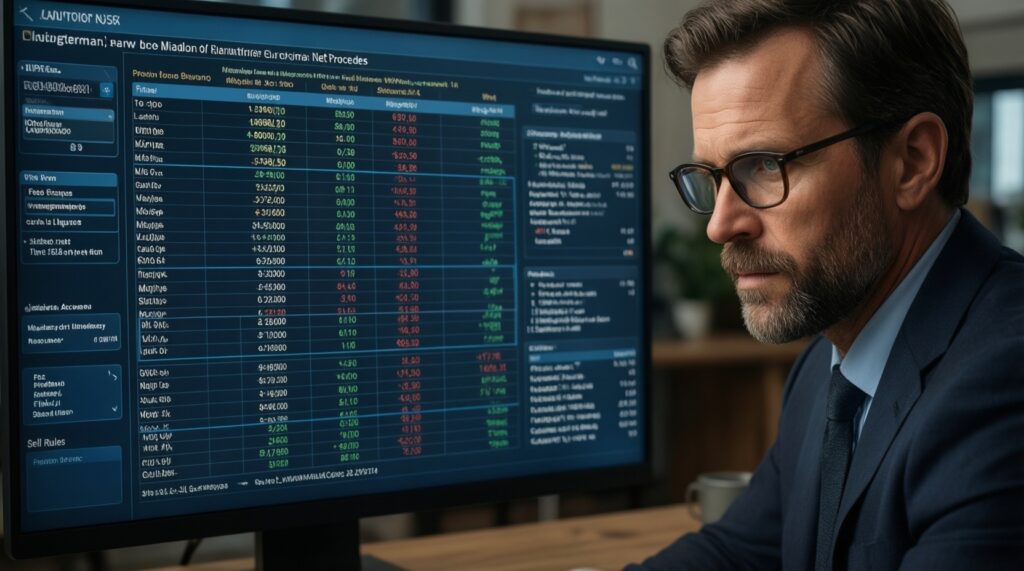
- Each holding has an assigned tier (A/B/C) and an estimated days-to-liquidate under normal conditions.
- You have a written "sell rule" (target price, time stop, or thesis break) for every Tier B/C item.
- Your expected net proceeds are calculated after marketplace fees and realistic discounts.
- No single marketplace is your only exit route for the majority of your inventory.
- You can convert at least part of your portfolio to a more liquid form without touching your rarest items.
- You have a plan for Steam wallet constraints (where applicable): what you will buy, how you will move value, and how long it takes.
- Your largest positions are in assets you have personally sold before (you know the real spread and friction).
- You have a cash/crypto liquidity buffer sized to avoid panic-selling skins in a downturn.
Custody, Security, and Counterparty Due Diligence
- Keeping your Steam API key enabled without auditing trade history and authorized devices.
- Accepting trade offers via links from chats or social DMs instead of navigating from official Steam pages.
- Confusing similar-looking marketplace domains, mirror sites, or fake support accounts.
- Over-trusting "price check" bots or screenshots as proof of value or liquidity.
- Leaving large balances on a single exchange or marketplace longer than necessary.
- Skipping small "test transactions" when using a new venue or withdrawal method.
- Not documenting counterparty identifiers (profile URLs, trade IDs, transaction hashes) for disputes.
- Using the same email/password patterns across Steam, marketplaces, and exchanges.
Tax, Compliance, and Record-Keeping for Mixed Inventories

This is not tax advice. In Thailand context, treat this as operational guidance: you want clean records so a professional can classify and report correctly for your circumstances.
- Separate portfolios by purpose (collecting vs investing). Use different accounts/ledgers when you can; it reduces ambiguity and simplifies cost basis tracking.
- Use a "cash-out only" crypto sleeve. If your goal is inventory safety, keep crypto activity limited to funding and withdrawals rather than frequent trading.
- Keep an auditable ledger. If tracking every micro-trade is unrealistic, consolidate by batches (same item, same day, same venue) while preserving underlying evidence (receipts, IDs).
- Use a compliant fiat on/off-ramp. When you need real cash-out, prioritize regulated venues with clear statements over informal routes, especially for larger withdrawals.
Practical Concerns and Short Answers
How many different skins should I hold for skins investment portfolio diversification?
Hold enough that no single item can dominate your outcome, but not so many you can't track liquidity and exits. If you cannot write a sell rule for it, you are over-diversified operationally.
What does "days-to-liquidate" mean in a Steam inventory?

It is your estimate of how long it takes to sell at a realistic net price (after fees and likely discount) under normal market volume. Track it by item tier and update it when spreads widen.
Are cases and capsules really among the best steam items to invest in?
They can be, but only when volume is real and not purely event-driven. Treat them as batch-trade instruments with defined exit rules, not as forever holds.
How do I diversify cs2 skins investment portfolio without buying random skins?
Diversify by liquidity tier, collection exposure, and demand driver (utility vs collector). Avoid stacking multiple positions that all depend on the same hype cycle.
How much crypto should I hold for crypto exposure hedging for investors?
Enough to cover planned purchases, withdrawals, and a buffer so you don't panic-sell illiquid items. If crypto price swings dictate your sleep, your hedge sleeve is too large or too risky.
What's the fastest way a "safe inventory portfolio strategy" fails?
Security lapses: phishing, API key compromise, or sending to the wrong counterparty. Market drawdowns hurt, but operational mistakes are often unrecoverable.
Should I value my inventory at the highest listing price?
No. Use mark-to-exit: expected net proceeds after fees and a realistic discount based on liquidity, or you will oversize positions and misjudge risk.