


Web3 crypto games can feel like betting, but the risk mechanics differ: you often "bet" through tokenomics (entry costs, NFT purchases, staking, and market price exposure) rather than a clear casino wager with a defined payout table. To choose the best option, compare fee drag, liquidity/exit ability, contract risk, and whether outcomes depend on randomness, skill, or token price.
Practical summary for fast decision-making
- If you want predictable session-based gambling risk, a crypto casino (คาสิโนคริปโต) on a reputable เว็บคาสิโนคริปโต is usually clearer than most "earn" game loops.
- If you want upside with market risk, prefer Web3 games where you can exit to stablecoins quickly and where assets are liquid, not locked.
- Budget-first: avoid high up-front NFTs, high gas chains, and long lockups; pick low-fee networks and short withdrawal paths.
- Premium approach: pay for audited contracts, transparent treasury policy, and deep liquidity; still cap exposure per session.
- For "เกม Web3 เล่นได้เงินจริง" claims, treat rewards as variable incentives, not salary-model your net returns after fees and slippage.
- Trust is mostly about verifiable randomness, minimal off-chain control, and credible audits-not about marketing.
How Web3 crypto games structure 'bets': tokenomics vs casino wagers
Use these criteria to decide whether you are effectively betting on gameplay outcomes, on token price, or on the operator's control surface (and which risk you can tolerate).
- What you are staking: fixed wager per round (casino) vs assets exposed to market price (tokens/NFTs) in a game.
- Payout determinism: published odds/paytable vs dynamic rewards driven by emissions, treasury policy, or variable liquidity.
- Fee drag: house edge + provider fee vs gas, marketplace fees, bridge fees, and slippage (often the hidden "edge").
- Exit liquidity: instant cashout vs needing to sell tokens/NFTs into a pool with spread and price impact.
- Lockups and cooldowns: none/short vs vesting, staking lock, withdrawal delays, or anti-dump mechanics.
- Randomness source: provably fair RNG vs oracle/VRF dependency vs off-chain outcomes that can be influenced.
- Custody and control: user-held wallet + immutable rules vs admin keys that can pause/upgrade/change parameters.
- Counterparty surface: casino operator risk vs smart contract + oracle + bridge + token issuer risk in เกมคริปโต Web3.
Economic mechanics: play-to-earn, staking, NFTs and the effective house edge
Below are common structures. The "effective house edge" in Web3 often shows up as fees, dilution, and adverse price movement rather than a single explicit percentage.
| Option | Who it fits | Pros | Cons | When to choose |
|---|---|---|---|---|
| Free-to-start play-to-earn loops (เกม Web3 เล่นได้เงินจริง) | Budget-first players testing risk | Low upfront cost; easy to stop; good for learning wallets and on-chain UX | Rewards can dilute; high time cost; withdrawal paths may be inconvenient | When you need a low-cost trial and can treat rewards as a bonus |
| NFT-gated earning (buy NFT to farm rewards) | Players comfortable with asset markets | Clear ownership; potentially tradable assets; sometimes better perks | Illiquid NFTs; floor-price risk; marketplace fees and slippage | When NFTs have real secondary liquidity and you have strict stop-loss rules |
| In-game token staking / lock-to-boost rewards | Yield-seekers who accept lockups | Simple mechanics; can reduce temptation to overtrade | Lockup risk; admin parameter changes; token price can dominate outcomes | When lockups are short and you can exit to stablecoins fast if conditions change |
| On-chain "bet-like" game dApps (skill/prediction, เว็บเดิมพันคริปโต) | Intermediate users who want transparent on-chain settlement | Clear entry/exit per round; contract-based settlement; easier bankroll accounting | Oracle dependency; MEV/front-running risks; limited dispute handling | When contracts are audited, oracle design is robust, and you can cap per-round exposure |
| Provably fair casino-style games (dice/slots) on เว็บคาสิโนคริปโต (คาสิโนคริปโต) | Players who want classic wagering formats | Session-based risk; straightforward wagers; often fast payouts | Operator risk; jurisdictional uncertainty; KYC/withdrawal policy changes | When you prioritize simplicity, quick sessions, and clear wager sizing over token upside |
| Hybrid Web3 games with off-chain servers (typical เกมคริปโต Web3) | Gamers who value gameplay more than pure finance | Better UX; lower on-chain friction; can be fun regardless of earnings | Centralization risk; bans/rollbacks; "earn" mechanics can be changed unilaterally | When you're paying for entertainment first and keeping financial exposure small |
Regulatory and compliance gaps that separate Web3 games from crypto casinos
In Thailand context, enforcement, platform access, and payment rails can change quickly. Use scenario-based rules to reduce avoidable risk (without assuming any platform is "legal" by default).
- If you need predictable withdrawals to a bank-like endpoint, then avoid long lockups and thin-liquidity tokens; prioritize short conversion paths to widely used stable assets before you cash out.
- If a platform markets itself as "casino" (คาสิโนคริปโต) and asks for heavy KYC late in the process, then assume withdrawal friction is possible; keep balances low and test a full deposit-to-withdraw cycle with a small amount first.
- If a Web3 game can change reward rates via admin settings, then treat earnings as promotional; only commit what you can exit within your planned timeframe.
- If you are choosing a budget-first path, then prefer low-fee chains, avoid bridges unless necessary, and skip high-priced NFTs until you've verified liquidity and withdrawal reliability.
- If you are choosing a premium path, then pay for better risk posture: audited contracts, transparent treasury policy, published randomness method, and deep liquidity-even if the "APR" headline looks lower.
- If you plan to use a เว็บเดิมพันคริปโต model (on-chain betting dApp), then verify oracle design and dispute assumptions; do not rely on customer support to reverse on-chain settlement.
Smart contract risks: common exploits, audit signals and oracle vulnerabilities
- Map the trust boundary: list which parts are on-chain (settlement, balances) vs off-chain (game server, match results, RNG).
- Check upgrade/admin power: identify upgradeable proxies, pause functions, and privileged roles; avoid contracts where a single key can change payouts.
- Look for credible audit signals: audits from known firms help, but also read whether critical issues were fixed and whether the deployed contract matches the audited commit.
- Assess oracle exposure: for prediction/skill outcomes, ask what happens if the oracle is delayed, manipulated, or censored; avoid designs with a single oracle endpoint and no fallback.
- Watch for MEV risk: if transactions reveal your move before settlement, assume front-running is possible; prefer commit-reveal or VRF patterns for bet-like mechanics.
- Stress-test withdrawal: verify there is a straightforward withdraw function, sufficient liquidity, and no hidden throttles (caps, queues) that trap funds.
Budget-first player safeguards: bankroll rules, fee mitigation and exit strategies
- Overfunding the wallet: keeping a large balance "just in case" increases loss impact; fund per session, not per month.
- Ignoring total fee stack: gas + swaps + bridge + marketplace fees can exceed the visible "house edge"; model the full path before playing.
- Buying illiquid NFTs first: you may be forced to sell at a steep discount; demand proof of consistent secondary volume before entry.
- Chasing emission rewards: high rewards can mean high dilution; if you can't explain the reward source, treat it as temporary.
- Locking tokens without a planned exit: lockups convert small mistakes into long losses; use the shortest lock that still provides your goal.
- Bridging as a default: bridges add extra smart contract and operational risk; avoid unless the cost savings are material and you accept the added attack surface.
- Not testing withdrawals early: always run a small deposit → play → withdraw cycle before scaling.
- Mixing entertainment and investment budgets: define two caps: a "fun loss limit" and a "portfolio risk limit," and do not borrow between them.
- No stablecoin checkpoint: without periodic conversion to a stable asset, token volatility becomes your dominant risk even if gameplay is fair.
Transparency and trust: provable fairness, off-chain components and centralization risks
For players optimizing for clear, session-based wagering and simpler bankroll control, a provably fair crypto-casino style product (คาสิโนคริปโต) can be the better fit. For players optimizing for upside tied to assets and gameplay loops, a Web3 game can fit better-if you keep exits liquid, minimize admin-key dependence, and treat token rewards as variable incentives rather than guaranteed profit.
Common concerns with concise answers
Is a Web3 game basically the same as a casino bet?
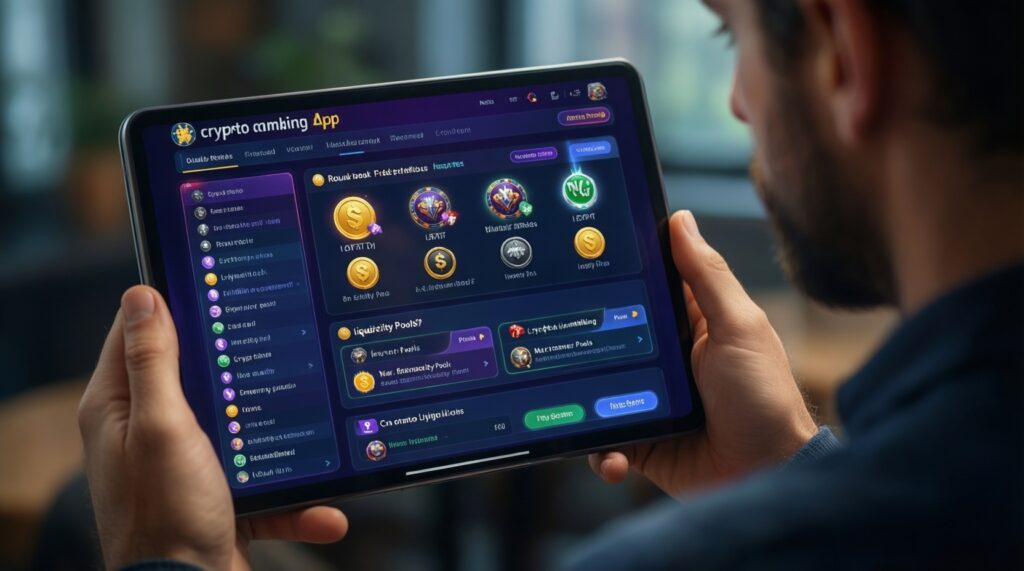
Often no: your main exposure may be token/NFT price and liquidity rather than a fixed-odds wager. Some on-chain games behave like wagering, especially on เว็บเดิมพันคริปโต-style dApps with round-based settlement.
What is the fastest way to spot hidden costs?
Trace one full cycle: buy asset → play → convert rewards → withdraw. Add gas, swap spread, bridge fees, and marketplace fees; if you can't calculate it, assume it's significant.
Do "play to earn" rewards mean guaranteed income (เกม Web3 เล่นได้เงินจริง)?
No. Rewards are usually emissions or treasury incentives that can change, and their value depends on market price and liquidity at the moment you sell.
How do I evaluate a เว็บคาสิโนคริปโต without relying on reviews?

Test small: deposit, play minimally, and withdraw. Verify provable fairness claims, withdrawal policy clarity, and whether KYC is required before or after you win.
What smart contract red flags matter most?
Upgradeable contracts with concentrated admin power, unclear oracle design, and withdrawal limits/queues that can trap funds. Also watch for games where outcomes are computed off-chain with no verifiable audit trail.
What is a budget-first "safe default" setup?
Use a separate wallet, fund per session, avoid bridges, avoid pricey NFTs, and set an automatic stablecoin checkpoint for any profits. Prefer options where you can exit in one or two swaps.
When does a premium approach make sense?

When you value lower operational risk over flashy rewards: audited contracts, transparent randomness, deep liquidity, and clear governance. Premium still needs strict bankroll caps because market risk remains.