
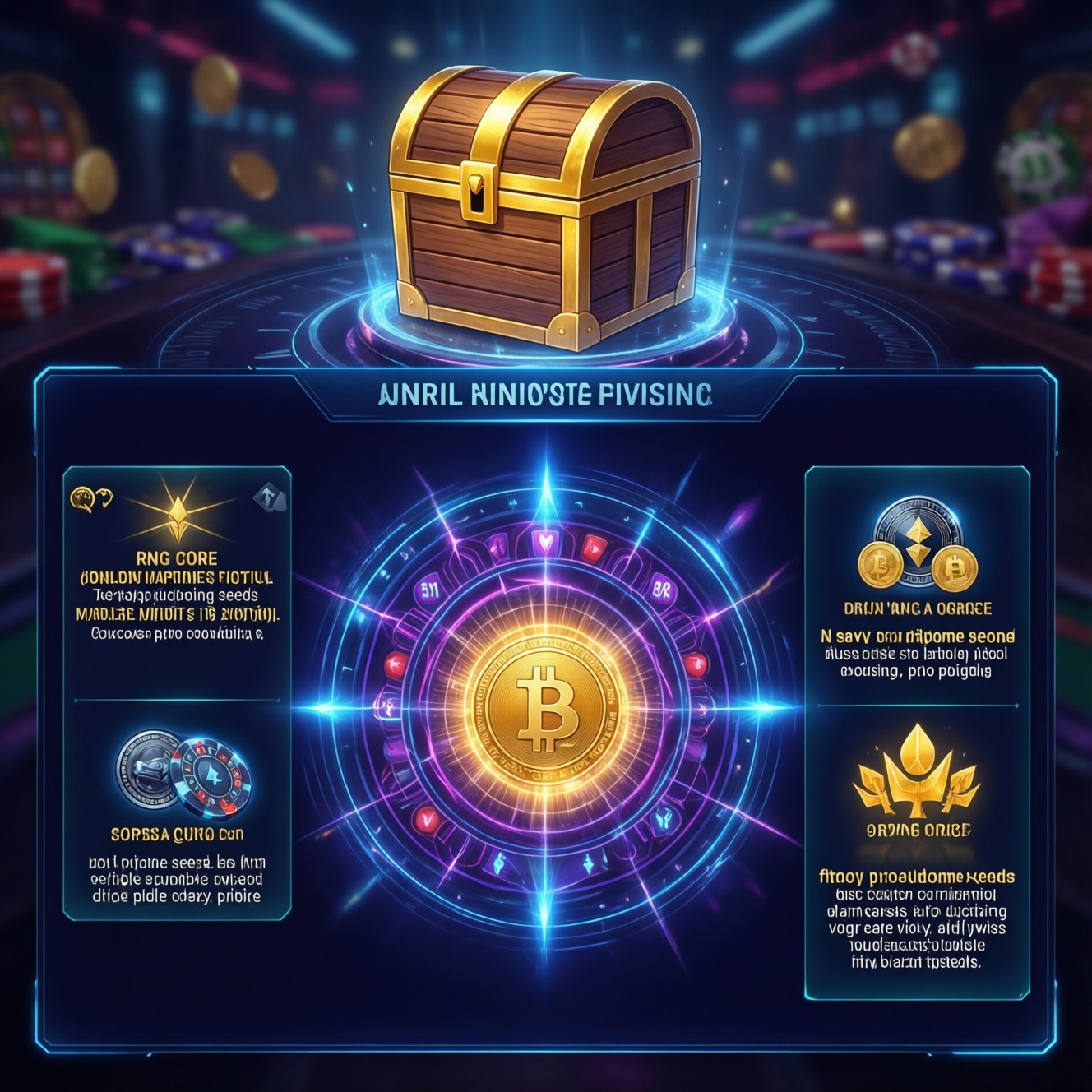
RNG (random number generation) in loot boxes, case openings, and crypto casinos is the mechanism that maps unpredictable inputs (or cryptographically secure pseudo-randomness) into outcomes like item drops or game rolls. Fairness depends less on "having an RNG" and more on where randomness is generated, how it's seeded, what's logged, and whether results are verifiable.
Core Concepts of RNG in Digital Wagering
- Most systems use PRNGs; higher-risk wagering uses CSPRNGs to resist prediction.
- Seeding is the real control point: weak seeds can make "random" outcomes reproducible.
- Server-side RNG reduces client tampering but increases operator trust requirements.
- Provable fairness typically means commit-reveal plus a deterministic mapping function.
- Auditable logs (inputs, seeds, timestamps, versions) matter as much as algorithms.
How RNG Engines Generate Entropy: PRNGs vs CSPRNGs
An RNG pipeline usually has two layers: (1) an entropy source or seed, and (2) a generator that expands that seed into a stream of values. In digital wagering, the generator is commonly a PRNG (fast, deterministic given the seed) or a CSPRNG (designed to be unpredictable even if an attacker observes many outputs).
PRNGs (e.g., Mersenne Twister, xorshift families) are fine for simulations and many game mechanics, but they are risky for adversarial settings because internal state can sometimes be inferred. CSPRNGs (e.g., AES-CTR DRBG, ChaCha20-based generators, or OS-provided randomness like /dev/urandom) are built so outputs remain computationally unpredictable without the secret seed.
In practice, "entropy" is often obtained from the operating system (timing jitter, device events, kernel entropy pools). If a system reuses seeds, seeds from predictable sources (timestamps alone), or exposes seeds to clients, the RNG can still be attacked even if the generator is strong.
| Approach | Strength | Typical use | Main failure mode |
|---|---|---|---|
| PRNG (non-crypto) | Fast, repeatable | Low-stakes gameplay randomness | State inference, predictable seeding |
| CSPRNG | Hard to predict | Wagering outcomes, security-sensitive draws | Bad integration (logging leaks, weak seeds) |
| Commit-reveal ("provably fair") | Verifiable after the fact | On-chain/off-chain betting, dice/roll games | Biased mapping, selective reveal, poor UX |
Loot Boxes and Case Openers: Typical RNG Architectures
In rng loot boxes and "case opening" systems, randomness is usually implemented as a server-authoritative draw from a weighted loot table, with the client only rendering animations. A case opening rng is therefore less about the spinning UI and more about when the server commits to the outcome and what inputs influence the draw.
- Define a loot table: items grouped by tiers with weights (not necessarily visible to players).
- Choose a draw method: common patterns are cumulative weights (roulette wheel) or alias method for fast sampling.
- Generate a uniform random value: from a CSPRNG/PRNG, ideally server-side.
- Map random value to an item: deterministic function that selects an item given the weights.
- Bind the draw to a transaction: user ID, session ID, case ID, timestamp, and server build/version.
- Return outcome + proof material (optional): e.g., a commit hash if using a provable scheme; otherwise, only the result.
- Log everything: inputs, output, and the exact loot table version used.
Player-facing pitfalls are often commercial rather than purely technical: when you buy loot boxes online, verify you understand whether you're buying a "case" (randomized) or a fixed bundle, and whether odds are disclosed or auditable. From a developer perspective, the main engineering risk is quietly changing loot tables without versioning, making later disputes impossible to resolve.
Blockchain and Provable Randomness: Oracles and On‑chain Seeds
Crypto and blockchain products add a different trust model: players want evidence that the operator could not choose outcomes after seeing a bet. In a crypto casino rng design, randomness might be produced off-chain (server CSPRNG + proofs) or on-chain (VRF/oracle), but both must consider miner/validator influence, front-running, and determinism.
- Commit-reveal dice/roll games: server commits to a secret (hash), player provides a client seed, then server reveals secret; the roll is computed from both.
- VRF-backed draws: a verifiable random function (often delivered via an oracle) provides randomness plus a proof that the value wasn't forged.
- On-chain raffles/loot drops: contracts request randomness for selecting winners or distributing items.
- Hybrid case openers: loot table selection off-chain, while the random seed or its proof is anchored on-chain for auditability.
- Cross-platform fairness claims: a provably fair crypto casino may publish hashes, seeds, and deterministic mapping rules so third parties can reproduce outcomes after reveal.
Mini-scenarios: choosing the right randomness model
- Mobile game loot box (TH market, high volume): server-side CSPRNG + strict loot-table versioning; avoid client-side RNG to reduce modded APK abuse.
- Web case opener with tradable items: commit-reveal so disputes can be settled with logs; add rate-limits and anti-bot signals to reduce farming patterns.
- On-chain raffle: VRF/oracle randomness; design against predictable timing (don't use block timestamp alone).
- Off-chain casino games with crypto deposits: publish a verifiable transcript (commit hash, seeds, nonce, game ID) so players can independently validate results later.
Measuring Fairness: Statistical Tests and Sample Analysis
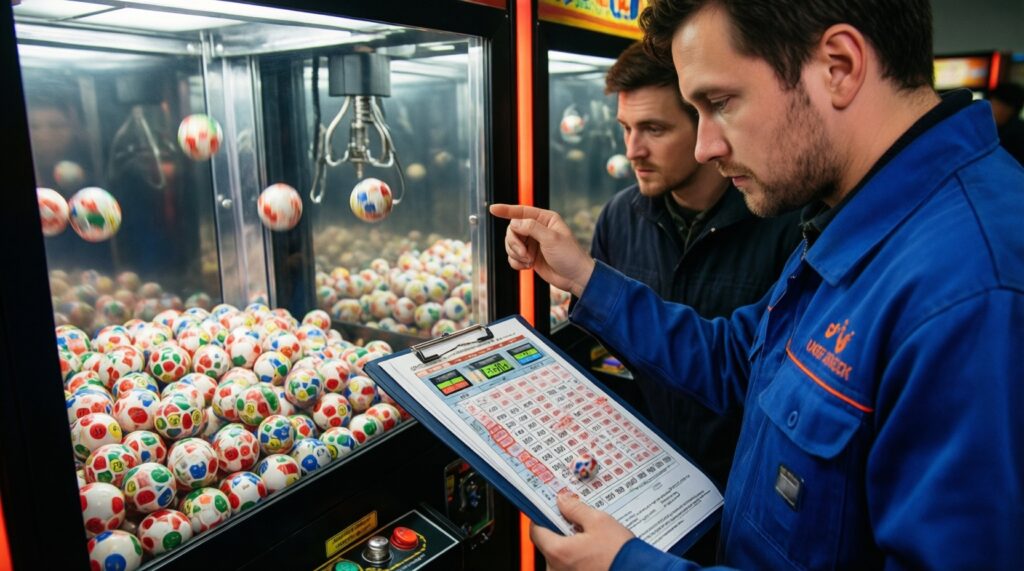
Fairness testing answers two different questions: (1) does the generator behave like uniform randomness, and (2) does the mapping from random values to outcomes match advertised weights. Many real-world "unfair" systems pass basic randomness tests but fail on mapping, logging, or disclosure.
Useful checks you can run
- Reproducibility test (for provable schemes): given published seeds/nonce, recompute outputs and confirm every bet matches.
- Chi-square sanity check: compare observed counts vs expected counts for discrete outcomes (tiers, symbols).
- Runs / streak tests: detect suspicious clustering beyond what's typical for independent draws.
- Permutation / shuffle validation: for card games, confirm no duplicates and correct distribution over many shuffles.
- Version-aware analysis: analyze by loot-table version and by app/server build to avoid mixing regimes.
Limits you should not ignore
- Small samples mislead: short sessions can look "rigged" simply due to variance; conclusions need consistent logs and enough observations.
- Passing tests does not prove honesty: an operator can be random but still change odds, apply user segmentation, or gate outcomes behind hidden rules.
- Mapping bias is common: modulo bias (e.g.,
rand() % n) and rounding errors can skew rare tiers. - Selection effects: analyzing only shared screenshots or "big wins" introduces strong reporting bias.
Detecting Manipulation: Red Flags in Game Servers and Clients
- Client decides outcomes: if the client can open cases offline and later "sync," tampering becomes far easier.
- Seeds exposed too early: publishing a server seed before it's committed (hash) lets attackers predict outcomes.
- "Random" tied to timestamps: outcomes that correlate with system time, request order, or reconnects suggest weak seeding.
- Unversioned loot tables: if odds change without a table/version ID in logs, disputes are not resolvable.
- Non-deterministic verification steps: a provable flow that depends on hidden server state cannot be independently reproduced.
- Myth: animations affect luck: the spin/flip visuals are typically just playback; the server already chose the result.
Operational Controls: Audits, Logging, and Responsible Design
For intermediate teams, the most practical "deep dive" improvement is operational: make RNG decisions explainable after the fact. That means deterministic mapping, immutable commitments (when applicable), and logs that let you replay a draw exactly as it occurred.
Mini-case: commit-reveal roll with audit logs
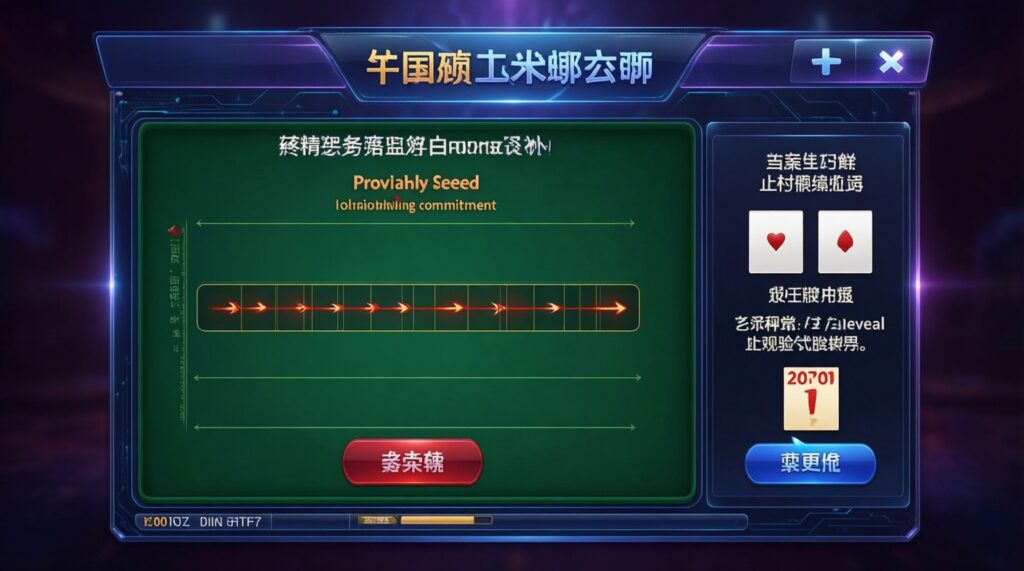
- Commit: generate
serverSeedwith OS CSPRNG; publishcommitHash = SHA256(serverSeed). - Accept bet: store
userId,clientSeed,nonce,gameId, and the currentcommitHash. - Reveal: after bet settlement, reveal
serverSeedand computeroll = f(serverSeed, clientSeed, nonce)using a documented function (e.g., HMAC-SHA256 then map to range carefully). - Verify: players can recompute
SHA256(serverSeed)to matchcommitHashand recomputeroll. - Log: persist seeds, nonces, mapping version, and response payload hashes; protect logs from tampering (append-only storage).
Pseudocode sketch developers can adapt
# Commit phase
serverSeed = CSPRNG_bytes(32)
commitHash = SHA256_hex(serverSeed)
publish(commitHash)

# Roll phase (after bet recorded)
msg = clientSeed + ":" + str(nonce) + ":" + gameId
digest = HMAC_SHA256(serverSeed, msg)          # bytes
u = uint64_from_first_8_bytes(digest)          # deterministic
roll01 = u / 2^64                              # in [0,1)
outcome = map_uniform_to_weighted_table(roll01, tableVersion)
- Responsible design note: don't use "near-miss" UI tricks to simulate better odds; keep disclosure and player controls clear, especially in monetized rng loot boxes.
Practical Questions Players and Developers Raise
Is "provably fair" the same as truly random?
No. It means outcomes are reproducible and verifiable given disclosed inputs, but the quality still depends on the mapping function and whether commitments and reveals are implemented correctly.
Can a case opening rng be fair if odds are hidden?
It can be technically random, but players can't assess fairness without disclosure or verifiable logs. Hidden weights also make it hard to detect silent changes.
What's the biggest technical mistake in rng loot boxes?
Weak or predictable seeding and unversioned loot tables. Both issues make outcomes manipulable or disputes impossible to resolve.
How does a crypto casino rng differ from a normal server RNG?
It often adds public commitments, on-chain anchoring, or VRF/oracle proofs so players can verify the operator didn't choose results after the bet.
What should I check before I buy loot boxes online?
Look for clear odds disclosure (or a verifiable scheme), region-appropriate compliance info, and a consistent transaction record. Avoid products where outcomes are decided on the client or where the operator can't explain a result.
Does changing my client seed increase my chances?
In a correct commit-reveal design, changing the client seed only changes the combined input; it doesn't create a systematic advantage because the server seed was committed beforehand.
Can I detect rigging just by watching outcomes?
Not reliably. Visual streaks happen naturally; meaningful detection requires logs, versioned rules, and enough samples to test mapping against claimed odds.