
Prediction markets in gaming are systems where players trade on outcomes-patch impacts, tournament results, or in-game events-so the price reflects collective belief in what will happen. Unlike simple polls or fixed-odds betting, these markets update continuously as new information arrives, making them useful for esports communities, live operations teams, and platforms building engagement loops.
Core Concepts: How Prediction Markets Fit into Modern Games
- A market price is a live, aggregated forecast-not a developer promise.
- Participants can express confidence levels by sizing trades, not just voting.
- Liquidity determines whether a market is informative or easily distorted.
- Resolution rules (what counts, when it ends, which data source decides) are the product.
- Patch and live-event markets work best when the outcome can be verified unambiguously.
- Anti-manipulation is a design requirement, not an afterthought.
Evolution and Drivers: Why Prediction Markets Emerged in Gaming
In prediction markets gaming contexts, the "market" is a mechanism for turning distributed player knowledge into a single, continuously updated probability-like signal. The rise is driven by always-on esports, rapid patch cycles, streaming-led information flow, and platformization (APIs, wallets, identity, and real-time data feeds).
Prediction markets differ from typical betting because participants can trade both sides over time-buying and selling positions as scrims, patch notes, roster rumors, or meta shifts emerge. They also differ from sentiment tools (polls, likes) by attaching consequence to being right, which tends to filter noise and reward informed updates.
They commonly appear in three "wrappers": community-run markets for bragging rights, platform-run markets for engagement, and regulated wagering products. The same core idea can power prediction market platforms for esports or purely in-app forecasting games, but legal and operational constraints change what you can offer in Thailand (th) and to whom.
| Approach | What it is | Best for | Main limitation |
|---|---|---|---|
| Prediction market | Tradable contracts whose price moves with new information | Live forecasting, community discovery, patch/meta expectations | Needs liquidity and strict resolution rules |
| Fixed-odds betting | Operator sets odds; users take the offered line | Straightforward wagering experiences | Less informative as a "signal"; operator pricing risk |
| Poll / voting | One-person-one-vote preference measure | Quick sentiment checks | No incentive to be accurate; easy to brigad |
Market Mechanics: Odds, Liquidity, Order Types, and Pricing Models
A prediction market converts beliefs into prices through trading. In practice, your design choices determine whether the system behaves like a robust forecast engine or a noisy mini-game.
- Contract definition: a clear yes/no (or multi-outcome) statement, e.g., "Team A wins the final."
- Pricing representation: a "price" often behaves like an implied probability, but you should present it as a forecast indicator to avoid overpromising.
- Liquidity: more liquidity makes prices harder to manipulate and reduces slippage; thin markets overreact to single trades.
- Order types: basic market orders are simplest; limit orders improve fairness for advanced users but increase UX complexity.
- Market making: either rely on user-to-user matching or provide an automated market maker to ensure always-available quotes.
- Fees and spreads: platform revenue and anti-spam levers; they also affect how quickly prices incorporate news.
- Settlement and payouts: define when trading stops, what data source resolves the outcome, and how disputes are handled.
Products and Use Cases: Betting on Patches, Tournaments, and Live Events
The strongest products pick outcomes that are timely, verifiable, and meaningful to players. Done well, this unlocks everything from esports betting tournaments experiences to forecasting layers around live ops.
-
Patch impact markets (meta forecasting): betting on game patches such as "Will Hero X's pick rate increase after Patch Y?" works best when you define a measurement window and a source (official match telemetry, ranked ladder, or tournament stats).
Micro-scenario: you open the market when patch notes drop, pause it at patch release, then reopen after hotfixes; settlement uses the agreed telemetry window. -
Tournament winner / stage markets: classic brackets, maps, or series outcomes. These are easy to understand and resolve, which is why they dominate prediction market platforms for esports.
Micro-scenario: a market closes at match start; late roster changes trigger a rules-based void or re-open policy. -
Live in-match events: in-game event betting like "first tower," "first objective," or "next round winner" demands low-latency feeds and strict cutoffs to prevent "bet-after-seeing."
Micro-scenario: trading locks a few seconds before an event becomes knowable from broadcast to reduce information advantage. -
Creator/community prop markets: outcomes tied to streamer challenges or community events (still needs verifiable resolution).
Micro-scenario: a creator commits to a measurable goal; disputes use VOD + an admin ruling process stated up front. -
Live ops and economy forecasts: "Will the limited-time item sell out by end of day?" or "Will queue time exceed a threshold?" can be internal tools (staff-only) rather than public wagering products.
Micro-scenario: ops uses the market signal to decide whether to extend an event or deploy capacity changes.
Designing Fair Markets: Market Rules, Resolution, and Anti-Manipulation
Fairness comes from predictable rules and from reducing information asymmetry. Most failures happen because a market resolves ambiguously, or because a few actors can dominate price moves.
Rules that prevent disputes before they happen
- Resolution source: name the authoritative feed (official tournament API, server logs, or a specific stats provider) and the fallback if it fails.
- Time windows: define exact start/end times for measurement (especially for patch outcomes).
- Voids and reruns: specify what happens on remakes, admin calls, disqualifications, server outages, or postponed matches.
- Market pauses: include explicit "trading halt" rules for breaking news (roster swaps, emergency hotfixes).
- Scope of statement: avoid fuzzy wording like "better," "popular," or "OP"; use measurable criteria.
Controls against manipulation and unfair advantage
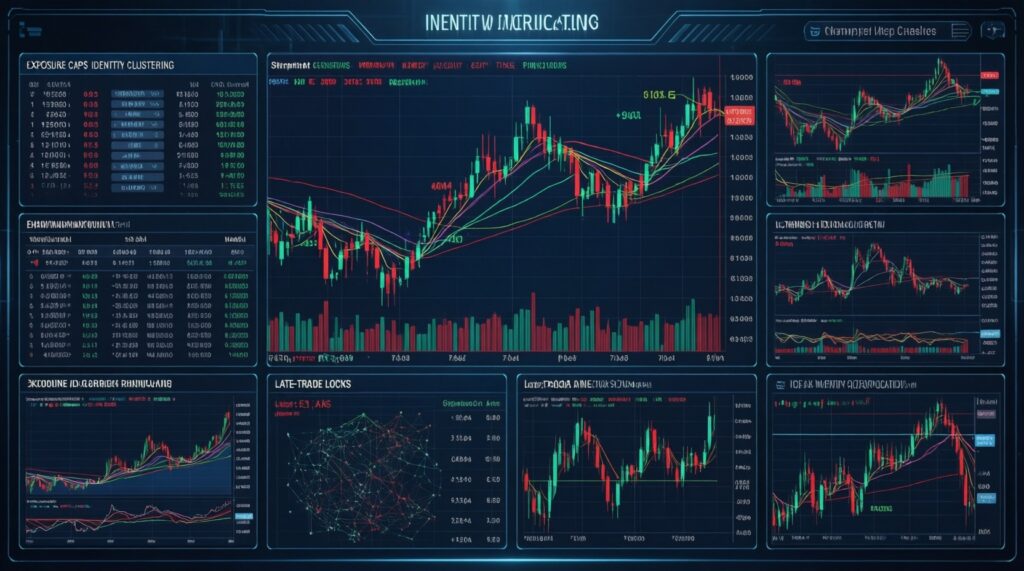
- Position limits: cap exposure per account and per identity cluster (device, payment instrument, behavioral signals).
- Late-trade protection: lock trading before outcomes become knowable from streams or spectator delay mismatches.
- Abuse detection: flag rapid price pushes, self-trading patterns, correlated accounts, and "pump then disappear" behavior.
- Disclosure: require labeling for insiders (team staff, tournament admins) where feasible, or restrict them entirely.
- Dispute process: publish an escalation path and a final arbiter to avoid community outrage loops.
Integration and Monetization: APIs, UX Patterns, and Revenue Models

Prediction markets fail more often from product and integration mistakes than from economics theory. Treat the market as a real-time system with strong rules, not a widget.
Quick practical tips for shipping a market safely
- Start with a single outcome type (tournament match winner) before expanding to patches or live events.
- Write the resolution clause first (data source, timing, void policy), then build the UI and API around it.
- Implement trading cutoffs tied to event states (scheduled, live, paused, final) to reduce bet-after-seeing.
- Instrument liquidity and slippage so you can detect thin markets and adjust market-making/fees.
- Ship moderation tooling (freeze, rollback, manual resolve with audit log) before opening to large communities.
Common implementation myths and avoidable mistakes
- Myth: "More markets = more engagement." Too many thin markets reduce signal quality and invite manipulation.
- Mistake: ambiguous wording. If users can argue about what happened, you will end up arbitrating constantly.
- Mistake: ignoring data latency. Live markets need consistent delays across feeds; otherwise, you reward the fastest stream, not the smartest prediction.
- Myth: "Fees don't matter." Fees shape participation; overly aggressive fees can kill updating behavior and leave stale prices.
- Mistake: bolting on identity later. Without strong account controls, bonus abuse and collusion become the core "game."
- Myth: "A market price is truth." It's a signal that depends on who can trade, how liquid it is, and whether insiders are present.
Operational Challenges: Legal, Security, and Community Moderation
In Thailand (th), the operational posture you choose matters as much as the product: regulated wagering, free-to-play forecasting with virtual points, or internal forecasting tools each carry different legal and compliance requirements. Treat anything resembling real-money betting as a high-risk area that requires professional legal review before launch.
Mini-case: preventing "bet-after-seeing" in a live event market
If you run in-game event betting tied to broadcast-visible moments, build a server-side cutoff that locks trading before the event can be observed by most users.
// Pseudocode: lock trading based on authoritative game server time
if (market.type == "LIVE_EVENT") {
  if (gameState.eventWindow == "IMMINENT" || gameState.isObservable == true) {
    market.status = "HALTED";        // stop new orders
    market.cancelUnfilledOrders();   // optional: reduce last-second sniping
  }
}
// Resume only when a new, non-observable window begins- Security: protect settlement endpoints; settlement is the highest-value action to attack.
- Community moderation: publish rules for voids/disputes, and show an audit trail for admin interventions.
- Legal/compliance: geofence, age-gate, and KYC/AML may be required depending on the model; do not rely on "gaming" branding to reduce risk.
Practical Questions Developers and Players Ask
Are prediction markets the same as esports betting?
No. Esports betting can be fixed-odds and operator-priced, while prediction markets rely on trading where prices move as participants buy and sell. The experiences can look similar, but mechanics and risk models differ.
What's the safest first market to launch for an esports community?
Start with match-winner markets for scheduled tournaments because outcomes are clear and resolution is straightforward. This is the easiest entry point for esports betting tournaments style engagement without complex telemetry definitions.
How do you make "betting on game patches" resolvable and not subjective?
Define one metric, one data source, and one time window before opening trading. Avoid adjectives and settle on measurable thresholds tied to your telemetry or a named stats provider.
Do live "in-game event betting" markets require special latency handling?
Yes. You need cutoffs and consistent delay rules so users can't trade after the event becomes observable on a faster feed. Without this, your market rewards access advantages instead of prediction skill.
How do platforms prevent manipulation in thin markets?
Use position limits, trade halts, and automated monitoring for coordinated accounts and abnormal price pushes. Also avoid launching too many markets at once so liquidity isn't diluted.
What should a resolution policy include at minimum?
Name the authoritative source, the timestamp rules, and what happens on remakes, postponements, and admin decisions. Publish a dispute path and the final arbiter.
Which "prediction market platforms for esports" integration point matters most?
Settlement and market-state APIs matter most because they control fairness and trust. If you can't pause, void, and resolve reliably with audit logs, the UI polish won't save the product.