
If your priority is transferable custody and off-platform trading, on-chain NFT items usually fit better; if you want smoother UX, built-in dispute handling, and a deep native marketplace, Steam items typically fit better. The best choice depends on your persona (player, trader, developer) and tolerance for wallet/security, reversibility, and platform or regulatory exposure.
Direct contrasts to guide decisions
- Ownership model: NFTs can be self-custodied; Steam items are governed by a platform license and rules.
- Recoverability: Steam accounts/trades may be reversible by enforcement; on-chain transfers are generally irreversible.
- Liquidity venue: Steam liquidity concentrates in ตลาดซื้อขายไอเทม Steam; NFTs rely on external marketplaces and chain-specific demand.
- Cash-out path: Steam cash-out is constrained; NFTs can be sold into crypto rails but add wallet and compliance friction.
- Security risk shape: Steam risk is mainly account compromise/scams; NFT risk adds wallet key loss, approvals, and smart contract issues.
- Developer control: Steam gives strong platform tooling; NFTs add composability but weaken post-sale control without careful design.
On-chain ownership: custody, provenance, and transferability
Use these criteria to decide whether ซื้อขาย NFT ไอเทมเกม (trading NFT game items) is actually aligned with what you mean by real ownership, and whether that ownership is worth the extra operational risk.
- Custody requirement: Are you willing to self-custody keys (or use a trusted custodian) to control the asset directly?
- Transferability scope: Do you need off-platform transfers (P2P, other markets, other apps), not just in one ecosystem?
- Provenance and authenticity: Can you verify the contract address, metadata model, and issuer reputation to avoid lookalike collections?
- Interoperability claims: Is usable across games real (documented integrations) or marketing? Most utility remains game-specific.
- On-chain metadata durability: Are visuals/stats stored in a robust way (on-chain or content-addressed) rather than fragile URLs?
- Upgrade and admin powers: Who can change the contract or metadata? Admin keys can undermine permanence.
- Fee sensitivity: Are you comfortable with network fees and marketplace fees that vary by chain and venue?
- Compliance and tax posture: Are you prepared for record-keeping across wallets, exchanges, and cross-border considerations in Thailand context?
Persona checks for on-chain custody and portability
- Player (collector): You want the skin even if the game shuts down. NFT custody gives you the token, but the in-game utility may still disappear; decide whether collectible-only value is acceptable.
- Trader (spread hunter): You plan to arbitrage across venues. NFTs enable cross-market listings, but you must handle approvals, bridges (if any), and fake contracts; operational discipline matters.
- Developer (secondary royalties/control): You want on-chain markets but need guardrails. You will likely implement allowlists, metadata signing, and clear upgrade policies to balance user ownership with live-ops.
- Section takeaway: NFTs maximize portability and self-custody, but shift the burden of verification, key management, and irreversible mistakes onto you.
Steam ecosystem ownership: platform licenses, restrictions, and reversibility
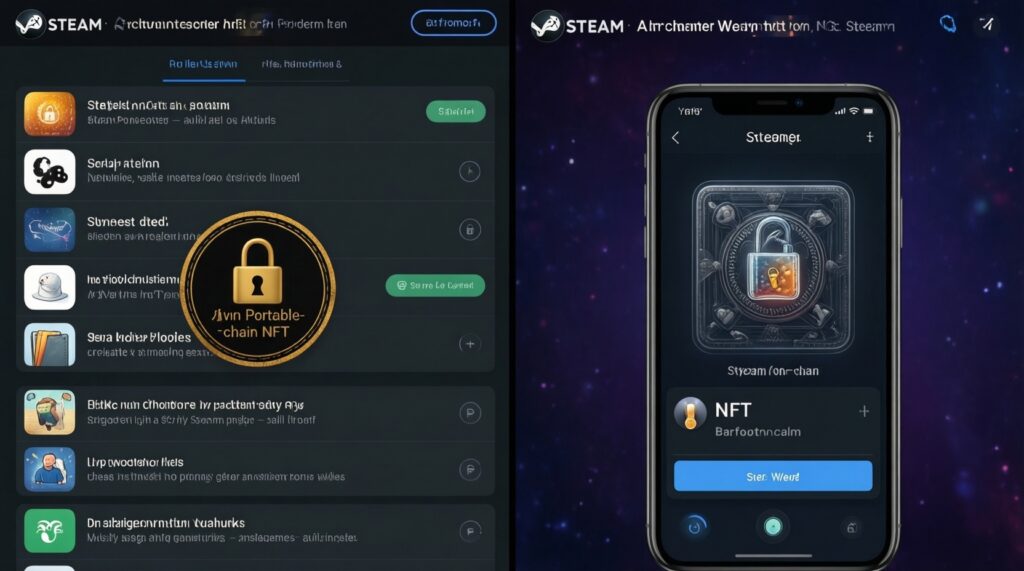
Steam items are tightly integrated with platform rules: you get convenience, strong discovery, and policy enforcement, but you trade away off-platform portability and, depending on item type, any straightforward path to cash-out.
| Option | Who it fits | Pros | Cons | When to choose |
|---|---|---|---|---|
| On-chain NFT item (self-custody wallet) | Traders/collectors who accept crypto ops and want portability | Off-platform transfer; independent custody; broad marketplace access | Irreversible transfers; key-loss risk; counterfeit contracts; variable fees | You prioritize own the token and cross-venue selling more than support/recovery |
| On-chain NFT item (custodial marketplace or game account custody) | Players who want NFTs but cannot manage keys | Easier onboarding; some recovery flows; fewer wallet steps | Custodian risk; withdrawals can be delayed/blocked; not fully self-custodied | You want NFT exposure with a UX closer to Web2, accepting counterparty risk |
| Steam Community Market tradable items | Most players and casual traders using ตลาดซื้อขายไอเทม Steam | High discoverability; platform anti-fraud tooling; familiar UX | Off-platform restrictions; policy risk (holds, bans); cash-out is limited | You want quick, low-friction trading inside Steam with enforcement and support |
| Steam item trading (P2P trade offers, outside the market) | Experienced traders managing counterparties | Flexible deal-making; can bundle items; avoids some market mechanics | Higher scam risk; trade holds/limits; reputational due diligence required | You need negotiated trades (bundles/rare patterns) and can manage counterparty risk |
| Developer-run off-Steam marketplace for game items (non-NFT) | Developers seeking control; players within one game economy | Clear rulebook; game-specific enforcement; tailored sinks and pricing | Low external liquidity; trust required; portability is near-zero | You need strict anti-RMT controls or a closed economy without crypto exposure |
Persona checks for Steam-native trading and governed reversibility
- Player (comfort-first): You just want to flip drops occasionally. Steam Market is simpler than learning กระเป๋าเงินคริปโตสำหรับเก็บ NFT ไอเทมเกม (a crypto wallet to store NFT items).
- Trader (capital lock-up): You care about how quickly you can redeploy value. Steam value tends to stay within the Steam ecosystem; NFTs can move out, but only if you can manage the full crypto flow.
- Developer (support burden): Steam-like reversibility reduces ticket pain (chargebacks, scams). On-chain irreversibility can cut fraud but increases wrong-send support with few remedies.
- Section takeaway: Steam optimizes for governed convenience and enforcement; NFTs optimize for custody and portability with less safety net.
Liquidity dynamics: marketplaces, secondary markets, and price discovery
Liquidity is not just can I sell, but can I sell fast at a fair spread. Use scenario-based rules to pick the venue that matches your time horizon and risk tolerance, especially if you are deciding NFT vs Steam ไอเทม แบบไหนคุ้มกว่า (which is more worth it).
- If you need instant matching and consistent buyer flow, then prioritize Steam's native marketplace for items with active demand, because discovery and search are centralized.
- If you need to exit into external money rails, then lean on NFTs (or Steam alternatives only if you have a compliant off-ramp), because Steam value is typically constrained inside the platform economy.
- If your edge is cross-venue price discovery, then NFTs can offer more fragmentation-driven opportunities, provided you can verify contracts and manage transaction finality.
- If the item's value is tightly tied to one live game's utility, then treat both Steam and NFT pricing as utility-driven; do not pay a permanence premium unless the game and issuer commit to long-term support.
- If you are a developer launching a new economy, then expect early NFT liquidity to be thin without incentives; Steam-like ecosystems benefit from an existing user base and built-in browsing habits.
Persona checks for selling speed versus exit flexibility
- Player (seasonal): You only trade around events. Choose the venue where event demand concentrates: Steam for Steam-native communities; NFTs if the community already trades on-chain.
- Trader (market-maker mindset): On-chain liquidity may be venue-split; you will spend time managing listings and gas/fees. Steam is simpler but can constrain your exit routes.
- Developer (launch): A thin order book looks like no interest. Plan onboarding, market-making partners (if any), and anti-bot rules aligned to the chosen system.
- Section takeaway: Steam tends to concentrate liquidity; NFTs often fragment it-good for portability, harder for consistent fills.
Security and fraud risks: account compromise, smart contract threats, and platform enforcement
Choose the safer path for your situation by walking through this quick checklist. It focuses on what you can control, not on theoretical risk.
- Define your recovery requirement: If you need a realistic chance of reversal/support after a mistake, prefer Steam-like governed systems over irreversible on-chain transfers.
- Evaluate your operational maturity: If you cannot reliably manage seeds, device security, and approvals, avoid self-custody NFTs or use a custodian with clear withdrawal rules.
- Set verification discipline: For NFTs, only interact with known contract addresses and established venues; for Steam, verify profiles and trade histories before P2P deals.
- Minimize attack surface: Limit browser extensions, revoke token approvals periodically (NFT), and lock down Steam (2FA, API key hygiene, trade URL privacy).
- Prefer transparent enforcement where you rely on it: Steam enforcement can help, but it can also freeze/limit activity; plan your holding/trading cadence around restrictions.
- Use small test transfers: When moving NFTs, test with low-value transfers to validate addresses and networks; for Steam, test small-value trades with new counterparties.
Persona checks for operational security and fraud exposure
- Player (phishing-prone): If you frequently click links from Discord/Twitter, Steam's constraints plus education may be safer than signing wallet prompts.
- Trader (high velocity): Your main risk is one bad approval or one compromised device. Consider segregated wallets (hot/cold) or separate Steam accounts for trading vs storage.
- Developer (brand risk): Smart contract bugs and fake collections harm trust fast. Invest in contract hardening, official verification pages, and clear user warnings.
- Section takeaway: Steam reduces some user-error fallout; NFTs require stronger personal and technical controls to be safe enough.
Legal and regulatory landscape: IP, consumer protection, and cross-border issues
These are the most common decision errors that create avoidable disputes or frozen funds, especially when users assume ownership equals IP rights or guaranteed cash-out.
- Assuming IP rights transfer with an item: Owning a token or a Steam item rarely grants rights to use the game's IP outside permitted terms.
- Ignoring platform/game ToS: Steam and many games restrict real-money trading; violating rules can lead to holds, bans, or asset lock.
- Confusing token ownership with utility guarantees: An NFT can exist forever while the game utility is discontinued or modified.
- Not planning for cross-border frictions: On-chain cash-out usually touches exchanges/banking; expect verification and compliance steps that can disrupt quick selling.
- Overlooking consumer protection expectations: Steam-like systems may provide support patterns; on-chain markets often treat transactions as final, shifting burden to the user.
- Relying on unofficial intermediaries: Third-party brokers for Steam or NFTs can add counterparty risk and potential fraud exposure.
- Misreading royalties and fees: NFT marketplaces may apply varying fee/royalty policies; revenue expectations should be conservative and contract-aware.
Persona checks for ToS, IP licensing, and cross-border cash-out
- Player (cash-out expectation): You search for วิธีขายไอเทม Steam ได้เงินจริง (how to sell Steam items for real money) and assume it is always allowed. In practice, ToS and the chosen route matter; treat any off-platform cash-out as higher risk.
- Trader (jurisdiction mismatch): You can sell an NFT globally, but your fiat off-ramp may impose checks. Plan for delays and documentation rather than forced selling under pressure.
- Developer (licensing): If you use third-party IP or user-generated assets, clarify licensing and takedown processes before minting or enabling transfers.
- Section takeaway: Many ownership disputes are actually ToS/IP/utility misunderstandings; write down your assumptions before committing capital.
Practical UX and technical barriers: wallets, custody models, and onboarding friction
Best for a comfort-first player is usually Steam items via the Steam market because it minimizes setup and maximizes support-like guardrails. Best for a portability-first trader or collector is usually on-chain NFTs, especially if you can run a secure กระเป๋าเงินคริปโตสำหรับเก็บ NFT ไอเทมเกม workflow; developers pick Steam-like ecosystems for controlled economies, or NFTs for composability and external distribution.
Practical concerns players, traders, and developers ask
Is an NFT item "real ownership" while a Steam item is not?
NFTs can give you direct control of a token in your wallet, but real ownership of in-game utility still depends on the game's servers and rules. Steam items are governed by platform terms, which can restrict transfers and usage.
Which is more liquid: NFTs or Steam items?
For many mainstream games, liquidity concentrates on the Steam market where buyers already are. NFTs can be liquid in specific communities, but liquidity is often fragmented across chains and marketplaces.
Can I reverse a mistaken transfer or scam?
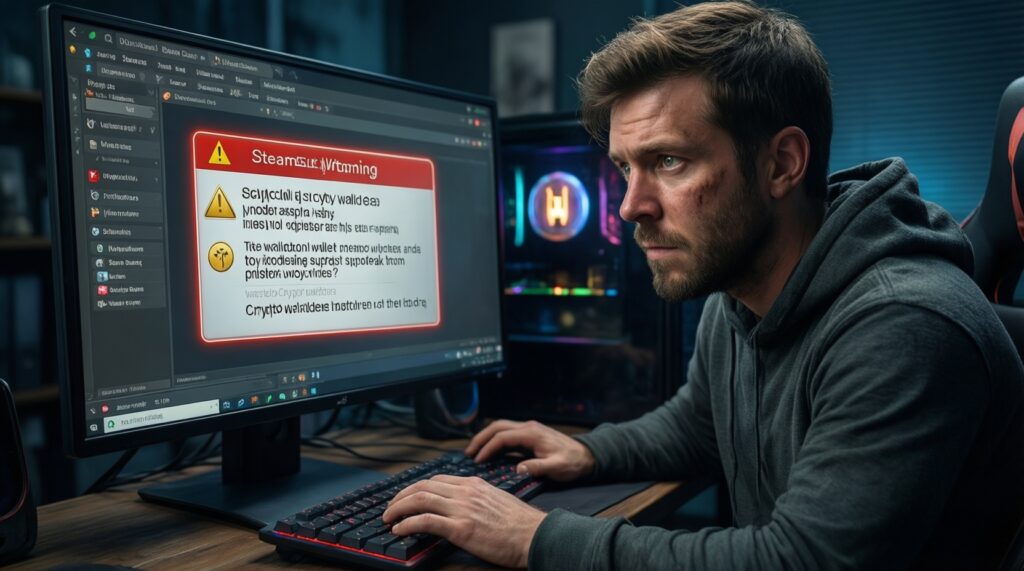
Steam has enforcement tools that may help in some cases, but outcomes vary by policy and context. On-chain transfers are generally final, so prevention (address checks, approvals hygiene) matters more.
What's the safest custody setup for NFT game items?
Use a dedicated wallet for gameplay/trading, keep higher-value assets in a separate storage wallet, and strictly verify contract addresses. If you can't manage keys reliably, a reputable custodian may reduce user-error risk at the cost of counterparty exposure.
Do Steam items have a legitimate way to convert to cash?
Inside Steam, value is typically designed to circulate within the ecosystem rather than cash out. If you pursue วิธีขายไอเทม Steam ได้เงินจริง, treat off-platform routes as higher risk and ensure you understand ToS and counterparty risks.
How should developers choose between Steam-style items and NFTs?
Choose Steam-style items when you need strong control, centralized enforcement, and streamlined UX. Choose NFTs when you want external distribution, composability, and user custody-then design around irreversibility and verification.