
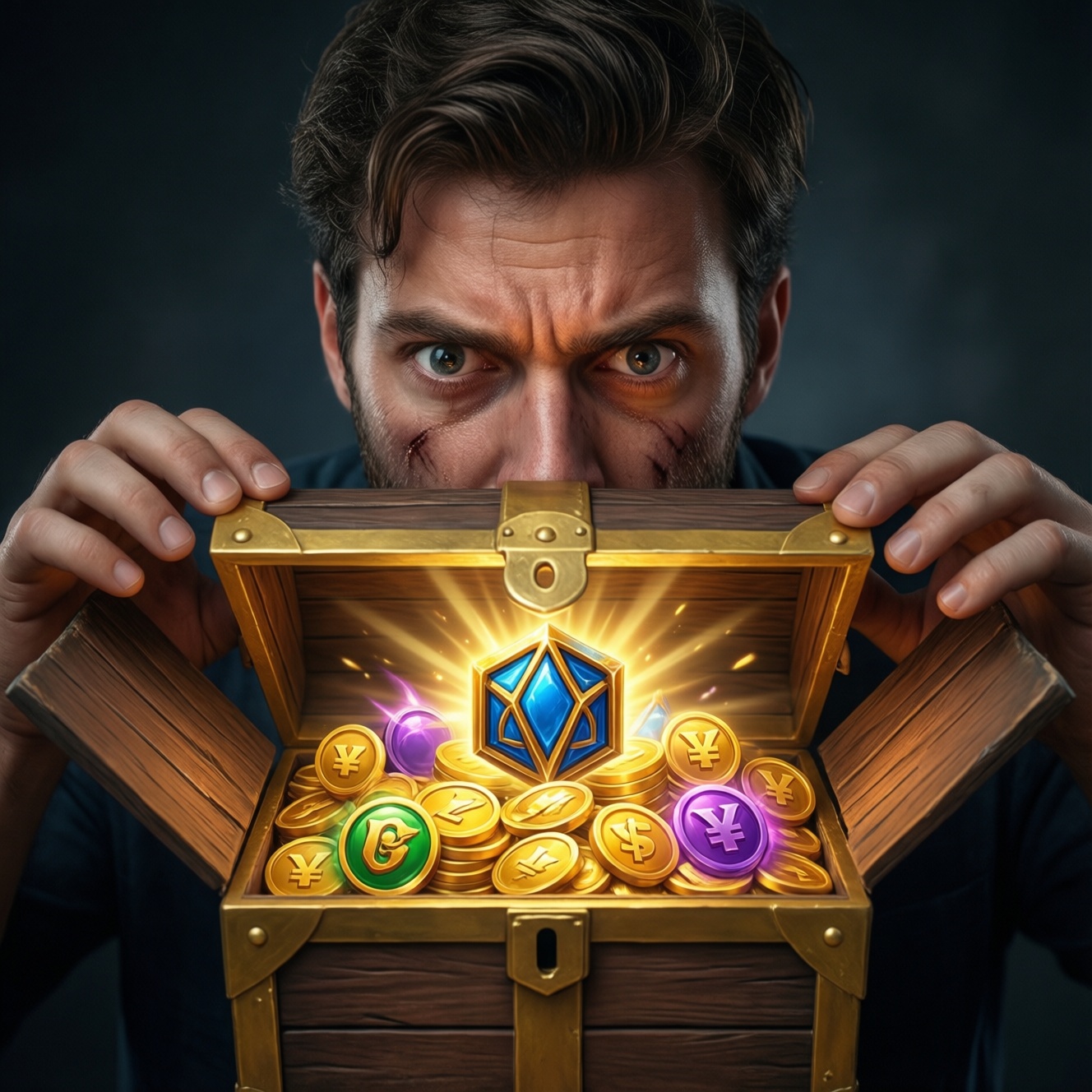
Near-miss in loot boxes is the "almost won" experience-getting close to a rare reward-which makes your brain treat a loss as a signal to keep trying. It's hard to stop because it boosts motivation, confidence, and urgency. The most effective fix is not willpower: use pre-set time/money limits, friction, and a clear exit plan.
Core Mechanisms Behind Near‑Miss Effects
- Near-miss feels informative ("I'm close"), even when outcomes are random.
- It creates a strong urge to "correct" the last attempt with one more try.
- Small cues (sparkles, rarity colors) act like rewards, even without the item.
- Progress-like systems (pity, shards, stamp cards) make stopping feel wasteful.
- Spending steps (top-ups, bundles) reduce perceived cost per roll and delay "pain of paying."
- Social comparison (friends pulling rares) raises perceived odds and FOMO.
Common Myths About Near‑Miss and Loot Boxes
Myth: "Near-miss means the system is about to pay out." In loot boxes and gacha, a near-miss is usually a presentation effect, not evidence that the next roll is more likely. Randomized rewards don't "remember" your last results unless the game explicitly uses a guaranteed mechanic (and even then, it's rules-based, not luck-based).
Myth: "If I understand the odds, I'll be fine." Knowing probabilities helps, but near-miss works at a habit level: visuals, timing, and emotion can override math. This is why intermediate players who can explain rates still end up doing เติมเงินเกม ลูทบ็อกซ์ after a frustrating "almost got it" moment.
Myth: "Loot boxes are harmless because it's just cosmetics." The harm isn't only the item; it's the spending loop and the time sink. If you're searching ลูทบ็อกซ์ คืออะไร, the most useful boundary is: loot boxes are paid (or pay-to-accelerate) randomized rewards, and near-miss is a technique that can make repeated purchasing feel rational.
How Near‑Miss Triggers Reinforcement: Dopamine, Prediction Error, and Illusion of Control
- Prediction error spike: Your brain reacts strongly when the outcome is "surprising," including "almost." That spike can feel like momentum, not failure.
- Motivation boost without reward: Near-miss can increase drive to continue even though you still lost-because it feels like progress.
- Illusion of control: Animations and interactive rituals (timing taps, "lucky" servers, changing banners) create a sense that skill can influence randomness.
- Loss framed as feedback: The system "teaches" you that you're improving ("closer"), which makes stopping feel like quitting right before success.
- Attention capture: Bright effects, suspenseful delays, and reveal sounds keep you in the loop long enough to buy again.
- Relief-seeking: After a near-miss, a new roll promises relief from frustration-so you chase emotion regulation, not items.
| Outcome | What you get | What it tends to trigger | Best immediate response |
|---|---|---|---|
| Clear loss | Nothing / low-value item | Disappointment, easier to stop | Stop and switch activity |
| Near-miss ("เกือบได้") | Looks close to rare reward | "One more" urge, perceived progress | Hard stop + friction (cooldown, app lock) |
| Win | Rare reward | Euphoria, "keep the streak" impulse | End session on a win (planned exit) |
Design Features That Amplify Near‑Miss Responses in Games
- Reveal sequences with "almost rare" cues: The animation shows rare colors/sounds briefly, then downgrades at the final step.
- Multi-step randomness: "You rolled a rare category... now roll within the rare category," creating several near-miss points.
- Progress tokens: Shards/dupes convert to a bar that is always "not far," making every roll feel like moving forward.
- Limited-time banners: Deadlines convert near-miss into urgency: "I'm close and time is running out."
- Bundles and top-up ladders: Discounts and "best value" packs make เติมเงินเกม ลูทบ็อกซ์ feel like a smart step rather than a new purchase.
- Social proof: Global chat pull announcements and friend screenshots increase perceived attainability.
Behavioral Patterns: Why Players Keep Chasing Almost‑Wins

- Escalation after a near-miss: You increase roll size or buy bigger packs to "finish the job."
- Session extension: "Last roll" repeats until resources are depleted or fatigue stops you.
- Budget redefinition: You treat the original limit as "not counting" because you were "so close."
- Emotional accounting: Spending becomes a way to fix frustration, boredom, or stress quickly.
- What near-miss can do well: Increase engagement, create memorable moments, encourage collection goals.
- Where it breaks down: It can train compulsive checking/spending, amplify regret, and reduce enjoyment of the core game when pulling becomes the main activity.
Practical Limit‑Setting: Strategies for Players and Guardians
If you're looking for วิธีเลิกสุ่มกาชา ลูทบ็อกซ์, treat it like a system design problem: your plan must work when you're tired, excited, or frustrated. Use templates you can repeat.
- Set two limits, not one (time + money): Decide both "how long" and "how much." This is the simplest way to ตั้งลิมิตการใช้เงินในเกม without relying on mood.
- Make spending steps slower: Remove saved cards, require a password manager, or move payment apps off the home screen. The goal is a 30-60 second pause before purchase.
- Use a "cooldown rule" after near-miss: After any "almost rare" moment, stop pulls for the day (or at least 30 minutes). Near-miss is a high-risk trigger state.
- Define an exit line that is not performance-based: "Stop after 20 pulls" works better than "stop when I get X." Performance-based exits are exactly what near-miss exploits.
- Pre-commit your top-up policy: Example: "No top-ups inside the game; only a fixed monthly wallet top-up outside the game." This blocks impulse เติมเงินเกม ลูทบ็อกซ์ mid-session.
- Guardians: separate allowance from gacha: If you manage a child/teen account, allow game purchases only through scheduled reviews, not on-demand. Keep rewards (allowance) unrelated to pull outcomes.
Simple limit templates you can copy
- Money: "I load a fixed wallet amount once per month; when it's gone, I don't reload until next month."
- Time: "Loot box/gacha screen max 10 minutes per day; gameplay is separate."
- Trigger: "If I feel angry, rushed, or 'close,' I stop and do one non-game task before deciding."
Regulatory and Industry Measures to Mitigate Near‑Miss Harm
Personal limits work best when products also reduce frictionless escalation. A practical industry approach is to detect "high-risk moments" and enforce cooling-off periods or clearer stop points without relying on players to self-police.
Mini-case: a safer pull flow (conceptual logic)
// Conceptual (not game-specific)
if (event == "near_miss" || spending_in_session >= user_session_cap) {
  lock_lootbox_for(cooldown_minutes);
  show_spending_summary();
  suggest_non-purchase actions (claim free rewards, exit to gameplay);
}
if (time_on_lootbox_screen >= time_cap) {
  force_exit_to_main_menu();
}- Clear session summaries: Show "spent this session" and "spent this month" at the moment of purchase, not hidden in menus.
- Default caps: Opt-out rather than opt-in limits for new accounts.
- Reduced near-miss theatrics: Avoid misleading "almost rare" reveals when the result is already determined.
Common Concerns and Short Answers
Is near-miss the same as "rigged odds"?
No. Near-miss is about how losses are presented and interpreted; rigging is about changing probabilities. You can experience near-miss even with fixed published rates.
Does a pity system remove the problem?
It can reduce uncertainty at a defined threshold, but it can also increase "sunk cost" pressure to keep pulling until the guarantee.
How do I explain "ลูทบ็อกซ์ คืออะไร" to a parent quickly?
It's a paid random reward mechanic: you pay (money or premium currency) for a chance at items, not a guaranteed purchase. Near-miss makes "almost winning" feel like progress.
What's the fastest way to stop impulse เติมเงินเกม ลูทบ็อกซ์?
Remove saved payment methods and add a forced delay (password manager, purchase approval). Make it impossible to top up in under a minute.
What's a realistic วิธีเลิกสุ่มกาชา ลูทบ็อกซ์ if I still want to play the game?
Separate "gameplay sessions" from "pull sessions," and cap pull sessions to fixed counts/time. If you break the rule once, end the session immediately and reset tomorrow.
How should I ตั้งลิมิตการใช้เงินในเกม without feeling deprived?
Use a fixed monthly wallet top-up and treat it as entertainment budget. Don't tie spending to outcomes; tie it to time (monthly) and amount (wallet cap).
When should I look for professional help, like คลินิกรักษาโรคติดพนัน ใกล้ฉัน?

If you hide spending, borrow money, can't stop despite harm, or feel withdrawal-like anxiety when you try to stop, seek support. Searching for คลินิกรักษาโรคติดพนัน ใกล้ฉัน is a reasonable next step if self-limits repeatedly fail.