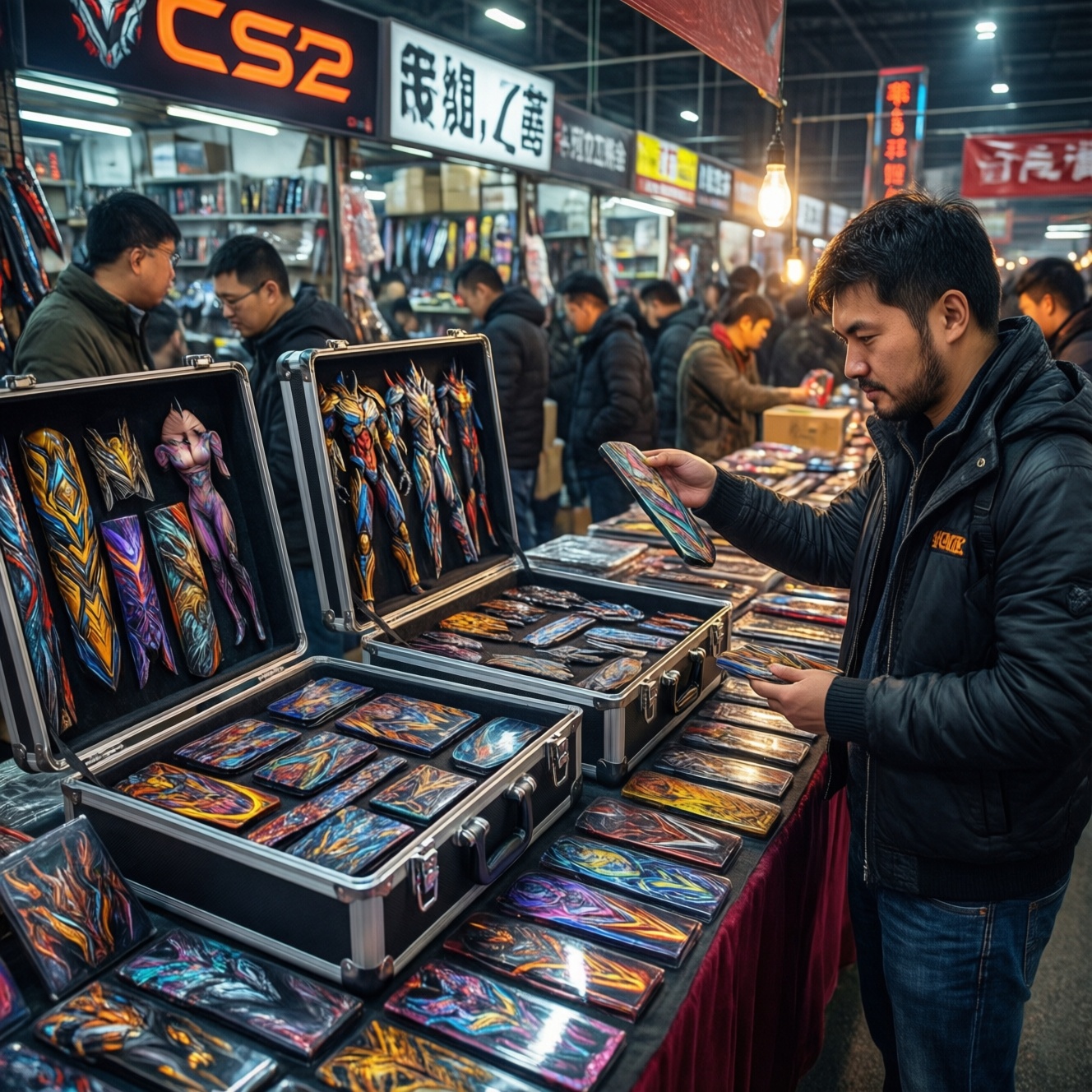


Loot boxes sit near gambling but don't always meet legal gambling tests: you usually pay, outcomes are random, but the prize is often restricted to in-game value and may lack real-world cash-out. The line depends on payout, tradability, and consumer-protection rules. Players should evaluate mechanics, spending controls, and jurisdiction before they buy loot boxes online.
Player Primer: Core Distinctions at a Glance
- Legal hinge: many frameworks focus on consideration (payment), chance, and prize of value (especially real-world value or cash-out).
- Design hinge: loot boxes are typically embedded in a game economy; gambling products are primarily wagering systems.
- Risk hinge: both can drive repetitive spending via variable rewards; exposure and protections differ by platform and region.
- Market hinge: secondary trading (skins/items) is often what pushes loot boxes closer to gambling-like outcomes.
- Compliance hinge: "loot boxes regulation" is fragmented; "loot boxes laws by country" can differ even when mechanics look identical.
Regulatory Definitions: How Laws Delineate Loot Boxes and Gambling
When people ask "are loot boxes gambling," regulators typically evaluate a small set of repeatable criteria. Use these as a practical screening checklist before spending, publishing, or advising:
- Consideration: do you pay money (or a money-like currency) to open the box, or can you earn it purely through play?
- Chance predominance: is the outcome mainly random, or can player skill meaningfully influence results?
- Prize characterization: does the reward have measurable value outside the game (cash, tradable assets, vouchers), or is it purely cosmetic/consumable in-game?
- Cash-out path: is there an official cash-out, withdrawal, or redemption mechanism?
- Tradability/transferability: can items be traded or sold to other users, particularly for real money (even via third parties)?
- Operator control: who sets drop rates and supply, and can they change odds dynamically without clear disclosure?
- Advertising and targeting: is marketing directed at minors or framed as investment/value-building rather than entertainment?
- Consumer-protection layer: are there spend limits, odds disclosures, cooldowns, or prominent warnings comparable to gambling safeguards?
Mechanics and Probability: Randomization, Transparency, and Odds
Not all random-reward systems are equal. The variants below reflect what players encounter in practice when comparing loot boxes gambling-like mechanics versus clearer gambling products. Pick the "best" approach for you based on how much uncertainty, spend risk, and resale exposure you can tolerate.
| Variant | Who it fits | Pros | Cons | When to choose |
|---|---|---|---|---|
| Earn-only loot boxes (no paid opens) | Players who want randomness but low financial risk | No direct purchase pressure; easier to self-limit; fewer legal gray zones | Can still encourage grind; can still normalize randomized rewards | If you want surprise rewards without paying per opening |
| Paid loot boxes with explicit odds disclosure | Intermediate players who budget discretionary spend | More predictable expectation-setting; easier comparison across offers | Odds don't prevent overspending; publishers can still reprice and repackage value | If you will spend, and you want at least basic probability transparency |
| Direct purchase (no randomness): skins/bundles | Players prioritizing cost certainty | Transparent value; avoids "chasing"; simplest to budget | Can be pricey; may reduce excitement for collectors | If you dislike volatility and want to know exactly what you're buying |
| Battle pass / progression track with fixed rewards | Regular players who value predictable unlocks | Clear goals; time-based pacing; less impulse-driven per purchase | Can create FOMO; encourages frequent play to avoid "waste" | If you play consistently and prefer planned rewards over random rolls |
| Loot boxes with tradable items / active secondary market | Collectors and traders who accept higher risk | Items may hold market value; trading can be enjoyable | Pushes closer to "are loot boxes gambling" territory; fraud/scams; price volatility | If you understand resale risks and can treat spend as entertainment, not profit |
| Licensed gambling (sports/casino-style wagering) | Adults seeking regulated wagering products | Typically clearer gambling rules; stronger age-gating and harm-min tools (varies by jurisdiction) | Direct monetary loss risk; higher intensity for vulnerable users | If you want wagering, prefer regulated channels, and can stay within strict limits |
Quick reading: the more a system enables cash-out or real-money equivalence, the closer it behaves to gambling, even if it is marketed as gaming. That is the practical core of "loot boxes regulation" debates.
Psychology and Addiction Risk: Reward Schedules and Vulnerable Players
Both randomized loot and gambling rely on intermittent reinforcement. Use these scenario rules to choose safer defaults-especially in households or teams where someone is vulnerable to compulsive spending:
- If you notice "chasing" (opening more to "fix" a bad streak), then switch to direct purchase or fixed-reward passes and disable one-click payments.
- If a player is under the legal age for wagering in their jurisdiction, then avoid paid loot boxes entirely and prefer earn-only rewards or fixed cosmetic bundles.
- If the game uses limited-time banners/events that trigger urgency, then pre-commit a budget and wait 24 hours before any purchase decision.
- If you're comparing "loot boxes gambling" systems across games and one has trading/market value, then treat it as higher risk and apply stricter caps (time, spend, and frequency).
- If you feel relief only after opening (not enjoyment), then pause spending and consider professional support; the pattern is a red flag regardless of the legal label.
Economic Dynamics: Monetization Models, Secondary Markets, and Spend Patterns
Use this fast selection algorithm to pick the best-fitting model for your situation while accounting for resale exposure and budget stability:
- Decide your goal: specific item, collection progress, or pure entertainment from uncertainty.
- Check for real-money equivalence: any trading, gifting, or marketplace linkage increases financial stakes.
- Choose a cost structure: fixed-price (bundle/battle pass) for predictability, randomized (loot box) only if you accept variance.
- Set a hard cap: maximum spend per week/month and maximum number of openings per session; stop at the cap even after "near misses."
- Remove frictionless payments: disable saved cards/app store one-tap purchases; require re-authentication.
- Audit post-purchase value: ask whether you would still pay if the item could not be traded-this exposes "profit" rationalizations.
Precedents and Enforcement: International Cases, Rulings, and Industry Shifts
In practice, "loot boxes laws by country" vary, and enforcement often hinges on details (tradability, disclosures, age gates). Avoid these common decision errors:
- Assuming one global rule: a mechanic acceptable in one market may trigger restrictions elsewhere.
- Equating odds disclosure with safety: transparency helps, but it does not prevent overspending or coercive event design.
- Ignoring the secondary market: third-party cash-out pathways can convert "just cosmetics" into gambling-like value dynamics.
- Over-trusting "virtual currency" labels: paying via gems/tokens still counts as consideration in many analyses if tokens are bought with money.
- Missing platform rules: console/mobile storefront policies can restrict loot boxes even when local law is silent.
- Confusing skill-based systems with random ones: "chance predominance" matters; don't lump crafting or deterministic loot with paid random rolls.
- Letting minors manage wallets: family payment sharing creates unintentional access to "buy loot boxes online" flows.
- Designing around loopholes: small tweaks that preserve cash-out value can still attract regulator attention and reputational damage.
Actionable Steps: What Players, Parents, and Developers Should Do Next
Player-focused choice (Thailand context, practical)
- Prefer direct purchase or fixed-reward passes when you want predictable value.
- If you spend on loot boxes, only do so with visible odds, strict caps, and no saved-payment friction.
- Avoid loot boxes tied to tradable items if you're tempted by resale or "making money back."
Parent/guardian safeguards
- Disable one-tap purchasing and require re-authentication for every transaction.
- Use separate child accounts and restrict spending privileges at the platform level.
- Discuss the difference between random rewards and wagering in plain terms; don't rely on the legal label alone.
Developer compliance-by-design checklist
- Publish stable odds and log changes; avoid opaque dynamic tuning.
- Offer deterministic alternatives (bundles, crafting, pity timers with clear thresholds where applicable).
- Implement cooling-off tools, spending summaries, and friction for repeated opens.
- Reduce cash-out likeness: restrict external trading where feasible and actively mitigate third-party cash markets.
Regulator/policy lens for consistent decisions
- Assess cash-out and tradability as primary risk multipliers, not just the presence of randomization.
- Require standardized disclosures (odds format, price equivalence, and clear purchase prompts).
- Align age-gating, advertising limits, and complaint mechanisms with observed risk, not product category names.
Best-fit guidance: for players seeking certainty, direct purchase or fixed tracks are usually the strongest default; for parents, earn-only systems plus payment controls reduce harm exposure; for developers, transparent odds and deterministic paths lower backlash and compliance risk; for regulators, focusing on cash-out/tradability clarifies where the gambling boundary becomes functionally relevant.
Concise Clarifications for Common Player Concerns
Are loot boxes gambling in Thailand?
It depends on whether the mechanism effectively creates a prize with real-world value or a cash-out path. Treat tradable or cash-equivalent items as higher-risk and closer to gambling-like outcomes.
Why do people search "loot boxes gambling" if many games call them microtransactions?
Because the paid random outcome resembles wagering, especially when players can trade items or when the design encourages repeated purchases. The label "microtransaction" doesn't change the behavioral incentives.
Does odds disclosure settle the "are loot boxes gambling" debate?
No. Odds help transparency, but the key legal and risk questions often revolve around prize value, cash-out, and consumer protections.
What is the biggest "loot boxes regulation" trigger for stricter treatment?

A credible route from opening a box to real-money value (official or via markets) is a common trigger. Secondary markets often change the risk profile even if the game itself does not cash out.
How should I interpret "loot boxes laws by country" when I play on global servers?
Laws and platform policies can apply based on where you live, where the publisher operates, and where the store account is registered. Don't assume the rules in another country reflect your local protections.
Is it safe to buy loot boxes online if I set a budget?

Budgeting helps, but add friction (no saved cards) and session caps to prevent impulse "chasing." If opening becomes mood-regulation rather than entertainment, pause and reassess.