

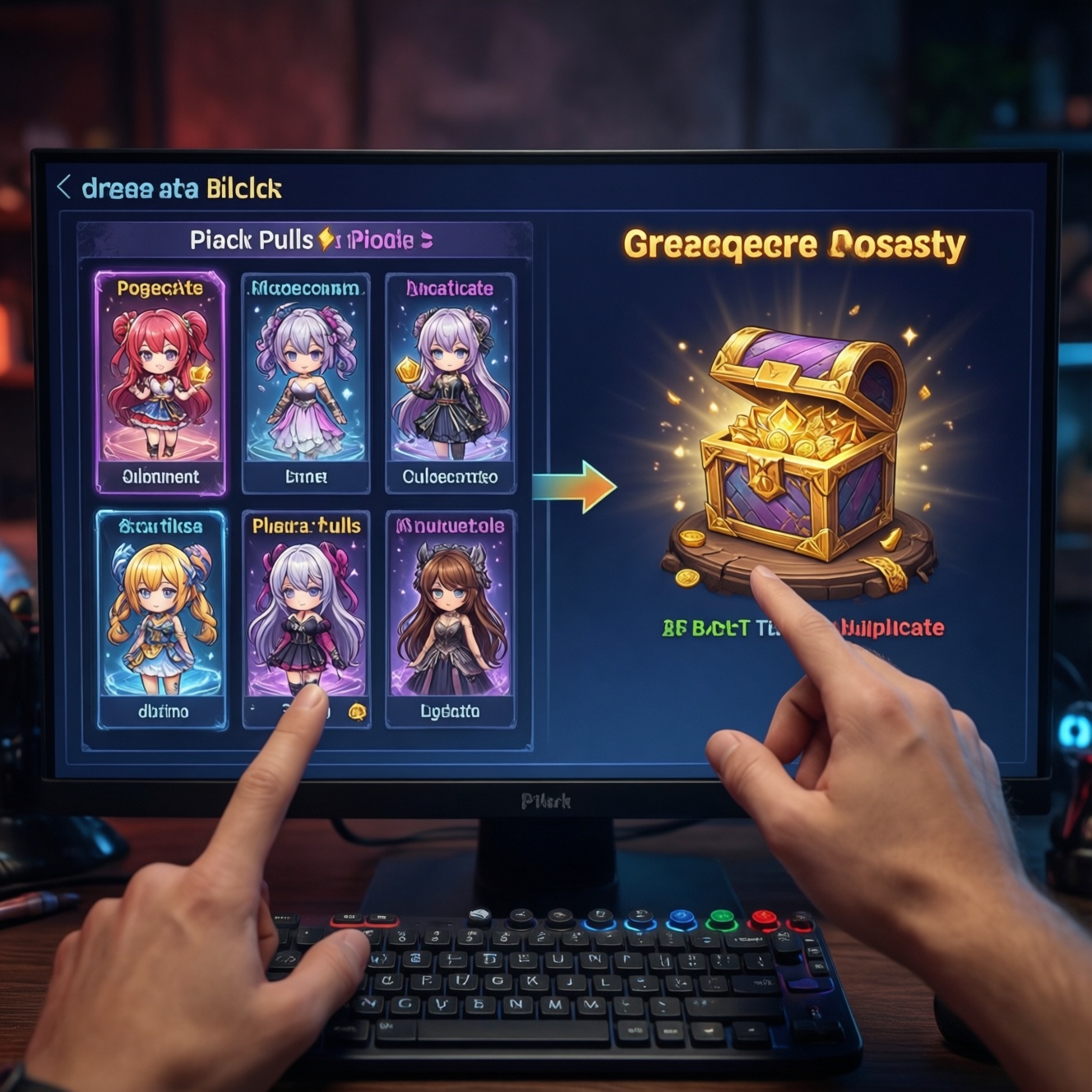
If your goal is "best value," gacha and loot boxes reward different behaviors: gacha is usually progression-anchored (units/gear) and becomes predictable only when pity/guarantees exist, while loot boxes are often cosmetic and value depends on duplicates handling. Choose by transparency, duplicate protection, spend cap, and how strongly results affect gameplay power.
Summary of Comparative Findings
- Gacha tends to feel more "worth it" when it has clear pity/guarantees and banner targeting; loot boxes rely more on broad pools and cosmetic demand.
- Drop-rate math matters most when rewards are power-relevant; cosmetic-only systems should emphasize duplicate protection and exchange value.
- The best "ROI" is rarely the single pull; it's the whole path: odds + pity + currency income + duplicate conversion.
- Collectors benefit from narrow pools, hard guarantees, and strong dupe-to-value systems; free-to-play players benefit from predictable earn rates and saved pulls.
- From a risk perspective, variable rewards with near-miss design increase compulsion; clear limits and disclosures reduce harm and backlash.
Mechanics and Economies: How Loot Boxes and Gacha Systems Operate
For "ลูทบ็อกซ์ vs กาชา ต่างกันยังไง" in practical terms: loot boxes usually sell randomized "packs" with a wide item pool (often cosmetic), while gacha sells randomized "pulls" typically tied to characters/gear and progression loops. Use these criteria to choose the better option for your playstyle (or to evaluate a game's fairness):
- Reward impact: cosmetic-only vs power/progression (pay-to-win sensitivity).
- Pool control: fixed pool vs rotating banners vs targeted rate-up items.
- Duplicate handling: useless dupes vs conversion to shards/tokens/exchange shop.
- Guarantees: none vs soft pity vs hard pity vs step-up guarantees.
- Currency economy: earn rate, savings capacity, and whether events create "must-spend" pressure.
- Player agency: rerolls, selectors, crafting, trading/marketplace constraints.
- Time gating: stamina, limited banners, and how often you can meaningfully improve without paying.
- Disclosure and UX: published rates, pity counters visible, history logs, and clear pricing.
Probability Structures: Drop Rates, Pity Systems, and Transparency
When players ask "กาชา อัตราดรอป คิดยังไง," the core is expected outcomes over many pulls: you compare (a) the base probability of the desired tier, (b) how the system changes probability over time (pity), and (c) how duplicates convert into progress. For "แพ็กสุ่มเกม อัตราดรอป และความคุ้มค่า," treat loot boxes the same way: base odds + duplicate value + any exchange mechanics.
| Variant | Who it fits | Pros | Cons | When to choose |
|---|---|---|---|---|
| Pure loot box (no pity, wide pool) | Cosmetic enjoyers, impulse buyers | Simple; occasional surprise value; works for broad cosmetic catalogs | Unbounded spend risk; low targetability; duplicates can feel worthless | Only if cosmetics are optional and duplicates convert to meaningful currency |
| Loot box with duplicate protection / exchange | Completionists who tolerate randomness | Reduced frustration; duplicates become progress; value curve is smoother | Still weak targetability vs banners; exchange rates can be opaque | If you want "pack opening" but need a safety net against repeats |
| Banner gacha with visible hard pity | Planners, budgeted spenders | Predictable ceiling; strong targeting; easier to budget | Can push "finish the pity" spending; requires patience/saving | If you want a clear answer to "กาชา คุ้มไหม เติมเท่าไหร่ถึงได้ของ" via a defined maximum |
| Soft pity / increasing odds over time | Players who do frequent pulls | Feels generous; reduces very long dry streaks | Less transparent budgeting; can be misread as "due" outcomes | If the game clearly displays the pity curve and your spend cap is strict |
| Step-up gacha (multi-step guarantees) | Moderate spenders, value seekers | Clear milestones; often best "package value" per pull sequence | Locks value behind completing steps; can penalize partial participation | If you're deciding "เกมกาชา เติมเงิน แนะนำ คุ้มค่า" and the step-up is fully disclosed and affordable within your cap |
How to interpret rates without over-trusting single-pull luck
- Base chance is not the whole story: pity and guarantees define your worst-case budget.
- Target rate matters: "top rarity" odds can be fine while "featured unit" odds are still poor.
- Duplicate value is part of probability: if duplicates convert to selectors/shards, your long-run outcome improves even when you miss.
Monetary Value: Cost per Expected Reward and Comparative ROI
Use persona-driven scenarios to decide which system is "better," without relying on hype.
- If you are Free-to-Play Planner (saves currency for one goal), then prefer banner gacha with visible hard pity and clear savings cadence; avoid pure loot boxes because budgeting has no ceiling.
- If you are Low-Spend Optimizer (small monthly budget), then choose step-up gacha or systems with guaranteed milestones; skip "endless packs" unless duplicates convert to selectors at a predictable pace.
- If you are Collector/Completionist, then prioritize narrow pools, rate-up targeting, and strong duplicate protection; a loot box can be fine only when exchange/crafting closes the last-mile gap.
- If you are Competitive Power Chaser, then avoid any system where power items sit in a wide, non-targetable pool; pick a gacha with hard pity + fragment progression so missing still moves you forward.
- If you are Cosmetics-Only Enjoyer, then loot boxes are acceptable when cosmetics don't affect gameplay and there is a dupe-to-currency loop; otherwise a direct store or battle pass is usually a cleaner value.
Quick budgeting rule (practical, not numeric)
- Define a hard monthly cap first.
- Only spend when the system has a visible ceiling (hard pity or guaranteed step-ups) or when duplicates reliably convert into the exact item type you want.
Player Psychology: Engagement Drivers, Retention, and Addiction Risks
This checklist helps you pick the "best" option for you (or evaluate a game) by measuring compulsion risk and regret likelihood, not just excitement.
- Classify the reward: cosmetic-only, convenience, or power. The more it affects power, the more harmful "infinite randomness" becomes.
- Check for a visible stop line: hard pity counter, guaranteed steps, or a clear exchange path.
- Audit "near-miss" pressure: animations, almost-win effects, and limited-time banners that push immediate decisions.
- Look for sunk-cost triggers: bonuses that activate only after you've already spent (e.g., "one more multi").
- Evaluate regret recovery: refunds, rollbacks (usually none), dupe conversion, and whether unwanted rewards still help.
- Set a pre-commitment rule: decide your cap and your stop condition before you open/pull.
Regulation, Disclosure, and Ethical Implications

Common decision mistakes players make (and product teams should avoid) when comparing loot boxes vs gacha:
- Confusing "top rarity rate" with "featured target rate": the rate you care about is the specific item/unit.
- Ignoring the absence of a spending ceiling: no hard pity + power rewards is a red flag for value and well-being.
- Overvaluing limited-time urgency: scarcity can be design, not true rarity; it often amplifies overspending.
- Not reading duplicate rules: if duplicates don't convert into meaningful progress, the expected value collapses fast.
- Assuming disclosure equals fairness: publishing rates helps transparency but doesn't guarantee a good outcome.
- Missing hidden conditions: separate pools for paid vs free currency, different pity per banner, or pity reset behaviors.
- Letting "I'm close" drive spend: pity systems can reduce variance but also create a strong completion compulsion.
- Comparing single-pull emotions instead of total path: value is the full loop: earn → save → pull → convert dupes → reach goal.
Practical Design Guidelines: Maximizing Fairness Without Killing Revenue
For players: gacha with visible hard pity and strong duplicate conversion is usually the better pick for planners and power-focused progression, while loot boxes are usually the better pick for cosmetic-only enjoyment when duplicates convert into real choice. For teams: predictable ceilings, clear rates, and non-punitive dupe systems can sustain revenue while reducing regret and backlash.
Common Player Concerns and Brief Explanations
Is gacha always better value than loot boxes?
No. Gacha is "better" mainly when it offers targeting and a visible ceiling (pity/guarantees); otherwise it can behave like a loot box with extra pressure from progression.
How do I tell if a pity system is actually helpful?
It's helpful when the counter is visible, the rules are unambiguous, and the guarantee applies to the specific featured target you want, not just any high rarity.
What's the simplest way to think about drop-rate math?

Focus on the chance of the exact target per pull, then add the safety net: what happens at a fixed number of pulls (hard pity) or via exchange/duplicate conversion.
Why do I feel tempted to "finish the pity"?
Pity turns randomness into a progress bar, which can trigger sunk-cost behavior. Pre-commit to a stop condition before pulling to avoid escalating spend.
Are loot boxes acceptable if they are cosmetic-only?
They are less harmful when cosmetics don't affect gameplay and duplicates convert into meaningful currency or choice. If duplicates are dead ends, frustration and overspending risk increase.
When should I spend real money in a gacha game?
Spend only when you can clearly predict your maximum cost to reach the goal (hard pity/step-up) and it fits your cap; otherwise treat it as entertainment spend, not investment.