

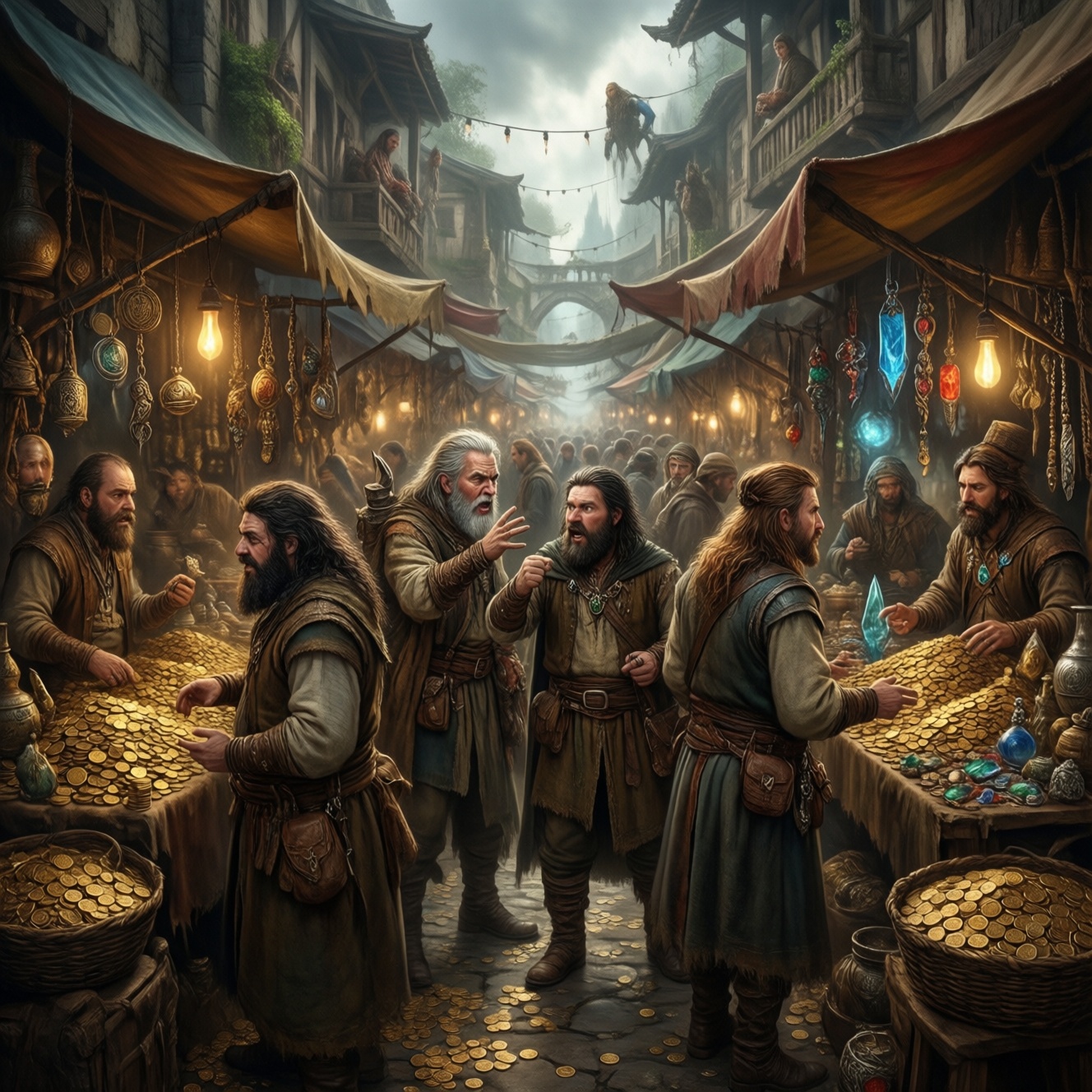
In an in game economy, inflation happens when currency or valuable items enter faster than they leave, pushing up player-to-player prices and reducing what a "normal" grind can afford. Developers counter it with item sinks, currency sinks, and controlled supply. Market cycles emerge from content patches, player speculation, and how easily players can buy in game items.
Essential Mechanics Snapshot
- Inflation is a balance problem, not a morality problem: it's about net currency creation versus removal, not "greedy players."
- Item sinks and currency sinks solve different failures: item sinks fight oversupply; currency sinks fight excess purchasing power.
- Prices in a game marketplace are signals: spikes often reflect supply shocks, not "broken trading."
- Convenience features can be inflation engines: automation, alt-friendly systems, and low-friction farming increase net inflow.
- Good sinks are optional but compelling: players should want the sink without feeling forced into a tax.
- Emergency controls exist for shocks: temporary caps, drop tweaks, or sink events stabilize a sudden spiral.
Debunking Common Myths About Virtual Inflation
Myth: "If prices rise, the economy is broken." Price increases can be healthy when they reflect higher demand for a newly relevant item (a patch makes a build popular) or a short-term supply dip. The problem is persistent virtual economy inflation, where purchasing power erodes across many categories because net currency creation outpaces removal.
Myth: "Just add more loot and players will be happier." Extra drops often reduce the value of mid-tier goods, compress progression, and push players toward a few scarce "stores of value." Inflation can coexist with item devaluation: currency buys less, while common items also become worthless.
Myth: "Player trading causes inflation." Trading moves value; it does not create it. Inflation is created by faucets (quest rewards, NPC sales, drops converted to currency) exceeding sinks (fees, repairs, crafting consumption, upgrades, deletion). Trading can amplify volatility, but the root cause is the faucet/sink balance.
Definition boundary (what counts): inflation is best measured as a broad rise in typical player-to-player prices in the trading layer. A single rare item spiking, or a premium currency shift in an in game currency exchange, can be a localized shock rather than system-wide inflation.
How Inflation Manifests Across Game Genres
Inflation looks different depending on what "money" is used for, how items are created, and whether a market exists. Watch the net inflow of currency, the conversion rate between effort and money, and whether key power items are consumed or permanent.
- MMORPGs with robust trading: daily/weekly activities become currency engines; crafted gear may inflate while raid drops stay scarce.
- ARPGs with barter-like currencies: "money" is often crafting materials; inflation shows up as devaluation of common crafting orbs versus top-tier ones.
- Extraction/looter shooters: wipe cycles reset inflation; late-wipe prices often rise due to stockpiling, meta loadouts, and reduced risk-taking.
- Gacha + auction house hybrids: premium currency and limited banners distort demand; markets can bifurcate into "whale-only" and "grind-only" segments.
- Sandbox survival with player shops: convenience goods inflate first (ammo, building mats) because they are high-turnover and time-saving.
- Games without open markets: inflation can still exist as NPC price irrelevance-players accumulate currency with nothing meaningful to spend it on (a sink deficit).
Comparative map: inflation drivers, sinks, and notable market moments
| Game (example) | Market model | Common inflation drivers (faucets) | Primary sinks | Notable market moments (typical) | Implementation convenience | Key risks if mis-tuned |
|---|---|---|---|---|---|---|
| World of Warcraft | Auction house + NPC vendors | Repeatable gold sources, mission tables, high-efficiency farming routes | Repairs, vendor mounts/items, AH deposits/cut, crafting consumption | Patch-driven material spikes; expansion launches reshape demand | Medium (many levers) | Mandatory-feeling taxes; new gold sources outpacing sinks |
| Final Fantasy XIV | Market board + NPC vendors | High-volume crafting/gathering loops, roulettes, NPC payouts | Repairs/teleports, housing costs, crafting material consumption | Housing-related demand shocks; patch-day crafting booms | Medium | Wealth concentration; bots affecting supply and price discovery |
| EVE Online | Player-run regional markets | Resource extraction, mission rewards, industrial scaling | Destruction (PvP loss), taxes/fees, manufacturing consumption | War-time scarcity; logistics shocks affecting regions | Hard (high systemic coupling) | Runaway scarcity; cartel behavior; cascading supply-chain failures |
| Old School RuneScape | Grand Exchange + item deletion systems | Monster loot tables, repeatable money-making methods | Item removal mechanics, repair/charges, GE taxes | Boss release shifts "best money-maker"; tax changes reshape flipping | Medium | Over-deleting reduces activity; under-deleting creates item gluts |
| Path of Exile | Player trading, barter currencies | League mechanics printing items/currencies, farming meta builds | Crafting consumption, map/device costs, item bricking | League-start currency scarcity; mid-league craft inflation | Medium | Craft power creep; common currencies becoming "trash tier" |
| Diablo IV | Limited trade (selected goods) | Gold drop tuning, repeatable activities, salvage-to-gold loops | Upgrades, crafting/enchanting costs, repairs | Patch changes shifting best farms; crafting cost pressure | Easy-Medium | Gold trivialization; sink frustration if costs feel punitive |
| Escape from Tarkov | Flea market + wipe cycle | Loot routes, trader arbitrage, quest rewards | Gear loss on death, hideout upgrades, fees | Late-wipe hoarding; early-wipe shortages; rule changes affecting listings | Medium | RMT incentives; pricing chaos from restrictions and exploits |
| Warframe | Player trade for premium currency; no central AH | Event drops, farmable prime parts, time-limited supply | Crafting/slot purchases (premium use), taxes, resource consumption | Vaulting/unvaulting shocks; speculation on discontinued parts | Medium | Speculation bubbles; wealth gap via premium trading advantages |
Designing Effective Item Sinks and Their Trade-offs
Item sinks remove items from circulation. They're most effective when they feel like progression, customization, or risk management-not a forced disposal. Below are typical scenarios, with convenience of implementation and risk notes.
-
Durability, repairs, and charges (soft item sink).
- Where it fits: gear-centric RPGs, MMOs, shooters.
- Implementation convenience: easy (simple decay + payment loop).
- Risks: feels like a tax; punishes experimentation if too aggressive.
-
Crafting consumption (hard item sink).
- Where it fits: crafting economies; material-heavy progression.
- Implementation convenience: medium (recipes, balance across tiers).
- Risks: if outputs are permanent and too strong, it accelerates demand spikes; if outputs are weak, it becomes dead content.
-
Upgrading/enchants that consume duplicates.
- Where it fits: loot games with repeated drops.
- Implementation convenience: medium.
- Risks: encourages hoarding and "feels bad" RNG if failure destroys value without agency.
-
Item deletion via taxation or buyback systems.
- Where it fits: centralized exchanges/auction houses.
- Implementation convenience: easy-medium (fees + automated removal rules).
- Risks: can reduce liquidity; mis-tuned fees kill low-margin trading and new-player participation.
-
Risk-based sinks: destruction on death, full-loot, or crafting failure.
- Where it fits: PvP economies and survival/extraction genres.
- Implementation convenience: hard (player psychology, anti-griefing).
- Risks: if risk is avoidable, rich players opt out; if unavoidable, casuals churn.
Practical checklist: what makes a sink "safe" to ship
- It scales with wealth or activity (heavy users remove more value naturally).
- It has a clear player-facing reason (power, cosmetics, convenience, risk mitigation).
- It doesn't hard-block progression for unlucky players.
- It can be tuned quickly (server-side variables, not client patches only).
- It doesn't create a single dominant funnel that turns the whole economy into one chore.
Player-driven Markets: Liquidity, Speculation, and Automation
Player markets are great at price discovery, but they also amplify shocks. The same system that makes it easy to find a fair price also makes it easy to coordinate, speculate, and automate.
Benefits you get "for free" with a functioning market
- Liquidity: players can convert loot to what they actually need, reducing frustration and making drops feel valuable.
- Specialization: gatherers, crafters, and fighters can each focus on what they enjoy.
- Self-balancing signals: rising prices attract more supply-unless supply is capped or botted.
- Clearer monetization boundaries: if players can trade, you must be explicit about what is and isn't pay-to-win when they buy in game items.
Limitations and risks to plan for up front
- Speculation loops: players hoard items expecting a patch, which can create a shortage before anything actually changes.
- Automation pressure: bots and scripts can dominate farming and listing, flattening "honest" profit margins.
- Market power: thin markets are easy to manipulate; a few actors can set anchor prices.
- Cross-currency distortions: when premium-to-farmable trading exists, in game currency exchange rates can become the real "price index" players follow.
Typical Market Cycles, Shocks and Leading Indicators
Most economies oscillate between scarcity and abundance. The goal is not zero volatility; it's keeping volatility within a range where progression, crafting, and trade still feel worth doing.
- Launch/season reset: scarcity phase; prices are high for basic inputs because time is the bottleneck. Leading indicator: rapid turnover of low-tier materials.
- Optimization phase: players discover best routes; faucets accelerate. Leading indicator: more currency entering per hour of "standard play," visible as faster price rises across many staples.
- Consolidation phase: wealth concentrates; "stores of value" emerge (rare mats, limited cosmetics). Leading indicator: widening gap between staple goods and prestige goods.
- Shock event: patch, exploit, dupe, new sink, or drop-table change. Leading indicator: sudden spread divergence-some categories spike while others crash.
- Stagnation risk: trading slows because players expect prices to fall or because fees/sinks are too painful. Leading indicator: listings rise while completed trades fall (illiquid game marketplace).
Avoidable mistakes that create "false inflation narratives"
- Confusing a single meta item spike with system inflation. Use a basket of commonly traded goods to assess broad movement.
- Ignoring velocity. The same amount of currency can be harmless if it circulates slowly; it becomes inflationary when farming and re-spending accelerates.
- Overcorrecting with harsh sinks. Abrupt, universal fees often reduce participation more than they reduce inflation.
- Letting permanent power stack without consumption. If best-in-slot is permanent and tradeable, the game tends toward hoarding and price cliffs.
Developer Tools: Patches, Currency Policies and Emergency Controls
This is where convenience vs risk is clearest: the easiest tools (taxes, drop nerfs) can also be the most disruptive if they change player routines overnight. Prefer tunable, segmented controls that target the true faucet.
Toolbox ranked by implementation convenience and failure modes
-
Marketplace fees and listing frictions (easy).
- Use when: pure flipping dominates and you need a currency sink tied to trade volume.
- Main risk: kills low-value trading and new-player selling; reduces liquidity.
-
Adjust faucet rates (easy-medium).
- Use when: a specific activity prints too much currency/items.
- Main risk: backlash if players feel you removed their "job"; pushes them to the next best exploit.
-
Add or buff optional sinks (medium).
- Use when: you need long-term stabilization without punishing casuals.
- Main risk: if rewards are too good, it becomes mandatory; if too weak, it's ignored.
-
Segmented sinks by wealth tier (medium-hard).
- Use when: inflation is driven by top-end players while midgame struggles.
- Main risk: perception of unfairness; requires careful UI messaging.
-
Emergency controls (hard).
- Use when: exploit/dupe or patch shock threatens market trust.
- Main risk: collateral damage; once used, players may expect future bailouts.
Mini-case (end-to-end): detecting inflation and choosing a low-drama fix
Scenario: after a content update, staple crafting materials rise in price across the board, while trade volume also rises. Players claim "the economy is broken," but the pattern suggests a faucet acceleration plus higher velocity, not a single-item shortage.
- Measure a simple basket index: pick several high-volume staples (common mats, mid-tier consumables) and track their median trade price trend.
- Check faucet attribution: identify which activity's reward profile changed (direct currency, vendor trash, drop density, conversion loops).
- Apply the least disruptive lever first: reduce the specific faucet and introduce a sink that aligns with player goals (e.g., upgrades that consume the oversupplied mat).
// Pseudocode: broad basket index + faucet check (conceptual)
basket = ["staple_mat_A","staple_mat_B","consumable_C","mid_component_D"]

index_today = medianPrice(basket, today)
index_week  = medianPrice(basket, last_7_days)

if index_today > index_week and tradeVolume(today) > tradeVolume(last_7_days):
    suspect = topCurrencySourceChangeSincePatch()
    tuneDown(suspect.faucet_rate)
    addOptionalSink(target_item="staple_mat_A", reward="upgrade_progress")
Concise Clarifications for Common Confusions
Is inflation always bad in an in game economy?
No. Short spikes can reflect real demand changes; persistent broad price increases that reduce progression affordability are the real problem.
Does allowing players to buy in game items guarantee pay-to-win inflation?
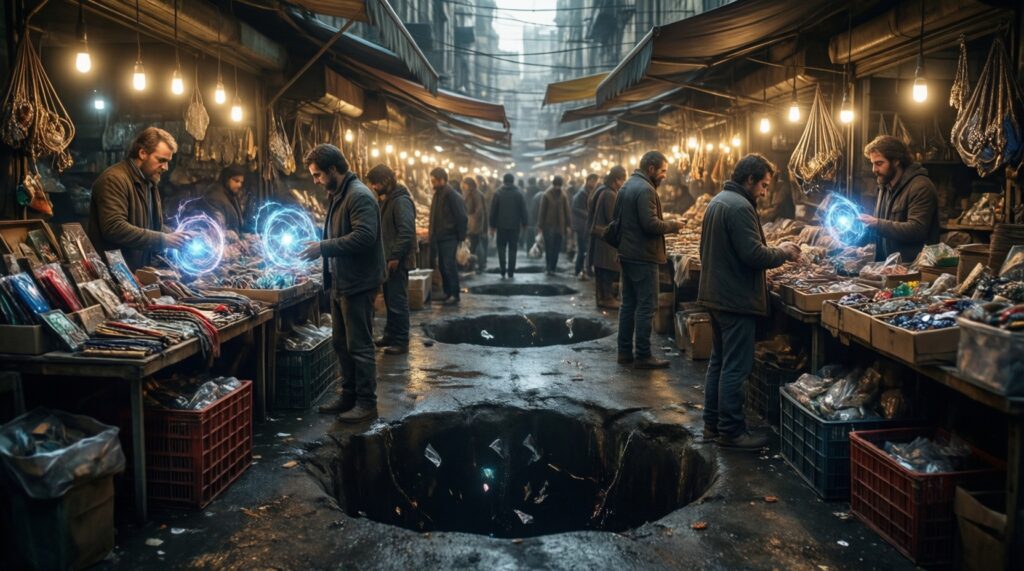
Not automatically. It depends on whether purchases create new power or simply redistribute existing items, and how strongly sinks prevent permanent accumulation.
What is the fastest way to spot virtual economy inflation without complex analytics?
Track a small basket of high-volume staples and compare their typical prices over time. If many staples rise together, it's likely systemic rather than a single-item shock.
Why does my game marketplace feel "dead" even when prices are high?
High prices can coexist with low liquidity when players stop listing or stop buying. Common causes are excessive fees, fear of price drops, or supply being botted/controlled.
Are item sinks better than currency sinks?
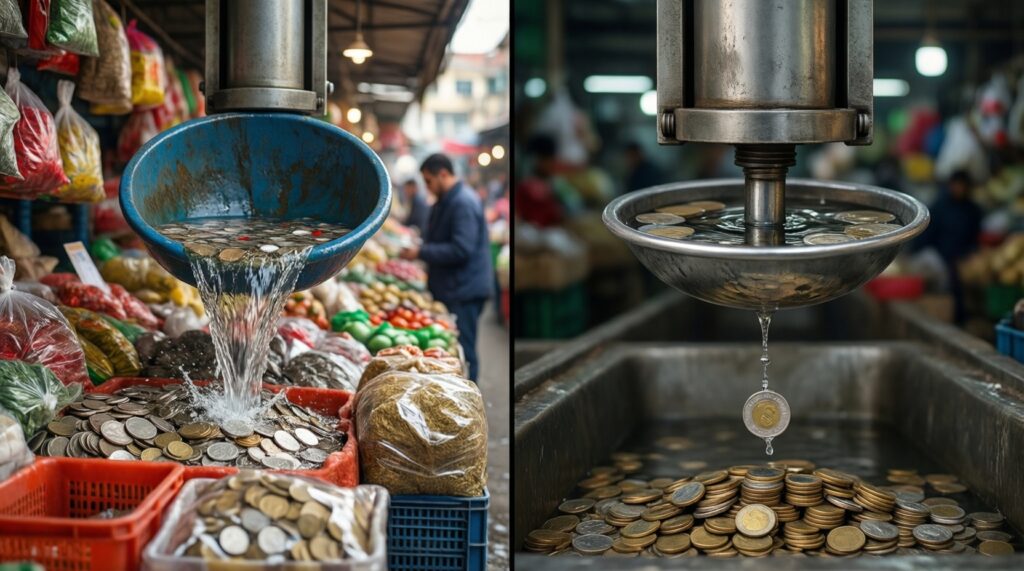
They solve different issues. Item sinks prevent oversupply and keep crafting meaningful; currency sinks protect purchasing power and reduce runaway hoarding.
How does in game currency exchange affect inflation?
Exchange rates can become a public reference for value, amplifying speculation and shifting demand between currencies. A sudden rate move can look like inflation even when only one currency is weakening.