
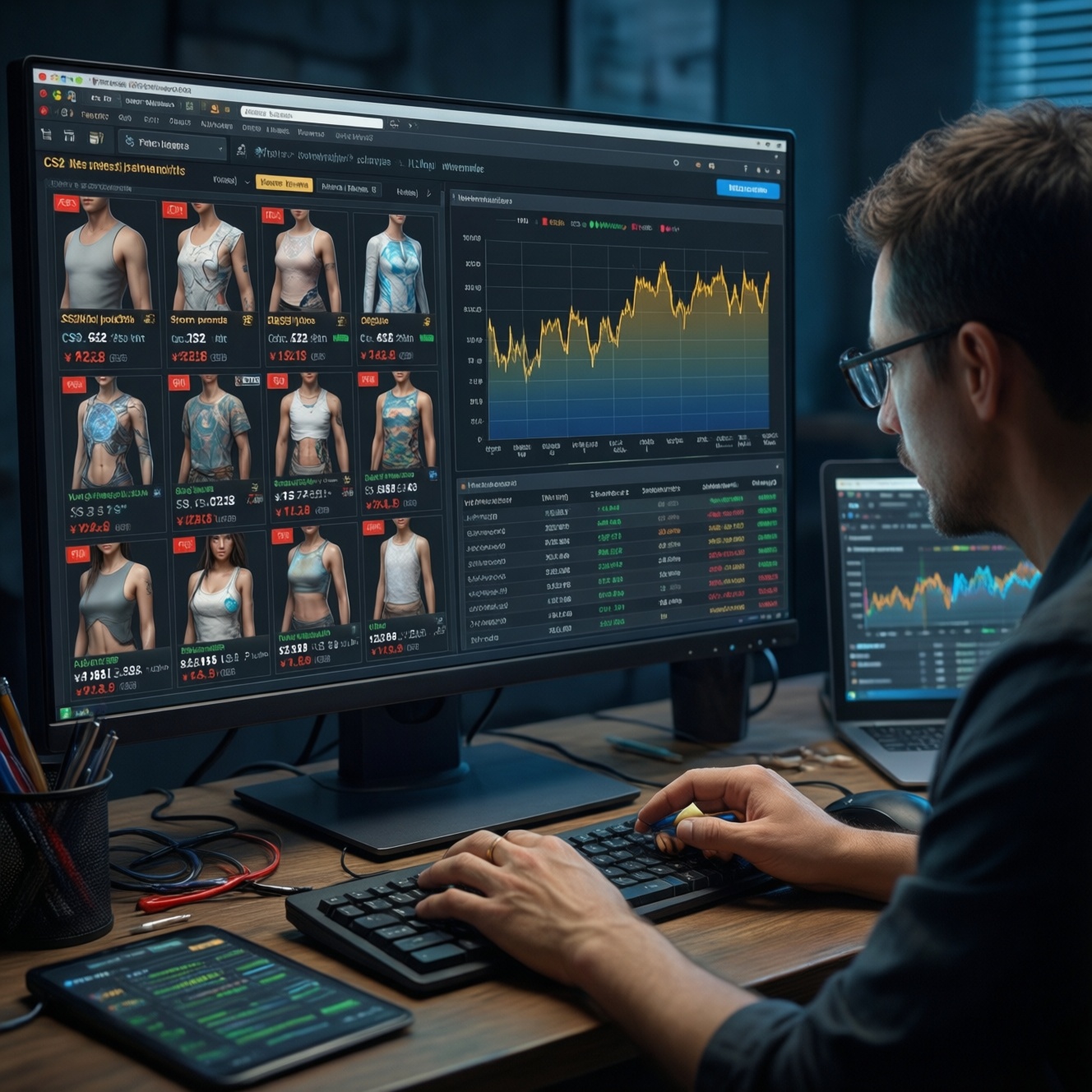
To track item values reliably, combine one primary marketplace feed (Steam Community Market or Buff) with a secondary cross-check (price index tool), then normalize names, currency, fees, and liquidity into one consistent record. This workflow lets you build a CS2 skin price tracker that updates safely, flags anomalies, and supports decisions when you buy CS2 skins.
Essential Metrics at a Glance
- Canonical item key: appId + market_hash_name + wear/phase/paint seed (when available).
- Normalized price: net-of-fees price in one base currency (often USD), plus the raw local price (e.g., THB view).
- Liquidity signal: recent sales count / active listings (separate them; don't mix).
- Update freshness: timestamp + source latency (how old the last pull is).
- Spread & slippage: best ask vs typical sale price; treat thin markets as high-risk.
- Outlier detection: sudden jumps, mismatched variants, or currency/fee mistakes.
Setting Up Data Sources: Buff, Steam, and Price Indexes
This setup fits intermediate users who want consistent CS2 skin prices monitoring for budgeting, inventory valuation, or alerting on notable moves. It's also useful when you want to compare Steam Community Market CS2 skin prices against Buff163 CS2 skin prices and a third-party index.
Don't do this if you can't keep credentials secure, if you plan to violate a platform's Terms of Service, or if you need "perfect real-time"-market feeds can be delayed, rate-limited, and sometimes incomplete for rare variants.
| Source type | What it's best for | Typical fields you want | Main pitfalls | Recommended cadence |
|---|---|---|---|---|
| Steam Community Market | Public baseline pricing, broad coverage | market_hash_name, currency, lowest_ask, volume/sales signals (when available), timestamp | Fees and displayed price vs net; cached pages; variant ambiguity | Minutes for active items; slower for long tail |
| Buff marketplace feed | Alternative market view; often different liquidity | item id, title, ask, last sale (if provided), listing count, timestamp | Login/session handling; localization/variants; ToS constraints | Minutes for watchlist items |
| Price index tools | Cross-checking, smoothing, alerts | normalized item key, reference price, change window, confidence tags | Index can lag; methodology differs; may hide raw liquidity | Hourly to daily (as validation) |
Authentication, APIs, Rate Limits and Scraping Ethics
- Accounts and access: separate accounts for personal trading and data access; enable strong authentication; store tokens/cookies encrypted.
- Respect platform rules: prefer official endpoints or permitted exports; avoid aggressive scraping that harms services.
- Rate limiting: implement backoff (exponential), caching, and a watchlist approach rather than "scan everything."
- Tooling: a small service (Node/Python), a scheduler (cron), and a datastore (PostgreSQL/SQLite) are enough for an intermediate build.
- Time & locale (TH context): store timestamps in UTC, render in Asia/Bangkok; keep currency conversion separate from raw fetched values.
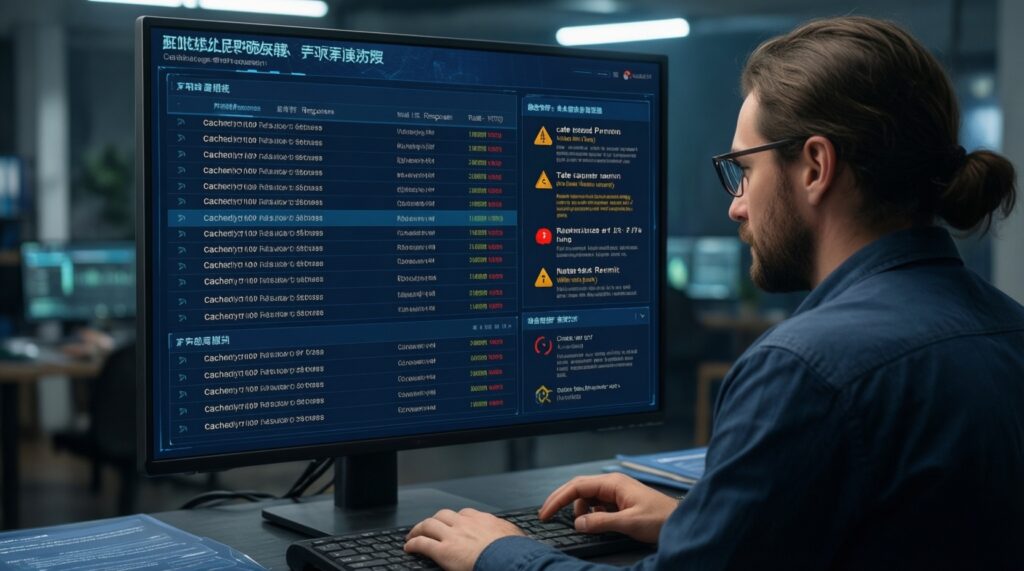
Minimal integration pseudocode (safe polling + caching)
// Pseudocode: poll watchlist, respect rate limits, cache raw responses
watchlist = loadItems()

for item in watchlist:
  if cache.isFresh(item.key, ttl=180):
    continue

  resp = http.get(item.sourceUrl, headers=authHeaders(), timeout=10s)

  if resp.status in [429, 503]:
    backoff(item.source, strategy="exponential+jitter")
    continue

  raw = parse(resp)
  storeRaw(source=item.source, key=item.key, raw=raw, fetchedAt=nowUTC())
  cache.set(item.key, raw, ttl=180)
Normalizing and Reconciling Prices Across Platforms
-
Create a canonical item identifier
Use the most stable identifier you can: for Steam, start with
market_hash_name; for other sources, map their item IDs to the same canonical name. Store variant attributes (wear, phase, StatTrak, souvenir) separately so you don't blend different items.- Keep a manual override table for tricky names (special characters, localized strings).
- Never merge items solely by partial text match when variants matter.
-
Capture raw prices exactly as displayed
Persist the raw numeric value, currency code, and whether it's an ask, last sale, or reference price. This preserves auditability when you later discover a fee or conversion mistake.
- Store both
raw_priceandprice_type(ask/sale/index). - Store
source_urlfor traceability.
- Store both
-
Normalize currency without overwriting the original
Convert into one base currency for comparisons (commonly USD), but keep the original currency alongside it. In Thailand, you may also want to render a THB view for planning while still comparing in the base currency internally.
- Save
fx_rate_usedandfx_timestampso replays are possible. - Do not "round early"; round only at display time.
- Save
-
Normalize fees into net and gross prices
Displayed marketplace numbers may include or exclude fees depending on the context. Store both
gross_price(what you see) andnet_price(what you receive/pay after fees) where applicable, and label the assumption.- If the fee model is unclear, keep it as
fee_model=unknownand avoid net calculations.
- If the fee model is unclear, keep it as
-
Reconcile multiple sources into a single "current" value
Pick a primary source per item and a secondary validation source. If values diverge beyond your tolerance, mark the record as
needs_reviewrather than forcing an average.- Use price index tools for sanity checks, not as the only truth.
- For rare items, prioritize liquidity indicators over a single printed price.
-
Build a lightweight anomaly filter
Flag sudden jumps, stale data, and mismatched variants. A simple ruleset beats a complex model when your input quality is mixed.
- Examples: "freshness > X minutes", "price change > Y%", "volume=0 but price moved".
Quick mode (fast-track workflow)

- Start with 30-100 items: create a watchlist of the skins you care about, not the whole market.
- Pick one primary + one validator: track Steam + a price index, then add Buff once your mapping is stable.
- Store raw first, normalize second: save raw JSON/HTML extracts, then compute normalized fields in a separate job.
- Alert only on clean signals: fire alerts only when data is fresh and variant-match confidence is high.
Designing a Live Price Tracker: Architecture and Data Flow
A practical CS2 skin price tracker usually has four layers: (1) collectors per source, (2) normalization/FX/fees, (3) storage + history, and (4) alerting + dashboards. Keep collectors simple and isolate parsing per source so a small markup change doesn't break everything.
Result verification checklist (before you trust the numbers)
- Each saved record has source, canonical key, raw currency, and UTC timestamp.
- Steam items are not merged incorrectly (e.g., StatTrak vs non-StatTrak, Factory New vs Minimal Wear).
- Normalized prices can be traced back to raw fields (no "magic number" columns).
- Fees are either correctly applied or explicitly marked unknown (no silent assumptions).
- FX conversion is reproducible (rate and time stored).
- Stale data is visibly flagged and excluded from alerts.
- Rate-limit handling is working (no burst loops; backoff triggers on 429/503).
- You can reproduce a chart point by reloading the stored raw snapshot.
Interpreting Market Signals: Volatility, Volume and Rarity
- Reading "volume" as liquidity: listings and sales are different; treat them as separate signals.
- Comparing ask to last sale directly: asks can be aspirational; sales reflect execution.
- Ignoring variant granularity: phase/float/seed differences can dominate price for some items.
- Trusting a single-source spike: cross-check against your validator or mark it as an outlier.
- Overreacting to thin markets: one trade can move the "price" when availability is low.
- Mixing currencies without noticing: store and display currency codes everywhere, including exports.
- Using index prices as executable prices: an index is a reference, not a guaranteed fill when you buy CS2 skins.
- Failing to separate freshness from movement: a late update can look like a jump.
Automation: Alerts, Threshold Rules and Trade Signals
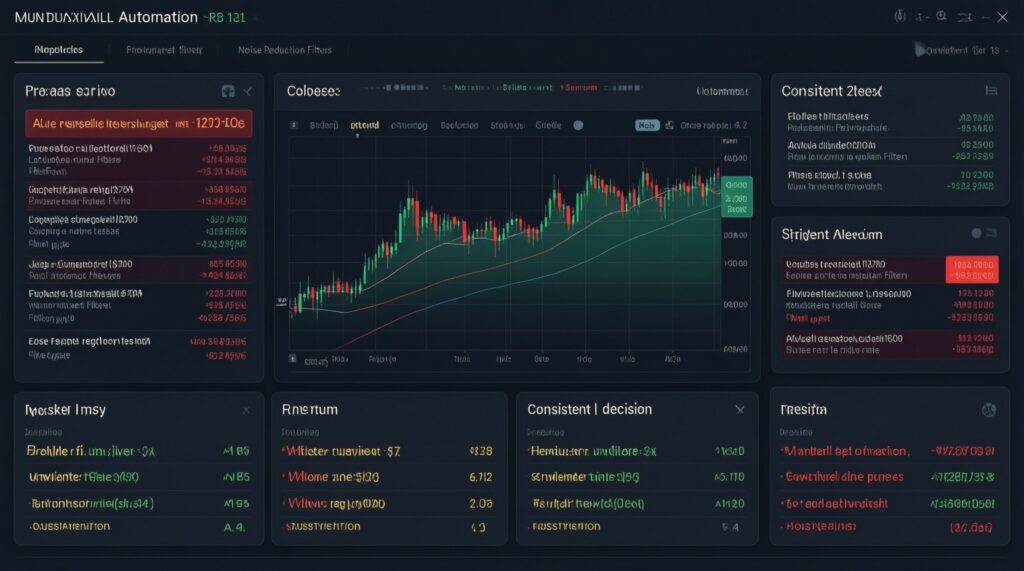
Automation is most useful when it reduces noise and enforces consistent decisions. Choose an approach that matches your risk tolerance and how actively you trade.
-
Simple threshold alerts
Use static rules like "price down/up by X% from last 24h reference" with freshness checks. Best when you want low maintenance and clear triggers.
-
Spread-based alerts
Alert when the gap between sources (e.g., Steam vs Buff) exceeds a tolerance after fee and FX normalization. Best for cross-market monitoring of CS2 skin prices without trying to predict direction.
-
Liquidity-gated alerts
Only alert if sales/listings exceed your minimum so you don't chase one-off prints. Best for avoiding traps in rare or illiquid items.
-
Index-confirmed signals
Trigger only when both a marketplace and a price index move in the same direction, reducing false positives. Best when your collectors are occasionally noisy.
Practical Issues, Quick Solutions and Limitations
Why do Steam Community Market CS2 skin prices differ from other sources?
Different marketplaces have different fees, liquidity, and buyer pools, and they may show ask vs sale differently. Normalize currency and fee assumptions before comparing.
How do I handle items with the same name but different variants?
Split them by explicit attributes (StatTrak, wear tier, phase/seed if available) and never merge solely by a text name. Keep a manual override list for edge cases.
What's the safest way to build a CS2 skin price tracker without breaking rules?
Prefer official or permitted endpoints, poll conservatively, and cache aggressively. If a site blocks automated access or forbids it, don't bypass protections.
How often should I refresh Buff163 CS2 skin prices and Steam data?
Use a watchlist and refresh active items more frequently than the long tail. Always implement backoff on rate-limit responses and treat "freshness" as a first-class field.
Can I rely on price index tools to decide when to buy CS2 skins?
Use them as a validation layer and for trend context, not as guaranteed executable prices. Confirm with current asks and liquidity on your target marketplace.
My tracker shows sudden spikes-what should I check first?
Check timestamp freshness, currency conversion, fee logic, and variant mapping. Then verify whether the spike is only on one source or confirmed across sources.
Do I need to store raw data if I already store normalized prices?
Yes-raw snapshots let you audit parsing changes and resolve disputes about what the source actually displayed at the time.