


Progression turns into pay-to-spin when the fastest path stops being skill or time and becomes repeated paid attempts: rerolls, gacha pulls, energy refills, or upgrade "spins" with volatile outcomes. To troubleshoot, start with read-only checks: identify where players stall, what UI prompts appear at the stall, and which random/paid actions unstick progress.
Progression Failure Signs: What Alerts You First
- Players report "I'm stuck unless I pay" and describe outcomes as random rather than learnable.
- Sharp mid-funnel drop-offs at specific levels/chapters; retries increase while win rate stays flat.
- ARPDAU spikes without a matching improvement in retention or session length (monetization replaces fun).
- Revenue concentrates in "buy in game currency" moments tied to a single gate (energy, materials, rerolls).
- Increased support tickets about "rigged" odds, "unfair" upgrades, or "loot boxes and gambling."
- Economy inflation: more sinks, fewer reliable earners, and progression feels like paying to spin.
Identifying Symptoms: When Progress Feels Like a Slot Machine
What players visibly experience (capture these first before changing anything):
- Progress is blocked by a hard gate (energy, keys, timers) that resets through payment.
- Upgrades fail unpredictably (breakage, downgrade, success chance) and repeated attempts are the "intended" loop.
- Core power comes mainly from randomized rewards (gacha/pack pulls), not from deterministic play.
- Difficulty spikes that don't respond to better play; only higher stats overcome them.
- Frequent "one more try" offers after losses: extra lives, continues, revives, rerolls.
- Currency shortfalls appear right at gate points; store highlights bundles relevant to that gate.
- Players compare you to pay to win games even if PvE-only, because outcomes feel purchased.
- New players ask if this is among the best free to play games or "another spinner," indicating trust erosion.
Analysing Monetization Triggers Behind Pay-to-Spin Loops
Read-only diagnosis checklist (fastest to verify first):
- Map every progression gate to its "escape hatches" (currency spend, ads, timers, premium items).
- List all RNG-influenced power sources (drops, rolls, crafting outcomes, gacha) and where they become mandatory.
- Audit loss flows: what appears immediately after a fail (revive, refill, reroll, "special" bundle)?
- Check if "buy in game currency" is the only reliable way to close a deficit in the midgame economy.
- Identify whether limited-time offers trigger on frustration signals (streak losses, low currency, failed upgrades).
- Verify if store sorting or popups prioritize the exact resource that unblocks the current gate.
- Confirm whether progression requires "perfect" RNG within a narrow time window (events, seasonal ladders).
- Look for compounding randomness: RNG to get an item + RNG to upgrade it + RNG to roll stats.
- Check if tutorial/early game is deterministic but midgame abruptly becomes randomized monetization.
- Review whether your paid loop resembles loot boxes and gambling (variable outcomes, near-miss visuals, repeated pulls).
- Search in reviews for "microtransactions in games" tied to fairness, not price (signals design, not marketing).
Metrics and Instrumentation: What to Measure and How
Instrument first; change later. Use event logs and cohort analysis to locate the exact "spin point" where deterministic progress converts into paid variance.
Events to add (or confirm) before any tuning
- progress_gate_entered (gate_id, player_power, chapter, attempt_count)
- progress_gate_failed (gate_id, fail_reason, time_in_attempt, remaining_energy)
- progress_gate_cleared (gate_id, attempts_to_clear)
- rng_action_used (action_type: pull/reroll/upgrade_roll, currency_type, cost, outcome_bucket)
- offer_shown and offer_purchased (trigger_reason, gate_id, sku)
- currency_balance_snapshot (soft, premium, key_materials) at gate entry/exit
Diagnosis table: symptom → cause → verification → fix
| Symptom | Possible causes (most likely first) | How to verify (read-only) | How to fix (lowest-risk first) |
|---|---|---|---|
| Mid-funnel stalls cluster at the same level/chapter | Difficulty spike; missing deterministic power source; gate tuned assuming purchases | Level cohort: attempts_to_clear distribution; power vs win rate; compare payers vs non-payers at same power | Flatten spike; add deterministic earners (quests/crafting); rebalance required power to match median non-payer trajectory |
| Retries increase, win rate doesn't improve | Skill isn't rewarded; RNG dominates; unclear fail feedback | Retry sequences: does performance improve (time survived, accuracy) without higher stats? | Improve teachable counters; reduce variance; add practice mode; make difficulty respond to mastery signals |
| Purchases concentrate around revives/refills/continues | Loss flow monetization too aggressive; "one more try" loops | Offer triggers: offer_shown after fail; conversion vs subsequent retention | Delay offers; cap offers per session; provide free recovery path (daily revives, ad option) before premium |
| Players feel forced to buy currency to progress | Economy deficit at gates; sinks exceed earners; premium currency used as universal fix | Balance snapshots: currency deficits at gate entry; time-to-earn vs price-to-skip; sink/earner ledger by chapter | Increase earners; reduce mandatory sinks; introduce alternative currencies; separate "convenience" from "power" |
| Upgrades feel like "spins" (fail/break/downgrade) | Compounding RNG; punitive failure outcomes; success odds not transparent | Upgrade funnel: success rate by tier; expected attempts; currency burn per tier | Add pity/guarantees; convert break/downgrade into "no progress"; add deterministic tokens to finish tiers |
| ARPDAU rises but retention falls | Short-term extraction; frustration purchases; whales compensate for churn | Segment payers: payer retention vs non-payer retention; post-purchase session length; refund/support rate proxies | Shift monetization to cosmetics/battle pass value; rebalance midgame gates; improve fairness messaging and transparency |
| Reviews mention "rigged," "scam," or "loot boxes and gambling" | Near-miss UX; opaque odds; repeated paid random pulls dominate progression | Text mining on reviews/support; correlate review spikes with new gacha/offer experiments | Make odds and guarantees explicit; reduce paywalls around RNG; ensure core progression is achievable via play |
Minimum KPIs to watch during troubleshooting
- Gate Clear Rate by cohort (new/returning, payer/non-payer) and by gate_id.
- Attempts to Clear and Time to Clear per gate_id.
- RNG Spend Share: % of spend on pulls/rerolls/upgrade rolls vs other categories.
- Frustration Purchase Rate: purchases within N minutes after a fail (define N internally and keep consistent).
- Post-Purchase Retention Delta: retention for those who purchased at a gate vs those who cleared without purchase.
Design Root Causes: Systems That Encourage Spinning
Step-by-step remediation (safe-to-risky; keep production intact by starting with analysis and small config changes):
- Freeze the "spin point" map. Document each gate_id where spend spikes and what exact action unblocks it (refill, revive, pull, reroll).
- Remove compounding randomness first. If players must roll to obtain power and roll again to make it usable, eliminate one layer (e.g., deterministic upgrade path).
- Add guarantees before changing prices. Introduce pity counters, milestone rewards, or "token-to-complete" crafting so effort converts to progress.
- Make failure non-punitive. Convert downgrade/break into "no progress" outcomes; keep the player's prior investment intact.
- Rebuild a deterministic power lane. Ensure main story progression can be cleared via skill + predictable earners (quests, crafting, targeted drops), not only pulls.
- Retune gates using non-payer median trajectory. Target a clearable path without requiring perfect RNG; leave paid options as acceleration.
- Throttle frustration-triggered offers. Cap frequency, add cooldowns, and avoid showing monetization immediately after repeated fails.
- Decouple premium currency from core progression deficits. If premium currency is the universal patch, players perceive pay-to-spin; introduce alternative earners/sinks.
- Audit UX patterns that resemble gambling. Reduce near-miss theatrics, timed pressure, and ambiguous outcomes; clarify odds/guarantees in-product.
Practical Fixes: Balancing Progression Without Revenue Loss
Escalate when the issue is structural (not a single gate) or carries compliance/trust risk. In Thailand, be especially cautious when your loop is perceived as loot boxes and gambling or when minors are part of the audience.
- Escalate to product + economy/design lead if you see multiple gates with the same currency deficit pattern (systemic sink/earner imbalance).
- Escalate to data/analytics if you cannot tie ARPDAU changes to a stable retention story (risk of short-term extraction).
- Escalate to compliance/legal if monetization relies on randomized paid outcomes with unclear odds, near-miss UX, or heavy pressure messaging.
- Escalate to customer support ops if ticket volume about "rigged" outcomes increases; treat as a trust incident, not "normal churn."
- Escalate to live-ops engineering if fixes require server-authoritative odds changes, guarantee counters, or anti-fraud checks for currency.
Revenue-safe alternatives that reduce pay-to-spin perception (often improving LTV through trust): cosmetics, battle pass with transparent value, subscriptions for convenience (inventory/queue), and direct purchase of deterministic progress items (tokens) rather than repeated rolls.
Testing and Rollout: Experiments, KPIs and Player Segmentation
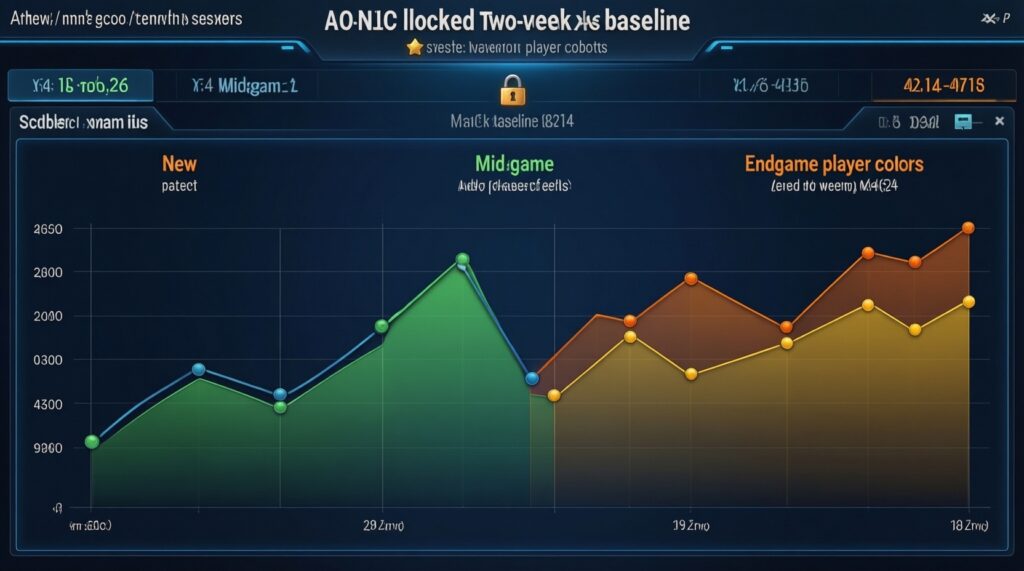
- Start with read-only baselines. Lock a two-week pre-change baseline for gate clears, attempts, and RNG spend share before running experiments.
- Segment by progression stage. Separate new players, midgame stalled cohorts, and endgame grinders; pay-to-spin issues are usually midgame.
- Segment by payer type. Non-payers, light spenders, and high spenders respond differently; avoid "fixes" that only help whales.
- Run A/B on one lever at a time. Examples: add pity counter OR reduce downgrade penalty OR add deterministic tokens-never all simultaneously.
- Define guardrails. Keep retention and gate clear rate as primary; treat ARPDAU as secondary during fairness fixes.
- Monitor substitution effects. If you reduce reroll revenue, check if players move to cosmetics/battle pass or simply churn less (net positive).
- Use staged rollout. Start with small percentage, then expand by cohorts least sensitive to economy shock (e.g., new entrants).
- Document player-facing messaging. Patch notes should emphasize fairness and guarantees; vague wording increases suspicion about microtransactions in games.
Common Troubleshooting Scenarios and Quick Remedies
Players say the game is pay-to-win, but it's mostly PvE. What should we check first?
Check where skill stops improving outcomes: retries rise while win rate stays flat. If the unblock action is a paid refill, revive, or reroll, the game will be labeled like pay to win games even without PvP.
We're listed among the best free to play games, yet midgame reviews call it a cash grab. Why?
Early game is often deterministic while midgame introduces gates solved fastest by spending. Verify the first gate where "buy in game currency" becomes the shortest path and add a reliable non-paid progression lane there.
How do we know if our upgrade system is effectively pay-to-spin?
If upgrades have failure/downgrade outcomes and players must repeat attempts with paid currency to recover, it functions as a spin loop. Confirm by measuring expected attempts per tier and the share of spend on upgrade rolls.
Is using loot boxes automatically the same as loot boxes and gambling?
Players perceive it that way when randomized paid outcomes are required for core power and odds/guarantees are unclear. Reduce reliance on repeated paid pulls for progression and add explicit guarantees.
ARPDAU increased after adding more microtransactions in games, but retention dropped. What's the fastest safe fix?
Throttle frustration-triggered offers and add a deterministic recovery path before premium options. Validate with a small cohort A/B and guardrail on retention and gate clear rate.
We can't remove gacha because it funds development. What change has the best risk/reward?
Add pity/guarantee mechanics and ensure story progression is achievable without perfect RNG. Monetize acceleration and cosmetics rather than repeated paid attempts at the same gate.
What's the first production-safe investigation step for engineering?
Add/verify read-only events around gates, fails, offers, and RNG actions, then build a gate_id dashboard. Don't tune values until you can pinpoint the exact "spin point" and its triggers.