

To analyze a CS2 team for esports betting, focus on three pillars: map pool comfort (veto-proof strengths), recent form adjusted for opponent quality, and roster/role stability. Then validate with a small set of core stats (ADR, KAST, opening duels, and side splits) and match context (veto patterns, pressure). This reduces "highlight bias" and improves pricing discipline.
Pre-bet Quick Checklist
- Confirm likely map veto order and each team's comfort picks/bans.
- Review last 8-12 official matches and grade opponent strength, not just W/L.
- Check roster status (stand-ins, new IGL, role swaps) and how long they've played together.
- Validate with core stats (ADR, KAST, opening duel impact, CT/T round splits) on relevant maps.
- Decide market + timing (ML, map handicap, totals) and set a capped stake before odds move.
| In 60 seconds, verify | Where to look | Pass condition (practical) |
|---|---|---|
| Map pool + veto direction | Last 10-20 vetoes on similar formats | You can name 1-2 likely maps and explain why |
Map Pool Strengths: evaluating team comfort on each official map
This section is for intermediate bettors who want a repeatable way to read สถิติแผนที่ CS2 (map pool) สำหรับเดิมพันอีสปอร์ต instead of relying on overall rankings. It's most useful for BO3/BO5 and for markets like "team to win a map", map handicaps, and map totals.
Skip or de-prioritize map-pool reads when: (1) the event is BO1 (variance is higher and veto paths compress), (2) both teams have very small sample sizes on the current patch, or (3) the match likely includes emergency stand-ins that break default protocols.
- Define each team's comfort pick (the map they pick when available) and reliable ban (the map they remove almost always).
- Prefer official matches and demos over scrims: scrims hide tactics, have different incentives, and often distort pace.
Recent Form Analysis: weighting last 8-12 matches and opponent quality
To do วิเคราะห์ทีม CS2 สำหรับเดิมพัน without getting fooled by easy schedules, you need a small dataset and a consistent grading method for opponents. The target is ฟอร์มล่าสุดทีม CS2 ก่อนแข่ง with context: who they played, on which maps, and under what stakes.
What you need (tools and access)
- Match list for each team (last 8-12 official matches): date, opponent, event tier, BO format, map scores.
- Veto info (pick/ban order) for those matches, ideally on similar BO formats to today's match.
- Map-level stats: ADR, KAST, opening duels, CT/T splits, clutch and eco conversion if available.
- Demos for at least 1-2 recent matches on the likely maps to confirm whether the numbers match the eye test (setups, trade spacing, utility timing).
- Roster news: official announcements and match pages for stand-ins, role swaps, or a new IGL.
Quick opponent-quality weighting (simple and safe)
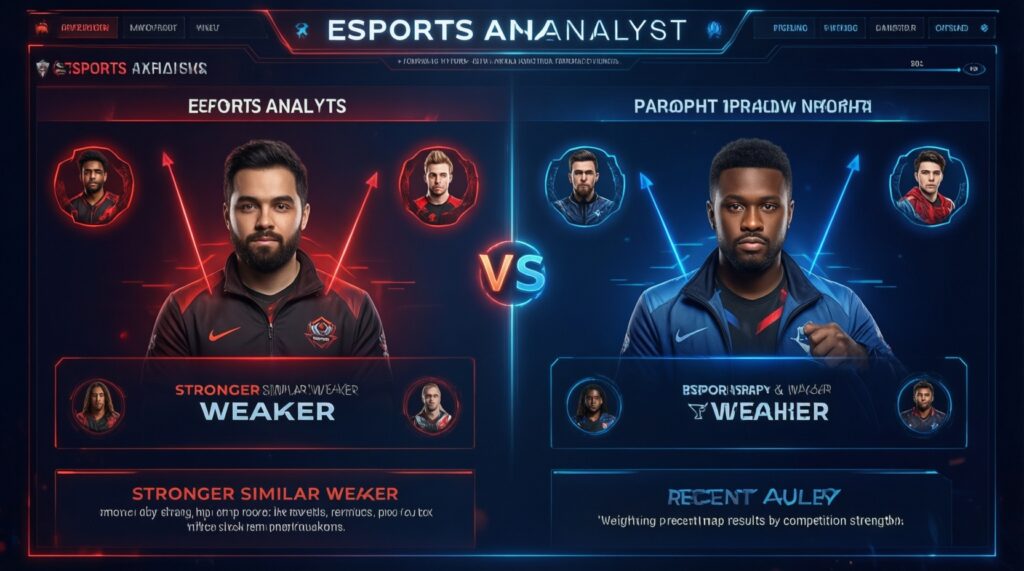
- Tag each opponent as stronger / similar / weaker based on recent results in the same competitive ecosystem.
- When summarizing form, give more weight to maps played vs stronger/similar opponents and less to blowouts vs clearly weaker teams.
Roster Changes and Role Stability: impact of transfers, stand-ins, and IGL shifts
Before you translate stats into a bet, run a roster/roles audit. This directly addresses การเปลี่ยนตัวผู้เล่น CS2 ส่งผลต่อการเดิมพัน: even one player change can alter protocols (mid-round calls, spacing, utility, trading) in ways that invalidate past map stats.
Mini prep checklist (before the steps)
- Confirm the expected five starters for both teams and whether a stand-in is likely.
- Identify IGL and main AWPer for both teams (and whether either changed recently).
- List each player's primary roles (entry, lurk, anchor, rotator, AWPer) and note any swaps.
- Write down the two most likely maps so you can review role impact per map (anchors differ by map).
-
Lock the actual lineup for today's match
Check the most recent official match page and team announcements. If a stand-in is involved, treat historical team stats as partially stale and prefer conservative markets (or pass).
- Red flag: last-minute substitution without prior officials together.
- Red flag: player is traveling/visa issues and may miss warmup or media day.
-
Identify role continuity (not just names)
Verify whether the entry pair, AWPer, and key site anchors stayed the same. Role swaps can keep the "same five" but still change spacing and timings, especially on CT setups.
- If the AWPer changed: reassess opening duel expectations and save patterns.
- If entry changed: reassess T-side pace and trade success on default rounds.
-
Evaluate IGL stability and mid-round structure
A new IGL (or shared calling) often shows up as inconsistent mid-round decisions, weaker late-round utility usage, and more time-pressure executes. Confirm via demos on the likely maps.
- Look for: repeated late executes with little map control, or frequent 3v3 round collapses.
-
Rebuild the map-pool view using only "new-roster" matches
Split the dataset into pre-change and post-change. For map pool and side splits, prioritize post-change matches even if the sample is smaller.
- If the post-change sample is tiny: downgrade confidence, reduce stake, or avoid map handicaps.
-
Translate roster impact into market choice
When uncertainty is high, avoid precise lines (large handicaps) and consider markets that tolerate variance (small handicap, map over/under with a thesis, or no bet).
Key Statistical Indicators: ADR, KAST, opening duel % and round-win splits
Use this as your "reality check" for สถิติทีม CS2 ล่าสุด สำหรับแทงบอลอีสปอร์ต-but only on the maps you expect to be played and primarily from official matches.
- ADR aligns with the player's role: entries and AWPers can be spiky; anchors can be lower but still valuable.
- KAST is a stability proxy: it helps detect whether a team's structure enables trades and survivability.
- Opening duels must be read with context: who takes them, on which side, and whether they're forced by weak defaults.
Result verification checklist (use 5-10 items)
- Map-level stats are checked on the likely maps, not just overall totals.
- You validated at least one recent demo to confirm that ADR/KAST are not inflated by anti-eco farming.
- The team's opening duel pattern matches their style (fast entries vs contact defaults) and is not a one-match spike.
- CT/T round-win splits make sense for the maps involved (don't extrapolate a CT-heavy map to a different environment).
- You noted whether the AWPer's impact is driven by early picks or late-round saves (very different for handicaps).
- Clutch outcomes are treated as noisy: you don't base the whole bet thesis on a few 1vX rounds.
- Eco and force-buy conversions are reviewed at least qualitatively (watch a demo segment) to avoid "scoreboard mirages".
- Stats come from official competitive matches; scrims are not used to justify a price.
Matchup Context: head-to-head, veto patterns and tournament pressure
Most bad bets happen when bettors ignore how the matchup will be played: veto funnels, stylistic counters, and pressure dynamics. Use these common errors as a self-audit before you commit to a line.
- Overvaluing head-to-head without checking whether the rosters and maps were comparable.
- Assuming "better team" equals "better on today's likely maps"; map pool often decides the match.
- Ignoring veto leverage: a team with a strong permaban can still be forced into discomfort if their second ban is weak.
- Reading BO1 results as proof of superiority in a BO3; veto depth changes everything.
- Not separating online vs LAN tendencies when the event environment changes (timeouts, stage pressure, pacing).
- Forgetting tournament incentives: teams may play safer with a lead in groups or take risks when elimination is near.
- Mispricing rematches: teams adapt quickly in CS2, especially in veto and anti-strats.
- Chasing narratives like "momentum" without tying them to map control, trading, and utility usage in demos.
Betting Models and Risk Management: stake sizing, value spotting, and market timing
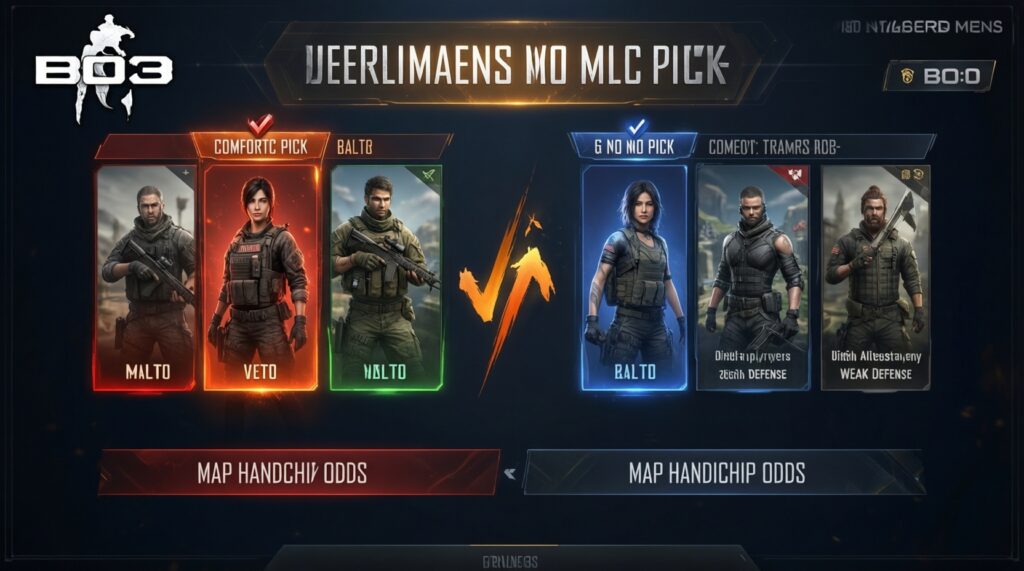
When your edge is modest or the roster situation is unclear, these alternatives can be more appropriate than a straight match winner bet.
- Map-based approach (BO3/BO5): Use a clear veto thesis (comfort pick vs weak defense) and choose "to win a map" or map handicap when the matchup is asymmetric on one or two maps.
- Totals approach: If both teams are strong on the likely maps and the veto suggests close maps, consider map totals rather than picking a winner.
- Wait-for-live confirmation: If you suspect nerves, role confusion, or new protocols, delay entry until you observe pistol-to-gun transitions and mid-round structure for a few rounds.
- Pass as a strategy: If you cannot explain the veto path and roster impact in two sentences, the safest model is no bet-protecting bankroll is part of the edge.
Common Betting Pitfalls and Practical Clarifications
How many matches should I use for recent form without overfitting?
A practical window is the last 8-12 official matches, then down-weight clearly weaker opponents. If the patch or roster changed, prioritize post-change matches even if fewer.
Should I trust scrim results for CS2 betting?
No for pricing a bet. Use scrims only as a soft hint; rely on official matches and demos because incentives, map choices, and information hiding make scrims misleading.
What's the quickest way to use สถิติแผนที่ CS2 (map pool) สำหรับเดิมพันอีสปอร์ต?
Start from likely veto order: each team's permaban and comfort pick. Then validate those maps with recent official performances and at least one demo segment.
How do I interpret opening duel stats if a team plays very slow?
Slow teams may take fewer openings but with higher selectivity. Check whether they lose openings when forced by time pressure, which matters more than the raw count.
When does การเปลี่ยนตัวผู้เล่น CS2 ส่งผลต่อการเดิมพัน the most?
When the IGL or AWPer changes, or when roles are swapped (entry/anchor). Those changes can invalidate historical CT setups, mid-round calls, and opening duel expectations.
Is head-to-head reliable for predicting today's match?
Only if the rosters, maps, and event context are comparable. Treat it as supporting evidence, not a primary signal.
What's one safe rule for stake sizing when uncertain?
Cap your stake when roster stability or map pool clarity is low, or skip the bet. Avoid increasing stake to "compensate" for uncertainty.