


A CS2 skin market crash or boom is usually not random: it's a fast chain reaction between liquidity, platform rules, and crowd attention. To troubleshoot a sudden move before you bet or trade, start with read-only checks: confirm the price/volume anomaly is real, rule out Valve-side changes, then validate macro liquidity and supply/demand catalysts before deciding to buy cs2 skins or stand aside.
Immediate Market Signals to Scan Before Trading
- 5-15 minute "step move": a sharp price jump/drop with thin depth usually means a temporary sweep, not a stable trend.
- Spread blowout: if the best buy and best sell separate abruptly, liquidity is disappearing; reduce size or pause.
- Repeated relists at lower prices: early sign of panic-selling that can develop into a cs2 skin market crash.
- Buy wall shifts: large buy orders moving down in chunks indicates risk-off repositioning rather than genuine demand.
- Cross-item correlation: many unrelated items moving together suggests macro liquidity (FX/crypto/market hours), not item news.
- Single-item decoupling: one skin ripping while peers are flat often points to streamer/pro exposure or a supply squeeze.
Short-Term Price Anomalies and Volume Spikes
- Price jumps in one or two prints and then stalls at a new level.
- Volume spikes without depth (many trades, but the order book looks empty).
- Spread widens suddenly and stays wide longer than a few refreshes.
- "Stair-step" decline where each bounce fails quickly.
- One marketplace diverges while another lags (possible data lag, fees, or withdrawal friction).
Concrete example: You see a popular rifle skin spike quickly, but the buy side is thin and the spread is wide; that pattern is more consistent with a short-lived sweep than a reliable cs2 skins price prediction trend.
Valve Policy Changes and Client-Side Updates
- Check Steam/CS2 client news and patch notes for changes to drops, trade rules, or inventory behavior.
- Verify Steam Community Market status (delays, partial outages, rate limits) before trusting the last traded price.
- Confirm whether the item is trade-hold affected (timers, restrictions) and whether that has changed recently.
- Look for abrupt shifts in listing visibility (filters, wear/float display changes, new sorting defaults).
- Validate that your price source is not caching stale data (compare at least two independent views).
- Re-check currency display and fees (a "price change" can be FX/fee presentation, not real demand).
- Confirm whether sticker/nametag/float details are still indexed consistently (misindexing can distort comps).
- Scan for sudden delist/relist waves following an update (users reacting to perceived rule risk).
- Do read-only spot checks on 3-5 comparable items to see if the move is systemic or isolated.
Concrete example: After a client update, many mid-tier items show wider spreads and slower updates; that often indicates market delays rather than a true cs2 skin market shift.
Macro Liquidity Shifts: Crypto, FX, and Market Hours
When many items move together, treat it as a liquidity event first. Your goal is to determine whether the move is driven by buyers/sellers changing risk exposure (fast), not by item fundamentals (slow).
| Symptom | Possible causes | How to verify (read-only) | How to fix (lowest risk first) |
|---|---|---|---|
| Multiple unrelated skins drop together | Liquidity pullback; market hours shift; risk-off sentiment | Check if broad categories move in sync (rifles/knives/agents), not just one collection | Pause new entries; tighten price limits; reduce size and avoid chasing "bottom ticks" |
| Prices look higher/lower in your currency without clear demand change | FX display effects; fee interpretation; rounding changes | Compare the same item across currencies/markets; confirm fee-inclusive vs fee-exclusive views | Standardize your tracking to one currency and one fee basis; update your comps |
| Weekend/late-night spikes with fast reversals | Thin liquidity; fewer market makers; impulsive buying | Observe spread and depth over several refreshes; thin depth + wide spread = fragile move | Use limit orders; set maximum slippage; wait for normal-liquidity hours to confirm |
| One marketplace leads, others lag | Withdrawal friction; settlement delays; marketplace-specific promos | Check update timestamps, listing counts, and whether transfers are delayed | Don't arbitrate on stale quotes; require confirmation on a second venue before trading |
Concrete example: If knives, rifles, and agents all soften at the same time, treat it as liquidity risk and not "the best cs2 skins to invest in changed overnight."
Supply Dynamics: Fresh Drops, Rerolls, and Float Concentration
- Freeze new buying for one review cycle. Don't average down while the spread is expanding.
- Check listing count direction. Rising listings + falling bids usually means supply is hitting the market.
- Compare nearby wear/float tiers. If only one float band moves, you may be seeing a float concentration squeeze (or release).
- Inspect recent sales cadence. A few aggressive undercuts can "print" a lower last price without real volume behind it.
- Verify substitute items. If close substitutes (same weapon, similar rarity/appeal) are stable, the move may be temporary.
- Set a "no-chase" rule. If price runs away faster than listings refill, wait for a retest rather than market-buying.
- Scale entries. If you still want exposure, split into smaller tranches with strict limit prices.
- Prefer liquid variants. In a drawdown, move toward items with tighter spreads and steadier turnover.
- Only then consider contrarian buys. Attempting to catch a falling market is the highest-risk step; do it only after supply stops expanding.
Concrete example: A "rare float" variant spikes because only a few are listed; once a handful of owners relist, the price mean-reverts quickly.
Demand Catalysts: Streamers, Pro Players, and Tournament Exposure
Escalate when the move is tied to reputation-sensitive events or platform-side constraints, where guessing is expensive.
- Escalate to marketplace support if you see stuck orders, missing listings, settlement delays, or inconsistent balances across pages.
- Escalate to a trusted trader/valuator if the item has complex valuation (pattern/float/sticker) and a viral catalyst is driving hype.
- Escalate your own risk controls if a streamer/pro moment causes a vertical candle: spreads widen, and exits become harder than entries.
- Escalate verification when you cannot reconcile price between venues; treat it as data-quality risk, not opportunity.
Concrete example: A pro uses a specific skin on stream during a tournament; demand surges for hours, but the "fair price" becomes unstable-avoid market orders and require depth confirmation.
Sentiment Diagnostics: Listings, Buy Walls, and Community Chatter
- Track listings vs bids daily. Rising listings with weakening buy walls is early risk for a cs2 skin market crash.
- Watch buy wall behavior. A stable wall supports price; a "stair-step" retreat signals cautious buyers.
- Prefer signals you can see on the book. Community chatter is useful only when it aligns with order flow.
- Avoid single-source narratives. Confirm hype across multiple communities and check whether listings actually tighten.
- Use scenario labels. Tag moves as "liquidity," "policy," "supply," or "hype" to avoid mixing playbooks.
- Predefine your trading mode. If you plan to buy cs2 skins for investment, require tighter spreads and steadier turnover than for short flips.
- Keep a watchlist of comparables. If a candidate item outperforms its peer set without a catalyst, assume mean reversion risk.
- Don't force forecasts. Treat cs2 skins price prediction as a range with invalidation, not a single number.
Concrete example: If chat is bullish but listings keep climbing and buy walls keep stepping down, sentiment is noise and order flow is signal.
Rapid Troubleshooting Checklist for Unexpected Price Moves
How do I tell a real trend from a one-off sweep?
If the spread widens and depth stays thin after the move, it's usually a sweep. A trend is more credible when depth rebuilds and the price holds through multiple refresh cycles.
What's the fastest read-only check before I trade?
Compare the same item's price, spread, and listing count in at least two independent views/venues. If they disagree materially, treat the data as unstable and wait.
Why did my "best cs2 skins to invest in" list suddenly underperform?
Most sudden underperformance is liquidity rotation: buyers shift to safer, more liquid items or exit the category. Re-check spreads, turnover, and whether listings are rising.
When should I assume a cs2 skin market crash is starting?
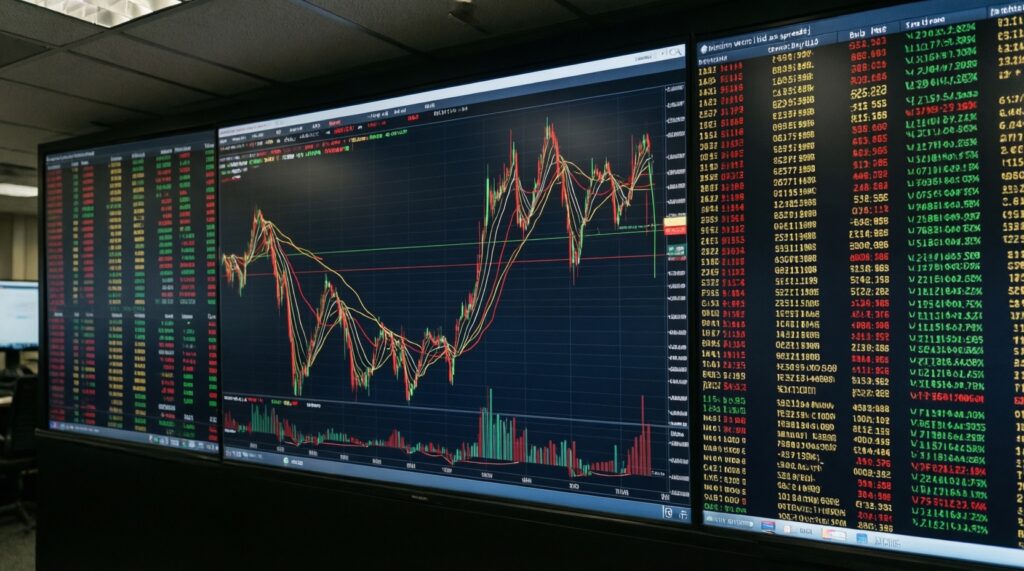
Assume crash risk when many unrelated items decline together, buy walls retreat in chunks, and listings expand at the same time. Don't add size until spreads normalize.
What should I do if a streamer causes a sudden pump?
Use limit orders only and require order-book depth to rebuild before entering. If you're already in, plan exits in tranches because liquidity often disappears after the initial hype.
How can Valve changes affect the cs2 skin market without obvious announcements?
Client-side UI/indexing changes, market delays, or rule adjustments can change listing visibility and trading friction. If many items show odd spreads or stale updates, prioritize platform diagnostics over price calls.
Is it ever safe to buy cs2 skins during a fast drop?

Only after you confirm supply pressure is easing (listings stop rising, bids stabilize) and the move is not driven by platform restrictions. Otherwise, treat early buys as high-risk.