

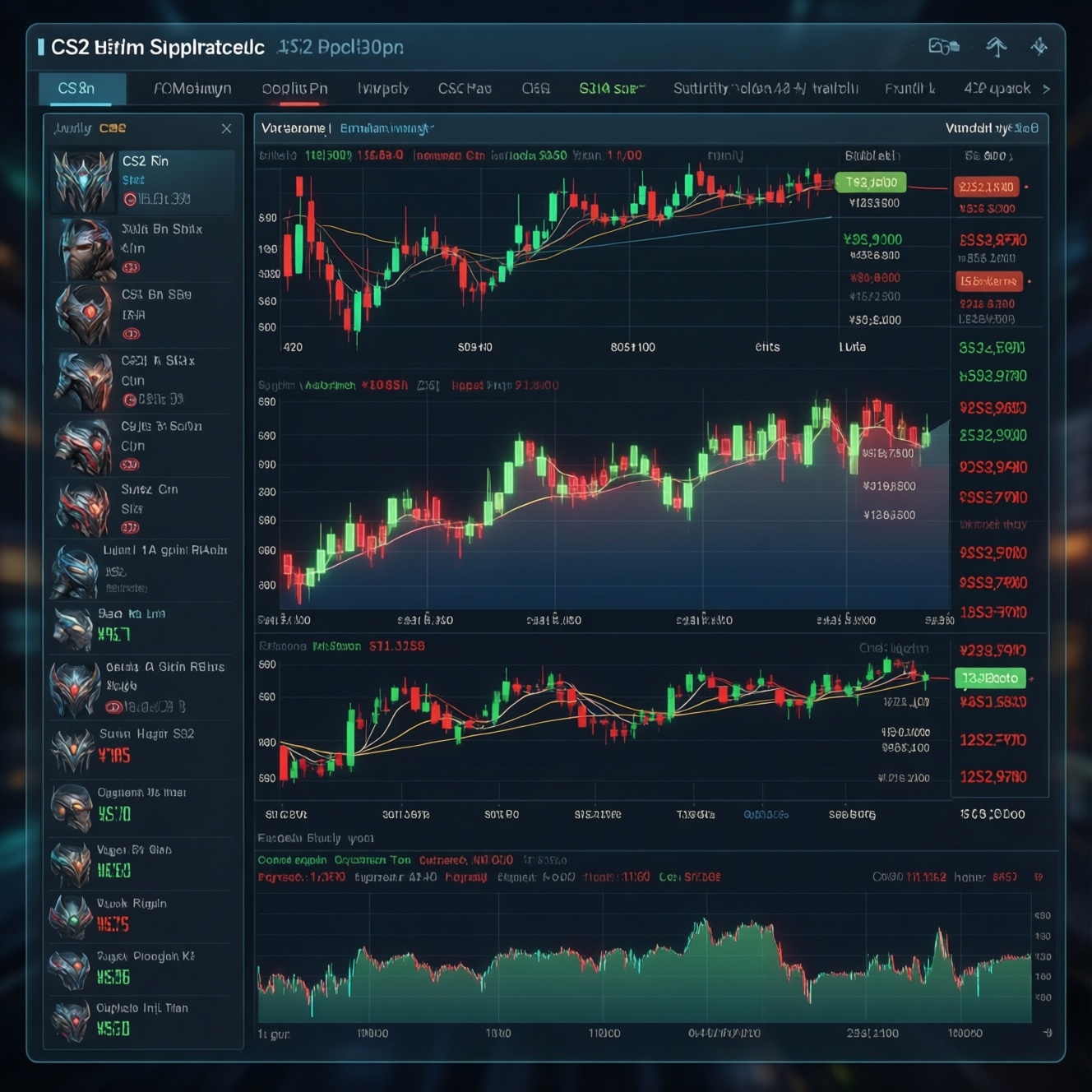
CS2 skin prices move mainly when supply changes (case drops, rarity access), demand shifts (meta weapons, hype cycles), or market microstructure flips (liquidity, listing behavior, floors). If you want actionable moves: track listings vs recent sales, watch update notes for meta impact, monitor case and sticker availability, and avoid buying into momentum without volume confirmation.
Top myths and immediate market signals
- Myth: "A skin is expensive because it's rare." Signal to watch: liquidity-daily sales count and how fast new listings get absorbed on the CS2 skin market.
- Myth: "Float alone determines price." Signal to watch: float matters only within the same finish + wear band; check the discount/premium relative to recent sold prices, not current asks.
- Myth: "Influencer hype equals a new fair price." Signal to watch: volume spikes without sustained follow-through usually mean a short-lived ceiling, not a new floor.
- Myth: "Cases only go up long term." Signal to watch: CS2 cases price reacts to drop availability, opening incentives, and broad risk-off selling; watch sudden listing floods.
- Myth: "Updates only affect the weapon being buffed." Signal to watch: loadout reshuffles can move multiple skins and stickers through shared usage patterns.
Debunking pervasive myths about skin valuation
Skin valuation in CS2 is the market-clearing result of marginal buyers meeting marginal sellers, not a fixed "intrinsic value." In practice, the price you see is shaped by the cheapest available listings, how many people are actively buying, and whether alternative substitutes exist (another finish, another weapon, another wear tier).
A useful boundary: separate collectible pricing (scarcity narratives, long holding periods, fewer daily sales) from utility pricing (popular weapons, loadout visibility, steady turnover). Utility-driven items respond faster to patches and meta shifts; collectible-driven items respond more to hype waves and supply news.
For actions, stop treating "listed price" as truth. Use a three-point check before you buy CS2 skins: (1) recent sold price trend, (2) sales frequency (how many sales per day), and (3) listing depth near the current lowest ask (how many items are stacked within the next small price steps).
| Price driver | What you can measure quickly | Typical time horizon | Actionable move |
|---|---|---|---|
| Case supply (drops/availability) | Listing count trend; speed of undercutting; spread between buy orders and asks | Weeks to months | Avoid chasing after a sharp run-up; prefer consolidation + stable absorption before entries |
| Rarity access (case opening incentives) | Relative demand for "cheap lottery" cases; sudden volume shifts on cases vs skins | Days to weeks | When opening demand spikes, watch for "case up, contents lag" opportunities-or the reverse |
| Hype cycles (influencers/collector runs) | Volume spike vs baseline; number of new listings; how fast walls get bought | Hours to days | Only buy breakouts that hold with steady sales; otherwise treat as scalp territory |
| Patches & meta changes | Usage shifts (weapon popularity), not just patch notes; correlated moves in related skins | Hours to weeks | Buy the "second-order" winners (supporting loadout items) after initial panic settles |
| Stickers & crafting (trade-ups/collector sets) | Availability signals (discontinued feel), listing thinness, set completion demand | Weeks to months | Don't buy thin markets at peak hype; stagger buys and target high-liquidity sticker tiers |
| Market microstructure (liquidity/floors) | Sales per day, bid support, depth at floor, undercut rate | Minutes to days | Enter where bids support the floor; exit into thinning demand and rising undercuts |
Case drops, rarity distributions and long‑term trend dynamics
Cases are a supply-and-expectations instrument: they're cheap to list, easy to stack, and heavily influenced by perceived future availability. CS2 cases price often moves before the skins inside do, because traders can reposition faster in cases than in illiquid high-tier skins.
- Drop availability sets the baseline supply. When more cases flow in, floors soften; when supply feels constrained, floors harden.
- Rarity distribution controls "lottery appeal." Players respond to perceived odds-to-cost, shifting opening demand between cases.
- Opening demand is cyclical. Hype around specific knives/gloves or finishes can temporarily pull demand into one case family.
- Cases transmit sentiment fast. In risk-off moments, stacked holders list quickly, creating sudden supply walls.
- Watch the case-to-contents lag. If cases spike but the popular outputs (play skins) don't, the move may be speculative and fragile.
- Listing depth matters more than one "lowest price." A thin floor can gap upward; a thick floor can absorb buys and stall rallies.
Hype mechanics: influencers, collector runs and momentum spikes
Hype is not random; it's a repeatable pattern where attention arrives faster than supply can reprice. Your edge is recognizing whether the move is liquidity-driven (temporary) or preference-driven (stickier demand).
- Streamer spotlight on a finish or loadout theme. Expect a fast spike in CS2 skin prices, followed by undercutting as holders list into attention.
- Collector run on a narrow attribute. Examples include specific patterns, very clean wears, or "matching" sets-these can gap because supply is thin, but exits are also thin.
- Momentum bots and fast flippers. They push breakouts when recent sales print higher, but they also vanish when spreads widen.
- Cross-item contagion. A popular rifle skin can pull in related stickers, charms, or complementary pistol skins as people rebuild loadouts.
- Fear-of-missing floor formation. When buyers stop waiting for dips, floors lift-until new listings catch up.
Action rule: treat any hype move as unconfirmed until you see sales frequency stay elevated while listing depth near the floor does not balloon.
How patches, weapon balance and feature changes transmit to prices
Updates reprice skins through usage: if a weapon enters the meta, more players want "their" version of it, and demand ripples into matching cosmetics. The market reacts first to headlines, then to the reality of what people actually equip.
Upsides: how to trade updates without guessing narratives
- Map the weapon's ecosystem. If a rifle rises, check its common pairings (sidearm, gloves, stickers that match popular themes).
- Focus on liquid items for the first wave. Higher sales-per-day lets you enter/exit with less slippage during volatile repricing.
- Buy the "confirmation dip." After the initial spike, many items retrace when flippers take profit; stable post-dip floors are often safer entries.
Limits: why patch trading fails even when you are right
- Consensus is priced fast. By the time "everyone knows," the upside is often in the spread, not the skin.
- Second-order effects are messy. Buffing one weapon can reduce usage of another, dragging its skins down even if they look unrelated.
- Market-wide risk changes dominate. When the whole CS2 skin market is selling off, even "good news" items can stall.
Stickers and cosmetics interplay: scarcity, meta loadouts and trade‑ups
Stickers move differently from skins because they can be consumed (applied) and because collectors value specific combinations. CS2 stickers price often behaves like a thin collectible market: fewer listings, bigger gaps, and sharper reversals when hype fades.
- Mistake: Buying a sticker because "it's old," ignoring liquidity. Fix: check how many sell per day and how wide the spread is before committing size.
- Myth: "Any discontinued sticker must go up." Fix: demand is concentrated in a few logos/teams/aesthetics; most stickers are not broadly desired.
- Mistake: Pricing stickers off the highest listing. Fix: anchor to recent sold prints; thin markets are easily manipulated by a few listings.
- Myth: "Applied stickers permanently add their full value." Fix: crafts trade at a discount because buyers don't share the same taste and can't recover sticker value cleanly.
- Mistake: Ignoring loadout meta. Fix: when a weapon becomes popular, sticker demand can shift toward that weapon's common skins and color themes.
Market structure: liquidity, listing strategies and floor formation

Most pricing mistakes come from confusing the floor with a single cheap listing. A real floor forms when buy-side demand repeatedly absorbs listings at a level, and sellers stop undercutting aggressively because items sell quickly enough.
Use a simple, repeatable workflow before you buy CS2 skins (or scale into any position):
- Check recent sold trend: are sales printing flat, higher, or lower than yesterday's cluster?
- Check sales frequency: does it sell multiple times per day, or is it a "one sale every so often" item?
- Check listing depth near the lowest ask: is there a thin floor (few items) or a thick wall (many items close together)?
- Check spread: if the gap between bids and asks is large, assume you'll pay a liquidity tax to exit.
Mini-case: deciding whether a spike is safe to buy
Scenario: a popular creator highlights a specific rifle finish. The item jumps quickly, and you're tempted to chase. Here is a practical decision script you can reuse.
if (sales_per_day is rising) and (floor_listings are not rising faster than sales):
    consider small entry near post-spike consolidation
else:
    wait; treat move as hype-only and expect mean reversion

if (spread widens) or (undercut rate accelerates) or (new listings flood in):
    avoid adding; plan exit into rebounds, not into the drop

for stickers tied to the same theme:
    only follow if sticker liquidity is acceptable (steady sales), not just low listing count
This is where "CS2 skin prices" become predictable: not by guessing the next narrative, but by reading liquidity, depth, and follow-through in real transactions-especially during hype windows.
Targeted clarifications and uncommon edge cases
When should I buy CS2 skins: during a spike or after it cools?
Prefer after it cools: look for a consolidation where sales stay steady but undercutting slows. Spikes are tradable only if volume remains elevated and listing depth near the floor stays thin.
Why do CS2 cases price sometimes move while the skins inside barely change?
Cases are easier to reposition and are driven by expectations about future availability and opening demand. Contents can lag because high-tier skins are less liquid and reprice more slowly.
Do low-float skins always outperform average floats?
No; float premium depends on the specific finish, wear band, and how many buyers care. In low-liquidity items, you may struggle to realize the premium on exit.
Is it safer to focus on liquid items in the CS2 skin market?
Yes for most intermediates: higher liquidity reduces slippage and makes pricing more reliable. Illiquid collectibles can outperform but punish bad entries and forced exits.
What actually drives CS2 stickers price spikes?
Thin listing depth plus sudden attention (team nostalgia, craft trends, influencer showcases) can gap prices quickly. The move is more durable when sales frequency rises, not just the lowest listing.
Can updates move prices even if the patch notes don't mention skins?
Yes; weapon balance, map changes, and feature tweaks change what players equip, which shifts demand for matching cosmetics. Watch what people use in practice, not only what's written.
How do I avoid overpaying when I buy CS2 skins from listings?
Anchor on recent sold prices, not the cheapest current ask. If the spread is wide or the floor is thick with undercuts, assume the "best" listing is not a stable market price.