


CS2 skin prices move mainly because updates change demand (what looks good or feels strong), supply shifts (cases, drops, trade locks), and events compress time (limited windows that trigger FOMO). Treat the market like a micro-economy: each patch rewrites utility, each case rewrites scarcity, and each hype cycle rewrites trader behavior.
Market Snapshot: Core Forces Behind CS2 Skin Prices
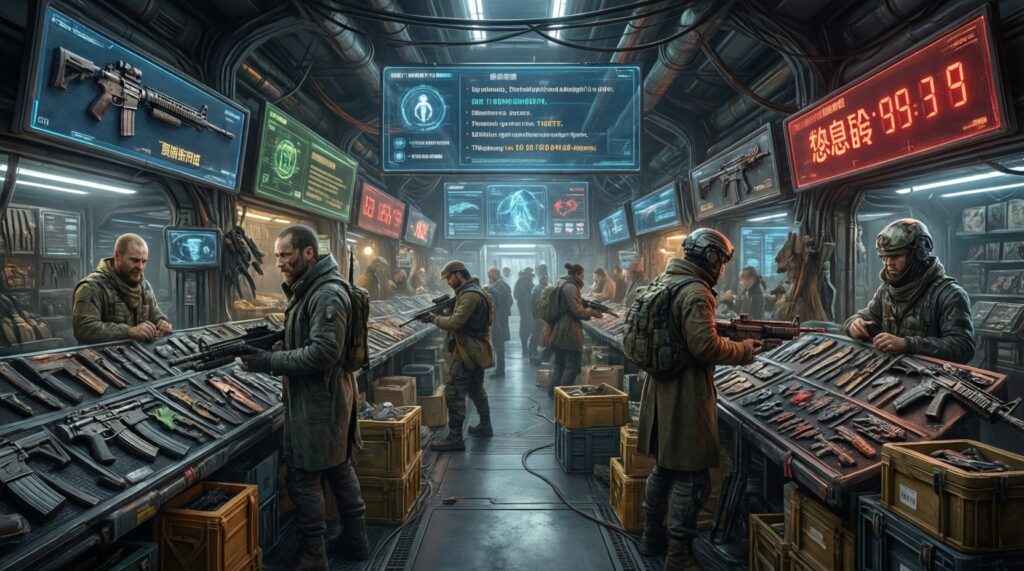
- Utility re-pricing: patches and meta shifts can make specific weapons and finishes more desirable overnight.
- Supply schedule: case releases, rotations, and drop pool changes alter how fast new units enter the market.
- Time pressure: events and limited items concentrate buying into short windows, amplifying volatility.
- Market plumbing: liquidity, trade holds, fee structures, and cross-market arbitrage affect the "real" clearing price.
- Behavioral cycles: influencer coverage and bot-driven repricing can push short-term overshoots and snap-backs.
Patch Impacts: How Game Updates Reprice Skins
Definition: Patch-driven repricing is the price change that happens when CS2 updates alter perceived value, not the underlying quantity of skins. It's primarily a demand shock: players and traders rebalance their inventories toward items that "fit" the new gameplay, visuals, or status signals.
What counts as a patch impact: weapon balance changes (pick-rate shifts), animation/sound/visual updates that change how a skin looks/feels, and UI/inspect changes that improve (or degrade) presentation. It also includes indirect effects like map pool changes that shift weapon usage patterns.
What it is not: a pure supply event (new case, drop pool change) or a pure calendar event (major, operation-like hype). In practice, updates often bundle multiple shocks, so isolate the dominant driver before you trade.
Mini case example (pattern): a weapon becomes more popular after a balance update; within hours, high-liquidity skins for that weapon typically see faster repricing than illiquid collectibles, because traders can rotate capital quickly.
| Trigger | Primary shock type | Typical immediate reaction | Common follow-through | Best confirmation signal |
|---|---|---|---|---|
| Balance/visual patch | Demand | Fast spread widening; quick relist reprices | Mean-reversion if hype fades; trend if meta sticks | Weapon pick-rate + sustained buy pressure across multiple markets |
| New case release | Supply + attention | Sell pressure on older mid-tier items as capital rotates | New items stabilize after early overpricing; older items can recover | Volume normalization after initial spike; narrowing spreads |
| Major/event window | Time + narrative | FOMO pumps in "theme" items; liquidity concentrates | Post-event cooldown; winners keep premium if scarcity is real | Post-window retention: price holds despite falling volume |
Supply Dynamics: Cases, Drops, and Rarity Distribution
Supply is the slow force that decides whether a price move can last. Even strong demand can't hold a level if new supply keeps arriving faster than buyers absorb it. Use this mental model to map where new units come from and how quickly they can hit the market.
- Case introductions: a new case redirects opening activity and attention, which can temporarily drain demand from older skins.
- Drop pool changes: when availability shifts, the market reprices based on expected future inflow, not just current listings.
- Rarity tier distribution: higher tiers are more sensitive to whale demand and less sensitive to casual selling, but can be illiquid.
- Trade holds and listing frictions: delayed deliverability reduces effective supply in the short term, raising volatility.
- Float and pattern segmentation: "same skin" is not one product; special floats/patterns behave like separate micro-markets.
- Capital rotation: when traders chase a new shiny set, they often liquidate mid-tier inventory first, creating broad dips.
Event Mechanics: Limited Releases, Rotations, and Hype
Events create compressed decision windows. Prices can detach from fundamentals because participants optimize for timing, not value. These are common scenarios where event mechanics dominate:
- Short-lived narrative themes: a tournament/creator spotlight makes certain weapons "the moment," pulling demand forward.
- Limited-time availability: items perceived as time-gated often pump before the end of the window, then cool off after.
- Rotation rumors: speculation about what leaves or enters circulation can move prices before any confirmation.
- Bundle effects: when many traders chase the same category, adjacent items rise too (sympathy moves).
- Post-event liquidation: investors who "bought the story" sell into late buyers; this is where sharp reversals happen.
Speculation & External Factors: Marketplaces, Bots, and Influencers
External mechanics often explain why two markets show different prices at the same time, and why "ราคาสกิน CS2 วันนี้" can look inconsistent across platforms. Speculation amplifies every other driver by speeding up repricing.
Upside: why these forces can help efficient traders
- Better discovery of fair value: liquid marketplaces tighten spreads and make arbitrage possible when prices diverge.
- Faster reaction time: repricing tools and active traders absorb information quicker than casual buyers.
- More exits: if you know ขายสกิน CS2 ได้ที่ไหน and understand fee/withdrawal constraints, you can choose the best route for liquidity vs. net proceeds.
Limits: what can mislead you
- Bot-driven "paper prices": automated relists can create the illusion of a new level without real buying.
- Influencer spikes: attention can front-run fundamentals; late entries often pay the premium.
- Cross-market friction: fees, withdrawal rules, trade locks, and currency conversion block clean arbitrage.
- Platform risk and policy changes: marketplace rule shifts can alter liquidity and spreads immediately.
Quick practical tips (for Thailand-based traders)
- Decide your objective first: "สะสม/เล่น" vs. "เทรด" leads to different acceptable spreads and holding times.
- Net price > headline price: compare after fees and withdrawal constraints before deciding เทรดสกิน CS2 เว็บไหนดี.
- Don't chase the first candle: wait for the second wave (retests) unless you have a strict stop and fast exit plan.
- Use liquidity tiers: keep most capital in high-volume items; limit exposure to rare floats/patterns.
- Plan entries like a buyer: for ซื้อสกิน CS2 ราคาถูก, set target levels and place bids during off-peak hours and post-hype cooldowns.
Quantitative Signals: Price Metrics, Volume, and On-chain/Off-chain Data
Intermediate traders often lose money not because they ignore data, but because they read the wrong data or read it at the wrong time. Avoid these common mistakes and myths:
- Myth: "One market price = the truth." Different venues reflect different fees, liquidity, and constraints; reconcile them before acting on "ราคาสกิน CS2 วันนี้".
- Mistake: ignoring spread and depth. A price print without order-book depth is not tradable size; thin books reverse violently.
- Mistake: treating volume spikes as bullish by default. Volume can be distribution (selling into hype), not accumulation.
- Myth: "Rarity always means safety." Illiquid rarity can trap you; the exit can cost more than the entry advantage.
- Mistake: mixing timeframes. Patch reactions can be hours; supply effects can be weeks; don't apply one playbook to all.
Tactical Approaches: Timing, Hedging, and Position Sizing for Traders

A practical way to trade CS2 skin economics is to separate signal (what changed) from execution (how you enter/exit). Use a simple ruleset so you don't improvise during volatility.
Mini case: deciding whether to buy after a patch
Scenario: a patch increases a weapon's popularity. You see prices jump on multiple markets, but spreads widen. The goal is to avoid buying the very top while still participating if the meta persists.
if patch_changes_weapon_usage == true:
  watchlist = top_liquid_skins_of_weapon
  wait for: (spread narrows) AND (price holds above pre-patch range)
  entry = scale_in 2-3 tranches
  risk = cap position size for illiquid variants
  exit = partial take-profit into spikes; keep runner only if demand persists 3-7 days
Opening cases vs. buying: how to decide
When you ask "เปิดเคส CS2 คุ้มไหม", treat it as entertainment first and finance second. If your objective is inventory value, buying targeted skins usually gives cleaner pricing and better control; case opening adds randomness and typically higher friction for "value capture."
Trader self-check before you place an order
- Can I explain the move as patch, supply, or event-and name the dominant driver?
- Did I compare net proceeds across venues (fees/withdrawal/trade locks), not just the visible price?
- Is the item liquid enough that I can exit without donating to the spread?
- Do I have a predefined invalidation point (what would prove I'm wrong)?
Trader Concerns and Clarifications
Why do prices jump right after a patch and then fade?
Early repricing is often driven by attention and thin liquidity, not stable demand. If the meta change doesn't persist, prices tend to mean-revert once listings refill.
Is it better to buy immediately when "ราคาสกิน CS2 วันนี้" starts moving?
Not always. Waiting for spread narrowing and a second wave of buyers/sellers usually gives a more reliable entry than chasing the first spike.
Where should I sell if I'm asking "ขายสกิน CS2 ได้ที่ไหน"?
Choose based on net proceeds (fees), speed, and buyer depth for your specific item tier. High-liquidity venues suit fast exits; niche venues may pay more for rare floats but can take longer.
How can I "ซื้อสกิน CS2 ราคาถูก" without taking big risk?
Target liquid skins, place bids rather than market-buying, and buy during post-hype cooldowns. Avoid illiquid variants unless you can hold longer and accept wider spreads.
"เปิดเคส CS2 คุ้มไหม" if I'm trying to grow inventory?
For inventory growth, it's usually a less controlled path because outcomes are random and selling the result can be costly. Treat case opening as paid variance; buy specific skins when you want predictable exposure.
How do I decide "เทรดสกิน CS2 เว็บไหนดี" for my strategy?
Match the venue to your item tier: deep liquidity and fast settlement for common items, specialized demand for collectibles. Always compare fee structure, withdrawal constraints, and typical spreads.