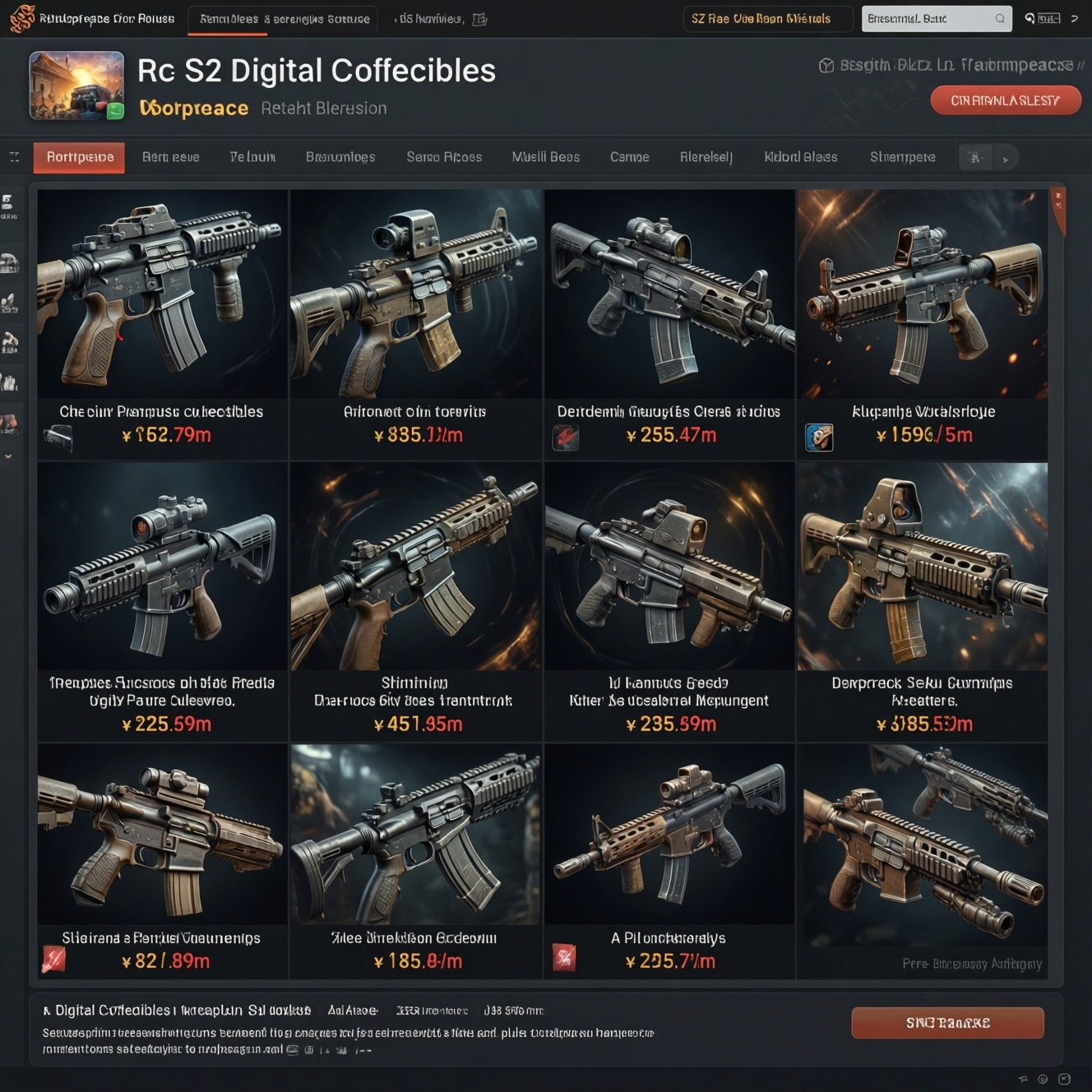


To improve CS2 skin betting outcomes, price each skin as a bundle of probability (how likely you are to land it), condition (float/wear), and rarity/collectibility (e.g., StatTrak, Souvenir, limited supply). Use a repeatable checklist and position sizing so a single bad roll on CS2 skin betting sites cannot wipe your bankroll.
Core Principles: How Odds, Wear, and Rarity Drive Skin Value
- Separate "game odds" (what can drop) from "market odds" (what actually trades with liquidity at your target price).
- Float is a pricing multiplier, not a cosmetic detail; tight float bands can outperform rarity in short windows.
- Rarity tiers set the ceiling, but collectibility tags (StatTrak/Souvenir) often set the floor.
- Model expected value with conservative assumptions and fees; treat every input as uncertain.
- Risk control (caps, stop-loss rules, diversification) matters more than any single "best CS2 skin betting strategies" list.
Understanding CS2 Odds: Drop Rates vs Market Probability
Who this is for: intermediate traders and bettors who already understand float, basic rarity tiers, and marketplace mechanics, and want to formalize decisions for CS2 skin betting.
When you should not do it: if you cannot track every bet/trade, if you must "chase losses," or if you rely on unverifiable "guaranteed" odds claims from CS2 skin betting sites. Also avoid it when you cannot withdraw and sell skins reliably in your region (including Thailand) within your planned time horizon.
Practical distinction:
- Drop/roll odds: the chance a case/contract/roll yields an item class. You often can't verify exact rates, so treat them as uncertain inputs.
- Market probability: the chance you can exit near a price level given liquidity, spreads, and fees. This is observable via recent sales, order book depth, and time-to-sell.
Float and Wear Explained: Precise Effects on Price and Demand
What you need before you price anything:
- A float inspection method: in-game inspect link + a reputable float viewer, or marketplace listings that show float explicitly.
- A pricing reference: recent sold prices (not only listings), plus current buy orders to estimate your true exit price.
- A simple "CS2 skin odds calculator" worksheet: a notes app or spreadsheet where you store inputs: entry price, expected exit, fees, probability assumptions, and your maximum loss per position.
- Fee map: know where fees apply (deposit, trade, sell, withdraw). If you can't quantify fees, treat them as "high" and reduce position size.
- Liquidity check: confirm the skin actually trades often enough for your timeline (same-day, week, month).
| Factor | What to measure | Practical ranges (rule-of-thumb) | Typical price impact direction | Common pitfall |
|---|---|---|---|---|
| Odds (roll/drop vs market) | Your assumed hit rate + ability to sell quickly | Use conservative assumptions; treat "house odds" as uncertain | Lower hit rate or weaker liquidity reduces fair entry price | Believing published odds without checking withdrawal and sellability |
| Float / wear | Exact float value + wear label | FN / MW / FT / WW / BS; prioritize tight float bands within a label | Better float tends to increase demand, especially near "clean" thresholds | Pricing only by wear label and ignoring float distribution within the label |
| Rarity tier | Collection tier + supply visibility | Higher tier usually means fewer units and higher volatility | Sets long-term ceiling; higher tiers can move faster both ways | Confusing "rare" with "easy to sell" |
| Collectibility tags | StatTrak, Souvenir, special event/limited runs | Tag premiums vary by weapon, skin popularity, and float band | Often increases floor if buyers specifically want the tag | Overpaying for the tag on illiquid, unpopular skins |
Rarity Tiers and Collectibility: StatTrak, Souvenir, and Limited Runs
Risks and limitations to accept upfront (risk-aware):
- Odds may be opaque; any "calculator" output is only as good as your assumptions.
- Float premiums can vanish if supply increases or demand shifts to a different skin.
- Withdrawal restrictions, trade holds, and fees can turn a "paper profit" into a real loss.
- Illiquidity is a hidden risk: you can be right on value and still lose on execution.
-
Classify the skin into a "value stack" (base + multipliers).
Write the skin as: Base Skin (collection/weapon) + Wear/Float + Tag (StatTrak/Souvenir) + Special supply narrative (limited/event). This prevents you from paying twice for the same "rarity story."
- Base Skin: popularity + how many comparable substitutes exist.
- Multipliers: float band, tag, and any truly limited attribute.
-
Anchor to the most liquid comparable sale.
Pick a comparable with recent sold history and adjust only one variable at a time (float or tag or tier). This is the quickest way to estimate CS2 skin value by wear and rarity without guessing.
-
Quantify float premium using brackets you can defend.
Use a small set of float brackets (e.g., "top of wear label," "middle," "bottom") and compare sold prices inside the same skin and tag. If you can't find enough comps, treat float premium as zero.
-
Evaluate StatTrak and Souvenir as separate markets.
StatTrak and Souvenir buyers often behave differently than "regular" buyers. Price them against their own tag comps first, then sanity-check against non-tag liquidity.
- If tag sales are sparse, reduce position size and widen your expected time-to-exit.
-
Decide whether you are betting on odds or on execution.
If the edge comes from a roll (true "CS2 skin betting"), demand a high margin of safety. If the edge comes from execution (buying mispriced float/tag), focus on fast exits and minimal fees.
-
Set entry and exit levels before placing the bet or trade.
Define (a) maximum entry, (b) target exit, and (c) time stop (when you exit even if price is flat). This makes performance measurable across different CS2 skin betting sites.
Price Modeling: Quantifying Odds, Wear, and Rarity Together
One simple, practical model (use conservative inputs):
Expected Value (EV) ≈ (P_hit × Net_Exit) − Entry − Friction
- P_hit: your assumed probability of landing the desired tier/skin (use a conservative assumption; if unknown, assume worse than advertised).
- Net_Exit: expected sell price minus selling fees (use buy-order price for a conservative estimate).
- Friction: extra costs and slippage (withdrawal fees, spread, trade holds, time cost). If you cannot estimate it, treat friction as "material" and lower Net_Exit.
Mini examples (illustrative only):
- Float edge example: Two identical skins, same tag; the 0.03 float sells reliably near the top of the recent sold range, while 0.07 sits unsold. Your "edge" is execution (buying the 0.03 at a 0.07 price), not higher odds.
- Tag edge example: A Souvenir version has fewer recent sales but stronger collectors. You size smaller and set a longer time stop because liquidity risk is higher even if the upside looks better.
Result verification checklist (use before every position):
- I can explain whether my edge comes from odds, float, tag, or liquidity execution in one sentence.
- I checked recent sold prices (not only listings) for at least one close comparable.
- I used a conservative Net_Exit (e.g., buy-order equivalent or discounted sale price).
- I included all fees and at least one slippage assumption.
- I confirmed withdrawal/trade constraints for the specific platform and my account region.
- I wrote my entry, target, stop-loss (price or time), and maximum holding period.
- I sized the position so a full loss does not break my weekly/monthly limit.
- I avoided double-counting rarity (e.g., paying a premium for both "rare tier" and "limited" without evidence).
- I can exit in at least one alternative venue if the first exit path dries up.
Risk Management: Mitigating Volatility in Skin Betting

Common mistakes that destroy bankrolls in CS2 skin betting:
- Using published odds as certainty instead of an assumption with error bars.
- Ignoring liquidity: buying the "right" skin in the wrong float/tag where it rarely sells.
- Chasing losses with larger bets (negative progression) after a bad run.
- Letting one platform's withdrawal rules dictate your entire strategy.
- Overpaying for marginal float improvements without proving buyers pay for it.
- Mixing long-term collector holds with short-term betting bankroll (time horizon mismatch).
- Failing to cap exposure to a single collection, tag type, or one high-tier outcome.
- Not defining a time stop; capital gets trapped in "almost liquid" inventory.
- Relying on a single pricing snapshot instead of checking sold history and buy orders.
Actionable Tactics: Entry, Exit, and Position Sizing for Skins
Alternatives that often beat pure betting, depending on your edge and constraints:
-
Execution-first float sniping (low-odds dependence).
Appropriate when you can consistently find mispriced float within the same wear label and flip near buy-order supported levels.
-
Tag-focused micro-portfolio (StatTrak/Souvenir) with smaller sizing.
Appropriate when you understand collector demand and accept slower exits; diversify across multiple liquid bases instead of one "hero" item.
-
Event-driven holds with strict time stops.
Appropriate when you have a clear catalyst (e.g., attention shift) and a pre-set exit window; not appropriate if you need guaranteed liquidity.
-
Market-neutral discipline: trade less, track more.
Appropriate when your data quality is low; pause betting, build a comp database, and only deploy when your EV estimate stays positive after conservative friction.
Answers to Common Market and Trading Concerns
Is CS2 skin betting the same as trading skins for profit?

No. CS2 skin betting depends on outcome probability (rolls), while trading focuses on execution, spreads, and timing. The skills overlap, but bankroll risk is typically higher in betting.
How do I choose among CS2 skin betting sites without relying on hype?

Prioritize clear withdrawal rules, predictable fees, and proven sellable inventories over promised odds. If you can't test a small withdrawal end-to-end, don't scale.
Do I really need a CS2 skin odds calculator?
You need a consistent way to write assumptions and compute EV after fees. A simple spreadsheet is enough; the goal is discipline, not perfect precision.
What matters more: rarity tier or CS2 skin value by wear and rarity (float/wear specifics)?
Rarity sets the general range, but float and tag often decide whether you can sell quickly at your target. If liquidity is thin, wear/float selection becomes more important than tier.
What are the best CS2 skin betting strategies for intermediates?
Strategies that win tend to be risk-controlled: small sizing, conservative EV estimates, and fast exits on liquid skins. Avoid strategies that require "hitting" one rare outcome to be profitable.
How should I set a stop-loss for skins when prices don't move like stocks?
Use a mixed stop: a price stop (exit if buy orders fall below your threshold) and a time stop (exit if it doesn't sell within your planned window). This limits both drawdown and trapped capital.
When should I avoid betting entirely and just hold cash?
When fees are unclear, withdrawals are constrained, or spreads widen so much that conservative Net_Exit makes EV negative. No bet is a valid position.