

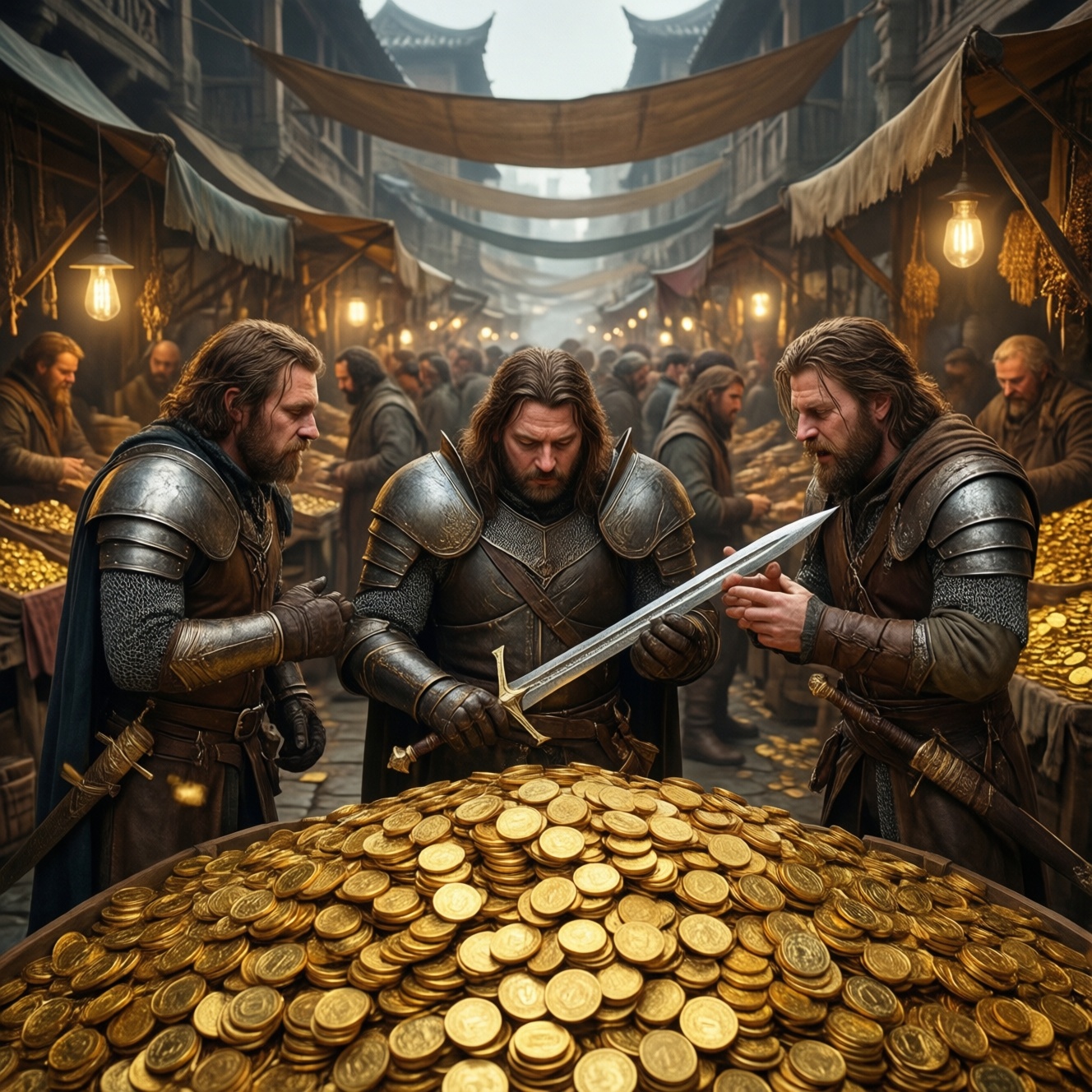
An in-game economy is the system of rules that creates, distributes, trades, and removes currencies and items-so prices emerge from player demand, item supply, and how fast money enters versus leaves the game. When currency creation outpaces sinks, inflation appears: the same sword costs more coins, and "cheap top-ups" feel less valuable.
Snapshot: How In-Game Economies Operate
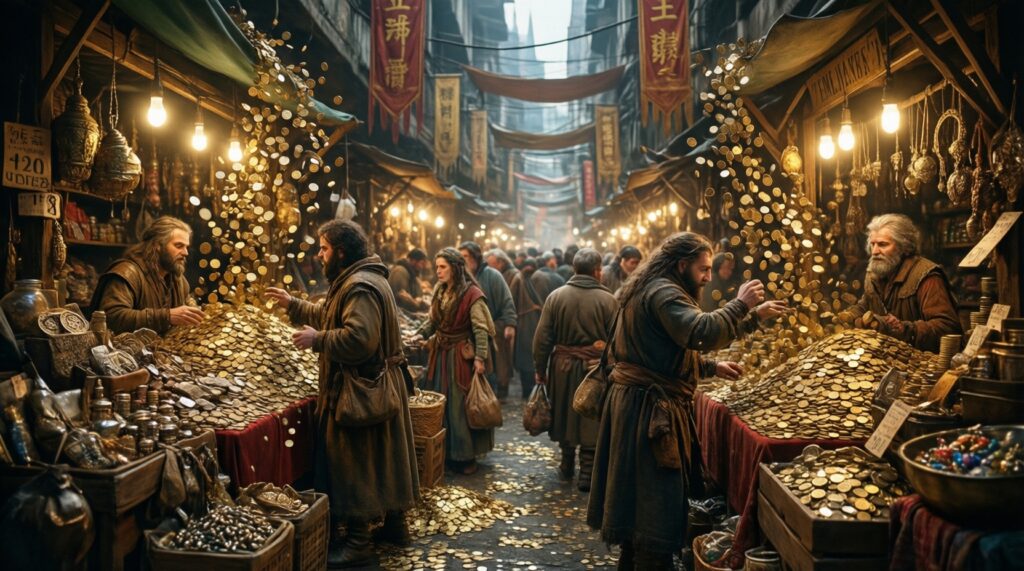
- Prices move when item supply (drops, crafting, shop stock) changes faster than demand (build meta, events, player goals).
- Currency sources (quests, farming, daily rewards) must be balanced with sinks (upgrades, taxes, durability, gacha pulls).
- Inflation is usually "too much currency per active player," not "greedy traders."
- Market design (auction house vs direct trade vs fixed NPC prices) determines how quickly information becomes price.
- Player behavior (hoarding, flipping, guild control) can create local monopolies and temporary shortages.
- Developers steer value with drop tables, caps, binding rules, and time gates-often more effectively than price controls.
Common Misconceptions About Virtual Economies
Myth 1: Developers "set" market prices. Developers set constraints (drop rates, trade rules, fees). Players set most live prices through repeated trades in a ตลาดซื้อขายไอเทมเกม or any player-to-player system.
Myth 2: Inflation means an item became rarer. Often the opposite: the item supply can be stable while the currency supply rises, so the sticker price climbs. Your coins are weaker; the item didn't "change."
Myth 3: Cheaper top-ups automatically make items cheaper. When players search เติมเงินเกมราคาถูก, total spending can increase-and if the game converts paid currency into tradeable value, prices may rise because more currency competes for the same limited drops.
Myth 4: "Cheap item buying" is always a bargain. Searching ซื้อไอเทมเกมราคาถูก can be rational, but low prices can also signal oversupply (event flood), upcoming nerfs, higher ban risk (policy violations), or poor resale liquidity.
Fundamentals of Supply and Demand in Game Markets
- Supply is controlled by faucets. Drops, craft outputs, shop restocks, event rewards, and account-bound freebies determine how many items exist.
- Demand is driven by usefulness. Meta builds, PvP seasons, new bosses, and content gates change "must-have" lists overnight.
- Time cost is part of price. If farming takes 2 hours, players price items against the best alternative gold-per-hour activity.
- Information spreads price. Auction history, streamer advice, and guild spreadsheets reduce mispricing and tighten margins.
- Substitutes cap extremes. If Potion A becomes expensive, players switch to Potion B, pushing A down unless B is also constrained.
- Transaction friction matters. High listing fees, trade limits, and delivery delays reduce flipping and slow price discovery.
Currency Creation, Sinks, and How Inflation Appears
Inflation shows up when currency enters the economy faster than it is removed, especially among active traders. Typical scenarios:
- Event farming loops: limited-time mobs or dungeons that print currency faster than intended, then players carry that wealth into the permanent market.
- Daily/AFK reward scaling: rewards accumulate across many accounts, while sinks stay flat, increasing currency per seller in the market.
- Paid-to-trade leakage: premium currency becomes indirectly tradeable (via giftable packs or tradable outputs), pushing more money into item bidding.
- Weak sinks in late game: once players finish upgrades, repair and crafting costs stop absorbing currency, so wealth piles up.
- Bot-driven farming: automated currency generation increases supply of money and farmed goods, distorting "normal" player time value.
| Economic lever | What it changes | Common player-visible symptom | Fast developer mitigation |
|---|---|---|---|
| Currency faucet (quests, drops, dailies) | Total money supply | Everything in the market costs more coins | Reduce payouts, add diminishing returns, cap repeatable rewards |
| Currency sink (upgrade fees, taxes, repairs) | Money removal rate | Rich players keep getting richer; low sinks feel "free" | Add/raise scalable fees tied to activity (enhance, listing, teleport) |
| Item faucet (drop rates, craft yields) | Item supply | Specific items crash in price after events | Adjust drop tables, add binding, reduce event saturation |
| Trade friction (fees, limits, binding) | Liquidity and flipping | Harder to arbitrage; prices vary more by time | Increase fees for fast relists, add trade cooldowns, limit gifting |
Player Behavior, Market Structures, and How Prices Form
Price formation depends on both how players behave and what market tools exist.
- Hoarding: players store scarce items as "value," reducing circulation and causing short-term spikes.
- Flipping: traders buy underpriced listings and relist higher; this speeds price correction but can feel predatory.
- Guild control: organized groups can temporarily corner a material by buying out listings or farming a spawn schedule.
- Patch speculation: rumors and preview notes move prices before any real supply/demand change happens.
- Auction house: high transparency, faster convergence to a single market price, easy to measure inflation.
- Direct trade only: fragmented prices, higher scam risk, slower discovery; "cheap" deals exist but require time.
- NPC fixed prices: stable for basics, but can create exploits if buy/sell spreads are wrong.
- Real-money gray markets: when players try ขายไอเทมเกมได้เงินจริง or แลกเงินเกมเป็นเงินไทย, it can shift incentives toward farming-for-cash, which pressures both inflation and scarcity-plus it often conflicts with game rules.
Design Tools Developers Use to Control Scarcity and Value
- Binding rules (bind on pickup/equip): reduces resale loops and protects progression pacing; overuse can kill market liquidity.
- Drop-rate shaping: move supply across time (steady vs event bursts) to avoid boom-bust pricing.
- Progression-linked sinks: fees that scale with item level or player power remove more currency from the players who generate the most.
- Trade taxes and listing fees: remove currency and discourage excessive relisting; set them wrong and the market "freezes."
- Caps and throttles: limits on daily farming, crafting, or transfers; useful against bots but can punish legitimate grinders.
- Controlled substitutes: introduce alternative items (slightly weaker) to prevent single-item monopolies during meta shifts.
Monitoring Metrics and Immediate Responses to Economic Drift

Keep the economy stable by watching a small set of signals and reacting with minimal, reversible changes before doing big reworks.
- Track money per active trader: if it rises week-over-week while sinks are flat, expect broad price inflation.
- Track median prices for a fixed basket: pick common consumables + mid-tier gear + key materials; it's your "CPI."
- Track faucet/sink ratio: total currency created vs destroyed per day; trend matters more than any single day.
- Check concentration: if a small group controls most listings of a material, price shocks are likely.
// Mini playbook for a sudden price jump (auction-house economy)
if (basketMedianPrice ↑ and currencyPerActiveTrader ↑) {
  // classic inflation
  increaseScalingSinks();          // e.g., higher enhance or listing fees at high tiers
  reduceRepeatableFaucets();       // e.g., nerf top gold-per-hour loop, add diminishing returns
} else if (specificItemPrice ↑ and listingsCount ↓) {
  // scarcity shock
  buffTargetedSupply();            // adjust drop/craft yield or add temporary alternative sources
  limitHoardingIncentives();       // binding changes, cooldowns, or event design tweaks
} else if (priceSpread ↑ and tradeVolume ↓) {
  // market is freezing
  reduceFriction();                // lower fees, improve UI info, adjust trade limits carefully
}
Concise Answers for Designers and Advanced Players
How do I tell inflation from real scarcity?
If many unrelated items rise together, it's usually inflation (currency pressure). If only one category spikes while substitutes stay stable, it's usually scarcity or a meta shift.
Does searching เติมเงินเกมราคาถูก affect in-game prices?
Indirectly, yes-if paid value becomes tradeable or boosts farming efficiency. More currency chasing the same limited items tends to push market prices up.
Is ซื้อไอเทมเกมราคาถูก a reliable strategy?
It works when you understand why the price is low (oversupply, end-of-event dump, nerf risk). Without that context, "cheap" often turns into low liquidity or future devaluation.
What happens when players try ขายไอเทมเกมได้เงินจริง?
It increases incentives to farm specifically for resale, which can destabilize both currency and item availability. It can also violate game terms and create enforcement risk for accounts and transactions.
Can you safely แลกเงินเกมเป็นเงินไทย without affecting the economy?
Any conversion path that rewards farming with outside value reshapes player behavior toward extraction. Even if it's off-platform, the in-game effects show up as farmed supply spikes and currency imbalance.
What's the single most useful metric for a ตลาดซื้อขายไอเทมเกม?
Track a stable "basket" median price over time alongside currency created vs destroyed. Together they explain most broad shifts faster than individual item drama.