

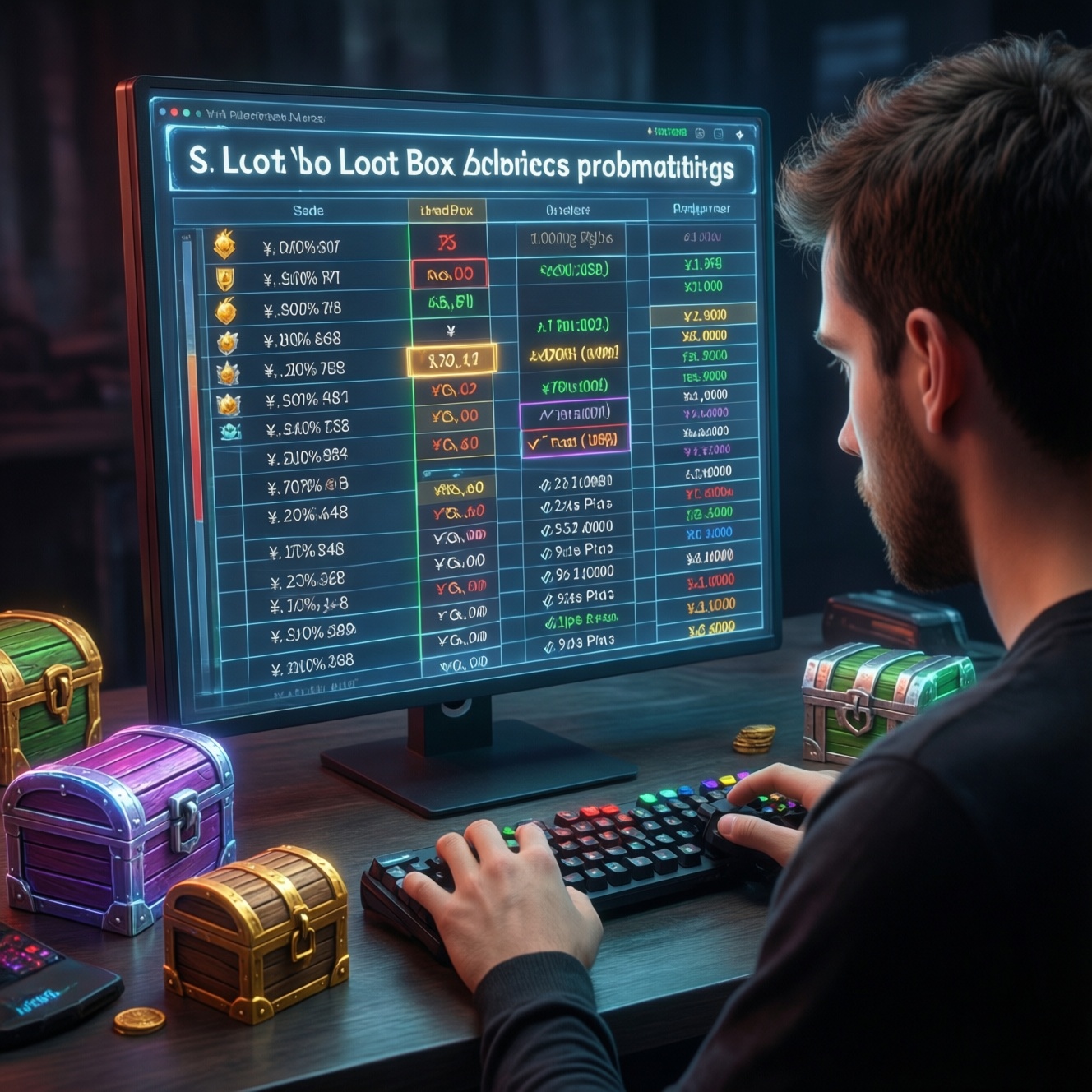
To interpret loot box odds, treat published drop rates as inputs for a simple expected value (EV) model: multiply each reward's probability by the value you personally assign, then subtract the price. Adjust for rarity tiers, pity/guarantees, and bundle discounts. This turns "loot box odds" into a decision rule for whether to buy loot boxes.
Understanding the Essentials of Loot Box Probabilities
- "Loot box drop rates" are usually long-run averages, not a promise for your next opening.
- EV depends on your own valuations (what you would pay for each item), not just rarity labels.
- Bundled boxes change EV mainly through price per box and any bundle-only guarantees.
- Pity systems can increase EV, but only if you understand triggers, resets, and what is guaranteed.
- Short runs are noisy: "I opened 20 and got nothing" is compatible with fair odds.
- A simple spreadsheet or loot box probability calculator is enough for most decisions.
How Drop Rates Are Calculated and Reported
Who this is for: players who want a practical way to compare boxes, events, and bundles using the disclosed probabilities rather than vibes.
When not to do this: if you cannot assign a personal value to rewards (or you only care about one specific cosmetic), EV will feel misleading; you should instead compute "chance to get my target within N openings" and set a strict budget cap.
- Typical reporting formats: per-item probabilities, tier probabilities (e.g., "Epic: x%"), or combined "featured pool" probabilities.
- What "rate up" usually means: conditional probability within a tier (featured item share inside "Epic"), not necessarily an increase to the overall Epic tier rate.
- Common hidden complexity: separate pools by region, platform, time window, or player state (first-time boxes, event boxes, returning-player bonuses).
Interpreting Official Probability Disclosures from Publishers
Before calculating loot box expected value, gather the exact terms the publisher discloses for the box you're evaluating.
- What you need:
- In-game disclosure page (odds screen) for the specific box/event.
- Price per box and any bundle pricing (including "bonus boxes").
- Rules for pity/guarantees: trigger count, what is guaranteed, whether counters reset, and whether duplicates are possible.
- What to verify in the disclosure:
- Are probabilities per opening, or per bundle?
- Do tier rates sum cleanly to 100% (allowing for rounding)?
- Is a "guaranteed rare+" stated as replacing an outcome or adding an extra roll?
- Are featured items listed with individual odds, or only within-tier shares?
- Access tips: if the odds screen is in Thai or abbreviated, screenshot it and rewrite it as a clean list of outcomes with probabilities; errors here propagate into every calculation.
Calculating Expected Value (EV) for Single and Bundled Boxes
EV is the long-run average value per opening, given "loot box drop rates." Use it to compare offers, not to predict your next result.
-
List outcomes and probabilities
Create a table of rewards (or tiers) and their probabilities per opening. If the publisher only gives tier odds, start with tiers and refine later if you have per-item odds.
- If odds are shown "within Epic," convert to overall probability: P(item) = P(Epic) × P(item | Epic).
-
Assign a personal value to each outcome
Use your own "would pay" value (in THB or your platform currency) for each outcome. For duplicates, decide a consistent rule: value as conversion currency, resale value, or zero if duplicates are useless to you.
-
Compute EV per opening
Use the formula: EV = Σ (pᵢ × vᵢ). This is the average value you expect from one box.
-
Compute net EV vs price
Net EV = EV − PricePerBox. If Net EV is negative, you're paying more than your average value received (by your own valuations).
- If the box grants extra items (e.g., a guaranteed currency pack), include those as additional outcomes with probability 1.
-
Evaluate bundles correctly
For a bundle of N boxes at total price B: EV(bundle) = N × EV(single) unless the bundle changes mechanics (guarantees, bonus rolls, different pool). Net EV(bundle) = EV(bundle) − B.
Concise comparison table (drop rates vs EV examples)
| Scenario | What you use from disclosure | EV calculation shape | Best for | Main pitfall |
|---|---|---|---|---|
| Tier-only odds shown | Tier probabilities (e.g., Common/Rare/Epic) | EV = Σ P(tier) × V(tier) | Quick comparisons across boxes | V(tier) hides big differences between items in the same tier |
| Per-item odds shown | Probability for each item | EV = Σ P(item) × V(item) | Accurate EV for your preferences | Time-consuming; duplicate rules can dominate results |
| Bundle with discount only | Same odds, lower price per box | EV(bundle) = N×EV; Net EV improves via lower B/N | When you planned to open many anyway | Discount can mask still-negative Net EV |
| Bundle with guarantee/pity change | Trigger count and guarantee definition | EV requires adjustment for forced outcomes | Event banners with milestones | Misreading "replaces vs adds" and reset conditions |
Fast mode (3-5 steps)
- Copy the official loot box odds for the exact box and write them as outcomes you can multiply.
- Assign values only to outcomes you actually care about; set duplicates to your real duplicate value.
- Compute EV = Σ(p×v), then Net EV = EV − price per box (or per bundle box).
- Adjust for pity/guarantees only after you confirm triggers, resets, and whether they add or replace rolls.
- If Net EV is negative and the target-item chance is low, don't buy loot boxes-set a budget or skip.
Adjusting EV for Rarity Tiers, Pity Systems and Guaranteed Drops

- Confirm whether "guaranteed rare+" replaces one roll (changes the distribution) or adds an extra roll (adds value on top).
- Check pity trigger details: fixed count (e.g., every N opens), escalating odds, or milestone rewards.
- Verify what resets the pity counter (getting a high-rarity item, switching banners, time window ending).
- Model "guaranteed after N" as a minimum outcome at opening N, not as a flat probability bump on every opening.
- If the guarantee is "random item from a tier," value it as the average value of that tier under your duplicate rules.
- Separate "featured" from "standard pool" if featured items matter to you; compute P(featured) explicitly.
- Account for duplicate protection (if stated): reduced probability of repeats changes both EV and variance.
- Include non-item rewards (currency, shards, crafting mats) with probability 1 when they always drop.
Variance, Sample Size and What Short-Term Results Mislead
- Assuming your short streak proves the odds are wrong; small samples swing wildly even under fair rates.
- Confusing "tier chance" with "specific item chance" (especially when "rate up" is conditional within a tier).
- Using community-reported openings as if they were controlled data; different pools, pity states, and events distort results.
- Ignoring duplicates: if duplicates are near-zero value for you, EV can be much lower than it looks.
- Mixing currencies or prices (THB vs platform credits) without converting consistently.
- Forgetting bundle effects: bonus boxes can improve EV, but only if odds/pools are identical and guarantees are understood.
- Interpreting "loot box drop rates" as independent when pity systems intentionally create dependence across openings.
- Optimism bias: focusing on the jackpot value while ignoring the high probability of low-value outcomes.
Quick Practical Tools: Simulations, Spreadsheets and Decision Rules
If the disclosure is complex, use one of these approaches depending on what you need.
- Spreadsheet EV model - best when you want transparency and quick edits; build columns for outcome, probability, value, and p×v.
- Monte Carlo simulation - best when pity/guarantees create state-dependent outcomes; simulate many runs to see distribution (not just average).
- Target-item probability planner - best when you only care about one cosmetic; compute probability of ≥1 success within N opens and stop at a budget cap.
- Loot box probability calculator (sanity check) - best for quick verification of "chance within N," but only after you confirm the calculator matches the game's pity/guarantee rules.
On-the-spot decision checklist
- I have the official loot box odds for this exact box (not a different banner or region).
- I know whether guarantees add an extra roll or replace an outcome.
- I converted any within-tier "rate up" into overall probability for the item I care about.
- I assigned realistic values (including duplicate value) and computed loot box expected value and Net EV.
- I checked bundle pricing per box and any bundle-only mechanics.
- I set a hard spend limit before I buy loot boxes, and I stop when I hit it.
Player Questions on Odds Interpretation
Are published loot box odds the chance I'll get something in my next box?
They are long-run probabilities per opening under the stated rules. Your next result can still be low-value even when odds are correct.
What's the difference between loot box drop rates and "rate up"?
Drop rates are the overall probabilities; "rate up" often means a higher share within a tier. Convert it to an overall item probability before comparing boxes.
How do I calculate loot box expected value if I only have tier odds?
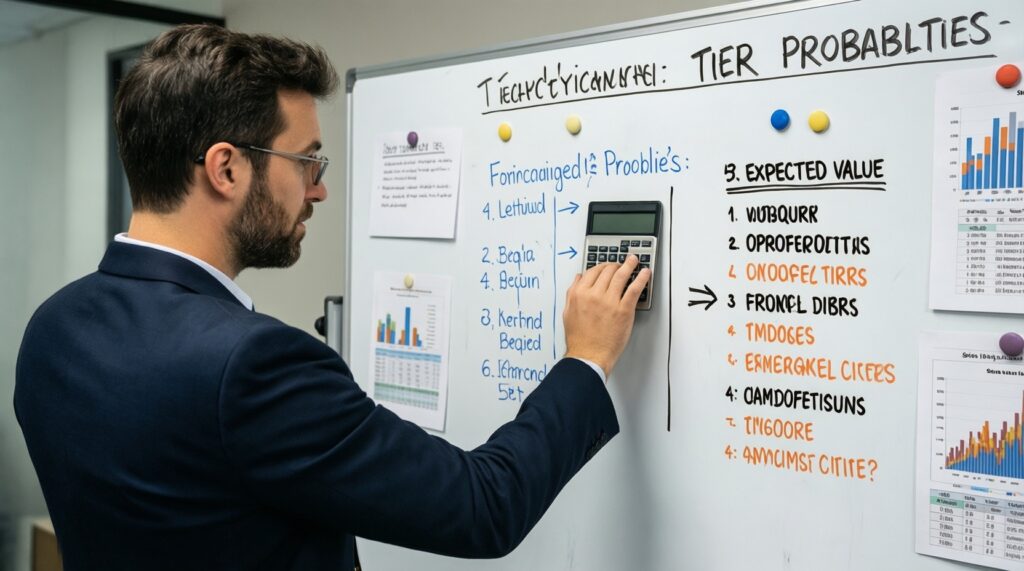
Assign an average value to each tier under your duplicate rules, then compute EV = Σ P(tier)×V(tier). It's a quick approximation for comparing offers.
Do bundle deals always improve EV?
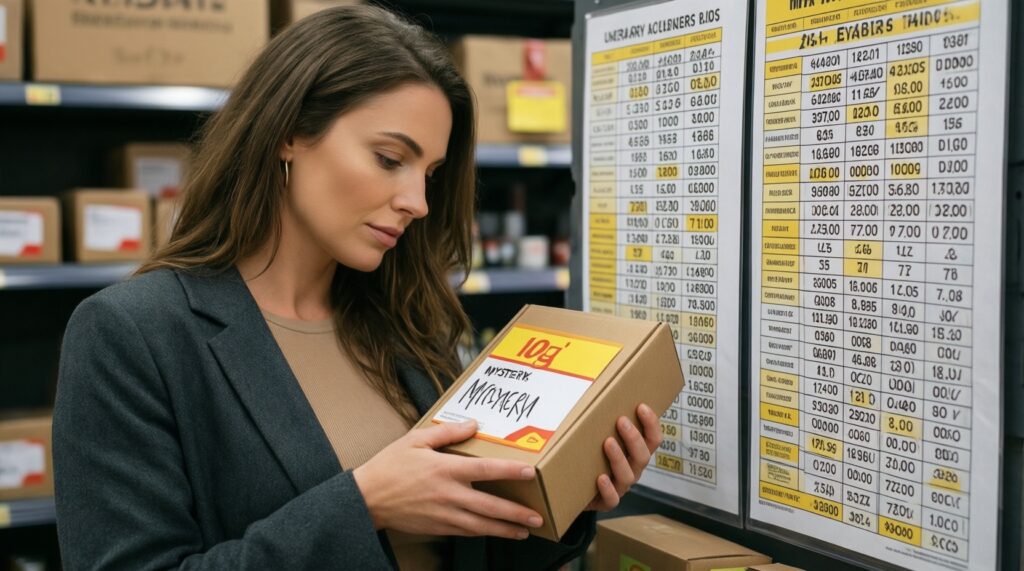
Only if the price per box drops and the odds/pool are unchanged, or if the bundle adds meaningful guarantees. A discount can still leave Net EV negative.
Can I rely on a loot box probability calculator I found online?
Only if it supports the game's exact mechanics (pity triggers, resets, guarantees). Otherwise it may produce confident-looking but wrong results.
Why do my results feel worse than the stated odds?
Variance makes short sessions swing negative, and duplicates can destroy value. Re-check that you're using the correct pool and that you didn't misread within-tier odds.