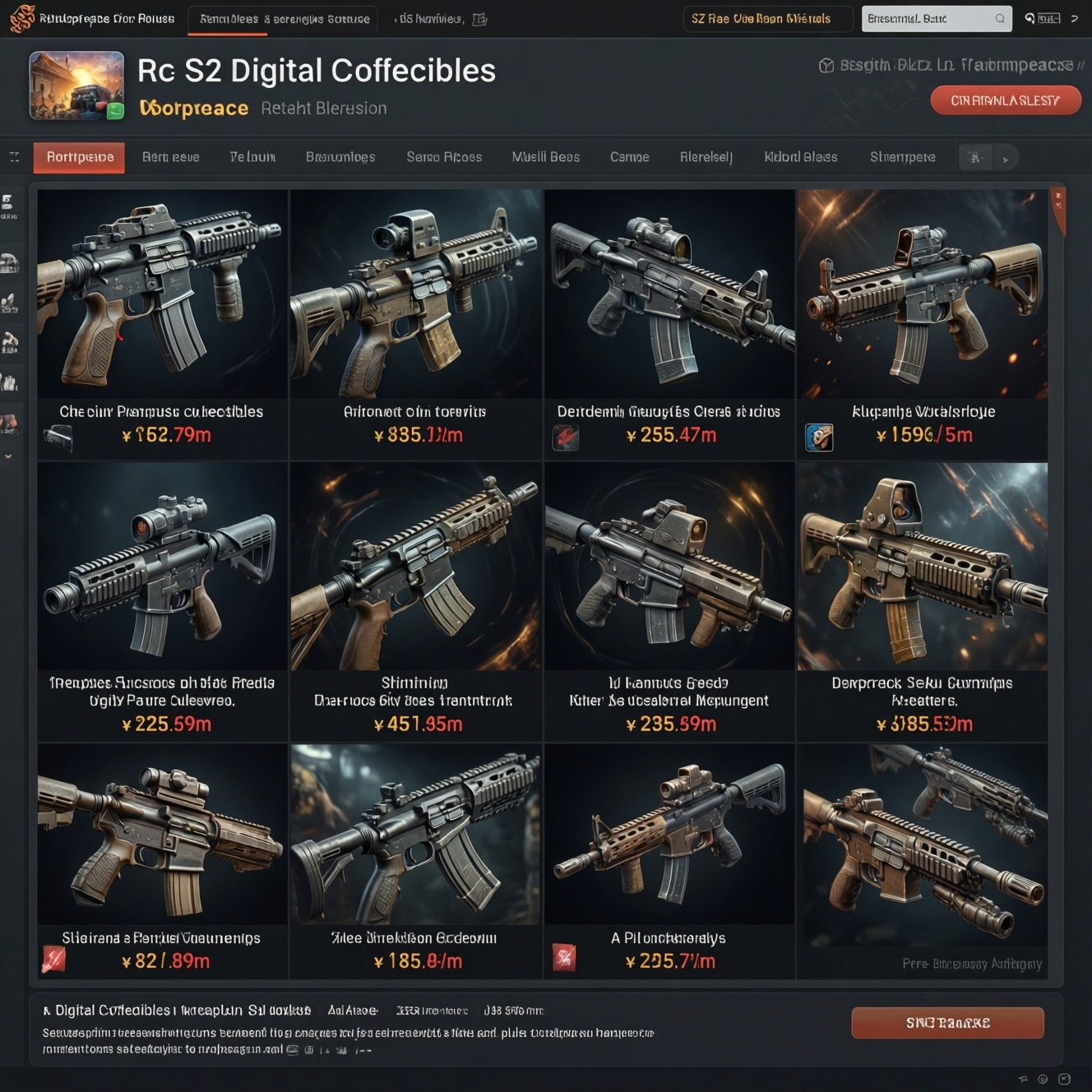

Virtual item prices in an in-game economy emerge from three forces: how fast items enter the world (supply), how strongly players want them (demand), and how acquisition odds are perceived (drop-rate expectations). If you can model supply channels, read demand signals, and tune game item drop rates, you can predict price swings and prevent runaway inflation.
Core Mechanisms: Supply, Demand and Drop-Rate Interplay
- Supply sets the floor: more item inflow pushes prices down unless demand grows faster.
- Demand sets the ceiling: meta shifts and social status can spike willingness to pay even with constant supply.
- Drop rates shape beliefs: perceived rarity (not only true rarity) changes hoarding, flipping, and engagement.
- Market rules create friction: fees, taxes, listing limits, and bind rules change effective supply and liquidity.
- Sinks stabilize: repairs, upgrades, crafting consumption, and time-limited drains counter item accumulation.
- Grey markets react to constraints: when players want to buy game currency, external trading pressure rises.
How Drop Rates Create Scarcity and Shape Player Expectations
Drop rate is the probability that an item appears from a defined source (enemy, chest, mission reward, gacha pull) under stated conditions. In price terms, drop rate controls the expected acquisition cost (time, effort, risk, or currency) and therefore the minimum price many players accept when selling.
Scarcity is not just "low probability." It is the combination of probability and attempt volume. If an item has a low drop chance but millions of attempts occur daily, supply can still be high. Conversely, moderate drop chances can still produce scarcity if attempts are gated by stamina, keys, lockouts, or endgame difficulty.
Players price based on perceived rarity: UI messaging, streamer narratives, patch notes, and visible drop animations all shift expectations. When expectations diverge from reality, you get hoarding (if players think drops were stealth-nerfed) or panic-selling (if players expect a buff or event rerun).
Practical recommendations:
- Design and communicate drop rules so players can form stable expectations (clear sources, conditions, and event boundaries).
- Gate the number of attempts as deliberately as the probability (cooldowns, keys, difficulty tiers).
- Audit perception drivers (announcements, VFX, "limited" labels) as if they were economic levers.
Supply Sources: Loot Tables, Crafting Systems and Developer Inputs
Supply is the net inflow of tradeable items. In practice, each supply channel behaves differently and needs different tuning knobs.
| Supply channel | Typical economic effect | Best tuning options | Common failure mode |
|---|---|---|---|
| Random loot tables (mobs, chests) | Continuous inflow; creates baseline market volume | Drop chance, attempt gating, pity/duplicate protection, difficulty scaling | Farm loop floods market; prices collapse; bots dominate |
| Guaranteed rewards (quests, achievements) | Stepwise supply spikes; predictable supply schedule | One-time flags, account/character limits, reward rotation, bind-on-pickup | Alt-account farming; supply multiplies |
| Crafting output (player production) | Supply responds to margins; can amplify inflation if inputs are abundant | Recipe costs, failure rates, time gates, input scarcity, durability/consumption | Crafting becomes money printer; materials too easy |
| Event vendors / battle pass | Short-term supply shock; strong expectation effects | Token earn-rate, purchase caps, time windows, item variants, tradability rules | Post-event crash; players feel bait-and-switch |
| Cash shop / premium exchange | Supply tied to spending; can anchor prices for convenience items | Price points, daily limits, trade restrictions, exchange rates, anti-arbitrage rules | Pay-to-win perception; currency arbitrage and inflation |
| Developer grants (compensation, promotions) | Unplanned injection; can break scarcity narratives | Bind items, provide substitutes, stagger distribution, target affected segments | Permanent value damage to rare items |
Mechanically, you can treat expected supply per day as:
Supply/day ≈ Attempts/day × DropChance × TradableShare
- Attempts/day: controlled by time, stamina, keys, matchmaking, and difficulty.
- DropChance: the probability within the loot table (including pity systems).
- TradableShare: binding rules, account restrictions, and destruction/consumption before listing.
Practical recommendations:
- Separate "fun drops" from "market drops": keep exciting loot, but gate tradable versions or require crafting conversion.
- When you increase supply, increase sinks in the same patch window (not weeks later).
- Add anti-bot pressure on the attempt layer (rate limits, detection, diminishing returns), not only on prices.
Demand Signals: Utility Value, Status Items and Shifting Metas
Demand is players' willingness to spend time or currency for an item now rather than later. In real markets, demand moves faster than supply because it can change instantly with strategy content, patch notes, or social proof.
- Power utility: items that improve win rate or progression speed (best-in-slot, upgrade materials).
- Time-saving utility: teleport scrolls, crafting accelerators, consumables that reduce grind.
- Status and identity: cosmetics, rare titles, limited skins; prices track prestige more than usefulness.
- Meta shifts: buffs/nerfs, new raids, new characters; yesterday's "junk" becomes today's core component.
- Speculation: players buy ahead of events and hoard if they expect drop reductions or future sinks.
A compact way to reason about demand pressure is:
WTP (willingness to pay) ≈ UtilityValue + StatusValue − SubstituteAvailability − WaitingCost
Practical recommendations:
- Publish clear substitute paths (alternative crafts, pity tracks) to prevent single-item choke points.
- When you change meta, forecast which items become bottlenecks and pre-empt with caps or staged rollouts.
- Track "waiting cost" (lockouts, event timers) because it spikes demand even without power creep.
Market Mechanics: Auctions, Listings, Brokers and Grey Markets
Before evaluating pros and limitations, apply the model to realistic scenarios where players trade, speculate, or exit to external marketplaces.
Mini-scenarios you can map to your game this week
- Patch-day spike: an item becomes required for a new build; listings thin out; virtual item prices jump before new farming routes are discovered.
- Event vendor shock: an event sells a previously scarce cosmetic; price collapses; collectors shift to the next scarce item.
- Currency pressure: if progression is slow, more players try to buy game currency; this strengthens RMT incentives and pushes developers to add legitimate sinks and exchange paths.
Benefits of common market designs:
- Auction house: improves price discovery; reduces negotiation overhead; increases liquidity for mid-tier items.
- Fixed-price listings: simpler mental model; good for high-volume consumables; easier to regulate via fees.
- Brokers/OTC trading: supports high-value items and bundles; reduces listing sniping; can enable verified trades.
- Bound / partially bound items: limits speculation; preserves progression integrity; keeps "earn it" prestige.
Limitations and trade-offs:
- Low friction enables flipping: instant relisting and minimal taxes let traders front-run normal players.
- Hard caps create shadow pricing: strict price ceilings move trade to chat, brokers, or grey markets.
- Thin markets are noisy: a few whales can move prices; players misread this as "drop rate changes."
- External marketplaces respond to scarcity: when players search for the best place to buy in-game items, it often indicates missing in-game exchange options or poorly tuned sinks.
Practical recommendations:
- Use transaction taxes + relist cooldowns to dampen flipping without punishing legitimate sellers.
- Prefer soft controls (fees, friction, bind rules) over rigid price caps that encourage off-platform trading.
- Instrument "failed purchase attempts" and "time-to-fill" to detect liquidity problems early.
Design Levers for Stability: Sinks, Caps, Events and Rate Tuning
Most economy problems come from treating one lever (usually drop rates) as the only fix. Stability comes from coordinated changes across inflows, outflows, and trading friction.
- Mistake: only nerfing drops to fight inflation. If currency and materials keep accumulating, prices can still rise; players just feel more grind.
- Mistake: adding supply without durable sinks. Events and passes inject items fast; without consumption, long-run prices trend down and progression is trivialized.
- Myth: rarity guarantees value. If an item is rarely useful, demand collapses and price follows.
- Mistake: ignoring substitute creation. New crafting recipes can unintentionally replace a whole tier of items and crash that market.
- Myth: "the market will self-correct". In games, players can quit, hoard, or move to RMT instead of equilibrating.
Practical recommendations:
- Balance with a three-part patch checklist: (1) supply change, (2) sink change, (3) market-friction change.
- Use time-limited sinks during events (upgrade boosts that consume items) to absorb supply shocks.
- When tuning game item drop rates, change attempt gating first when you want smoother outcomes than pure probability edits.
Diagnostics and Metrics: Liquidity, Inflation, Price Elasticity and Noise
Use a small set of signals to decide whether you have a supply problem, a demand shock, or a market-structure issue.
Mini case: patch introduces a new best-in-slot upgrade component
Observed: prices surge, listings disappear, chat fills with "drop got stealth-nerfed." Likely cause: demand spike + low liquidity, not necessarily drop changes. The correct response differs depending on which metric moves first.
# Pseudo-monitoring loop (daily)
median_price = median(trades.price)
listed_qty   = sum(listings.qty)
sell_through = trades.count / max(listings_created.count, 1)
farm_rate    = drops.count / max(attempts.count, 1)

if median_price ↑ and listed_qty ↓ and farm_rate stable:
    # demand shock / hoarding
    action = ["add substitute path", "increase sink rewards elsewhere", "raise listing duration or reduce relist speed"]
elif median_price ↑ and farm_rate ↓:
    # supply drop (bug or unintended gating)
    action = ["audit loot table", "check attempt gating", "hotfix drop source"]
elif median_price ↓ and listed_qty ↑:
    # oversupply
    action = ["add consumption sink", "reduce attempts/day", "bind portion of drops"]
Practical recommendations:
- Track liquidity with "listed quantity" and "sell-through," not only price.
- Separate genuine inflation (currency growth) from item-specific demand shocks (meta changes).
- Build alerts for mismatches between farm_rate and player sentiment to catch perception-driven volatility early.
Practical Questions Developers and Economists Ask
What is the simplest way to explain price formation in an in-game economy?
Prices rise when demand grows faster than net supply, and fall when net supply outpaces demand. Drop-rate perception and market friction decide how quickly the adjustment happens.
How do drop rates translate into a "fair" market price?
Players often anchor on expected acquisition cost: attempts needed times the cost per attempt (time or currency). If trading is easy, prices tend to hover near that expectation plus a convenience premium.
When should we adjust game item drop rates versus adding a sink?
Adjust drop rates when supply is structurally too high or too low; add sinks when accumulation is the root problem. If prices are volatile but farm rates are stable, use friction or substitutes before touching drops.
Why do virtual item prices jump even when we changed nothing?
Meta content, streamer coverage, and player coordination can shift demand overnight. Thin markets also amplify noise: a few large buyers can move the median price quickly.
How can we reduce RMT pressure when players try to buy game currency?
Provide legitimate value paths: strong sinks, clear progression alternatives, and controlled exchange mechanisms that reduce the payoff of external trading. Also reduce extreme bottlenecks that create desperation demand.
What does "best place to buy in-game items" signal from a design perspective?

It often indicates that in-game trading is too inconvenient, too restricted, or too expensive in time. Improving discoverability, price transparency, and safe trading usually shifts behavior back in-game.
Which single metric is most useful for diagnosing market health?
Sell-through (trades divided by listings created) is a strong first check. It distinguishes "high price because scarce" from "high price because nobody can actually trade."