


Esports arbitrage opportunities exist, but they are narrower and faster than most guides imply: the edge comes from brief mispricings between bookmakers, not a guaranteed, repeatable loophole. To execute safely in Thailand, you need fast esports odds comparison, clear stake sizing, and a workflow for live line movement, void rules, and bet acceptance.
Essential Concepts to Scan Before Hunting Arbs
- Arbs are usually latency games: the main constraint is time-to-execute, not math.
- Most "sure bets" fail due to line moves, bet rejections, stake limits, or voids-not because the formula is wrong.
- Live markets in esports are driven by information speed (kills, objectives, map wins), so prices can re-sync instantly.
- Your real advantage is process discipline: pre-funded wallets, preset stakes, and rule checks.
- "Best" usually means reliable settlement + stable limits, not the highest headline odds.
Understanding Esports Arbitrage Mechanics
Esports arbitrage betting is placing opposing bets on the same event (across different bookmakers or markets) so that, if both bets stand as placed, the combined payout exceeds the total stake. The myth is "risk-free profit"; the reality is "risk-shifted profit" where operational and rule risks dominate.
Who it fits (and who should skip it)
- Good fit: You can execute quickly, keep multiple accounts funded, and you're comfortable checking market rules before clicking.
- Not worth it if: You rely on one book, you can't monitor live odds actively, you're using slow deposits/withdrawals, or you can't tolerate cancellations/voids and occasional negative outcomes from execution errors.
- Also skip: If your local setup adds delay (unstable connection, mobile-only switching between apps) because speed is the edge.
Myth vs. reality (what changes in esports)
- Myth: Esports lines move like traditional sports. Reality: A single fight, round, or objective can reprice multiple markets instantly.
- Myth: You can scale endlessly. Reality: limits, stake caps, and acceptance checks are common, especially on volatile live markets.
- Myth: Any two books create an arb. Reality: you need compatible rules (overtime, map handicaps, void conditions) and similar settlement timing.
Identifying Real Arbitrage Windows Across Bookmakers
A "real" arbitrage window is one you can actually lock before the market moves and under rules that won't retroactively invalidate one side. This is where esports betting odds mechanics matter more than spreadsheets.
What you need before searching
- Two or more funded accounts: Keep balances ready so you're not waiting on transfers during a live move.
- Fast switching: Desktop with multiple tabs or two devices; avoid logging in/out repeatedly.
- Market rule alignment: Confirm how each bookmaker treats overtime, map redraws/remakes, and match postponements.
- Stable data view: A reliable odds screen (manual or tool) to perform esports odds comparison quickly.
- Execution plan: Decide which side you place first and what you do if the second leg changes (hedge, abandon, or reprice).
Choosing where to look first
- Start with high-liquidity esports: More books quote them and lines refresh frequently (good for finding brief gaps, but also harder to execute).
- Prefer simpler markets: Match winner and map winner are easier to align than niche props with inconsistent rules.
- Use "best esports betting sites" criteria that match arbing: fast acceptance, consistent settlement, and transparent void rules matter more than promotions.
How Live Odds Shift During Matches - Drivers and Patterns
Odds move because bookmakers ingest game-state signals (score, economy, objectives), react to sharp money, and protect themselves from latency. Your goal is to predict where mispricings appear, then execute without creating avoidable settlement risk.
-
Map the key in-game triggers for the title you're betting
Before the match, list the events that cause instant repricing (e.g., first blood/first turret in MOBA, pistol rounds and economy swings in tactical shooters). This prevents chasing noise and helps you anticipate "freeze" moments.
- Pre-note which triggers often cause market suspension (temporary lock).
- Identify triggers that can create stale lines at slower books.
-
Watch for asymmetric update speed between books
Arbs typically appear when one bookmaker updates aggressively and another lags for seconds. You're not searching for a big mismatch-just enough for a positive overlay that you can actually place.
- Keep both bet slips ready on the target market to reduce clicks.
- Prefer books with clear "odds changed" prompts so you don't place at unintended prices.
-
Confirm market equivalence (same outcome, same rules)
Many "arbs" are fake because the outcomes are not identical (map count, overtime included/excluded, different handicap lines). Verify naming, map number, and settlement conditions on both sides.
- Check whether the market is Bo1/Bo3/Bo5 specific.
- Confirm how each book treats remakes and technical pauses.
-
Place the more fragile leg first
In live betting, one side may be more likely to move or be suspended. Place the leg on the book that is more prone to suspensions/limits first, then immediately place the second leg on the more stable book.
- If the second price moves against you, decide in advance whether you'll re-calc, hedge partial, or abort.
-
Recalculate instantly and record the state
After both bets are accepted, capture the bet IDs and the in-game timestamp/score state. This helps in dispute resolution and post-analysis of where your process is losing time.
-
Monitor for void triggers until settlement
Even after acceptance, edge cases can unwind one leg (void) while the other stands. Keep an eye on match status changes and rule-based cancellations.
Quick mode (fast-track)
- Pre-fund two books and keep both logged in with the same match open.
- Spot a lag via rapid esports odds comparison on one core market (match or map winner).
- Rule-check in 10 seconds: same map, same OT/remake rules, same market label.
- Place fragile leg first, then place the stable leg immediately.
- Screenshot IDs + score state, then monitor for void/suspension announcements.
Tools and Data Sources for Fast Arbitrage Detection
You can do arbs manually, but tool-assisted scanning reduces missed windows. The trade-off is cost, delay, and occasional false positives. If you use arbitrage betting software, treat it as a signal generator, not a decision-maker.
Comparative view: speed, latency risk, and reliability
| Approach | Typical latency profile (relative) | Reliability of "true" arb signals | Best for | Main trade-off |
|---|---|---|---|---|
| Manual multi-tab checking | Medium to slow (human-bound) | High (you verify rules directly) | Lower-volatility pre-match; small set of books | You miss fast windows; higher execution time |
| Odds screen/aggregator (read-only) | Medium (depends on refresh) | Medium (can show stale or mismatched markets) | Broad scanning; shortlist candidates | False positives; still need rule checks |
| Dedicated arb scanner | Fast detection, but variable feed delay | Medium to high (depends on market mapping quality) | High volume monitoring across many books | Cost + mapping errors; execution still on you |
| API-driven custom script | Potentially fast (engineering-dependent) | High if markets are mapped correctly | Advanced users optimizing time-to-execute | Setup/maintenance; access constraints |
Result validation checklist (before you click confirm)
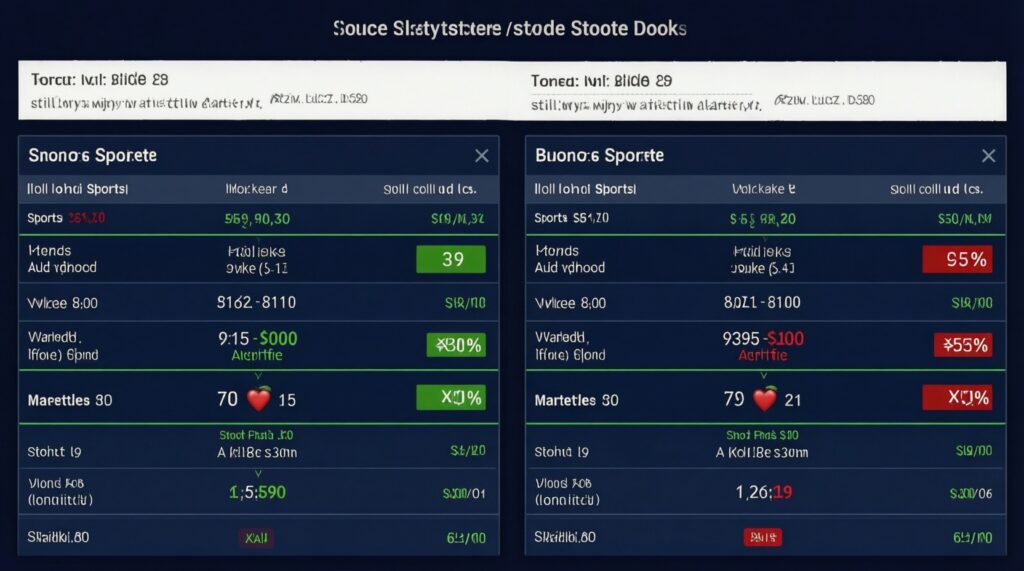
- Both sides refer to the same match (teams, event, start time, map number).
- Market is semantically identical (match winner vs map winner, correct handicap line, same totals line).
- Rules align on overtime, walkovers, remakes, and postponements.
- Both prices are still available on the bet slip (not just on the market list).
- Your stake fits within visible limits; you are not relying on "max stake unknown."
- Currency/wallet is ready; no pending verification that can block placement.
- Settlement timing won't strand you (e.g., one book settles instantly, another delays) if you need to hedge.
- You have a predefined response if one side changes: re-calc / hedge / abort.
Risk Management: Stakes, Limits, and Market Exposure
The fastest way to lose money arbing is not picking the wrong match-it's ignoring operational risks. Use small-to-moderate stakes per window until your workflow is consistently clean and your rejection rate is low.
Common mistakes that turn "sure" into loss
- Not accounting for stake caps: You place leg A, then leg B has a lower max stake, leaving you exposed.
- Ignoring void asymmetry: One book voids on remake; the other grades action, creating an unintended single bet.
- Relying on visible odds only: The bet slip price changes at confirmation, killing the edge.
- Using volatile live props: Player props and niche markets often suspend faster and map inconsistently across books.
- No plan for partial fills: Some books accept lower stakes without making it obvious; always verify accepted stake.
- Overconcentration on one match: Multiple arbs on the same series can stack correlated risk (a single void event affects all).
- Chasing after a move: Trying to "force" an arb after the market already corrected typically creates negative expected value.
- Spreading funds too thin: Small balances across many books slow you down and reduce your ability to complete the second leg.
Execution Workflow: From Signal to Bet Settlement (comparison table included)
This workflow prioritizes speed and safety. The best approach depends on whether you're targeting pre-match stability or live volatility.
Standard workflow (signal to settlement)
- Pre-check: Confirm both accounts are logged in, funded, and able to place bets (no session timeouts).
- Find a candidate: Use esports odds comparison to spot a misprice on the same market across two books.
- Rule lock: Open the rules/market terms quickly; verify overtime/remake treatment and market definition.
- Compute stakes: Set stakes so worst-case (if one side moves slightly) is still acceptable to you.
- Place fragile leg: Submit the side likely to suspend/reject first.
- Place stable leg: Submit immediately; if price changes, follow your pre-decided response (re-calc/hedge/abort).
- Document: Record bet IDs, odds, accepted stakes, and the in-game state.
- Monitor & close: Watch for void triggers until both legs settle; if one leg is voided, hedge the remaining exposure promptly.
Alternatives (when each is appropriate)
- Pre-match only arbing: Use when you want fewer suspensions and clearer rules; you'll get fewer windows but more time-to-execute.
- Live arbing on core markets: Use when you can act fast and can tolerate more rejections; focus on match/map winner lines rather than niche props.
- One-sided value + conditional hedge: Use when a second-leg arb is uncertain; you place the value side and hedge only if a suitable counterprice appears.
- Manual shortlist + occasional scanner: Use when you don't want full reliance on tools; scanners alert, you verify and execute manually.
Clarifications and Practical Edge Cases
Is esports arbitrage betting actually "risk-free"?
No. The pricing math can be locked, but execution risks (odds moves, rejections, stake caps, void rules) can break the lock.
Why do esports betting odds change so abruptly in live matches?
Because game-state updates are frequent and decisive, and books suspend/reprice to manage latency and sharp action. A single objective can re-anchor multiple markets.
What's the fastest way to avoid fake arbs during esports odds comparison?
Verify market equivalence: same map number, same handicap/total line, and aligned overtime/remake rules. If you can't confirm in under a minute, skip the window.
Do "best esports betting sites" matter for arbing?
Yes-mainly for acceptance speed, consistent settlement, and transparent void policies. "Best" for promotions is often different from "best" for execution reliability.
Should I use arbitrage betting software for esports?
It can help you detect candidates faster, but it won't protect you from rule mismatches or bet-slip price changes. Treat tool signals as prompts to verify, not as guaranteed arbs.
What if one leg gets accepted and the other leg's odds move?
Follow a pre-set decision: re-calc and proceed, hedge a smaller amount, or abandon and accept controlled exposure. Don't improvise while the market is moving.
What's the most common settlement edge case in esports?
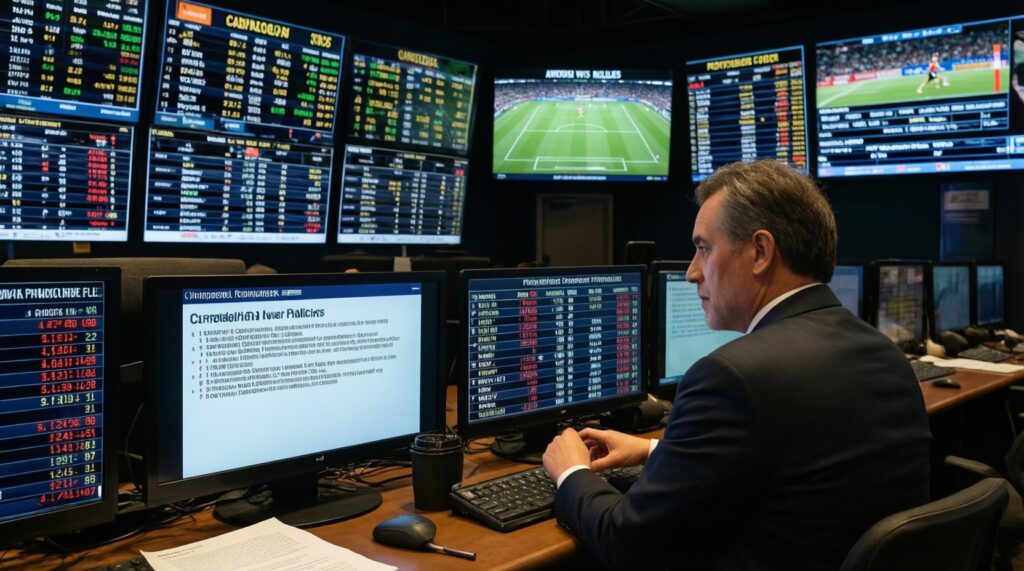
Remakes, technical cancellations, and postponed maps can trigger voids differently across books. Always check each bookmaker's policy for these match interruptions.