


A practical gamer's betting toolkit is a repeatable workflow: track every bet in one place, review a short post-session checklist, monitor a few KPIs, run a tilt reset when emotions spike, and verify any book, tipster, or "sure win" offer. This reduces self-deception, limits losses, and helps you spot scams early.
Essential metrics and checkpoints
- Log every wager consistently (same fields, same time, same source).
- Separate results by market/league/type to find what you actually beat.
- Track closing line movement (CLV) as a reality check on decision quality.
- Use a hard stop-loss and a time cap per session to contain tilt.
- Verify operator licensing, payments, and terms before depositing.
- Use responsible gambling tools for bettors (limits, cool-offs, self-exclusion) before problems start.
Setting up a reliable results tracker
This is for intermediate bettors who place repeated wagers and want clarity on what works, what is variance, and what is tilt. A simple spreadsheet is enough, but a sports betting tracker app can be faster on mobile and reduce "missing bets" in your records.
Skip building a tracker if you're currently chasing losses, borrowing to bet, hiding activity from family, or you can't stick to basic limits-set limits and support first, then track.
- Best fit: frequent bettors, multiple markets, multiple books, anyone testing a strategy.
- Not worth it (yet): one-off entertainment bets, active addiction risk, or no ability to record data consistently.
Minimal tracker fields (template): Date/Time, Sport/League, Market, Selection, Odds (decimal), Stake, Book, Result (W/L/Void), P/L, Notes (reason, injury news, live trigger), Closing odds (if available).
Designing a concise post-session checklist
You need tools and access that make the review frictionless. Don't aim for perfection; aim for a checklist you can finish in under a few minutes.
- One tracker location (spreadsheet or sports betting tracker app) you will update the same day.
- Access to bet history exports/screens (your sportsbook account statements).
- At least one of the best betting odds comparison sites (for pre-bet sanity checks and line shopping).
- A notes app (for tilt triggers and "why I bet this" in one line).
- A betting bankroll management tool (or a spreadsheet tab) to enforce stake sizing and limits.
- A place to record sports betting scam alerts you encounter (links/screenshots, who recommended it, what was promised).
Post-session checklist (copy/paste):
- Did I log every bet (including cash-outs/voids/free bets)?
- Did any stake exceed my preset maximum? If yes, why?
- Did I chase after a loss or increase volume to "get even"?
- Did I accept odds without checking at least one comparison source?
- Did I feel tilt (anger, urgency, revenge betting)? Rate it 0-10.
- Did I break any bankroll rules or time caps?
- What is one fix for next session (one sentence only)?
Quantitative KPIs every gamer should monitor
Preparation checklist (do this before calculating anything):
- Confirm your tracker has no missing stakes/results for the period you'll review.
- Standardize odds format (use decimal or convert everything to one format).
- Split "free bet/bonus" wagers into a separate tag so they don't distort core results.
- Create tags for market type (e.g., moneyline/spread/totals/props) and timing (pre-match/live).
- Decide one review window (weekly or every 20-50 bets) and don't change it mid-review.
-
Compute profit/loss and ROI on settled bets
Start with the simplest truth: total profit/loss and ROI (profit divided by total staked) for settled bets only. Treat voids as zero-impact and keep them visible to catch operational issues.
- Template: Period P/L = sum of bet P/L; Period ROI = P/L ÷ total stakes.
- Rule: If you can't reproduce the numbers twice, your tracker isn't reliable yet.
-
Track strike rate by odds bands
Group bets into odds ranges (e.g., low, medium, high). This shows whether your wins are coming from realistic edges or occasional longshots that won't repeat.
- Template note: Record odds band as a tag so filtering is one click.
-
Measure CLV (closing line value) where possible
CLV helps separate "good process, bad short-term results" from "bad process, lucky streak." Record the closing odds at a consistent time (e.g., at kickoff) and compare to your bet odds.
- One-line rule: If you're consistently beating the close, keep size steady; if not, reduce volume and review.
-
Segment performance by market, league, and timing
Aggregate ROI/CLV by market type (props vs totals), league, and pre-match vs live. Most intermediates leak money in one segment while believing they're "overall fine."
- Template: Filter → copy summary → paste into a "Segment report" tab.
-
Monitor volume, average stake, and max drawdown signals
Track the number of bets, average stake, and your worst downswing within the review window. When volume spikes or stakes creep up, tilt is usually nearby.
- Rule: If average stake rises after losses, activate your reset protocol before the next bet.
-
Log decision quality in one line
Add one short reason code to each bet (e.g., "injury news," "line error," "model edge," "live pace"). This prevents rewriting history after the outcome.
- Example codes: INFO, PRICE, MODEL, LIVE, HUNCH (use HUNCH as a warning tag).
Practical tilt-identification and reset protocols
- I increased stake size after a loss (not after a new edge).
- I placed a bet without logging the reason in one line.
- I felt urgency (must bet now) or revenge motivation.
- I kept opening more markets because the first ones "looked bad."
- I broke my time cap or skipped meals/sleep to keep betting.
- I started relying on chat tips, influencers, or "locks."
- I ignored my own odds-check routine (didn't use any of the best betting odds comparison sites).
- I'm hiding losses or minimizing them when asked.
Reset protocol (use immediately when 2+ items trigger):
- Stop for a fixed cooldown and close betting apps/sites. No "one last bet."
- Reduce access friction by setting deposit limits or a cool-off; use responsible gambling tools for bettors.
- Do a 3-line review: What happened? What rule broke? What changes next session?
- Return only with a pre-written plan (markets allowed, max stake, max bets, stop-loss).
Detecting scams: verification and red flags
- "Guaranteed profit" or "risk-free" claims without clear terms, verifiable math, and realistic constraints.
- Pressure to act fast (limited spots, countdown timers, "today only") to bypass due diligence.
- Unverifiable records: screenshots only, no full bet history, no timestamps, no consistent odds source.
- Payment red flags: requests for crypto-only, gift cards, or sending money to personal accounts.
- Opaque fees and moving goalposts: "membership," "VIP unlock," then additional fees to withdraw.
- Fake verification: stolen logos, fake licenses, or "regulated" claims without a regulator page you can confirm.
- Account control requests: asking for remote access, IDs beyond normal KYC, or asking you to place bets "for them."
- Shill behavior: coordinated praise in chats, attacks on skeptics, and deletion of losing picks.
Verification routine (quick and safe):
- Check licensing and operator identity via official regulator channels where applicable; match entity names, not just brand names.
- Test withdrawals with a small amount before depositing more; document support responses.
- Cross-check odds and markets against mainstream books and best betting odds comparison sites to spot manipulated lines.
- Keep a "deny list" in your notes with links/screens of sports betting scam alerts you encounter.
Bankroll rules and loss-limiting frameworks

Pick one framework and commit for a full review window. Switching systems mid-downswing is a tilt pattern.
Flat staking (fixed unit)
Use when your edge is uncertain or you're rebuilding discipline. Set one unit (small, affordable), and keep it constant except during scheduled reviews.
Percentage staking (fixed % of bankroll)
Use when you track bankroll accurately and want stakes to scale down automatically during drawdowns. A betting bankroll management tool can automate this and enforce max stake caps.
Stop-loss plus time cap (session guardrails)
Use when tilt is your main leak. Define a maximum loss per session and a hard time limit; if either hits, the session ends regardless of "good opportunities."
Market whitelist with maximum bets per day
Use when you overtrade. Only bet pre-approved markets/leagues, and cap total bets per day to prevent random late-night exposure.
Common practitioner concerns and quick remedies
Should I use a spreadsheet or a sports betting tracker app?
Use a spreadsheet if you want full control and custom fields; use a sports betting tracker app if you struggle with consistency and mobile logging. The best option is the one you will update the same day.
What's the minimum I must track to improve?
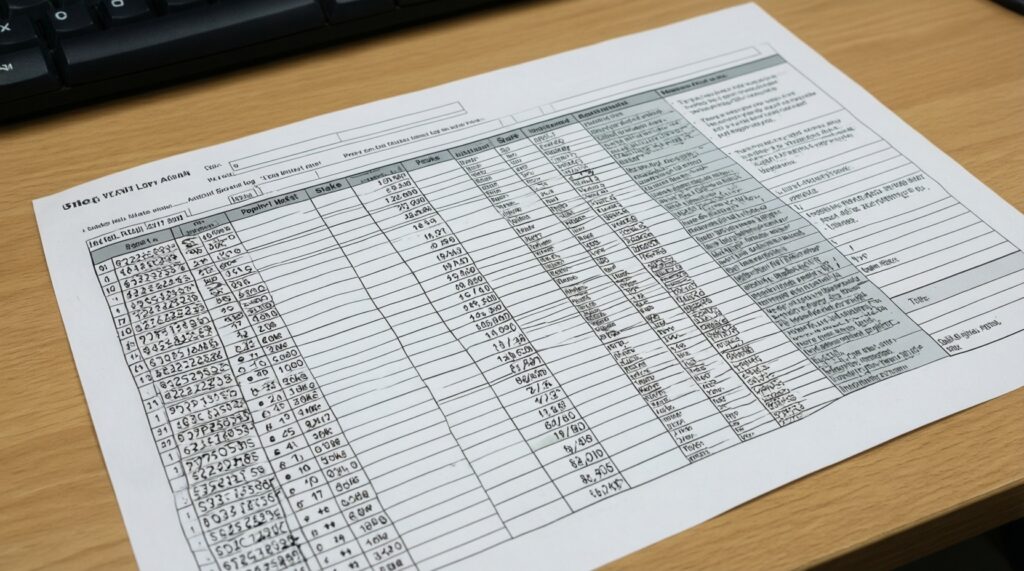
Date, market, odds, stake, result, and one-line reason are the minimum. Add closing odds later for CLV once your logging is consistent.
How do I choose among the best betting odds comparison sites?
Pick one that covers your sports/books and shows timestamps clearly. Use it for line shopping and to sanity-check whether your book's price is out of range.
How do I set sports betting scam alerts for myself without overreacting?
Create a simple rule: no deposits or paid picks until licensing/identity checks and a small withdrawal test pass. Log every suspicious offer with links/screens so patterns repeatably stand out.
What are the most effective responsible gambling tools for bettors?
Deposit limits, loss limits, time limits, and cool-offs are the most operational. Turn them on before you need them; they work best as defaults, not punishments.
My tracker says I'm losing, but I feel my picks are good-what now?
Check data integrity first (missing bets, wrong odds, bonuses mixed in). Then review segmentation (market/league/live vs pre) and use CLV to evaluate process, not vibes.