

Loot box psychology is the set of behavioral mechanisms that make randomized rewards feel compelling, hard to stop, and easy to justify. It combines loot boxes variable reward schedules, uncertainty around loot box odds, and social timing pressures so players buy loot boxes more often than planned and increase loot box spending through repeated "just one more" decisions.
Core psychological mechanisms at play
- Variable reinforcement: unpredictable rewards amplify persistence and repeat purchasing.
- Near-miss effects: "almost got it" outcomes can increase motivation despite losses.
- FOMO + social proof: limited-time items and visible peer ownership accelerate decisions.
- Loss framing: "Don't miss your chance" feels stronger than "You might gain."
- Salience and interruption: flashy reveals and countdowns narrow attention to the next opening.
How loot boxes lever variable reward schedules
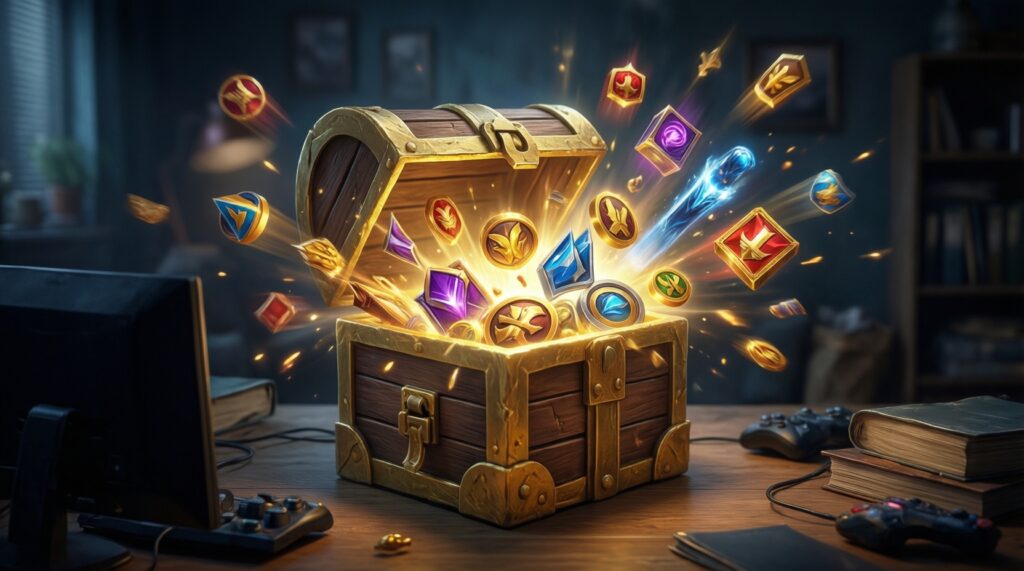
Definition: Loot boxes are purchasable (or earnable) openings that deliver randomized items. In behavioral terms, they operationalize variable reinforcement: rewards arrive unpredictably, so the action (opening) becomes resistant to stopping, similar to lab paradigms where uncertain reinforcement sustains responding longer than predictable reinforcement.
Boundaries: Not every random reward is a loot box. The term is most psychologically relevant when (1) outcomes are uncertain at the moment of purchase/opening, (2) the reveal is audiovisual and salient, and (3) repetition is frictionless (fast re-open, bundles, stored currency). This is where "loot box psychology" tends to show up most strongly in real play.
Where loot box odds fit: Published loot box odds can reduce uncertainty on paper, but they rarely remove uncertainty in experience because the player still faces repeated independent trials and vivid feedback loops. Players often remember the reveal, not the base rate.
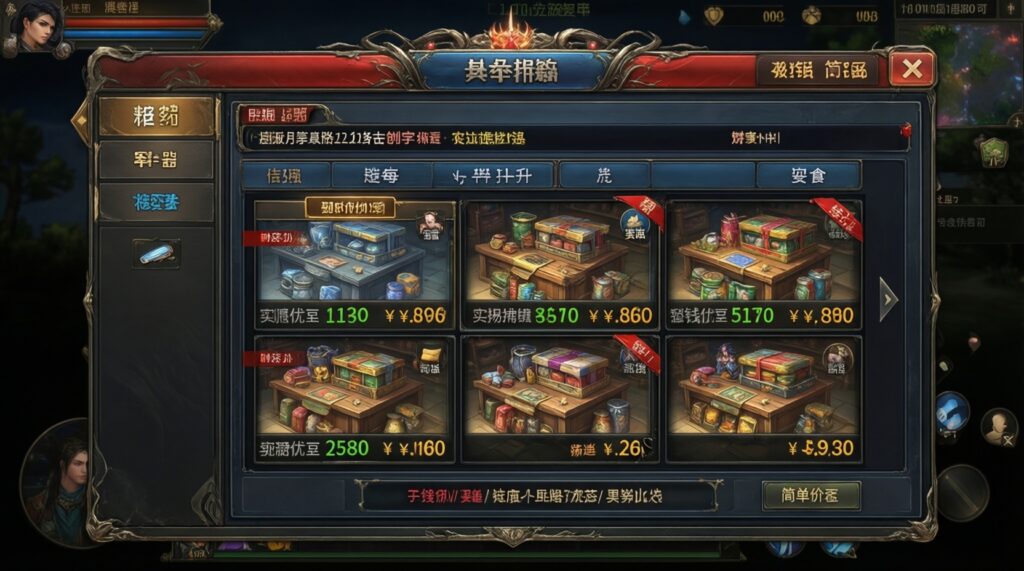
Real-world example: A Thai mobile RPG sells a "featured" chest: the player sees a dramatic animation, gets many low-value duplicates, and occasionally gets a rare skin. Even with stated odds, the player's learning is driven by the occasional spike in reward, not the typical outcome.
- Check whether the reward is unpredictable at the moment of payment/opening, not merely randomized over a long grind.
- Audit how quickly the player can repeat the loop (one tap, stored currency, bundles).
- Separate "published odds" from "experienced volatility" in the moment-to-moment UI.
Fear of missing out: scarcity, timed events and social proof
FOMO works when the player feels that delaying a decision creates a loss: the item, discount, or social moment disappears. In practice, teams implement it through multiple reinforcing cues:
- Time-limited banners: countdowns, "ends soon," and rotating pools compress decision time.
- Event-exclusive cosmetics: items labeled as never returning (or unclear return policies).
- Social visibility: lobbies, profile frames, guild chats, and kill-feed callouts showing others' new drops.
- Progress-linked scarcity: "Only during this season" rewards tied to battle passes or rankings.
- Price framing: "First-time bonus" or "limited bundles" that feel like a loss if not claimed.
Real-world example: During a festival event in Thailand, a game promotes a themed skin for 72 hours, highlights streamers wearing it, and puts the item in a lobby carousel-players feel the social window closing, not just the offer.
- Remove ambiguity: state whether items return, and if so, under what conditions.
- Reduce coercive urgency: avoid stacking countdowns with social pop-ups in the same flow.
- Measure "time pressure" moments: identify screens where players purchase within seconds of exposure.
Cognitive biases that nudge spending behaviour
These are common ways loot box spending gets nudged in real products, especially when the player is already invested in a goal (collection, rank, skin set). Typical scenarios include:
- Sunk cost escalation: after several openings, stopping feels like "wasting" what was already spent.
- Goal-gradient effects: "You're 8/10 toward a guaranteed reward" increases urgency to finish.
- Availability bias: a rare win is vivid and memorable, dominating recall over many losses.
- Anchoring: large bundle prices make smaller bundles feel reasonable even if both are expensive per outcome.
- Default and friction bias: stored premium currency makes opening feel like spending less than direct cash.
Real-world example: A player opens 7 boxes chasing a cosmetic set; the UI shows 2 items remaining and offers a "complete set" bundle. The completion framing shifts the question from "Should I spend?" to "Should I stop now that I'm close?"
- Map the moment a player's goal becomes explicit (collection meter, set checklist, pity counter).
- Identify where you convert cash into currency and whether that masks spending.
- Check if UI language implies inevitability ("almost there") versus probability.
Emotional and physiological responses to randomized rewards
Randomized rewards are powerful because they produce fast emotional swings: anticipation, tension during reveal, and either delight or frustration after outcome. These are not automatically "bad," but they can become problematic when paired with high-frequency repetition and spending prompts.
Upsides when designed responsibly
- Excitement and surprise: a legitimate entertainment payoff when the player chooses it with informed consent.
- Social moments: shared reveals and gifting can create community rituals.
- Variety: randomized outcomes can prevent stale reward patterns in long-running games.
Limits and risk factors to watch
- Rapid re-engagement loops: short cool-downs and repeated prompts intensify "chasing."
- Mood regulation: players may open to escape boredom/stress, then feel worse after losses.
- Attentional narrowing: audiovisual reveals can crowd out reflective thinking about budget and odds.
Real-world example: After a frustrating ranked loss, a player opens boxes "to feel a win." The emotional shift is immediate when a rare animation appears, even if the long-run value stays negative for them.
- Add a pause: insert natural breaks after openings (summary screen, optional stop cues).
- Separate "celebration" from "purchase": avoid immediate re-buy prompts inside the reveal peak.
- Offer budgeting tools that appear before the opening loop starts.
Design patterns: hooks, progression systems and monetization loops
Teams often copy patterns without understanding which parts create undue pressure. Common mistakes and myths include:
- Myth: "Disclosing odds solves it." Odds disclosure helps transparency, but does not neutralize variable reinforcement or persuasive UI timing.
- Mistake: stacking pressure layers. Countdown + social proof + "pity counter" + bundle discount in one flow is a coercive cocktail.
- Mistake: unclear duplicates policy. If duplicates are common, players need clear conversion rules and caps; otherwise frustration drives chasing.
- Myth: "Pity counters are always consumer-friendly." They can also intensify goal-gradient chasing when players are close.
- Mistake: hiding real price signals. Multiple currencies and bonus gems can make it hard to feel the true cost per opening.
Real-world example: A game shows a pity meter, but also flashes "Only today" and adds a "friends opened 20x" ticker. Players interpret the system as both "safe" (guarantee) and "urgent" (deadline), increasing impulsive purchases.
- Limit concurrency: cap how many persuasion cues appear on a single purchase screen.
- Make duplicates and conversions legible in one place, in plain language.
- Keep cost salient: show local currency equivalence alongside premium currency.
Mitigation and intervention: policy, ethical design and player safeguards
Mitigation is strongest when it combines product design (friction, transparency, limits) with player safeguards (budget controls) and policy readiness (clear compliance posture for app stores and local expectations in Thailand). The goal is not to remove randomness, but to reduce coerced repetition and improve informed choice.
| Trigger in the loop | What it exploits | Practical safeguard |
|---|---|---|
| 1-tap re-open after reveal | Peak excitement and impulsivity | Optional stop screen with spend summary and a cooldown |
| Countdown + "exclusive" label | FOMO loss framing | Clear return policy; avoid stacking urgency with discounts |
| Pity counter near completion | Goal-gradient chasing | Budget cap prompts before the "close to goal" zone |
A short audit algorithm to check whether the experience is drifting into harmful pressure
- Describe the loop: write the exact steps from seeing the offer to opening to re-opening (screens, taps, currencies).
- Locate pressure stacking: mark where time limits, social proof, and completion meters appear together.
- Test comprehension: can an average player restate loot box odds, duplicates rules, and max cost to reach a guarantee without leaving the flow?
- Measure breakpoints: identify whether there is a natural stop after each opening (or only after many).
- Decide an intervention: add one friction or clarity change, then re-test the loop for reduced urgency and better cost salience.
Mini-case: A studio notices late-night spikes in repeated openings. They add a post-opening summary (items gained, money equivalent, next guaranteed threshold) and move "buy again" off the reveal screen. The loop becomes slower, but players report fewer regret-driven purchases while still enjoying reveals.
- Implement at least one "pause point" that is not visually dominated by the reward animation.
- Put the player's spend-to-date in the same surface where you ask them to buy again.
- Document your compliance assumptions early (regional expectations, platform rules, internal ethics bar).
Self-check before shipping or updating a loot box feature
- Can a player understand the value proposition without relying on rare highlight moments?
- Do you avoid combining countdowns, social proof, and completion meters on the same purchase step?
- Is the real-money cost salient at the moment of purchase, not hidden behind currencies?
- Is there a clear, optional stop after each opening that does not punish the player for stopping?
- Can support staff explain duplicates, conversions, and guarantees in one consistent script?
What practitioners often ask about loot box psychology
Is loot box psychology the same as gambling psychology?
They overlap in variable rewards and uncertainty, but loot boxes often include progression, cosmetics, and game-specific motivations. The psychological risk depends heavily on repetition speed, spending prompts, and how outcomes are framed.
Do published loot box odds prevent overspending?
They improve transparency, but they do not automatically change behavior because the experience is driven by vivid outcomes, near-misses, and rapid repetition. Good design also needs clear pricing, duplicates rules, and stop points.
Why do some players buy loot boxes even when they know the odds are low?
Anticipation, goal pursuit, and social timing can outweigh reflective calculation in the moment. Players often remember rare wins more strongly than typical outcomes.
What is the "pity counter" effect on loot box spending?
It can reduce uncertainty by guaranteeing a reward after enough openings, but it can also intensify chasing when players are close to the threshold. The UI around the counter matters as much as the mechanic.
How does FOMO increase conversion during timed events?
Deadlines convert "maybe later" into "now or never," and social proof makes the cost feel justified as participation. Stacking multiple urgency cues increases impulsive purchases.
What is a practical safeguard that does not kill revenue entirely?

Add a post-opening summary and move the re-buy call-to-action away from the emotional peak of the reveal. This preserves excitement while restoring a moment for budget-aware choice.