

In an in-game economy, inflation means players need more currency to buy the same items, while deflation means currency becomes more valuable and prices fall. Item sinks remove items or currency to keep markets stable. Managing these forces is a practical loop: measure supply/demand, adjust faucets and sinks, then validate with live virtual economy analysis.
Core Economic Concepts at a Glance
- Inflation: too much currency/items chasing limited desirable goods; prices and grind expectations rise.
- Deflation: currency scarcity or oversupply of goods; trading slows and hoarding increases.
- Faucets: systems that create currency/items (quests, drops, daily rewards, cash shop conversions).
- Sinks: systems that permanently remove currency/items (fees, crafting consumption, durability loss).
- Velocity: how quickly currency changes hands; low velocity often signals fear, hoarding, or poor sinks.
- Fairness perception: if players can buy game currency efficiently, non-payers scrutinize sinks and drop rates.
How Inflation Appears in Live Game Economies
Inflation in a live economy is not only "higher auction prices." It's a shift where the median player must spend more time or currency to reach the same power level, convenience, or status. In practice, it often emerges when currency faucets scale with player power (or playtime) faster than meaningful sinks scale with consumption.
A common pattern is MMO gold inflation: veteran players and automated farming generate large volumes of gold, while the most desired goods (best-in-slot crafts, rare cosmetics, limited spawns) remain relatively scarce. Prices move upward, new players feel locked out, and guilds start demanding "market-priced" contributions.
Inflation can also be "hidden" behind fixed-price NPC vendors. If vendor costs stay constant while player income increases, vendor items become effectively cheaper over time, accelerating progression and indirectly raising market prices for anything still scarce.
Mechanics and Triggers of Deflation
- Faucet nerfs without sink adjustments: patch reduces earnings, but repair/crafting fees remain, shrinking liquidity.
- Oversupply of tradable loot: events or drop-rate boosts flood the market; prices fall and trading becomes unprofitable.
- Progression completion: once many players finish upgrades, demand collapses for mid-tier materials.
- Hoarding incentives: future uncertainty (announced crafting changes, upcoming tier) makes players hold currency/items.
- High-friction trading: listing limits, long cooldowns, punitive taxes reduce transaction volume and price discovery.
- Dominant non-market acquisition: if best gear is bound-on-pickup, the player market loses purpose and deflates.
Mini-scenarios before you rebalance
- Event shock: a weekend boost doubles material drops; Monday's market crashes, then players stop gathering because it "isn't worth it."
- Repair spiral: a tough raid increases death frequency; repair fees drain gold faster than players earn, causing liquidity stress and fewer consumable purchases.
- Monetization substitution: if players can buy game currency or convert premium tokens into gold, whales anchor prices higher while others exit trading, reducing healthy volume.
Designing and Evaluating Item Sinks
Game item sinks are the main lever for stabilizing an in-game economy because they counteract permanent accumulation. A sink is effective only if it is used repeatedly, is understood, and aligns with what players already want to do (progress, customize, compete).
- Crafting consumption: recipes that permanently consume materials (especially common drops) to create desirable outputs.
- Durability and repairs: currency sink tied to activity intensity; best when predictable and not punitive for learning.
- Enhancement risk/decay: upgrade systems that consume items or fragments; must avoid rage-quit thresholds.
- Marketplace taxes and listing fees: steady currency sink; tune to reduce bot profit without killing casual trading.
- Cosmetic customization: dyes, transmog, housing items that consume currency/materials with high repeat use.
- Time-limited rerolls: paid-in-currency respecs, talent rerolls, or loot focusing that helps build diversity.
Quick practical tips (live-ops ready)
- Prefer opt-in sinks that feel like upgrades (cosmetics, convenience, crafting) over punishment-only sinks.
- Make sinks scale with wealth: flat fees hurt new players; percentage-based taxes target rich players and bots.
- When running a loot event, launch a paired sink (limited crafting, cosmetic vendor, reroll week) to absorb the surplus.
- Design sinks around repeatable desire: aesthetics, build experimentation, and housing outperform "mandatory fees" for long-term acceptance.
- Track sink usage by segment (new, mid, endgame). If only endgame uses it, inflation will still crush onboarding.
Where Currency Enters: Earning and Monetization
Currency enters through gameplay (faucets) and, in many titles, through monetization pathways that effectively increase purchasing power. The design goal is not "no inflation," but predictable progression, credible markets, and stable player expectations.
Benefits of multiple faucets
- Activity diversity: different playstyles (PvE, PvP, crafting) can all fund progression.
- Catch-up potential: new/returning players can regain footing without relying solely on trading.
- Economic resilience: if one faucet is exploited, you can cap/nerf it without collapsing the whole economy.
- Monetization flexibility: optional boosts can coexist with fair gameplay if sinks and caps prevent runaway wealth.
Constraints you must accept
- Faucets compound: scalable incomes (based on gear power, AoE speed, automation) accelerate MMO gold inflation.
- Conversion paths set price anchors: whenever players can buy game currency (directly or via token exchange), that rate influences "what an hour is worth."
- Caps create edge behaviors: daily limits shift play into burst sessions and can inflate prices around reset times.
- Bound rewards weaken markets: if most desirable loot is non-tradable, your sinks must work harder elsewhere.
Diagnostics: Metrics That Reveal Economic Stress
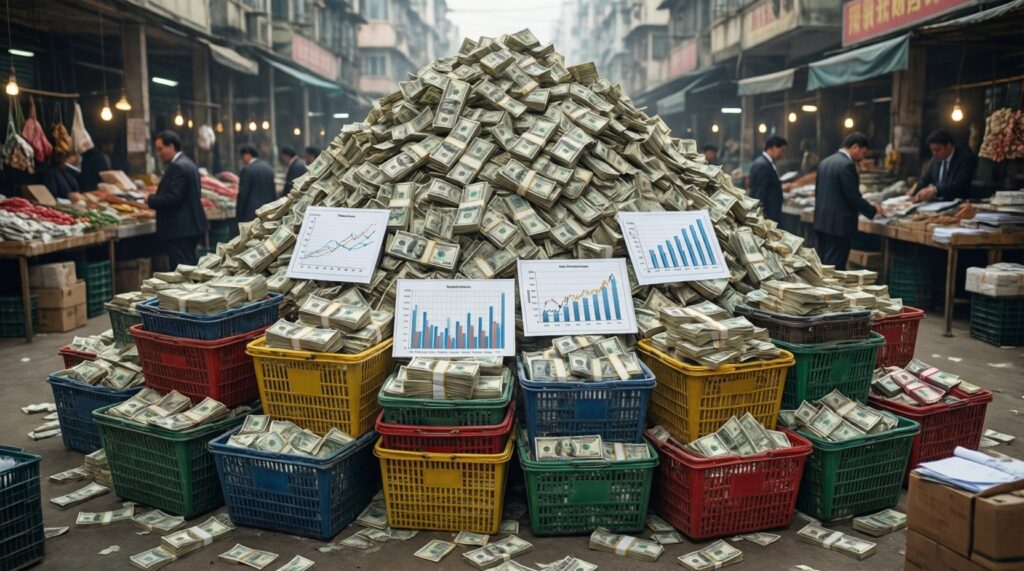
- Myth: "Average price up = inflation." Prices rise for many reasons (meta shifts, content gates). Use basket tracking across tiers and categories.
- Mistake: ignoring currency velocity. If currency stock is high but trades are low, you have hoarding, friction, or trust problems-not just sink shortage.
- Mistake: measuring only top 1% behavior. Endgame whales can dominate prices, but onboarding failure shows up in mid-tier affordability and time-to-first-trade.
- Myth: more sinks always fixes inflation. Bad sinks can cause deflation and player resentment; evaluate sink "felt cost" versus progression value.
- Mistake: not separating bot/farm impact. If farm loops inject currency faster than players can meaningfully spend it, you'll chase symptoms forever.
- Mistake: no pre/post patch baselines. Without consistent dashboards, "virtual economy analysis" becomes opinion-driven during incidents.
Intervention Strategies: Patches, Events, and Balancing

Interventions work best as a controlled sequence: limit the exploit or runaway faucet, add attractive sinks to absorb excess, then smooth progression so regular players don't feel punished. Avoid dramatic sink spikes that turn into mandatory chores.
Mini-case: stabilizing a crafting material crash
Scenario: an event floods tradable materials, prices collapse, gatherers quit, and gold piles up with no satisfying spend. You respond by adding a time-limited crafting track that consumes the surplus and outputs cosmetics plus minor power.
# Pseudo-logic for a limited-time sink
if EventActive:
  recipe.cost = base_cost * 1.0
  recipe.inputs = ["CommonMat" x N, "RareMat" x 1]
  recipe.output = ["CosmeticToken" x 1]
  recipe.limit_per_day = K  # keeps demand steady, avoids total drain
else:
  disable(recipe)

# Marketplace tuning
auction.tax_rate = percent_based  # targets rich players
listing_fee = small_flat_fee      # discourages spam, protects casual sellers
Validation steps: confirm the recipe is desirable (high participation), confirm common material stockpiles decline without erasing new-player access, and verify trade volume rebounds rather than freezing.
Common Economic Questions for Developers
What's the simplest definition of an in-game economy?
An in-game economy is the set of rules that create, move, and remove currency and items between players and systems, shaping prices and progression.
Is MMO gold inflation always bad?
No, mild inflation can be tolerable if incomes and key costs rise together. It becomes harmful when new players can't afford basics or when markets feel meaningless.
What are game item sinks in one sentence?
Game item sinks are repeatable mechanics that permanently remove currency or items to offset accumulation from drops and rewards.
Does letting players buy game currency automatically break balance?
Not automatically, but it sets strong price anchors and can widen wealth gaps. You need caps, robust sinks, and careful segmentation to keep progression credible.
How can I tell inflation from a meta-driven price spike?
Track a basket of unrelated goods across tiers and check currency velocity. Meta spikes concentrate in a narrow category; inflation lifts broad baskets and liquidity patterns.
What's a safe first intervention during an economy incident?
Freeze the worst faucet (exploit loop), then introduce an attractive, opt-in sink before making broad nerfs. This reduces backlash and preserves engagement.