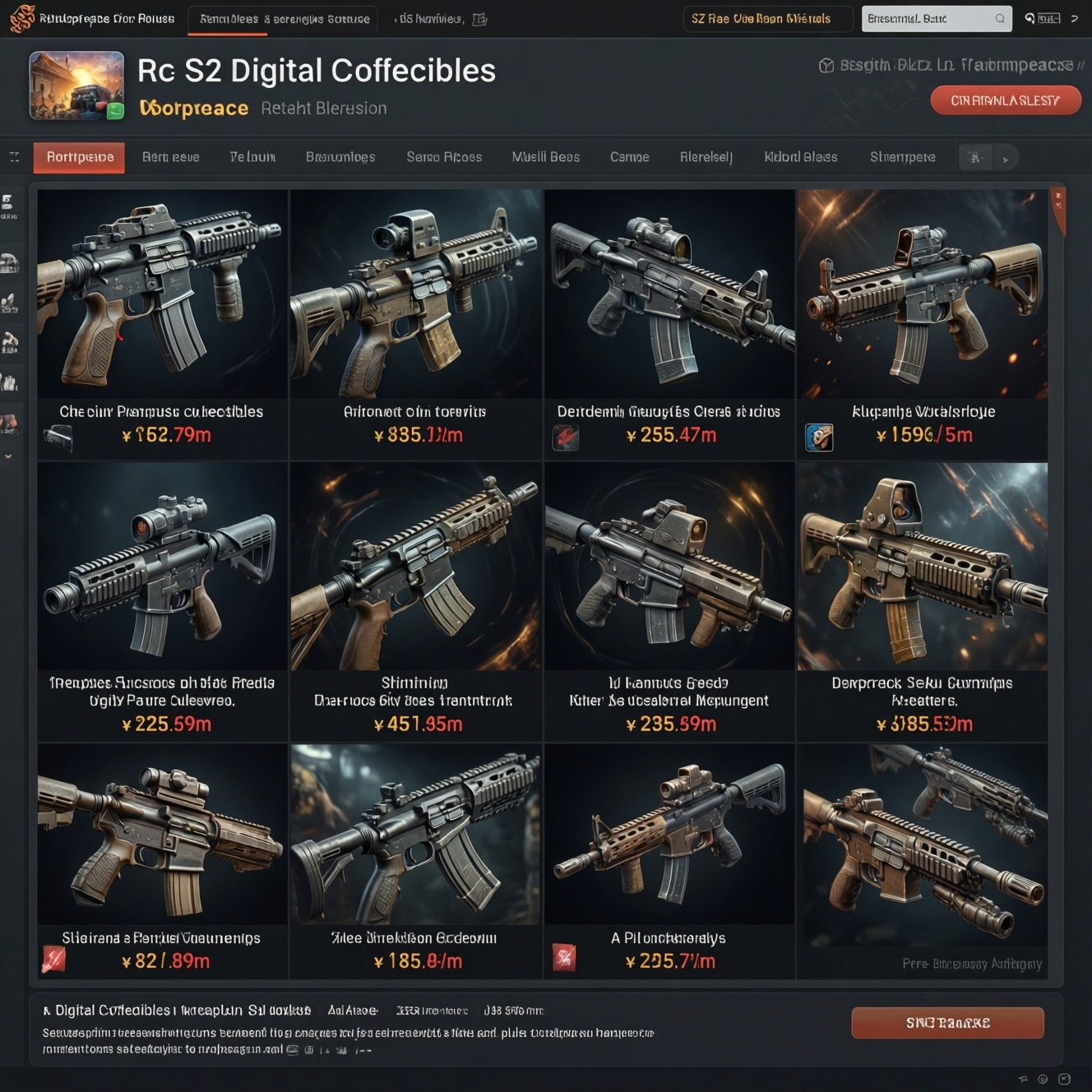


Arbitrage in CS2 skin markets is possible, but it is rarely "risk-free" because Steam's fee structure, trade holds, and thin liquidity can erase spreads before you exit. In practice, cs2 skin arbitrage works best as disciplined spread-trading across marketplaces, time windows, and item conditions-while accounting for fees, settlement delays, and price impact.
Essential Premises for Skin Arbitrage

- You profit from a realizable spread (after fees, taxes where applicable, and withdrawal costs), not from headline prices.
- Execution speed matters: liquidity and settlement delays can flip a "profit" into a loss.
- Steam wallet funds are not cash; arbitrage paths differ for on-Steam vs off-Steam exits.
- Most edges come from mispriced variants (float, wear, pattern, stickers) and short-lived demand shocks.
- Automation helps scanning, but compliance limits what a cs2 skins trading bot can safely do.
- Consistent results require repeatable rules (filters, sizing, and stop conditions), not one-off flips.
How CS2 and Steam Market Mechanics Shape Price Opportunities
Definition and boundaries: Arbitrage in skin markets means buying a specific, comparable CS2 item where it is cheaper and selling it where it is more expensive, capturing the net difference. In CS2/Steam contexts, "comparable" must include the same skin, wear/float band, and meaningful pattern/sticker attributes when buyers price them in.
Why "pure" arbitrage is hard: Steam Community Market prices are shaped by Steam wallet constraints, platform fees, and listing mechanics, while external marketplaces price skins closer to cash-out value. This structural gap enables steam market arbitrage ideas, but converting value between ecosystems usually introduces friction (fees, delays, withdrawal limitations).
What counts as a real opportunity: A spread only matters if you can execute both legs at the expected prices and within your risk window. If you can only "buy cs2 skins cheap" at a price that fills slowly or cannot be withdrawn/sold quickly, it's not a reliable edge.
Reliable Data Sources and Methods for Price Discovery
One-line summary: Use multiple price signals and validate with actual fill probabilities, not just last traded price.
- Use order-book aware metrics: compare Steam highest buy order vs lowest sell listing, not just "median" or "last sale."
- Normalize item identity: same weapon/skin, same exterior, and note float/pattern/stickers; treat variants as different products.
- Cross-check at least two venues: Steam plus one or more external marketplaces (often discussed as the best cs2 skin trading sites) to detect stale quotes.
- Estimate time-to-fill: look at listing depth around your target price and recent sales frequency for that exact variant.
- Track fee-adjusted parity: maintain a "net sell" price after platform fees and a "net buy" price after purchase costs.
- Watch event-driven demand: updates, sticker capsules, esports calendar spikes, and streamer attention can temporarily re-rate a subset of skins.
Arbitrage Tactics: Cross-Market, Temporal, and Condition-Based
One-line summary: Most workable tactics exploit where prices update slowly or where buyers misprice attributes.
- Cross-market spread capture: buy on the cheaper marketplace and sell on the richer one for the same variant, after fees and settlement constraints.
- Steam order-book "micro-arb": place buy orders below impatient sellers and relist near the competitive floor; profits depend on fees and churn.
- Temporal reversion: buy during short-lived panic selling (post-update uncertainty) and sell when demand normalizes-this is closer to trading than pure arbitrage.
- Condition/float segmentation: some markets price "Factory New" broadly, while others pay up for low float FN; arbitrage the mispriced tail.
- Sticker/pattern underpricing: identify listings where sticker value is ignored or pattern premiums are not reflected, then sell where collectors are active.
Accounting for Fees, Liquidity Constraints and Slippage
One-line summary: Your model must survive worst-case fills and all-in costs, not best-case screenshots.
Costs to model before entering a trade

- Platform selling fees: Steam and external venues take a cut; treat it as a guaranteed drag on every round trip.
- Deposit/withdrawal/transaction costs: cash-out routes can introduce additional friction or delays.
- FX and local funding costs (TH context): if you move between THB and another currency, model conversion spreads and bank/processor fees.
- Opportunity cost of locked value: trade holds or slow sales reduce how many cycles you can run.
Execution risks that erase spreads
- Slippage: the price you can actually sell at may be lower once you list (you become the supply).
- Thin liquidity: "profitable" spreads on rare variants often lack buyers at size.
- Queue priority: undercutting wars can move the floor faster than your item sells.
- Mark-to-market illusion: last sale price is not your liquidation price; focus on realistic exits.
Automation, Bots and Compliance: Technical and Ethical Limits
One-line summary: Automate scanning and alerts, but assume execution is constrained by platform rules and operational risk.
- Myth: "A cs2 skins trading bot guarantees profit." Bots find spreads; they do not guarantee fills, stable fees, or stable demand.
- Mistake: ignoring variant matching. Buying "the same skin" without float/pattern/sticker checks turns arbitrage into random speculation.
- Mistake: relying on stale APIs or cached prices. If your data lags, you're trading yesterday's market.
- Mistake: scaling too fast. More volume increases slippage and attracts undercutting; spreads compress as you push size.
- Compliance risk: automated behavior, scraping, and account sharing can violate platform or marketplace rules; keep automation within published limits.
Real-World Examples and Step-by-Step Playbooks
One-line summary: Treat each attempt as a repeatable workflow with entry filters, fee-adjusted math, and a predefined exit.
Mini-case: fee-adjusted spread check (illustrative numbers)
Suppose a skin's Steam lowest listing is 1,000 (Steam wallet units) and the highest buy order is 940. On an external market, the same variant can be sold for 30.00 (cash units) and bought for 28.50. The trade is only viable if your net sell after fees and cash-out friction exceeds your all-in buy cost and you can complete both legs within your risk window.
Workflow: a practical arbitrage scan you can run weekly
- Define a universe: pick 30-100 high-liquidity skins you understand (popular rifles/pistols, not ultra-rare one-offs).
- Collect two-sided prices: record Steam "lowest sell" and "highest buy order," plus external "buy" and "sell" for the same exact variant.
- Compute net edges: apply each venue's sell fee and any withdrawal/FX friction; reject anything without a clear net margin.
- Check depth: confirm there are enough recent sales and listing depth to exit near your modeled price.
- Execute small first: do 1-3 test trades to validate settlement speed and real fill prices.
- Log results: store entry, fees, time-to-fill, and exit price; refine filters to what actually works.
Quick practical tips for intermediate traders (TH context)
- Prefer liquidity over "big % spreads": the easiest spreads to see are often the hardest to realize.
- Anchor to the exit first: if you cannot confidently sell (where, how fast, at what net), don't enter.
- Segment by variant: maintain separate watchlists for "generic" vs "collector" items (stickers/patterns).
- Timebox your exposure: set a maximum holding time; if it doesn't sell, cut or reprice based on your plan.
- Keep funding rails simple: fewer conversions and withdrawals usually beat chasing tiny price gaps.
Self-check before you try your next cs2 skin arbitrage loop
- I calculated net profit after all fees for both legs, not just the visible spread.
- I verified variant equivalence (wear/float, pattern, stickers) across markets.
- I checked liquidity (recent sales + listing depth) at my intended exit price.
- I can complete the cycle without getting stuck in non-withdrawable value longer than my time limit.
- I recorded the trade in a log so I can improve the process instead of repeating guesses.
Common Practitioner Concerns and Quick Answers
Is steam market arbitrage "guaranteed" because Steam is big?
No. Steam is liquid, but fees, queue dynamics, and wallet constraints mean spreads can vanish before you exit.
What's the safest way to buy cs2 skins cheap without taking hidden risk?
Start with high-liquidity items, use buy orders, and only enter when the fee-adjusted exit is realistic at the current order book.
Do I need a cs2 skins trading bot to do this?
No. Bots help monitoring and alerts, but you still need variant checks, fee math, and disciplined execution to avoid bad fills.
How do I choose among the best cs2 skin trading sites for cross-market checks?
Pick venues with transparent fees, consistent item metadata (float/pattern where relevant), and enough volume to exit close to your modeled price.
What's the most common mistake beginners make in cs2 skin arbitrage?
They use last-sale prices instead of liquidation prices and ignore how fees and slow fills turn a visible spread into a loss.
Can I scale this to large volume quickly?
Scaling usually compresses your edge through slippage and faster undercutting; increase size only after repeated, logged profitable cycles.