


Steam item trading is the controlled transfer of in-game and Steam inventory items between accounts using Steam's trade system or via pricing on the Steam Community Market. It works through inventory ownership records, trade confirmations, and risk controls (holds/escrow). Understanding listings, liquidity, and Steam market fees helps you buy Steam items safely and verify you received exactly what you paid for.
Trading at a Glance: Core Concepts in One View
- Two main routes: direct steam item trading (account-to-account) vs selling/buying on the steam community market.
- Ownership is platform-managed: Steam inventory shows what you own; transfers only "final" after confirmations and any holds.
- Pricing is market-driven: the "lowest listing" is not the same as a reliable fair price if volume is thin.
- Holds are normal: trade holds/escrow are security features, not proof of a scam by themselves.
- Cash-out limits: Market proceeds become Steam Wallet funds, not direct cash, which shapes strategy.
- Verification beats trust: confirm item identity (app, type, tags, condition) before and after any transfer.
Common Misconceptions About Steam Item Trading
Myth 1: "Trading and the Market are the same thing." They aren't. Direct steam item trading is a peer-to-peer exchange where you see a trade window and both sides accept. The steam community market is a listing system where you sell to the highest buyer or buy from the lowest seller; you usually don't choose the counterparty.
Myth 2: "Steam trading cards are just cosmetic junk." Steam trading cards are inventory items that can be traded or sold; their value often comes from badge crafting demand and set completion. They behave like small, liquid commodities, but can still vary by game popularity and seasonality.
Myth 3: "If I see a price, that's what I will get." Market prices are not guaranteed outcomes. Your sell order may not fill quickly, and the "cheap" listing may disappear before you buy. Also, steam market fees reduce your net proceeds when selling, so the listed price is not what you receive.
Myth 4: "Any hold means I'm being scammed." Holds and escrow are built-in safeguards triggered by account security state and risk signals. Scams typically rely on fake confirmations, impersonation, or off-platform links-not on Steam's native hold message.
Core Mechanics: How Steam Manages Item Ownership and Transfers
- Inventory records: Items exist as entries tied to an app (game) and your Steam account, visible in your Steam Inventory.
- Trade eligibility: Each item has constraints (tradable/marketable, cooldowns, game-specific restrictions).
- Trade construction: In the trade window, each side offers specific items; nothing is "promised later" in a valid trade.
- Acceptance and confirmation: Both sides accept; some trades also require a Steam Guard Mobile Authenticator confirmation.
- Hold/escrow layer: If a hold applies, the items are locked in transit until the hold completes or is canceled.
- Finalization: After completion, items move to the recipient's inventory and appear under the correct app/category.
- Market flow: Market listings match buyers/sellers; when you buy Steam items, the item transfers and funds move within Steam Wallet.
Market Dynamics and Price Formation (include comparative table)
Prices on the Steam Community Market form from visible listings (ask side), buy orders (bid side, where available), and how quickly items actually move (liquidity). Intermediate traders should focus on scenarios where spreads are predictable and risk is manageable:
- High-liquidity staples: common steam trading cards and widely traded cosmetics-easier entry/exit, smaller spreads.
- Event-driven demand: seasonal badge crafting, game updates, or drops that change supply/demand.
- Regional wallet behavior: Thailand context: you may fund Steam Wallet via local payment methods; wallet-bound funds encourage reinvestment rather than "cash" profit.
- Thin markets: rare items with few listings-bigger swings, harder to price, easier to get stuck holding inventory.
- Fee-aware flipping: any flip must clear steam market fees and price drift; otherwise, "profit" is an illusion.
| Method | What you control | Typical timeframe | Main costs & friction | Primary risks | Best use case |
|---|---|---|---|---|---|
| Direct steam item trading | Exact counterparty; exact items in the trade window | Immediate if no hold; delayed if hold/escrow applies | Possible holds; requires careful confirmation | Impersonation, item substitution, "look-alike" items, off-platform scams | Swapping specific items, bundles, or negotiated deals |
| Steam Community Market (buy) | Max price you pay; you don't pick the seller | Usually quick for liquid items; slower for thin markets | Wallet funds required; listing can vanish before purchase | Overpaying in spikes; buying wrong variant (wrong app/quality) | Fast acquisition when you just need the item |
| Steam Community Market (sell) | Ask price (your listing) and timing | Depends on being priced competitively | Steam market fees reduce net proceeds; funds stay in Wallet | Undercut wars; mispricing; slow sales locking capital | Converting items into Wallet balance for games/items |
Escrow, Trade Holds and Platform Security Measures
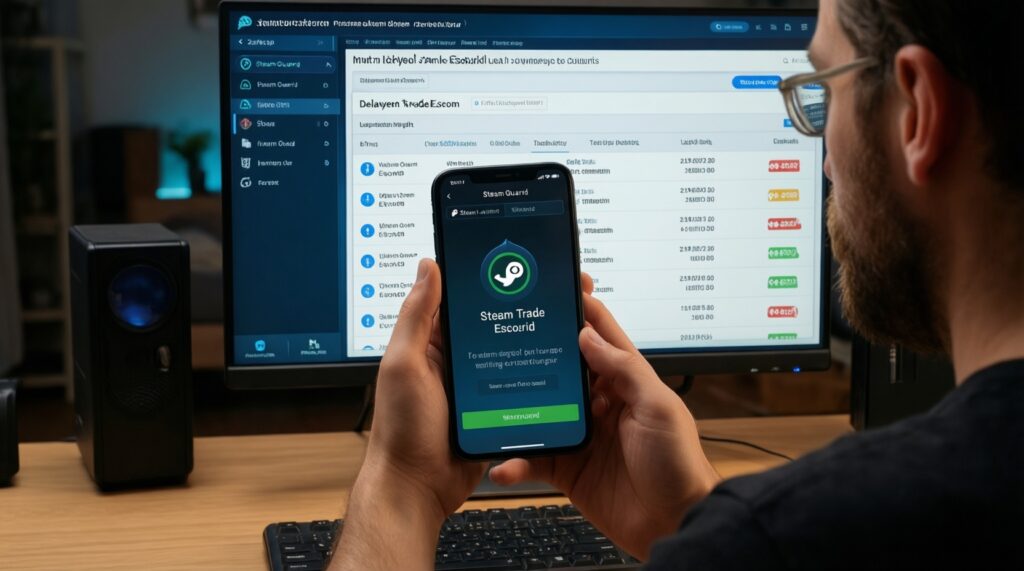
- Account security gating: Steam Guard Mobile Authenticator and confirmations reduce unauthorized transfers.
- Hold/escrow buffering: when triggered, items don't instantly leave your control; Steam can delay completion to mitigate fraud.
- Trade history and audit trail: you can review completed trades/market transactions inside Steam for dispute context.
- Delays are a feature: time friction can break fast flips and creates opportunity cost.
- Not all items behave the same: some items are tradable but not marketable (or vice versa), limiting exit options.
- Security UX is a target: scammers try to get you to approve the wrong confirmation or log into fake sites-controls only help if you read what you confirm.
Practical Strategies for Risk‑Managed Trading and Flipping
- Trade what you can price: prefer items with steady listing depth and frequent sales; avoid "one listing sets the price" situations.
- Build fee-aware targets: when planning a flip on the steam community market, model your net after steam market fees before you buy Steam items.
- Use identity checks, not names: verify the item by app/game, icon, tags, exterior/quality (if applicable), and whether it is tradable/marketable-don't rely on a chat description.
- Avoid off-platform settlement: don't accept "I'll pay later," gift cards, bank transfers, or links to "middlemen." Keep the entire exchange inside Steam's native flow.
- Control your exposure: split capital across several liquid items rather than a single rare piece that may not sell.
- Keep your account "clean": stable security settings reduce surprises (holds), improving predictability for active trading.
Legal, Wallet and Tax Considerations for Active Traders
Market proceeds generally remain in Steam Wallet, which affects how you measure profit: you're optimizing purchasing power inside Steam, not withdrawing cash. If you trade at high frequency, keep personal records (date, item, buy price, sell price) so you can explain activity if a platform review, payment dispute, or local compliance question arises in Thailand.
Short verification algorithm (post-trade / post-market purchase):
- Open Inventory → filter by game/app: confirm the item appears under the correct title (not a similarly named item from another app).
- Open item details: verify tags/attributes (tradable/marketable status, quality/variant, any restrictions).
- Cross-check transaction record: open Steam trade history or market history; ensure the timestamp and item name match what you expected.
- Confirm net result: for Market sells, compare listing price vs net received after steam market fees; for trades, confirm the exact received items and that nothing extra was added/removed at the last screen.
Practical Answers to Typical Trading Doubts
Is steam item trading reversible if I get scammed?
Generally, completed trades aren't "rolled back" just because you regret them. Your best protection is verifying items and confirmations before acceptance, and avoiding off-platform steps.
Do steam trading cards trade the same way as skins?
They use the same inventory and trade/market systems, but card prices tend to be driven by badge crafting demand and usually have different liquidity patterns than cosmetics.
What is the difference between trading and the steam community market?
Trading is a direct swap between two accounts you interact with. The Steam Community Market matches you with unknown counterparties through listings and uses Steam Wallet funds.
Why did my trade get a hold or escrow?
Holds are triggered by security and risk conditions (for example, account protection state). It's a platform safeguard; read the hold notice and don't try to bypass it via external sites.
When I buy Steam items, can I choose the seller?
On the market you typically buy the lowest priced available item that matches the listing, not a specific person. Control comes from setting your max price and verifying the item variant.
How do steam market fees affect flipping?
Fees reduce what you receive from a sale, so a small price increase may still be a net loss. Calculate expected net proceeds before you enter a flip.
How can I quickly verify I received the correct item?
Check Inventory under the correct game, open item details to confirm tags/variant, then cross-check trade/market history for the matching record. If anything mismatches, stop and investigate before making another trade.