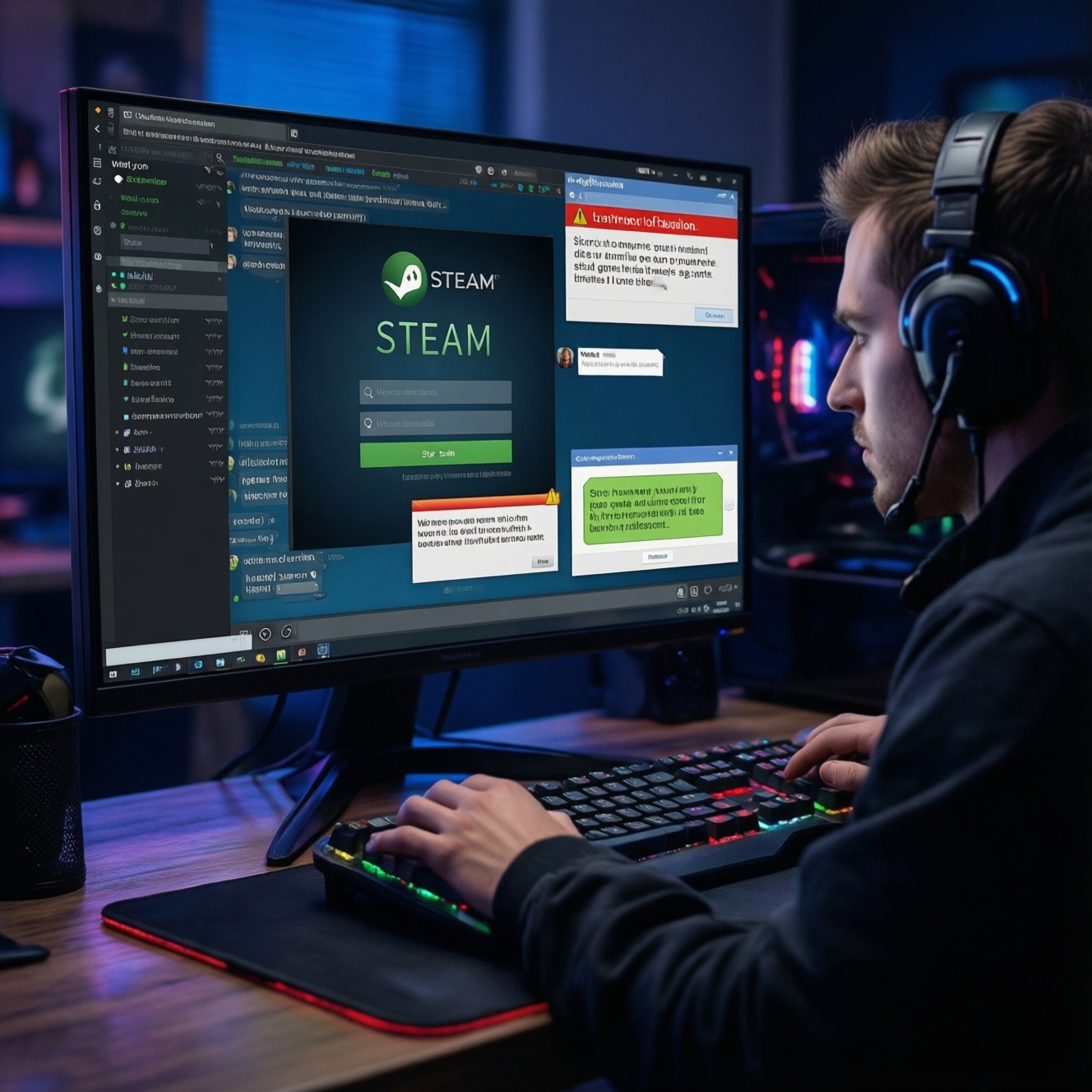


Case opening (loot boxes) can feel addictive because it combines uncertainty, rapid feedback, and emotionally charged near-misses that train your brain to chase the next reveal. The good news: you can stay in control by recognizing the reinforcement loop, correcting thinking traps, and using practical limits (time, money, and friction) that reduce impulsive purchases.
Core Psychological Mechanisms Behind Case Opening
- Dopamine prediction: the "maybe" is often more motivating than the reward itself.
- Variable outcomes: inconsistent wins teach persistent repeating.
- Near-miss effect: almost-getting a rare item feels like progress.
- Distorted probability: vivid wins are remembered; boring losses blur together.
- Emotion-driven spending: hype, regret, and sunk cost override planned limits.
- Design amplification: rarity colors, animations, and social proof intensify urges.
How Loot Boxes Activate Brain Reward Pathways
Loot boxes and "case opening" are reward systems where you exchange currency (earned or paid) for a randomized outcome. Psychologically, the core hook is not the item itself but the anticipation-your brain assigns extra salience to uncertain rewards and updates expectations after each reveal.
This is why even a loot box opening simulator can feel compelling: it preserves the suspense, surprise, and rapid "reveal" rhythm, even when the stakes are imaginary. The mind still practices the same craving loop: cue (urge) → action (open) → outcome (reveal) → learning (try again).
Boundary note: enjoying randomness is not automatically a disorder. It becomes a control problem when opening interferes with finances, sleep, work/study, relationships, or when you repeatedly break self-set limits-especially when you also buy loot boxes online "just this once" to fix a feeling.
Practical takeaway: treat "anticipation" as the product being sold. If you can interrupt anticipation (delay, distract, add friction), you reduce the pull without needing perfect willpower.
Variable-Ratio Reinforcement: The Engine of Compulsion
Variable-ratio reinforcement means rewards arrive unpredictably: you might get something desirable after 1 try, 10 tries, or never. This schedule is uniquely good at producing persistent behavior, because each attempt could be "the one."
- Uncertain payoff: the brain keeps the behavior "active" because the next outcome is unknown.
- Fast feedback: short time between attempts accelerates learning and habit formation.
- Near-misses: outcomes that feel close (almost rare) increase "try again" energy.
- Escalation: after a "good" hit, you chase the peak; after a dry streak, you chase relief.
- Ritualization: opening styles, lucky times, or "one last case" become cues that trigger urges.
- Normalization: watching streamers or friends makes repeated opening feel standard, not exceptional.
Practical takeaway: if you want control, target the schedule: reduce attempt frequency (cooldowns), slow the loop (delays), and remove streak-chasing logic (pre-commit to a fixed number, then stop).
Cognitive Distortions That Make Odds Seem Better Than They Are
Once the loop is running, thinking errors make opening feel more rational than it is. These distortions show up in predictable places:
- Gambler's fallacy: "I'm due." After many losses, you feel a win is more likely, even though the next roll is independent.
- Hot-hand belief: "I'm on a streak." After one lucky pull, you expect luck to continue.
- Availability bias: you vividly recall rare wins (yours or streamers') and underweight the many forgettable losses.
- Illusion of control: changing click timing, "seed," or a ritual feels like it influences randomness.
- Cherry-picked comparisons: you compare your spend to the best outcome you saw, not to the typical outcome you actually get.
Practical takeaway: replace "I'm due" with a neutral script: "Each opening is a new roll; my plan decides, not my feelings."
Mini-scenarios: how these biases show up in real life
- After browsing CS2 content: you visit CS2 case opening sites, see highlight clips, and your brain treats them like "evidence." Action: wait 15 minutes before any opening; highlights lose intensity with time.
- During a late-night grind: you think "one more to end on a win." Action: end sessions on a timer, not on an outcome.
- When friends pull something rare: you feel pressure to "match" them. Action: mute loot notifications and set private limits before you join voice chat.
- When comparing games: you search best loot box games and assume "better game" means "better value." Action: separate fun-from-playing from fun-from-opening; they're different products.
Emotional Triggers: Anticipation, Regret, and Sunk-Cost Effects

Emotions are not side effects here-they are the fuel. Case opening reliably creates short spikes of excitement, then quickly creates new discomfort (regret, "unfinished" feeling) that motivates another attempt.
What case opening feels good for (and why that matters)
- Micro-escape: a fast way to change mood when bored, stressed, or lonely.
- Identity boost: rare items signal status or taste; the reveal feels like social validation.
- Momentum: opening provides a clear "next action" when you feel stuck.
Where emotions distort decisions (limits you must plan for)
- Anticipatory craving: excitement grows before opening, pushing you to act "now."
- Regret chasing: after spending, you open more to "make it worth it."
- Sunk-cost effect: "I already spent so much" becomes a reason to spend more.
- Loss of stopping cues: no natural endpoint; each reveal suggests another attempt.
Practical takeaway: decide your stop point before you feel anything-because once anticipation and regret kick in, you're negotiating with the part of you that wants relief, not accuracy.
Game Design Features That Amplify Urge: Rarity, Visuals, and Social Proof
Many design features are neutral in isolation but powerful in combination. Common myths happen when players treat these features as "information" rather than persuasion.
- Myth: "Rarity color means I'm close." Reality: rarity framing intensifies near-miss feelings; it doesn't change the next outcome.
- Myth: "Animations reveal hidden patterns." Reality: flashy reveals increase arousal, which increases impulsive choices.
- Myth: "Limited-time offers are smarter to buy." Reality: urgency shifts you from values-based decisions to fear-based decisions.
- Myth: "Public drops prove it's possible for me right now." Reality: social proof is curated; you see wins more than losses.
- Myth: "If I switch platforms, I'll do better." Reality: changing stores or communities changes vibes, not the psychological loop that drives repetition.
Practical takeaway: treat design cues as advertisements. When you notice hype (sound, glow, countdown), label it: "This is a trigger, not a signal."
Concrete Self-Regulation Techniques: Limits, Tools, and Habit Replacement
Control improves when you change your environment so the impulsive choice becomes harder and the planned choice becomes easier. Use a layered approach: limits + friction + replacement.
| Trigger moment | What your brain wants | Control move (low effort) |
|---|---|---|
| Seeing highlights or friends' wins | "Join the action" | Mute notifications; delay 15 minutes; do one non-monetized match first |
| After a loss streak | Relief + closure | Hard stop on number of openings; switch activity (training map, quest, co-op) |
| Late-night boredom | Stimulation | Move payment method out of reach; set bedtime alarm; watch a fixed-length video instead |
| After spending regret | "Make it back" | Write the spend down; freeze purchases for 72 hours; talk to a friend |
A simple "control script" you can reuse
Use this mini-pseudocode when you feel the urge. It's built to answer the real question: "What do I do in the next 60 seconds?"
IF urge_to_open == true:
  wait 10 minutes (timer on phone)
  name the trigger (bored / stressed / saw a win / regret)
  check plan:
    - money limit for this week?
    - time limit for today?
    - allowed openings count?
  IF any limit would be broken:
    do replacement action for 15 minutes (match, workout, shower, call)
  ELSE:
    open only the pre-committed amount, then stop and log it
Mini-scenarios (Thailand context):
- You're about to buy at night: if you tend to buy loot boxes online when tired, set a rule: no purchases after your chosen time; keep payment apps logged out during evening gaming.
- You use "practice" to justify spending: if a loot box opening simulator makes you crave real opens, use it only after you've completed a non-spending task (one match, one daily quest), or avoid it entirely.
- You browse marketplaces/sites impulsively: if CS2 case opening sites are a trigger, block them on your device during work/study hours and keep access only in a short, scheduled window.
- You shop for new titles: when searching best loot box games, decide in advance what you're buying (gameplay) and what you're not buying (randomized spending), then stick to it.
Practical takeaway: if you're searching for how to stop loot box addiction, start with one measurable change for 14 days: a weekly budget cap, a fixed opening count, and a delay rule. Small, enforced structure beats motivation.
Typical Concerns and Misconceptions About Case-Opening Behavior
Is case opening the same as gambling?
Psychologically, it can function similarly because money is exchanged for an uncertain outcome. Legally and culturally it varies, so focus on your behavior: loss of control, chasing, and harm are the key red flags.
Why do I crave opening even when I know the odds are bad?
The craving is often for anticipation and mood change, not for "value." Knowing the odds doesn't automatically reduce the emotional pull of uncertainty and near-misses.
Do loot box opening simulator videos make urges worse?
They can, because they rehearse the same cue→reveal loop and keep rare outcomes vivid. If you notice cravings after watching, treat it like a trigger and add distance or limits.
If I switch to different CS2 case opening sites, will I be safer?

Switching sites rarely fixes the core issue: repeated attempts driven by variable rewards and emotion. Safety comes from limits, friction, and tracking-regardless of platform.
Is it better to buy loot boxes online in bulk to "get it over with"?
Bulk buying usually increases risk because it removes stopping points and makes chasing easier. If you engage at all, pre-commit to a small, fixed amount and stop without negotiating.
What's the fastest first step if I want to stop?
Add one high-friction barrier today: remove saved payment methods or require a 10-15 minute delay before any purchase. Immediate friction reduces impulsive "autopilot" spending.
When should I get outside help?
If spending causes debt, lying, conflict, or you can't stick to limits despite repeated attempts, involve a trusted person and consider professional support. Escalation is a signal to widen the safety net.